
‘Wayne brought heart, grace, and grit to every corner of the sport’ – US racing mourns legendary Lukas
The global racing industry has paid tribute to legendary US trainer D Wayne Lukas, who died aged 89, just a week after it was announced he had retired and had been admitted to hospice care.

Lukas, the winner of nearly 5000 races, including 15 Triple Crown races, rewrote history at almost every turn of his extraordinary career.
“It is with heavy hearts that we share the passing of our beloved husband, grandfather, and great-grandfather, D Wayne Lukas, who left this world peacefully yesterday evening at the age of 89, surrounded by family,” a statement from Lukas’s family released on Sunday, read.
“Wayne devoted his life, not only to horses, but to the industry-developing generations of horsemen and horsewomen and growing the game by inviting unsuspecting fans into the winner’s circle. Whether he was boasting about a maiden two-year-old as the next Kentucky Derby winner or offering quiet words of advice before a big race, Wayne brought heart, grace, and grit to every corner of the sport.
“His final days were spent at home in Kentucky, where he chose peace, family, and faith. As we grieve at his passing, we find peace in knowing he is now reunited with his beloved son, Jeff, whose memory he carried in his heart always.
“We are deeply grateful for the outpouring of love, prayers, and support from all corners of the racing community–from racetracks across the country to lifelong friends and respected rivals, and from fans who never missed a post parade when ‘Lukas’ was listed in the program.”
Among his 15 Triple Crown wins as trainer were four Kentucky Derby victories and he was only behind Bob Baffert (17) in the number of Classic wins. His most recent Triple Crown victory came in last year’s Preakness Stakes with Seize The Grey.
He also holds an equal record for Breeders’ Cup championships victories with 20 and has trained 26 Eclipse Award winners.
His runners amassed over $300 million in earnings, including 4967 wins, while he was the leading North American trainer in earnings on 14 occasions.
Lukas was inducted into the National Museums of Racing’s Hall of Fame in 1999.
“A four-time winner of the Kentucky Derby, today we lost one of the great champions of Churchill Downs and one of the most significant figures in thoroughbred racing over the last 50 years. We will miss his humor, his wisdom and his unmatched capacity to thrill the fans with the performances of his horses on our sport’s biggest days,” Bill Carstanjen, chief executive of Churchill Downs Incorporated said.
Tom Rooney, president and chief executive of the National Thoroughbred Racing Association also paid tribute.
“It is hard to imagine thoroughbred racing without the presence of D Wayne Lukas. His passion for the sport was unparalleled, and his legacy will live on in the champions he trained and the numerous men and women he mentored along the way,” he said.
“His horsemanship reshaped the sport, and his impact will be felt for generations to come. If there’s a Mount Rushmore of horse trainers, D Wayne Lukas is on it.”
Baffert described Lukas as ”a true visionary” and the inspiration for his own record-breaking career.

“When I transitioned into thoroughbreds, Wayne was the competition, and all I wanted was to beat him in the big races. It didn’t take me long to realise how difficult that would be,” he said.
“Wayne was a game-changer, transforming horse racing for the better. He made it so the horse’s bloodlines were more important than the owner’s.
“He created a system of flying his horses coast to coast, establishing a presence at every major racetrack in America. And Wayne didn’t just show up. He dominated. He won so much he became known as ‘D. Wayne off the plane’.
“He developed the blueprint the rest of us still follow.
“The horses were everything to Wayne. They were his life. From the way he worked them, how he cared for them, and how he maintained his shed row as meticulously as he did his horses. No detail was too small.
“Many of us got our graduate degrees in training by studying how Wayne did it. Behind his famous shades, he was a tremendous horseman, probably the greatest who ever lived.
“As I grew older and wiser, Wayne remained the competition, but he also became a mentor and one of my best friends. When he beat me, I knew I was beaten by the best. When I beat him, I knew I had done something right.”
Author

Related Articles
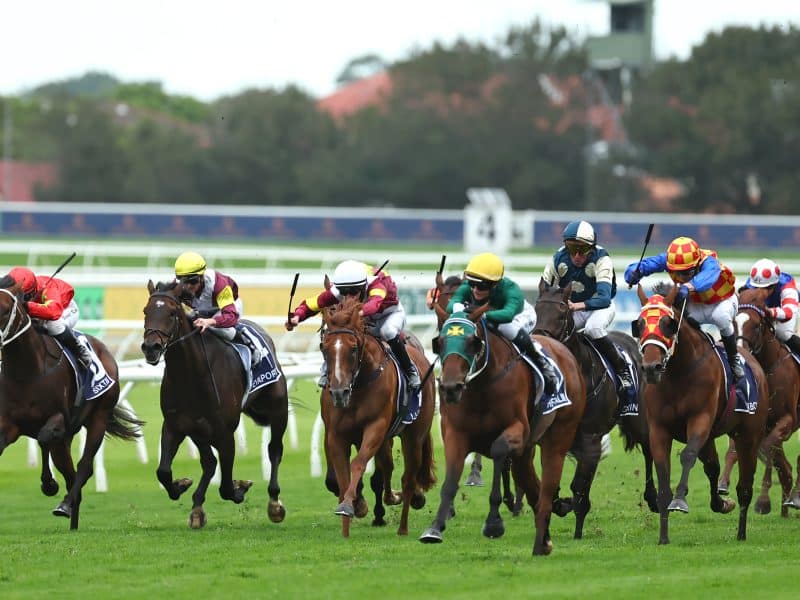
What we learned from Doncaster day – Sheza star, Star a queen and King creates history
James McDonald and Chris Waller’s Group 1 double was completely overshadowed by a brilliant filly, a mare who is now Australia’s best sprinter and Rachel King’s piece of Australian racing history.
Racing’s burning questions as PM moves on wagering advertising reform
Racing has long expected a carve out from any federal gambling advertising restrictions, but even with an exemption, a significant shift in how bookmakers market to customers will have a commercial impact on the thoroughbred industry, writes Bren O’Brien.
Across hemispheres – The Piggott-Pilkington link behind Inglis Sires’ bid
There are no borders in racing anymore, and Am I Dreaming’s shot at the $1 million Inglis Sires’ sits squarely in that space, shaped by trainer Jack Pilkington and bloodstock agent Jamie Piggott’s international footprint.