
Analysis: Japan’s determination to fend off legalised sports betting, despite a massive black market
Japan isn’t alone in confronting the challenge of billions of dollars moving offshore through global black market sports betting platforms, but its determination to keep broad sports betting illegal in the country makes it an even harder task, writes Bren O’Brien.
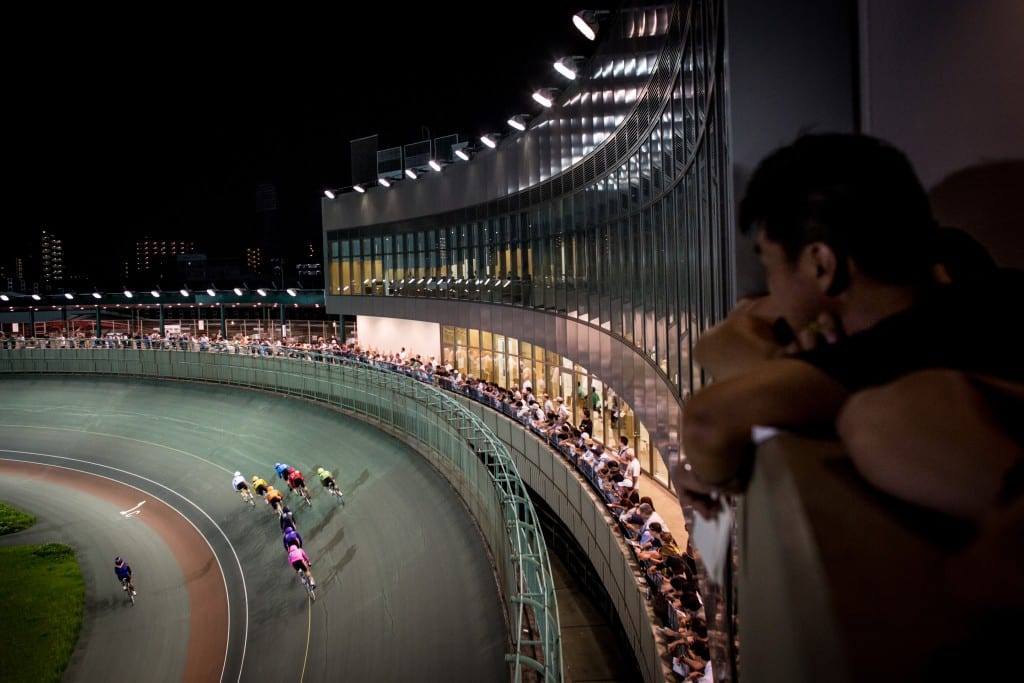
While Japanese gamblers turn over more on sports, illegally via overseas platforms, than they do legally on horse racing, the country’s politicians seemingly have no appetite for the widespread legalisation of sports betting in Japan.
A 2024 report from a body called the Council For Sports Promotion, a foundation that supports the local sports industry, found that Japanese gamblers turn over a staggering 6.45 trillion yen, the equivalent of AU$59 billion, on overseas sports betting platforms.
The number is greater than the turnover on horse racing – which is 4.5 trillion yen across JRA and NAR – and only slightly less than the 8.5 trillion yen wagered across parimutuel on the four legally available avenues of sports betting – horse racing, boat racing, cycling and moto racing.
With such a large grey/black market, and Japan looking to establish its first land-based casinos from around 2030, the expectation might be that Japan would look to regulate the sports betting market by legalising and licensing a local wagering industry.
But there appears to be little political appetite for that change, with a cross-party group of lawmakers, led by a former Justice Minister, Takashi Yamashita, commissioning a review of the sports betting market in Japan late last year.
The review, which will look at setting up legislation aimed at protecting the integrity of athletes and referees, is currently underway, but at an executive meeting in December, it confirmed that it would seek to strengthen restrictions on sports betting.
The Penal Code prohibits sports betting, and further legislation proposed by the group would strengthen measures under the mantra of former Prime Minister Tara Aso, who stated that “sports betting does not fit in Japan”.
Last year, legislation was enacted that prohibited the launch and promotion of online casino services targeting Japan, including on social media. It enabled Japanese authorities to block payment gateways and overseas websites, in cooperation with overseas regulators.
It is an approach similar to that occurring in Australia, with arguably mixed results, although Japan differs in that it does not have a regulated sports betting market to protect.
Australia’s unregulated market now represents – according to independent research commissioned by industry lobbyist Responsible Wagering Australia – 36 per cent of all online gambling in Australia.
The size of Japan’s illegal sports betting market is at least 10 times that of Australia, with over one trillion yen (AU$9.2 billion) wagered on Japanese-based sports and the remainder on overseas sports.
The largest volume of bets on Japanese sports was placed on professional baseball at 528.1 billion yen, followed by football at 333 billion yen and basketball at 87 billion yen.
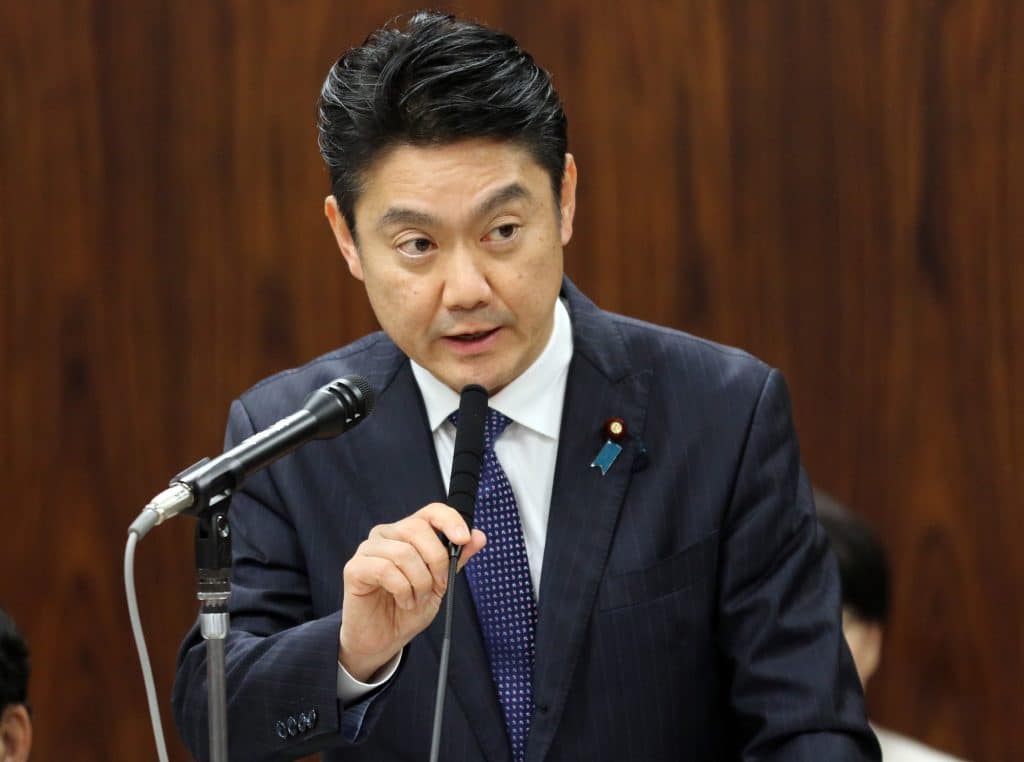
It is the potential impact on the integrity of Japanese-based sports that is driving much of the political focus.
“Illegal betting is spreading rapidly, and if nothing is done, the Japanese sports industry could become a target,” sports promotion council member Toshikazu Yamaguchi, the president of media company, The Yomiuri Shimbun Holdings.
It is notable that, in contrast to Australia, a Japanese media company would be such a strong supporter of greater regulation of gambling.
The laws are also designed to protect sports that are legally permitted to offer wagering. There is an argument that the anti-sports gambling laws allow horse racing to prosper and sustain high levels of prize money, which support a high-performing local industry.
But the fact that illegal sports betting is already turning over more than legal horse racing tells you that argument may be lost.
Notably, five of the world’s 25 most valuable gambling-related companies by market capitalisation are headquartered in Japan.
The two biggest, Sankyo Pty Ltd and Heiwa Corp, have built wealth through the manufacturing and operation of pachinko machines. Although technically not gambling, because of the built-in sweepstakes component, the Japanese turned over 15.7 trillion ($AU143 billion) in 2023 on Pachinko and Pachislot, and that is considerably down on what it was at its peak.
That pseudo-gambling space is where MIXI, now the controlling owner of the Australia-based PointsBet, has found an opportunity. Social gaming platforms have become highly popular, utilising technology and social media to generate engagement.

Having said that, selling bets is a much more direct way to generate revenue as MIXI’s most recent quarterly results – which include PointsBet for the first time – demonstrate. Its betting sales have doubled in the space of one quarter, thanks to PointsBet’s contributions from Australia and Canada.
MIXI highlighted that reliance on the highly regulated Japanese market for growth has its challenges and investing in regulating betting companies like PointsBet, is a valuable point of difference.
It will be interesting to see if other major gambling-related companies, which look to be locked out of a legalised Japanese sports betting industry for some time yet, will follow suit.
In the meantime, Japanese regulators face the challenge of installing practical measures in a highly technically capable society, which stems the trillions of yen flowing into offshore sites.
As has been shown elsewhere, this is a difficult task.
Author

Related Articles
BetStop compliance failures cost Dabble more than $1 million in fines
Wagering operator Dabble left 157 customer accounts open after the holders self-excluded and continued sending gambling messages, prompting a penalty and two years of external compliance oversight.

🔒 🔒 Brand exposure: The familiar dilemma behind Novig’s 42 million-view Sydney Sweeney campaign
Novig’s controversial Sydney Sweeney campaign has delivered enormous reach during the prediction market’s US expansion, but the backlash highlights a dilemma familiar to Australian wagering companies: balancing brand recognition with legitimacy.
🔒 🔒 RWWA review revives WA TAB sale question, but at what price?
Western Australia has tried three times to sell its TAB. A $28.5 million loss, an unresolved AUSTRAC assessment and a review of the wagering business’s outlook make a fourth attempt plausible, but the $1 billion once on the table is long gone.
