
Ruling reserved in ATC-Racing NSW Supreme Court case over administration
Justice Francois Kunc has reserved judgment after the NSW Supreme Court heard arguments over Racing NSW’s authority to appoint an administrator to the Australian Turf Club under the Thoroughbred Racing Act.
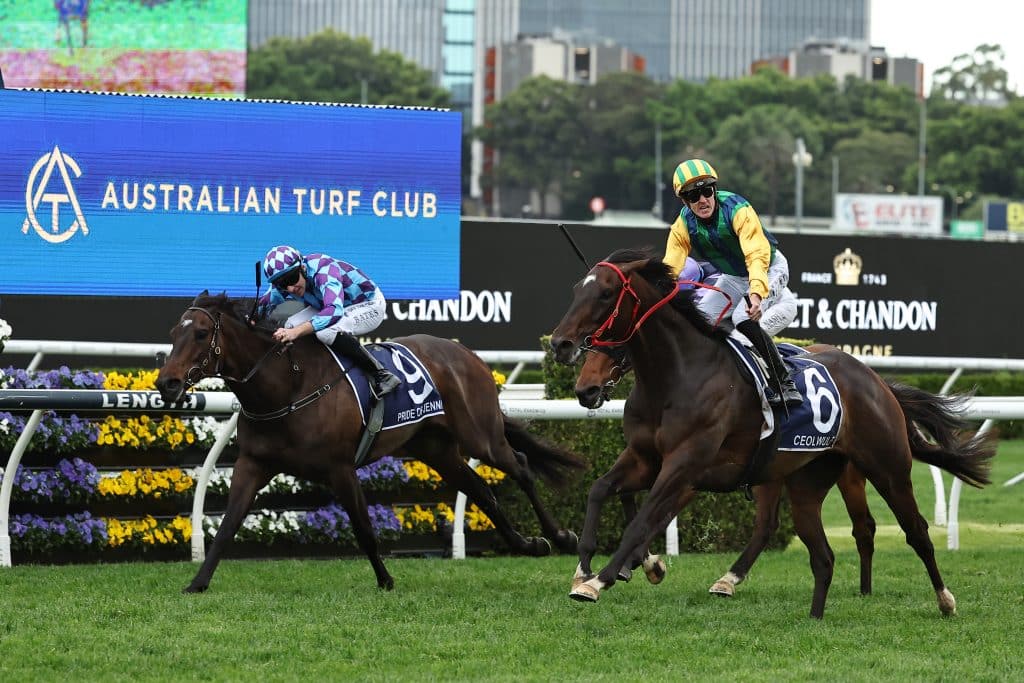
Justice Francois Kunc has reserved his decision in the case of the Australian Turf Club’s fight against Racing NSW’s decision to place the member-run organisation into the hands of an administrator.
Three days of proceedings were completed in the NSW Supreme Court on Monday, with Racing NSW’s legal counsel Michael Henry SC arguing that the state’s thoroughbred regulator was entitled to take a “maximalist position” in the management of the industry.
The ATC’s barrister Scott Robertson SC submitted that Racing NSW does not have the authority via the Thoroughbred Racing Act to appoint an administrator.
Henry SC opened Monday’s proceedings by suggesting that almost everything surrounding the operations of the ATC was relevant to the conduct of horse racing and that, in turn, gave Racing NSW authority to place it under the management of an administrator.
“So far as horse racing goes … we say one cannot divorce the race clubs from the horse racing, because that’s the very reason the race clubs exist,” Henry SC told the court.
Under questioning from Justice Kunc, Henry SC conceded that even under the wide-ranging maximalist position of the Thoroughbred Racing Act, his client may not have the power to set the prices of food and beverages.
Justice Kunc asked “where do I draw the line?” and in doing so he referenced the activities of the ATC-owned Rosehill Bowling Club as a possible business outside its horse racing remit and whether that would fall under Racing NSW based on Henry SC’s argument.
“There may be some limits. For example, my friends raised the issue about prescribing prices for, or dictating prices for food and drink and the like,” Henry SC said.
“It may be … a false issue because it’s not something that is realistically contemplated or has ever been in contemplation.
“There’s no suggestion in the papers that that’s a real issue. But theoretically, for the purposes of Your Honour’s argument, it may be that an activity like that is not sufficiently related in the sense of in connection with a function.”
Henry’s admission comes after the ATC and Racing NSW were in the Supreme Court on February 12 in a dispute over the club’s handling of an investigation into the alleged theft of food and beverages from the its racecourse hospitality venues.
Racing NSW had made a request for information about the club’s hospitality businesses based upon section 29B of the Thoroughbred Racing Act, which allows it to give direction in writing to a registered race club to provide specified documents or furnish specified information to Racing NSW.
Later, Henry SC reinforced “that in the circumstances that subsist, the maximalist position does apply”.
“The only issue now is, can an administrator be appointed? Is the line such that we could do that? And we say for the reasons we’ve advanced, in the circumstances, yes,” he said.
Robertson SC argued that an administrator would be unable to act for the benefit of the ATC rather than that of Racing NSW after such a scenario was put to him.
“Whilst it’s very tempting to embrace that approach, we just don’t think that can possibly be right, but if he’s right, no doubt that’s the next court case that someone will bring against the administrator if the administrator has been validly appointed,” Robertson SC said.
Justice Kunc adjourned the hearing on Monday afternoon without making a ruling, prompting Robertson SC to seek that a stay of proceedings be continued if he found against his client pending a potential appeal.
Racing NSW’s board, led by chair Dr Saranne Cooke, determined in December after a show-cause hearing process that the ATC should be placed into the hands of an administrator, appointing Morgan Kelly of Ernst and Young to handle the club’s affairs due to solvency concerns.
The ATC received an injunction from the NSW Supreme Court before Christmas pending the outcome of the case.
Author

Related Articles
‘Performance over tenure’ – CEO Sam Cavanough’s insight into what makes Ciaron Maher Racing tick
Twelve months on from being thrust into the chief executive’s role at Ciaron Maher Racing, Sam Cavanough has no regrets about having swapped a budding legal career for the task of running Australia’s biggest stable.
Australian Chinese Jockey Club rides the Fire Horse into the Lunar New Year
The rare Year of the Fire Horse has arrived, blending Chinese tradition and a continuing Australian Chinese Jockey Club ambition to connect heritage, culture, and racing opportunities for a new generation of owners.
ATC presses case to defy administration as Supreme Court case begins
The Australian Turf Club’s bid to stave off administration has begun in the NSW Supreme Court as its legal team outlined the three grounds on which it will argue against the Racing NSW-imposed action.