
A global career path could be racing’s strongest recruitment tool
A job in racing can open doors across the globe, but industry leaders say the sport is still failing to sell that message to the next generation of workers.
Selling what racing can offer potential employees, rather than what it can’t, should be a priority in the sport’s bid to tackle a staffing crisis that extends beyond Australia’s shores.
It is the global nature of racing, and the career opportunities it creates, that can be one of the industry’s greatest strengths in attracting young people into the sport, Australian Trainers Association president Troy Corstens says.
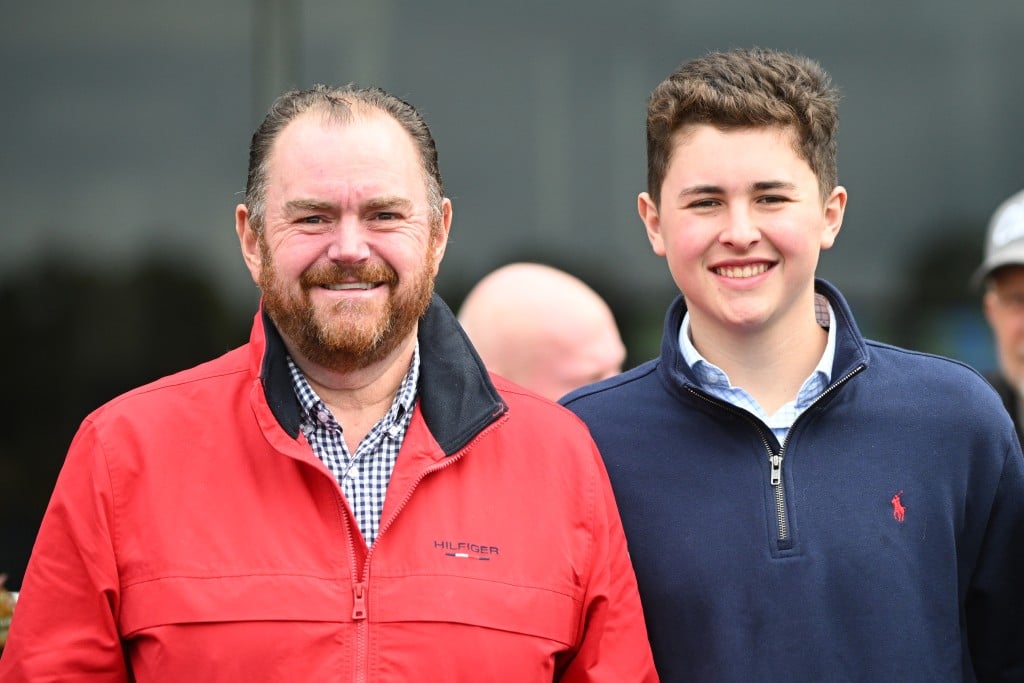
The Victorian trainer’s son Ed, who is now firmly entrenched in the family’s racing business, has played a role as recruitment manager, luring some of his school friends into the industry.
It’s that direct pathway that the industry needs to pursue more aggressively, the Group 1-winning trainer says.
“I’ve got a son (Ed) and we’ve got sort of three or four of his friends that have all come through a similar pathway, and they’re all now working for us,” Corstens says.
“I’ll probably lose every one of them in the next two years, but it will be to the industry, so whether one goes off to breeding, one becomes a bloodstock agent, another one is very keen to go overseas and work for a trainer overseas, but that’s fantastic. I’m happy with that.”
And it is that holistic approach to upskill employees – be it stable staff, stud staff and sales staff – for the betterment of the wider industry that will help attract workers to the sport.
“If you can work with horses in Australia, you can do it in America, you can do it in England, you can do it in France. It’s universal,” Corstens says.
“With a couple of phone calls, I could get a person who works for me a job anywhere in the world.”
It is industry advocates such as Ed Corstens that can push the barrow for racing, starting when students are developing their interests and considering career paths.
“I’d really love to see some programs where we are going to career days and going to schools and saying, ‘listen, have you thought about this?’ And even if you pick out some of the smaller kids and say, ‘geez, you could be a jockey. Did you ever think about that?’” Troy Corstens says.
“I think a lot more of that could be done, but it’s another one of those ones. Who does it?
“Who pays for it? Who comes up with the program? It’s just something that should be talked about and I can tell you as the ATA, we’d be more than happy to be involved in something like that.
“Can we fund it? No, we don’t have the money. Are we going to be involved in it? Love to be. I’d love to be involved in something like that.”
While the ATA doesn’t have the budget to embark on such a program on its own, if other industry bodies were to embrace school-based and wider careers expos promoting jobs in racing, trainers would be fully behind the initiative, Corstens says.
“I think I could go to 50 or 100 of our members and just tell them what we needed and they’d stick their hands up straight away to encourage young people to come through, to do what we needed to do to get more people into the game,” he says.
“I’ve got no doubt that our members would jump at that.”
Corstens admits his views as head trainer at Malua Racing can often differ from those when he is speaking as the Australian Trainers Association president.
Therein lies one of the issues for racing, not just trainers, but across the board: having everyone on the same page. It is an almost impossible task.
In the past fortnight Corstens was on Melbourne racing radio where he called for later start times to trackwork.
For many it seems logical, particularly for those observers of the industry rather than those in stables day to day, but even Corstens’ push created friction among his colleagues, at Flemington and elsewhere.
“I want to be definitive here because, as the ATA president, I cop a little bit of flack saying that I haven’t consulted anyone about talking about later starts. I’m specifically talking about later starts at the moment for Flemington trainers,” he says.
“I do think it’s a good idea that everybody starts later, but it’s that much of a differing opinion and you get so much pushback from just even suggesting it that it’s probably not something that I would tackle industry-wide.
“However, I’m still allowed to have my own opinion and I do really think that we could change the whole system by starting later.
“And you could ring Wayne Hawkes and he’ll be on to you about it as to why we shouldn’t be starting later … because some of the track staff have got second jobs and stuff like that.
“But if we never, ever look to change something and we just sit back and we whinge, which as an industry, we can do quite a great deal, how do we make things better?
“How do we change things if we just sit back and do things the way that we’ve always done them?
“And that’s something I truly believe in.”
Author

Related Articles
Open letter raises red flags over NSW trainer relicensing requirements
In an open letter addressed to Racing NSW, country trainer Debbie Prest has raised concerns about the regulator’s licensing requirements, questioning the rollout of the Sleip App and requests for financial information.

Premium venues to benefit as RV reshapes country racing calendar
Racing Victoria will overhaul the classification of country TAB meetings from next season, with six key venues to receive premium status as part of a strategy to strengthen wagering and engagement.

Russell Warwick to step down as NZTR chair
Upheaval continues in the upper echelons of New Zealand racing, with confirmation that Russell Warwick will step down as chair of New Zealand Thoroughbred Racing in the coming months.
