
Jones’s demise as Racing Victoria CEO a lesson in board behaviour
The brutal nature of racing politics in Victoria and NSW speaks to the importance of principal racing authorities and racing clubs having both a strong, independent board and a knowledgeable and accountable executive, writes Bren O’Brien.
COMMENT: Every other week for the past eight months, a rumour would go around that Racing Victoria (RV) chief executive Andrew Jones was set to be shown the door. So, when Jones resigned last Friday, a convenient black spot for news coverage in between a public holiday and a weekend, it came as little surprise.
The rumour mill surrounding Jones’ future at RV was driven in large part by the strident opinions of his most outspoken, and powerful critic, Jonathan Munz, the chairman of the owners’ body TROA.
Munz was hardly alone in his distaste for Jones but was his loudest detractor and sent him off with one last kick in the pants when he issued a statement at the weekend.
“Jones and his team were completely out of their depth and apart from fundamental management errors, were seen as pushing a misconceived radical strategy parading as “innovation,” Munz said.
Whether Munz’s firing one last shot at Jones as he left the room was entirely necessary is a matter of opinion, but the statement’s most salient point was Munz’s assessment of the RV board.
“Unfortunately, the board enabled Jones for way too long and did not listen to pleas for change from investors, race clubs and participants. Indeed, it has been observed that in many ways the RVL board members were more culpable than Jones. They should have heeded advice from the industry to sack him almost a year ago,” Munz said.
Munz tried, unsuccessfully, to spill five positions on the RV board in February. While he, and others, harboured deep concerns about Jones and other members of the executive team, he was no fan of a group of board directors who had frozen in the headlights of scrutiny.
He felt they had become captured by Jones’ innovation agenda and had not held the executive to account. It’s an easy argument to make in the circumstances.
Significantly, the RV board has been without a permanent chairman since Brian Kruger left last June. While interim chairman Mike Hirst has insisted that this has not impacted board decision-making, Jones’s long, tortured exit indicates otherwise.
 Bren O’Brien
RV has been waiting for a six-foot-ten messiah named Gil to ride into town but in the meantime, the board has been left in a stasis, which has occurred during a time of considerable upheaval in the funding model of racing. Time has been lost.
While what happens on boards may not interest everyday racing fans, they are crucially important to the role of principal racing authorities (PRAs). They provide a layer of critical thought and governance to the executive which operates under them.
A CEO or executive unchecked by a strong board is free to make decisions on a whim or on personal preference, which is not a process which ends well in a stakeholder-driven industry like racing.
It’s not just a question the RV board needs to answer.
The strength and independence of the Racing NSW board has been questioned in recent months amid suggestions of a compromised selection process for the new chair after Russell Balding’s sudden exit.
As with all PRAs, the Racing Minister, in this case David Harris, decided who would become the next Racing NSW chair. Saranne Cooke was selected by a panel that included a man who admits to being a lifelong friend of Racing NSW CEO Peter V’landys. Best practice?
Meanwhile, over at the ATC, the process surrounding the sale of Rosehill gets messier with every revelation. Who drove the proposal is now up for considerable debate, but it’s clear that at the ATC, it was pushed by the executive and not the board.
Independent MP Mark Latham has suggested the proposal was discussed with the government and Racing NSW before it was even broached with the ATC board. If that is the case, it raises questions about who is driving the ship and the function and capability of the board.
Bren O’Brien
In Queensland, Racing Minister Grace Grace ticked off the extension of six existing members of the Racing Queensland (RQ) board and the addition of another in a ‘low-key’ media release last Friday.
She had left that announcement until just four days before the terms of the entire board were set to expire. There were some concerns raised within the industry that the existing board needed change, but there was only one voluntary departure.
Remarkably, under Queensland legislation, all seven directors could be dumped as soon as the next state election, which is due in October, and where a change of government is widely expected.
“Steve Wilson (chair) and Dale Cartwright have been re-appointed for one year, to balance the need for board continuity and coincide with the delivery of major infrastructure projects,” Grace said.
One of those projects mentioned was the Gold Coast Turf Club rebuild, one that has, until this point, not gone well, reportedly because of issues between the club and the RQ.
Change, of course happens at every organisation, and is often viewed, or portrayed as a positive.
Long tenures, especially at the executive level, can prove counterproductive. A Harvard Business Review study in 2019 said 9.5 years was the optimum time for a CEO to be in a role.
For reference, V’landys has been CEO at Racing NSW for 20 years. That’s in stark contrast to every other state. Jason Scott has been in charge at RQ for less than a year, Vaughn Lynch at Racing SA barely 18 months, and Tasracing’s Andrew Jenkins has only been in the hotseat on an official basis for 14 months. RWWA’s Ian Edwards is the longest-serving outside of V’landys, at three-and-a-half years in his chief executive role.

Jones, who lasted just 22 months, always said he was ‘sanguine’ as to his future and when briefly contacted by The Straight after his departure said the pending board changes, including McLachlan’s ascent to the chairmanship, meant his future interests were not best served remaining in the job.
McLachlan, in the high likelihood he accepts the chairmanship, is set to be one of three new board members (four if you count Jones being replaced), a substantial refresh moving forward, and will look to impart his experience on the choice of new executive.
But replacing a pariah as CEO with a messiah as chairman is not exactly A1 business practice either. McLachlan can not and should not be a one-man band. Racing’s best interests remain in a strong, independent board and a knowledgeable and accountable executive.
Author

Related Articles
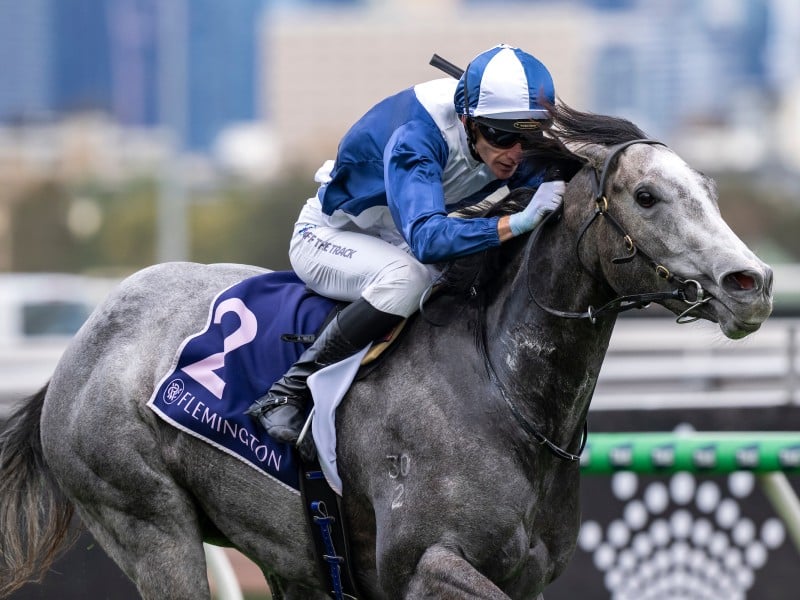
Redgum rising – how a stable is blooming with a four-legged billboard
More than two decades on from Hollow Bullet, Redgum Racing remains a working partnership between John McArdle and Brent Clayton that has made the most of its opportunities to return the stable to top-level racing.
Entain eyes Australian rebound while seizing on NZ online casino opportunity
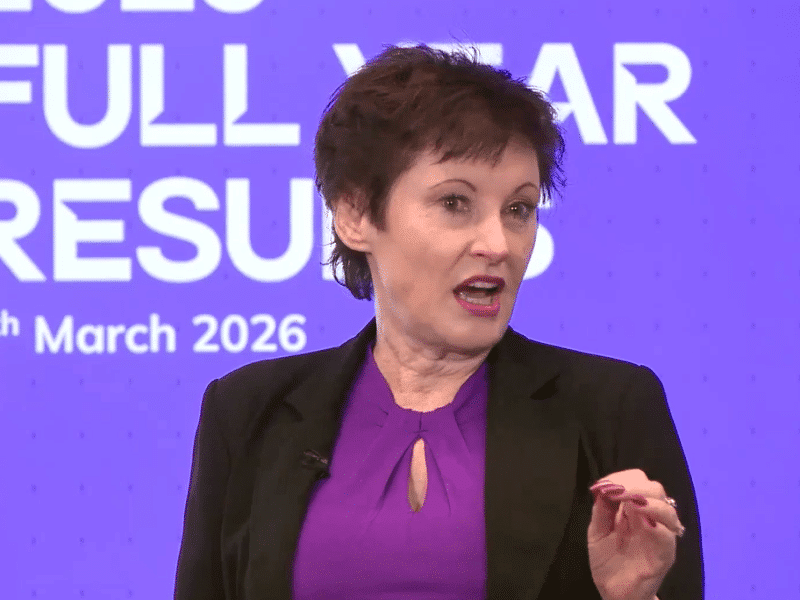
Wagering company Entain retains faith in the future growth of its Australian business, while it estimates its opportunity in New Zealand could grow to NZ$700 million a year with the potential addition of three online casino licences.
Cut in half – Australia’s thoroughbred foal crop’s long-term decline continues
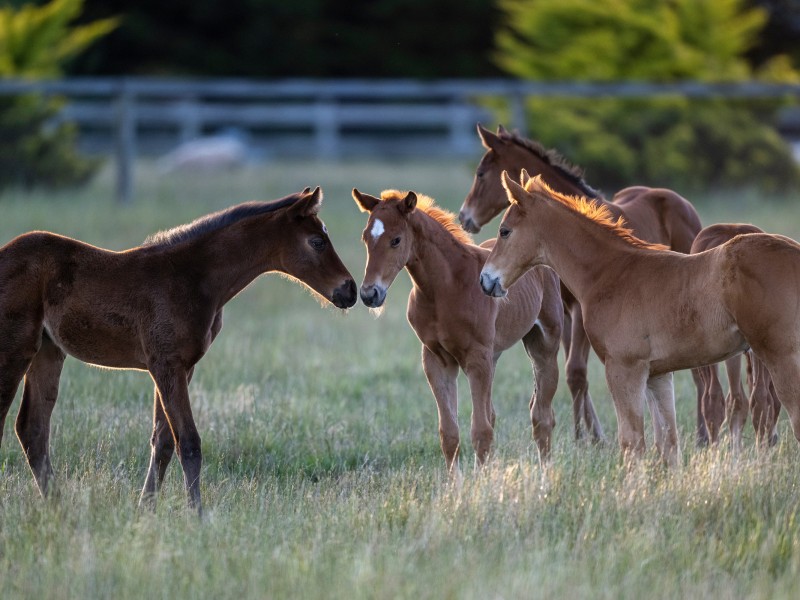
Australia’s thoroughbred foal crop has dropped to just over 11,000 foals, less than half the size of its 1989 peak, as the industry’s contraction continues despite a slight improvement in live foal rates.