
What’s wrong with Warwick Farm? The inside running on Sydney’s ‘dinky-di’ racetrack
It’s doubtful that any piece of racing infrastructure is subject to as much widespread industry scrutiny as our major turf racetracks. Warwick Farm seems a special case, writes Warwick Barr.
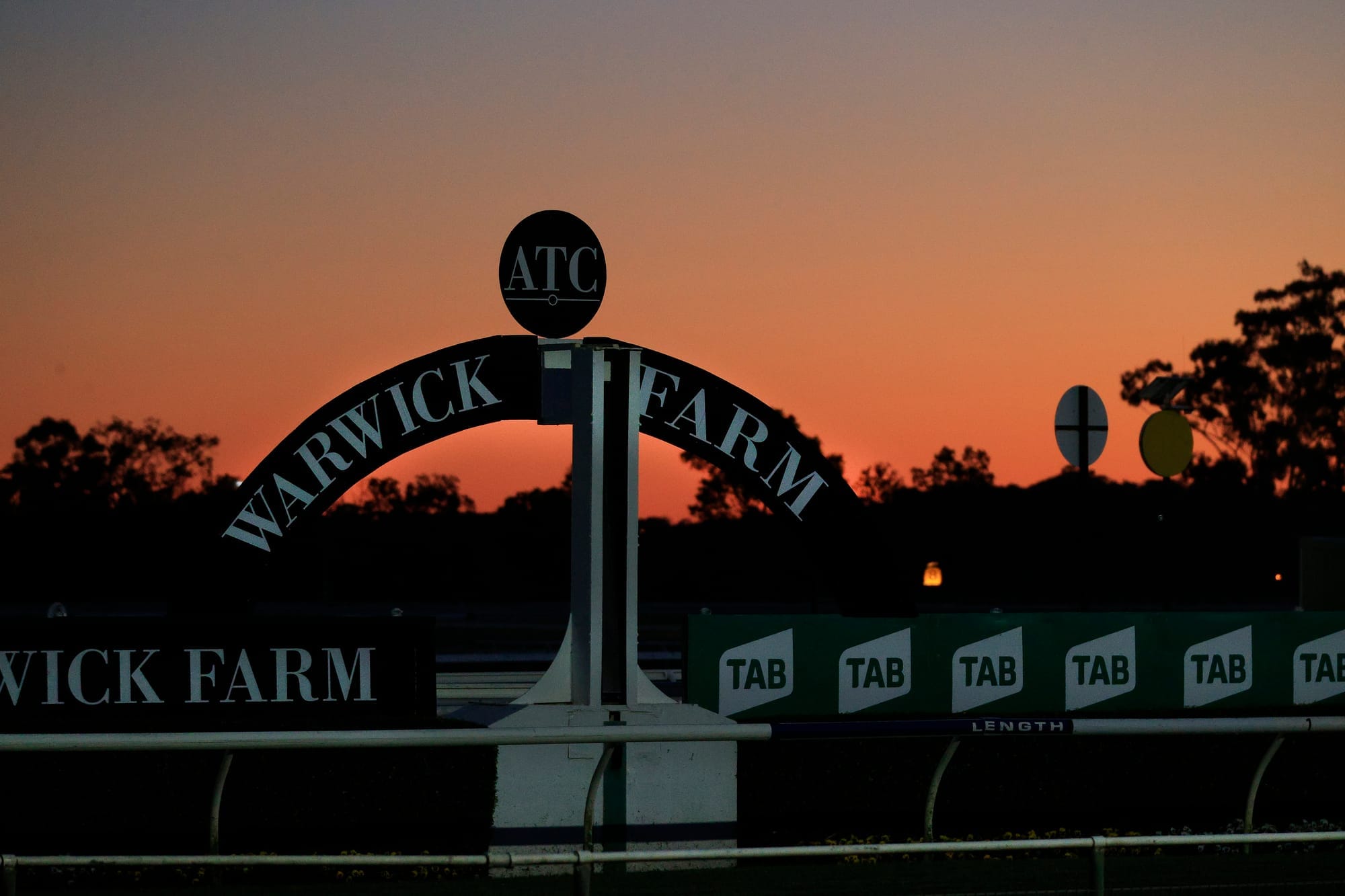
At first, it was local government red tape.
But now, a planned $6 million upgrade for Warwick Farm to enhance its racing infrastructure seems to be caught up in a broader and more complex issue engulfing the NSW racing industry.
A year ago, the Australian Turf Club (ATC) was forced to postpone its plans for a Warwick Farm facelift just as work on remodelling the course proper was about to start.
Apart from the laying of new turf more than a decade ago, the proposed works would have marked one of the most significant course proper upgrades in Warwick Farm’s history.
Plans submitted to Liverpool City Council included the construction of a retaining wall along the 1400m chute to accommodate bigger field sizes, a new camber to the turns and home straight and a new irrigation system.
However, the project, which was slated to receive Racing NSW-assisted funding, was stalled due to an impasse with the council. Warwick Farm is situated on a floodplain for the Georges River.
 Warwick Barr
At the time, the ATC was confident the issue would be resolved by now but since then a much grander – and controversial – vision for the future of Sydney racing has been revealed.
And as the ATC’s plan for the sale of Rosehill heads for a parliamentary inquiry, it would be no surprise if a Warwick Farm course proper facelift has slipped down the club’s to-do list.
“Our track is a bit like a crystal ball … always looking into it,” one Warwick Farm trainer told The Straight.
A survey by The Straight of Australia’s major racecourses found that Warwick Farm is one of the last bastions of a bygone era.
Bren O’Brien
Among Sydney’s five tracks used for thoroughbred racing, Warwick Farm is well overdue for a complete overhaul, using an accepted industry-standard use-by date.
Remarkably, it belies its vintage to the point that some say the axiom “if it isn’t broken, don’t fix it” should be applied.
For as long as anyone can remember, Warwick Farm has never undergone a rebuild like its more famous Sydney racing cousins, Randwick and Rosehill.
“Warwick Farm is still the most original dinky-di racetrack since it was put on this earth,” a source familiar with the western Sydney racetrack told The Straight.
Under the protocols of a total rebuild, a racetrack is stripped right back to its base, allowing for updated drainage and irrigation systems and a new profile.
“Warwick Farm is still the most original dinky-di racetrack since it was put on this earth.”
In most cases, reconstruction rather than renovation is necessary because of a build-up of organic material above a sand layer, which causes tracks to hold more moisture than needed.
Racecourse managers contacted by The Straight expect a new racetrack to last between 20 to 25 years, providing there are no serious issues such as the ones that plagued Eagle Farm’s rebuild during the past decade.
“They do have a timeframe on them but to pin that down exactly, well that’s in the lap of the gods,” one experienced curator said.
“But there is probably no real answer to that if you keep maintaining them. You’d like to think 20 years would see them out nowadays,” one track manager said.
A full reconstruction can put a racetrack out of action for up to 12 months.
“Ten months, if you time it right to do it in the growing season,” the manager said.
“Start it in the winter so you can finish the bulk of the work by spring, give it a chance to grow and consolidate in another three or four months.”
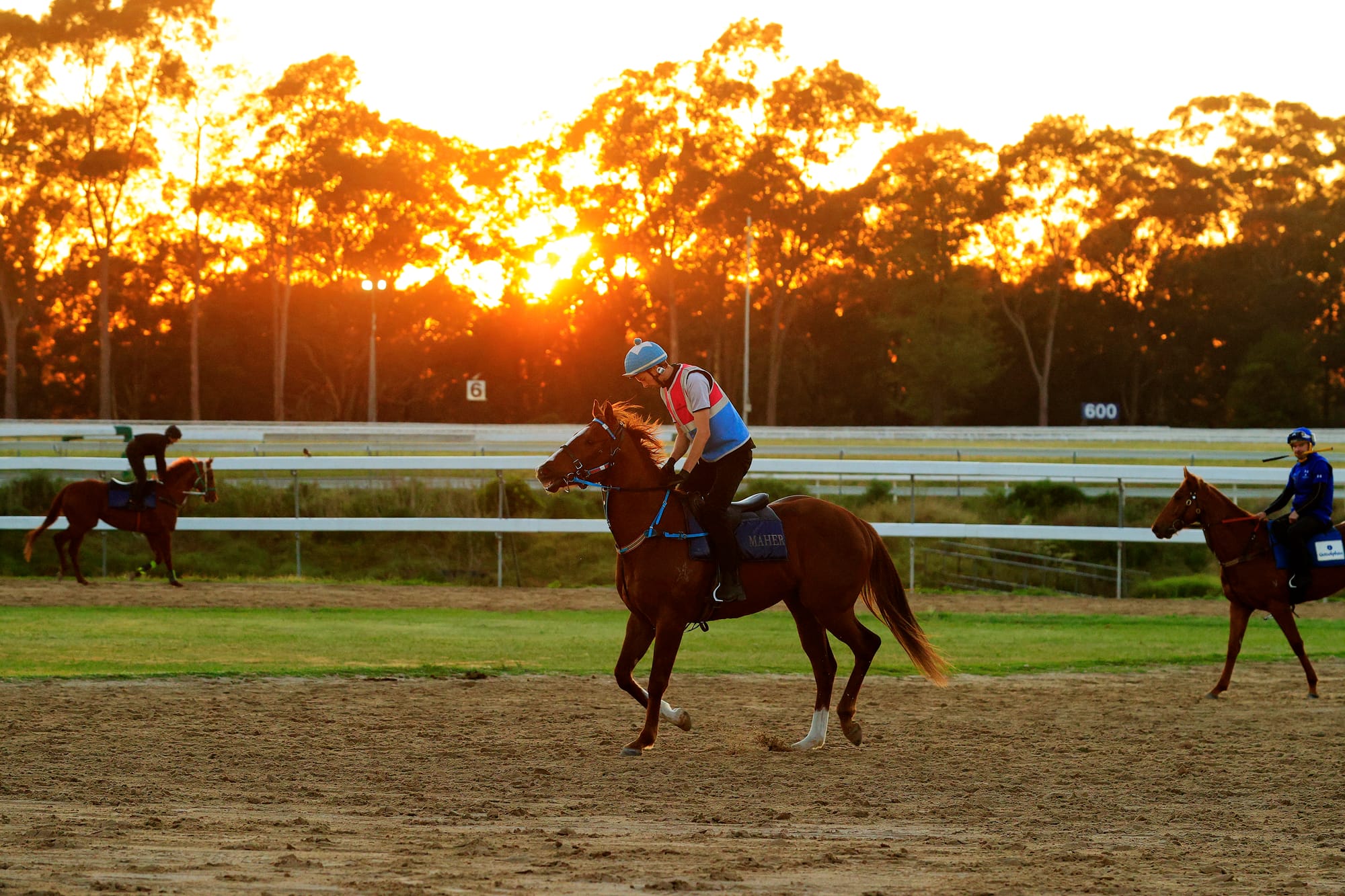
Despite its age, the Warwick Farm course proper rarely generates the scrutiny and debate that a track like Randwick receives.
Reduced racing traffic is one of the reasons explained for Warwick Farm standing the test of time.
Largely because of inferior wagering turnover, Warwick Farm is no longer considered viable as a Saturday racing venue.
Important meetings such as the Warwick Stakes (now Winx Stakes) in the spring and the Chipping Norton Stakes (now Verry Elleegant Stakes) in the autumn, which were once a source of pride for Sydney’s southwest racing community, have been moved to Randwick.
Bren O’Brien
It also shares midweek and public holiday workloads with the Kensington track at Randwick and Canterbury.
There is a school of thought that Warwick Farm’s decreased schedule has given its course proper longevity it might not have otherwise had, providing consistency in its racing pattern, which isn’t found at other Sydney racetracks.
“Some people are a bit gun shy about rebuilding the Warwick Farm course proper,” one industry insider said.
“They’re worried that if they do go and spend money on it, they will ruin it.
“It seems science when it comes to horse racing tracks is not an exact science, that’s for sure. Look at Eagle Farm now. And the Gold Coast.
“It’s an interesting one. Canterbury hasn’t had an upgrade for so long, but it’s perfect most of the time.”
“It seems science when it comes to horse racing tracks is not an exact science, that’s for sure.”
Warwick Farm’s future as a training and racing centre has been the source of speculation for two decades.
In 2004, Racing NSW proposed closing the racetrack, which accommodates 700 horses in training, and relocating it to Horsley Park.
The size and suitability of Warwick Farm for a major redevelopment has surfaced again as part of a parliamentary ‘call for papers’ over a proposed sale of Rosehill in a meeting between Racing NSW and the NSW Government Cabinet Office in November.
Under the ATC’s proposal to redevelop Rosehill for housing, a significant portion of the estimated $5 billion from the sale would be invested in Warwick Farm to make it a state-of-the-art racing and training centre.
It has since been revealed that Racing NSW has concerns about Warwick Farm becoming a shopfront for the thoroughbred industry in western Sydney.
Warwick BarrRelated Articles
O’Brien on Monday – Shooting the breeze, Froggy’s tears, Maurice flying high and a happy correction
In this week’s O’Brien on Monday, with Tim still on leave, Bren digs into the debate over breeze-up sales prompted by an agent’s opinion piece, reflects on an emotional night for one of Australia’s most successful jockeys, examines Maurice’s strong start to the season and issues a correction he is more than happy to make.
Gallery: Stars of Saturday – Caulfield and Randwick
All the star performers from Saturday’s stakes racing in Melbourne and Sydney over the weekend from the perspective of photographers from The Image Is Everything.

Straight Talk – A looming leadership shake-up, a way back for Weir, the breeze-up debate and the WA TAB
This week on Straight Talk, Sam Doran and Bren O’Brien discuss the growing uncertainty around racing’s leadership ranks, the sport’s latest animal welfare image challenge, key developments in bloodstock and breeding, and renewed questions over the future ownership of WA TAB.
