
When were Australia’s major racetracks last renovated?
Warwick Barr takes a look at the most recent major renovations for Australia’s metropolitan racetracks.

NEW SOUTH WALES
The Kensington inner circuit at Randwick is the newest racetrack in Sydney but it has been a problem child since opening in 2001.
So much so, it is the most recent Sydney metropolitan racetrack to receive a rebuild.
Much-maligned for a lot of its existence, the Kensington track has been through several incarnations.
After staging the then-Australian Jockey Club’s flagship Epsom Handicap-Metropolitan Handicap meeting in 2001 when the Randwick course proper was out of action, it was mostly downhill for the track.
Remedial work was carried out in 2003 but racecourse manager Norm James said he wasn’t about to “high-five anyone” because the controversial track “had let us down before”.
After spending two years in hibernation, the track was finally ripped up in 2016 when it was deemed no longer fit for competitive racing.
Kensington was reinstated to the NSW racing roster in early 2018.
VICTORIA
Longevity has been a hallmark of Melbourne’s metropolitan racing surfaces.
The Caulfield course proper has been in action since the mid-1990s, although had a renovation last year.
Flemington is a jewel in the crown since it was rebuilt following the 2006 Melbourne Cup carnival.
Featuring cambered turns and new drainage, the new track cost the Victoria Racing Club $12 million. The level wall put in to protect the course recently drew political scrutiny after the Maribyrnong River flooded nearby streets in 2022.
The Moonee Valley Racing Club’s StrathAyr track, a turf surface built on a sand and mesh base, was installed in 1995.
It will be pensioned after the 2025 Cox Plate meeting as part of a $2 billion redevelopment of the racecourse.
An inner racetrack called The Heath opened this year at Caulfield, about 12 months after the first sod of soil was turned on the project.
Two meetings so far have been held and it has been given the seal of approval from jockeys and trainers.
QUEENSLAND
Eagle Farm, Brisbane racing’s headquarters, was closed in 2014 for its first comprehensive refurbishment in more than a century.
With an initial cost of $10 million, Racing Queensland took over the construction of the new track.
It’s been anything but smooth sailing despite reopening in 2016.
The track received widespread criticism amid claims of botched renovations and refurbishments, forcing a series of closures in a stop-start return that left trainers and jockeys continually frustrated.
Brisbane Racing Club officials were forced to shift marquee winter carnival races such as the Stradbroke Handicap across the road to Doomben
A reported $1 million was spent on maintenance during 2020 before there were calls in 2021 for the track to be ripped up for a third time.
On the Gold Coast, a rebuild of the course proper was completed in time for the Magic Millions meeting in January.
 Bren O’Brien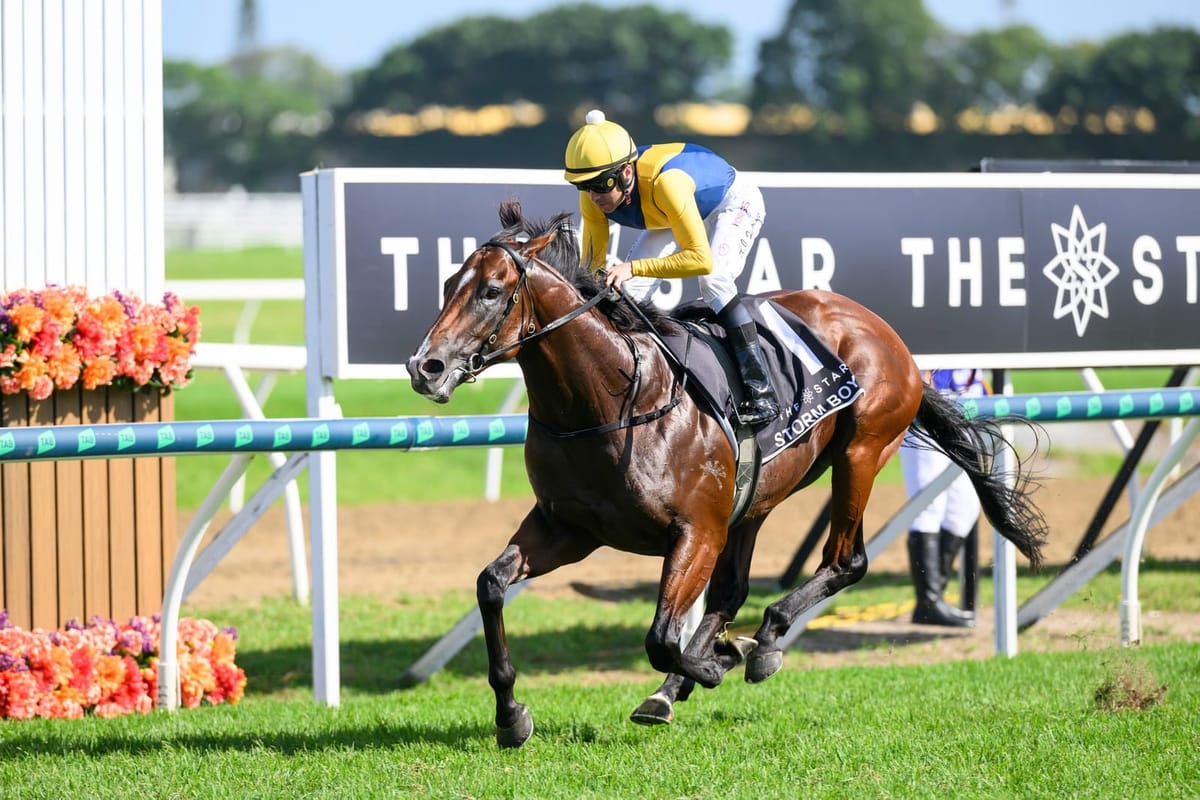
But it hasn’t been raced on since March when heavily criticised for the kickback it produced, forcing the recent Hollindale Stakes meeting to be switched to the Sunshine Coast.
The Gold Coast Turf Club’s inaugural meeting under lights also fell by the wayside and turf racing isn’t expected to resume until August at the earliest.
WESTERN AUSTRALIA
Two city tracks share the workload for the Perth racing industry – Ascot and Belmont.
Ascot is used through the warmer months of the year before going into hibernation towards the end of autumn when Belmont carries the winter workload.
It’s been two decades since Ascot was completely rebuilt, and there is a consensus that an upgrade is due to create a new sand profile
The Ascot racing surface is especially vulnerable when it rains during a meeting but an exact timeframe for a reconstruction hasn’t been established.
Belmont, with a constant and even drainage rate, continues to power on and is the focus of Perth racing for two meetings each week between May and October.
The course proper’s rail movement is expansive, from true to 9m on Saturdays and 12m to 21m for midweek fixtures.
Belmont has figured in a recent makeover with a realignment of the chute for 1000m starts.
The new chute, which involves 200m of rebuilt track, has moved from a 90-degree angle to 120 degrees.
On the West Australian provincial circuit, Bunbury received a complete rebuild in 2023 in an overhaul that also included inner tracks.
SOUTH AUSTRALIA
Since the closure of Cheltenham Park (2009) and Victoria Park (2007), the South Australian Jockey Club (SAJC) has almost exclusively raced at Morphettville.
The track was resurfaced and renovated in 2002 and seven years later an inner track known as Morphettville Parks was opened to help split the workload.
Costing $7.2 million, Morphettville Parks allows the SAJC to stage 70 meetings each season.
South Australia is also home to one of Australia’s newest racetracks with Murray Bridge reopened in 2019.
Gifford Hill has given Murray Bridge a presence alongside Australia’s premier race meeting on eight Saturdays a year. $35 million was spent on the new racecourse about an hour’s drive from Adelaide. Gawler (four) and Oakbank (one) also host Saturday meeting.
TASMANIA
Hobart’s Elwick Racecourse underwent a $12 million major rebuild in 2019 but it encountered problems less than a year after its reopening.
Racing had to be shut down on the eve of the Tasmania summer carnival in late 2020 because of safety concerns surrounding the new Strathayr surface.
TasRacing officials sent an SOS to prominent Melbourne-based track managers Liam O’Keeffe and Marty Synan when loose turf plugs made the surface too dangerous for racing.
Trainers and jockeys were up in arms about the state of the track, forcing the Tasmanian Guineas meeting to be switched to Launceston.
However some quick remedial work ensured the Hobart Cup meeting went ahead in February 2021.
The track has raced without any significant issues since.
AUSTRALIAN CAPITAL TERRITORY
The Thoroughbred Park course proper was closed in 2006 and reopened in October 2007 as the second stage of an upgrade to the track and training facilities.
The track was reshaped to improve camber through the turns, and a new irrigation and drainage system was installed.
During the reconstruction, Canberra’s meetings were held on a synthetic surface known as the Acton track, built at a cost of $2.25 million in 2004.
Related Articles
What we learned from Doncaster day – Sheza star, Star a queen and King creates history
James McDonald and Chris Waller’s Group 1 double was completely overshadowed by a brilliant filly, a mare who is now Australia’s best sprinter and Rachel King’s piece of Australian racing history.
Racing’s burning questions as PM moves on wagering advertising reform
Racing has long expected a carve out from any federal gambling advertising restrictions, but even with an exemption, a significant shift in how bookmakers market to customers will have a commercial impact on the thoroughbred industry, writes Bren O’Brien.
Across hemispheres – The Piggott-Pilkington link behind Inglis Sires’ bid
There are no borders in racing anymore, and Am I Dreaming’s shot at the $1 million Inglis Sires’ sits squarely in that space, shaped by trainer Jack Pilkington and bloodstock agent Jamie Piggott’s international footprint.