
A glimmer of light emerges following dark times for South Australian racing
Amid a perfect storm of funding cuts, reduced revenue, government indifference and hiked taxes, South Australian racing was in a bad way five years ago.
Once the home of racing dynasties like the Cummings, Hayes and Hawkes families, serious long-term concerns were held by major breeders, trainers and owners for the sustainability of the South Australian industry.
Bit by bit, the rebuild has begun and this week Racing SA put forward a three-year strategic plan that champions sustainability and ambition.
Titled ‘Racing Together’, the strategic plan outlines the next three years of priorities and initiatives for Racing SA and signals an upswing in industry positivity. Has racing finally turned a corner in South Australia?
“I’d like to think it has,” Racing SA CEO Vaughn Lynch told The Straight.
“We acknowledge there is a lot of work in it, but we’re very proud of our organisation. We run really lean and we put as much back into our industry as we can,” he says.
“We’ve set ambitious goals and it’s on me to then make sure we’re resourced appropriately to deliver them. There may be some we fall short on, but it’s still important to have these ambitious goals.”
Lynch was appointed CEO in November 2022, four years after the South Australian industry was flattened by industry cuts.
Blaming a bookmaker backlash over a newly introduced Point Of Consumption (POC) tax, the state regulator had to slash prize money across its flagship races in late 2018, most notably two Group 1 races – the Robert Sangster Stakes and The Goodwood.
These races were respectively lowered from $1 million to $600,000 and $750,000, in addition to further funding cuts to infrastructure projects.
South Australia was the first state to impose a POC tax and, while its introduction to other states also delivered the racing industry a slice of that revenue, South Australia’s ailing thoroughbred industry initially missed out.
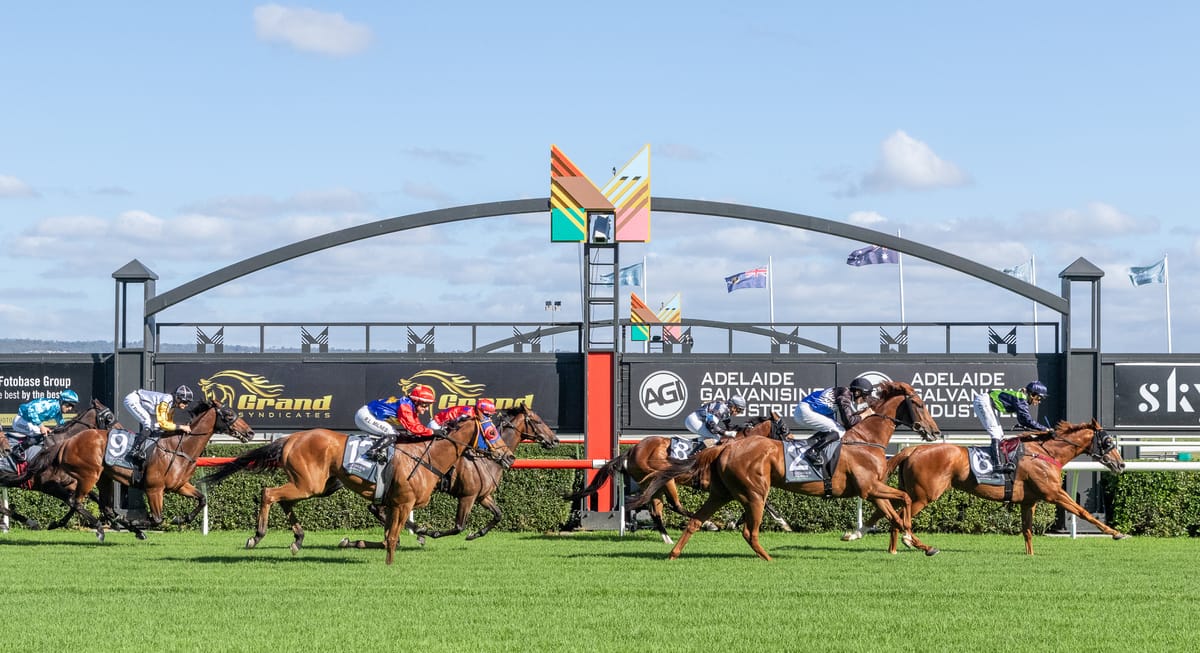
Today, it receives back 20 per cent, a figure that was doubled only last July from its original 10 per cent.
“We are operating at a structural disadvantage down here, there’s no doubt,” Lynch says. “We get a smaller percentage of the POC than any other state in Australia, and by a significant margin than some of the other states. But that’s the footprint we’ve got and we’ve got to work within those boundaries.
“We’ve got to wring the rag dry and we’re proud of running lean, but we acknowledge that we need to continue to deliver to get the very best for the industry.”
When the POC tax was first introduced in South Australia in 2017, wagering service providers (WSPs) reacted negatively, initially refusing to do any wagering-based promotion for the state’s racing. The knock-on effect was immediately felt through a government shortfall which hit the industry’s bottom line.
By late 2018, things hit rock-bottom when Frances Nelson, the then-chair of Racing SA, declared that all she wanted was a level playing field for her state, that South Australia should be able to compete sustainably on its own terms.
Her announcement of cuts had included slashing the Robert Sangster and The Goodwood purses, leaving the state without a million-dollar feature race.
“We’ve set ambitious goals and it’s on me to then make sure we’re resourced appropriately to deliver them. There may be some we fall short on, but it’s still important to have these ambitious goals” – Racing SA CEO Vaughn Lynch
Trainers were not only vocal about the cuts; they threatened relocation if things didn’t improve. Jockeys, breeders and owners declared the same. South Australian racing was going backwards, they said.
The POC tax was at the centre of everything, and Lynch says a transition to receiving back 10 per cent of what the government collected was critical to South Australia.
Now it’s 20 per cent, but this still falls well short of most other states, in particular the 80 per cent received back from the POC tax proceeds by Queensland and Tasmania, and the 50 per cent Victoria will begin to receive later this year. New South Wales is getting back 33 per cent.
“It gave us something, but it’s still not to the point of the other states, and that’s something we are continuing to work on with the government,” Lynch says.
While the POC proportion returned to the industry is low, the pie is growing. The amount of money collected through what the South Australian government calls the Betting Operations Tax grew from $34 million in 2019-20 to $82 million in 2022-23.
 Jessica Owers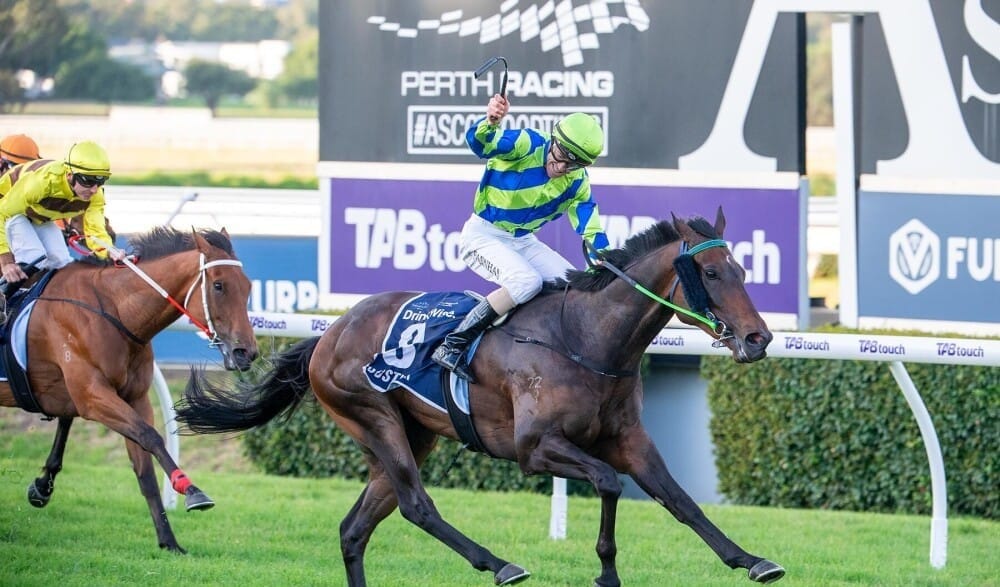
That bump in revenue, plus the hard work of Racing SA, has enabled a much-improved relationship with the state Labor government, led by Premier Peter Malinauskas.
“I don’t think we’ve ever had a stronger relationship with government than we have now,” Lynch says. “It’s crucial going forward that that continues, and it’s a priority of ours that it does continue. It’s also vital for the industry, no two ways about it.”
“A major example of that was getting the POC pass-through up to 20 per cent, but we’ve also involved government in a lot of our thought processes outside of this issue.”
Recently, Racing SA brought Katrine Hildyard, the state’s Minister for Women, along to a session involving its female apprentice jockeys. It was an everyday way to remind the government about industry input into employment, opportunity and inclusivity.
“We’re keeping government informed about all of our activations, whether it be welfare, education or racing,” Lynch says. “We need to be transparent about how we spend our money and what we do, and that’s the way I run this organisation.”
The three-year strategic plan released this week has seven priority areas, the scope of which range from raceday experience and racing’s reputation to integrity, revenue growth and labour. It’s a busy document, and Racing SA will be busy delivering it.
“I don’t think we’ve ever had a stronger relationship with government than we have now.” – Vaughn Lynch
As part of its funding agreement with the state government, Racing SA is obligated to produce such documents, but Lynch is confident that the strategic plan won’t sit on a shelf at headquarters. It will be active through to 2026.
“We’ve written this plan as a working document, not a file that will sit in a cabinet to be checked in three years,” he says. “This is live within the organisation, and we’re working on putting the resources together right now to meet those deliverables.
“It’s open to everyone to read, from government right through to anyone with an interest in racing. All I can add is that I guarantee we’re using this as a working plan, and it will be front and centre of everything we do within the next three years.”
Lynch said the title of the plan, ‘Racing Together’, was important because inclusivity and union within racing were key priorities. He said robust discussions within the industry were necessary, but agreement on a pathway forward was probably the most important message out of the plan.


But is positivity enough for South Australian industry participants? What about reinstating prize money levels, in particular The Goodwood and Robert Sangster purses? As it stands, they are South Australia’s richest races at $750,000, but fall a long way short of eastern states’ levels.
The reinstatement of those races to seven-figure status would be an important signal to participants of the industry’s recovering health, and Lynch reiterated Racing SA’s faith in its Group 1 features.
“The Sangster has never been stronger than it was last year in terms of participation,” he says. “It’s a very unique race, being a 1200-metre Group 1 for fillies and mares, so it’s a real target race for owners and trainers. It has never rated as high as it did last year, so I’d have to challenge that it’s taken a hit.
“But we’re certainly aware of these races’ status in the overall Group 1 footprint and it would be good to be able to address the prize money issue.”
Last year, in its 2023 annual report, Racing SA published a net operating surplus of $7.14 million, a huge step forward from the $1 million loss announced in 2018.
Chairman Rob Rorrison declared that the financial performance, enriched by the 20 per cent POC pass-through, was enabling Racing SA to increase prize money and deliver on its infrastructure promises.
He said the trajectory was positive for the South Australian industry and complacency unacceptable, but conceded “while the base we are working from is markedly improved, there are many more challenges that we must meet”.
Related Articles
Tech firm BetMakers in trading halt as Tabcorp reports swirl
ASX-listed BetMakers has entered a trading halt pending an announcement, with the technology company linked to a possible acquisition by Tabcorp.

The year the prediction markets broke – Kalshi, the Super Bowl and the questions that remain
With Kalshi facilitating over US$1 billion of trading volume on Monday’s Super Bowl and rival Polymarket also reporting a massive surge in trade, America’s latest betting revolution has gathered further steam, but there are a host of burning questions around prediction markets.
Caught short – Investigations launched over Hobart Cup distance bungle
Multiple investigations have been launched into a blunder which saw one of Tasmania’s biggest races, the Hobart Cup, run short of its advertised distance on Sunday.