
A lot in play and at stake as ATC’s show-cause process resumes
A crucial meeting between Racing NSW and the Australian Turf Club is set to provide a key insight into the ongoing relationship between the regulator and the state’s biggest racing club, writes Bren O’Brien.
COMMENT: The Australian Turf Club’s long wait to see if Racing NSW will force it into administration may well continue after Thursday’s meeting regarding the show-cause notice issued by the regulator in September, but it will at least know where it stands in its fight for independence.
There are two schools of thought on how Racing NSW will approach the meeting with the ATC.
The first would be a co-operative discussion on how to get the ATC back on track, across both its board and executive functions, following the resignations of three directors in the space of two months and the departure of former chief executive Matt Galanos.
The ATC’s four remaining board members, Tim Hale, Caroline Searcy, Annette English and David McGrath, bought some time over the Everest carnival period to mend some fences and rally the troops, hoping to show Racing NSW that the challenges it faced can be confronted collectively by the industry.
But the fear is that the show cause process will be more combat sport than kumbaya.
Racing NSW lit the fuse on this with its initial show cause notice on September 19, which was followed up four days later by a damning “notice to participants” outlining their reasons, authored by chair Saranne Cooke.
Cooke has been viewed as a measured presence in dealing with participants but was unequivocal in her language in that correspondence of September 23.
The only concession Racing NSW has made since then has been a delay of the show cause process to allow the spring carnival to proceed without the ongoing “street battles” between the highly factionalised NSW racing industry.
But the ATC would do well not to think this ceasefire is a denouement of hostilities. As previously reported in The Straight, Racing NSW does not have a habit of resiling from such matters.
The ATC has its own decision to make here. Does it walk into Druitt Street on Thursday with bouquets or brickbats?
Specifically, does it try to argue that Racing NSW’s show-cause case has been falsely prosecuted, or does it try to find a way to work with the regulator on addressing those concerns?
The spanner in any plans the ATC may have is that wildest of wildcards, Independent MP Mark Latham.
Latham, who did much of the political heavy lifting for those who successfully fought the proposed sale of Rosehill, including chairman Hale, has now found himself on the other side of the argument.
Yep, Mark Latham and Peter V’landys, the two men who traded personal barbs from close range in the middle of a parliamentary inquiry just last year, are now on the same side, a move that could prove a crucial leverage point in the whole ATC situation.
Latham, incensed at being evicted from Randwick last month, has fallen out dramatically with Hale, whom he has known for more than 30 years.
The Straight understands he and another witness have provided sworn affidavits to Racing NSW that accuse Hale of leaking privileged information to the politician during the Rosehill debate.
In a truly bizarre set of circumstances, Racing NSW has been prosecuting charges against Latham for a verbal attack on the now ATC chief executive Steve McMahon at the racetrack in April.
If the accusations against Hale are sustained, it would place his position as chairman and board member of the ATC under enormous scrutiny.
Why does that matter? Well, as we mentioned, the ATC is down to a bare minimum of four members. If Hale were forced to step down from the board, they would not have the quorum to operate. It could be forced into administration by default.
Under the ATC constitution, the board could have acted to increase its numbers after the departure of Peter McGauran, Ben Bayot and Natalie Hewson via casual vacancies, but The Straight understands current show-cause action has prevented this from happening.
Racing Minister David Harris can also appoint ATC board members but when asked about it in parliament earlier this month, he simply said that advertising for the vacant roles will commence when a selection panel is constituted.
That is symbolic of the “hands-off” approach Harris has taken since the political turmoil erupted in the NSW racing industry when the Rosehill proposal became public nearly two years ago.
You can see how the ATC is painted into a corner on the issue. It could opt to concede that Hale will step down as chairman while Latham’s accusations are further investigated, but it is not known if that would satisfy Racing NSW.
In what has become a drawn-out and politically messy situation from every angle, the ATC should be preparing for all eventualities when Thursday’s meeting begins.
However, it is unlikely to take too long before Racing NSW shows its hand on how it intends to pursue its ongoing relationship with the club.
Author

Related Articles
Asian Pattern Committee to meet on Australia’s black-type uncertainty
Asian Pattern Committee delegates are set to meet this week to discuss Australia’s black-type program and its place within international conventions.
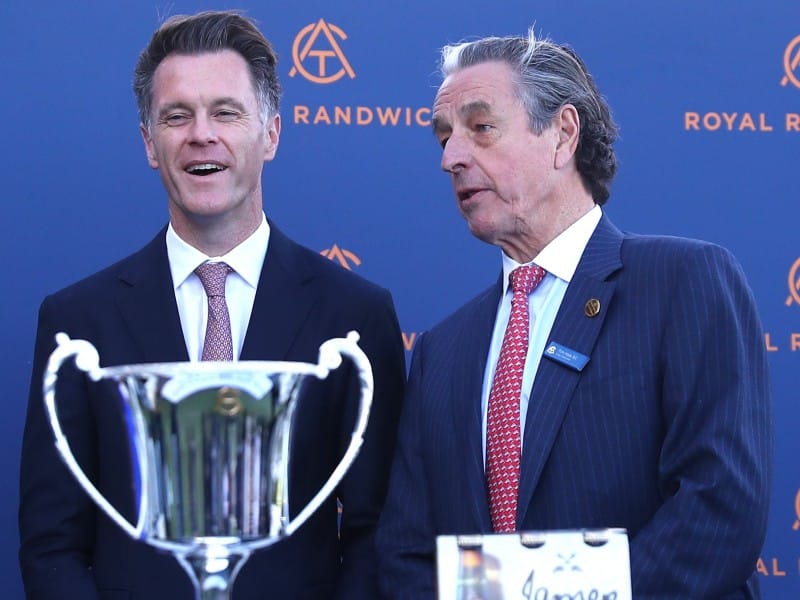
‘Ongoing engagement in the best interests of NSW racing’ – No resolution to ATC’s show-cause meeting with Racing NSW
The respective boards of the Australian Turf Club and overarching regulator Racing NSW have agreed to continue dialogue about whether the organisation should be placed into administration.
VRC posts sixth straight loss, but points to positives in balance sheet turnaround
The Victoria Racing Club is confident that it is on the right financial trajectory after staging a $17.4 million improvement on its balance sheet in 2024/25 under the reign of new chief executive Kylie Rogers.