
“That’s what makes this one special – 2570 owners” – A micro solution to racing’s macro problem
Forty-four years after winning the Preakness Stakes for the first time and just shy of his 89th birthday, D Wayne Lukas is an American horse trainer who is embracing his latest Triple Crown triumph with a modern-day twist.
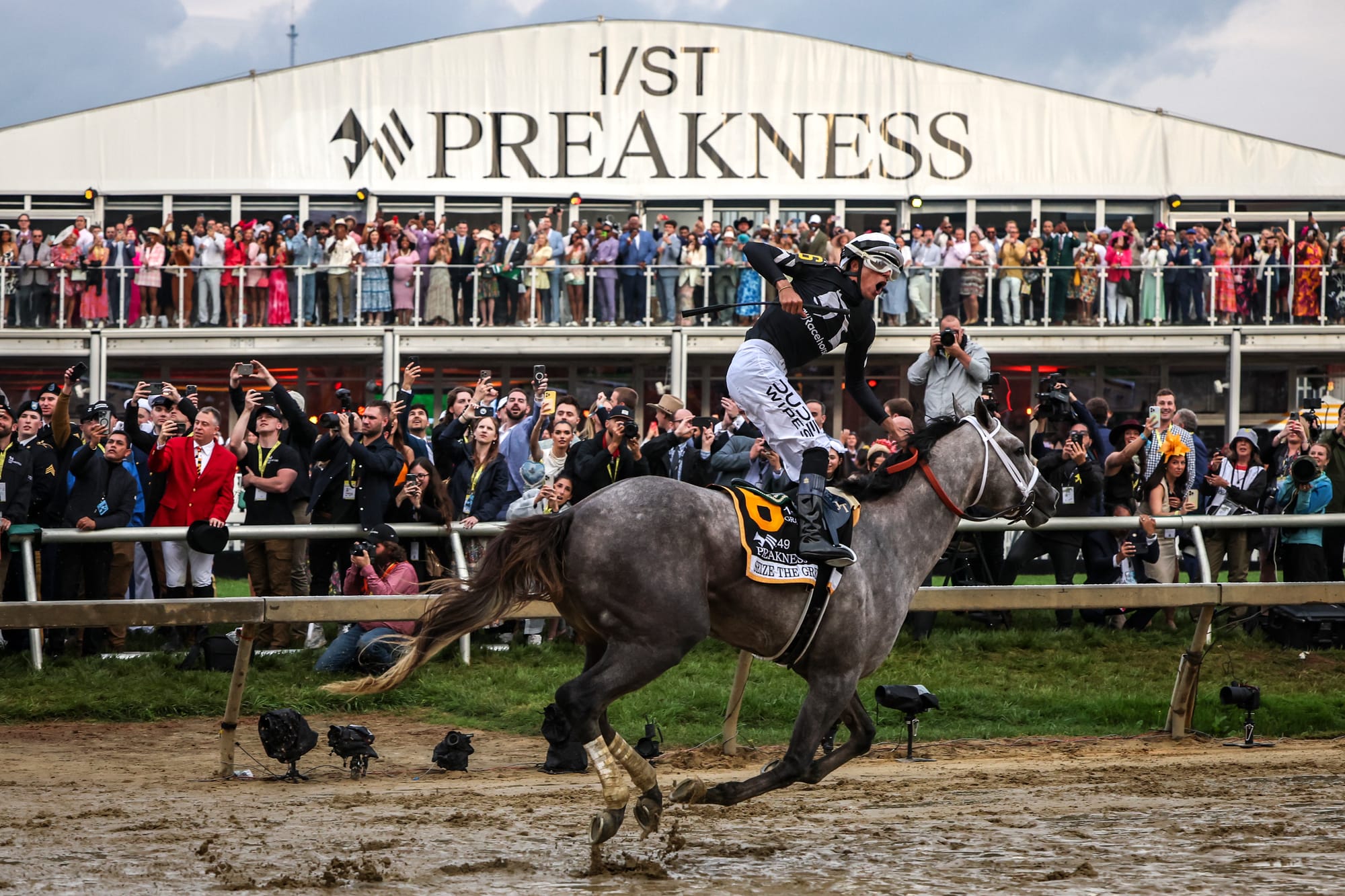
When Seize The Grey made all the running to win the Preakness, he delivered a sixth win in the race for Lukas, a revered figure in American racing.
At the same time, it showed that there is a place for a horseman of Lukas’s old-school values to coexist and complement a new-age approach to ownership.
Seize The Grey’s win was also a triumph for 2570 owners who purchased micro-shares in the horse at $US127 for each 0.001 per cent of the action.
It’s a syndication model designed to give everyday horse racing fans a viable entry point for an ownership experience in what would otherwise be a hobby that could be beyond their means.
“It’s a helluva concept. It really is,” Lukas told reporters in his post-race Preakness press conference.
“The thing about it is every time we’ve been lucky to win one of these, that it’s been with a different client, and so that is what makes it special. The one before that was a different client.
“That’s what makes this one special – 2,570 owners. Isn’t that something, to make that many people happy?
“To see that many people happy in racing is really special. I’m happy, but I love the fact I could make them happy. That’s what I get paid for, to let them live the dream.”
Seize The Day is raced under the MyRacehorse banner, a micro-syndication model that is the brainchild of Mike Behrens, a former US advertising and marketing executive who created the ownership platform in 2017.
MyRacehorse first made headlines in America when it acquired a 12.5 per cent stake in Authentic, subsequently the winner of the 2020 Kentucky Derby and Breeders Cup Classic winner who now stands at Spendthrift Farm in Kentucky.
In Australia, the micro-ownership concept also emerged in 2017 before Behrens expanded his operation.
MiRunners, and its associated operation The Racing League, are the other significant micro-syndication companies in Australia.
BTX, which focuses on micro-ownership via blockchain, has also entered the market in the past couple of years.
Backed by Spendthrift’s Australian presence and feature a partnership with prominent breeder David Moodie’s Hesket Bloodstock, MyRacehorse Australia opened for business in 2021 while also assessing the UK’s appetite for an ownership approach that could easily be described as a cross between online retailing and a crowd-funding exercise.
It hasn’t worked as planned in the UK but despite Spendthrift’s exit from the Australian breeding scene, MyRacehorse has experienced consistent growth in this part of the world.
More than 40,000 Australian owners are now engaged on the platform.
Its Australian branch is run by managing director Ben Willis and has grown from two to 12 full-time staff with a stable of 60 thoroughbreds on its books.
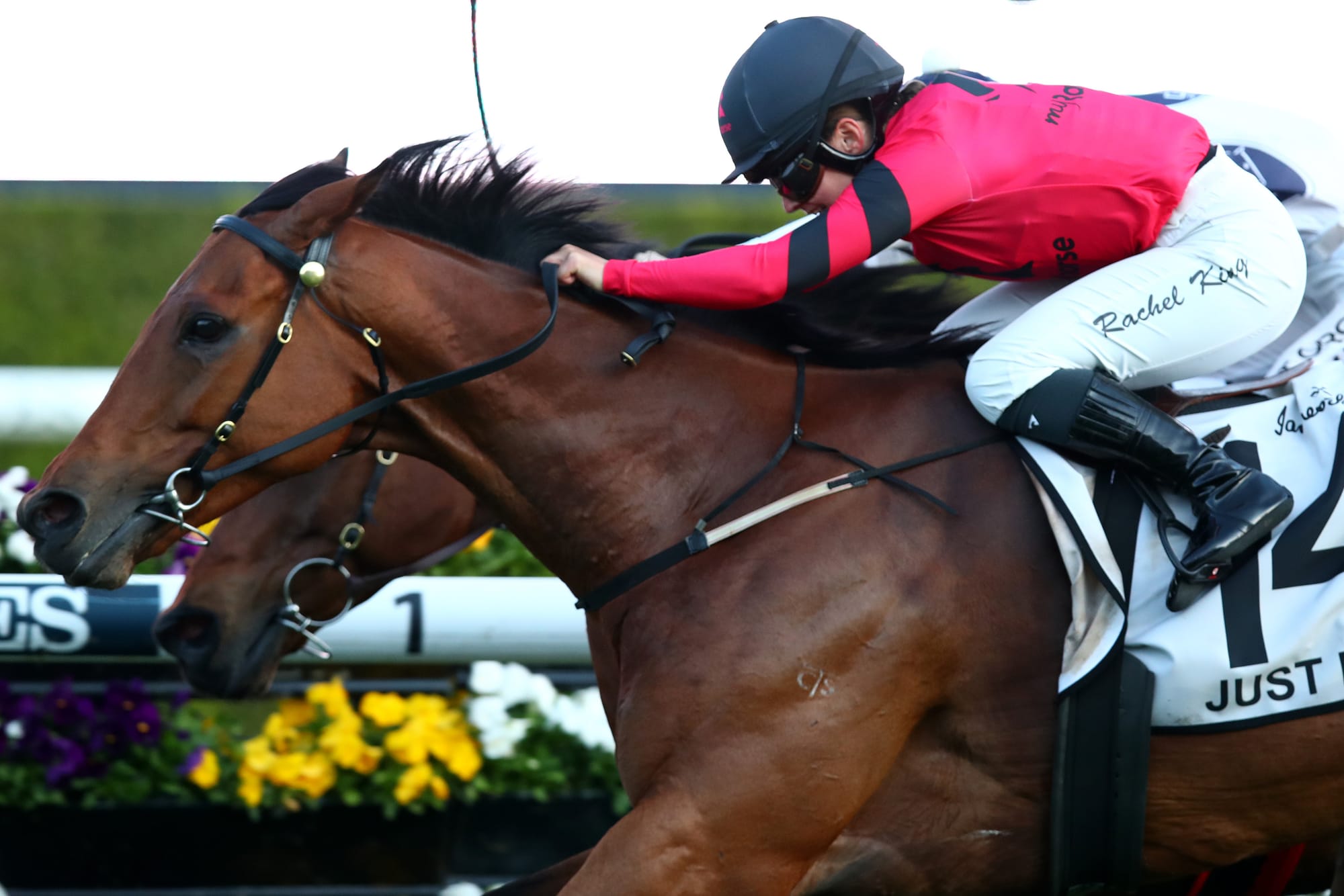
The bloodstock portfolio is a diverse offering with a selection of yearling sales purchases sitting alongside a number of overseas horses that are ready to race when they land in Australia.
Just Fine has been a standout pick of MyRacehorse’s imports, winning a string of races en route to claiming a Group 1 success in last year’s Metropolitan for trainers Gai Waterhouse and Adrian Bott.
From the sales, fillies such as Infatuation and Sneaky Sunrise have emerged over the past two seasons as worthy flagbearers.
Infatuation has banked more than $600,000 from two wins and is stakes-placed while Sneaky Sunrise will be given her chance during the Melbourne spring after scoring at Flemington on Saturday for her 1601 MyRacehorse owners.
Willis, who has a background in wagering, says simplicity is the key to MyRacehorse’s growth in this part of the world.
“Horses like Seize The Grey and Just Fine winning major races certainly helps … definitely racetrack success is the biggest booster of growth,” he told The Straight.
“When those horses win it is a major driver of interest and recognition in the brand.”
Willis says MyRacehorse appeals to potential owners who do not have a direct connection to racing and may, therefore, be reluctant to get involved.
“We’ve tried to eliminate a lot of barriers to traditional ownership,” he said.
“You now don’t have to know a trainer or a mate who has some inside word.
“We try to simplify and provide as much information as possible. It’s pretty much like online shopping.
“You add shares to your cart and you pay and become an owner with just one click. Very simple and straightforward.”
“We’ve tried to eliminate a lot of barriers to traditional ownership.” – Ben Willis
MyRacehorse’s red and black colours are becoming a familiar sight on Australian racetracks and with that exposure comes an awareness that Willis says puts the company in a “very high growth phase”.
“The backbone of what we provide is entertainment, we are competing in an entertainment industry,” he said.
“We strive to focus on an entry point to racing … a bit of a gateway into racing and ownership.”
There are challenges to the micro-syndication model. Despite his racetrack successes, Authentic never proved a gold mine for his 4600 micro-owners and some were left miffed by the lack of a windfall.
By design it represents a fixed price entry level venture, not an avenue for genuine investment returns. Whether that offering provides a pathway to more people becoming involved in greater levels of ownership, time will tell, but the American experience is instructive.
For Lukas, this new angle to ownership delivered pandemonium to Preakness celebrations that might be a blueprint for racing’s future.
“Looking around … everybody hugging. It was really chaotic,” he said.
If chaos rules in this way on a racetrack, micro-syndicates might turn out to be a macro way for racing to recapture a lost audience.
 Warwick Barr
Related Articles
🔒 🔒 A Geelong-term view: Victorian club targets land-use strategy for bold racecourse property improvements
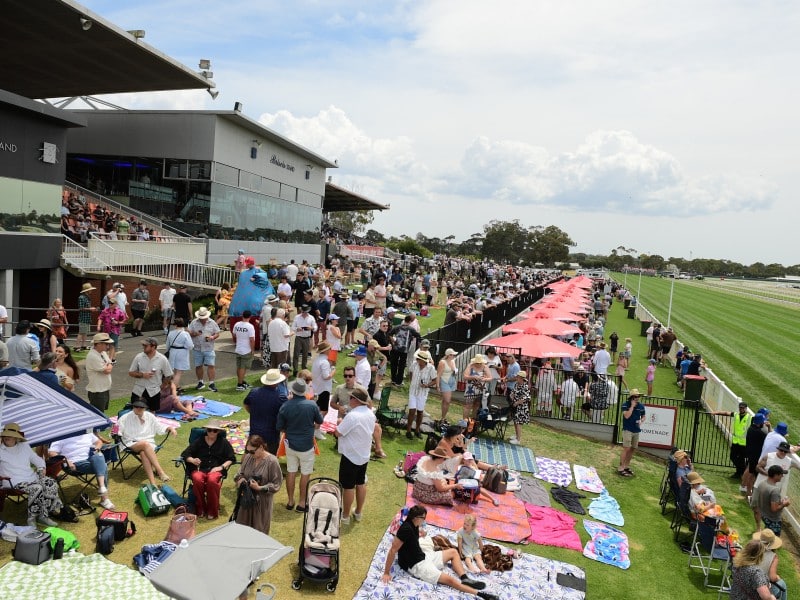
Geelong Racing Club is aiming to transform an underused part of its racecourse into a potential source of long-term funding, while delivering new sporting, residential and community opportunities for Victoria’s second-biggest city.
Straight Talk – RQ’s CEO search, a hot US bloodstock market, Sam Pritchard-Gordon on Cornerstone Stud, plus the latest on wagering reform
This week on Straight Talk, Racing Queensland’s CEO search, Western Australia’s funding review, a buoyant global bloodstock market, ownership and stud changes and gambling reform momentum.
🔒 🔒 Racing builds political capital, as funding model takes the spotlight ahead of WA review findings
The share of wagering tax flowing back to racing looms as a key test for Western Australia’s independent industry review, with calls growing for the government to revisit its current Point Of Consumption Tax arrangement.
