
American thoroughbred wagering continues decline
As data reveals that wagering continues to fall on racing in the United States, the American industry is also confronting a drop in the amount of prize money paid out.
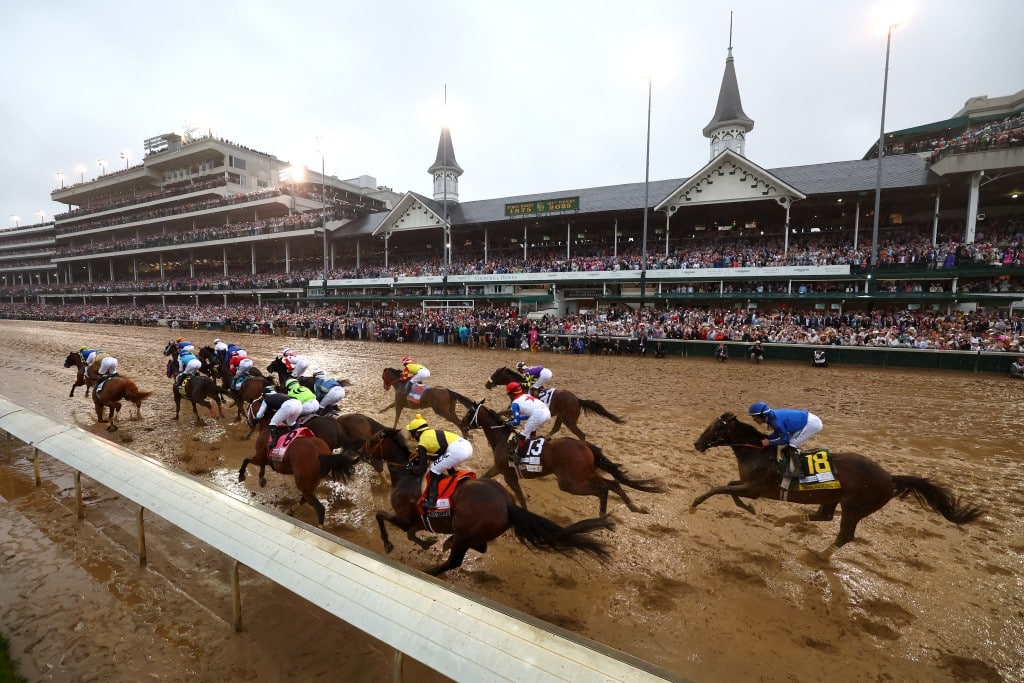
For the sixth time in the past seven years, overall wagering on American thoroughbred racing has fallen, with the US$11.03 billion turned over in 2025 the lowest since 2020.
As racing in the United States faces contrasting challenges, with threats to racing’s funding models in some states, the overall volume wagered on the sport dropped 2.1 per cent in 2025 compared to 2024.
That US$11.03 billion annual figure is 27.3 per cent lower than the peak of US$15.18 billion in 2003. By contrast, wagering on Australian racing has increased from AU$11.1 billion in 2003 to AU$26.3 billion on the latest national figures made available in 2023.
Equibase’s year-end Thoroughbred Racing Economic Indicators were released this week, showing the drop in wagering was particularly pronounced in December, where overall investment fell 7.3 per cent.
Contributing to the drop in the overall wagering on US racing in 2025 was a 5.2 per cent reduction of race days, from 3787 to 3590. The number of race meetings in the United States has fallen from 6578 in 2001.
There was a similar annual drop – 4.7 per cent – in the number of races staged, from 30,852 to 29,401 from 2024 to 2025.
As a result, the average wagering per race day increased by 3.27 per cent to $3.07 million, while average field sizes also increased from 7.45 to 7.47.
Significantly, purses/prize money declined for the first time since 2020, a year that was impacted by a 25 per cent reduction in racedays because of the pandemic, which led to a similar drop in purse money.
While in 2024, purses reached a record high of US$1.31 billion, that slipped to $1.28 billion, a drop of 2.4 per cent.
To give some broader context, according to Equibase, total purses in 2003 were US$1.05 billion, while they were US$1.1 billion in 2013. This is a much slower arc of growth than in Australia, where returns to owners have increased from $365 million to $1.1 billion over 20 years.
Among the challenges to the funding model of American racing is the reliance on casino, slot machine and historic horse racing products, which co-exist on many racetracks.
While these have given racing an opportunity to retain funding levels, they also provide competition for the wagering dollar. There is also the prospect of racecourse owners looking to remove legislative requirements that live horse racing must be coupled with casino gambling on their venues.
The attempts to ‘decouple’ other gambling avenues and horse racing in Florida has led to doubts over the future of several venues, including Gulfstream Park.
The American wagering industry has also undergone a massive shake-up since the widespread legalisation of sports betting thanks to the landmark PASPA decision in 2018.
Online sports betting is now legal in 31 states, while the explosion of prediction markets, which utilise federal commodities law to allow the trading of contracts on outcomes such as sports, is already altering the landscape.
Total handle on legal sports betting in the United States was US$4.9 billion in 2017 and grew to around US$150 billion in 2025.
In contrast to Australia, where the rise in sports betting also enabled wagering on racing to reach record levels, American racing has been largely left behind, with total handle growing just 1.2 per cent since 2017.
However, at least the United States has the advantage of knowing what its wagering figures look like in a quick time frame, with the Equibase data published five days into the new year.
The Racing Australia Fact Book, which covers data from the Australian racing year that ended in July, has yet to be published five months after the season, and it is not known whether it will include national wagering data, which was omitted for the first time in last year’s edition.
Author

Related Articles

Cash crackdown – $5000 limit on unreported bets as AUSTRAC turns up heat on money laundering
Australian punters who wish to bet cash amounts of $5000 or more in venues or on track will now be required to produce photo identification as new anti-money-laundering laws come into effect at the end of March.

A $US187 billion monster – The looming challenge as over 50 crypto-betting platforms offer Australian and New Zealand racing
The sheer size of the unregulated gambling market and the fact that over 50 crypto operators are willing to offer markets on Australian and New Zealand racing present a huge integrity challenge to local racing authorities, a new report has found.

Vouris: Compliance a key capability in fight against the black market
Andrew Vouris, the Entain executive responsible for guiding the company through one of the sternest examinations of compliance culture in Australian wagering history, has urged the industry to focus on “winning the right way”.