
Australian Chinese Jockey Club rides the Fire Horse into the Lunar New Year
The rare Year of the Fire Horse has arrived, blending Chinese tradition and a continuing Australian Chinese Jockey Club ambition to connect heritage, culture, and racing opportunities for a new generation of owners.
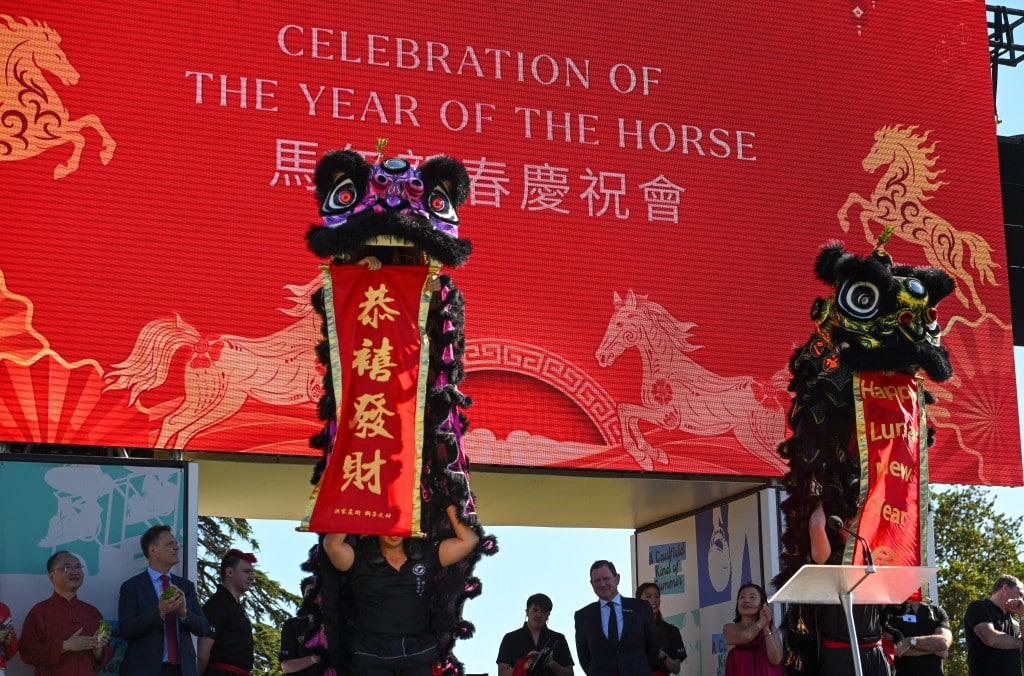
In Chinese tradition, the zodiac is a 12-year cycle, with each animal paired with one of the five elements – wood, fire, earth, metal, and water.
This year belongs to the horse, ensuring Australian Chinese Jockey Club founder Teresa Poon is in her element.
To further distinguish 2026, there is a combination that happens only once every 60 years.
It’s an occurrence that makes Poon, who came to Australia from Hong Kong in 1991, better placed than most to explain what the year of the Fire Horse means.
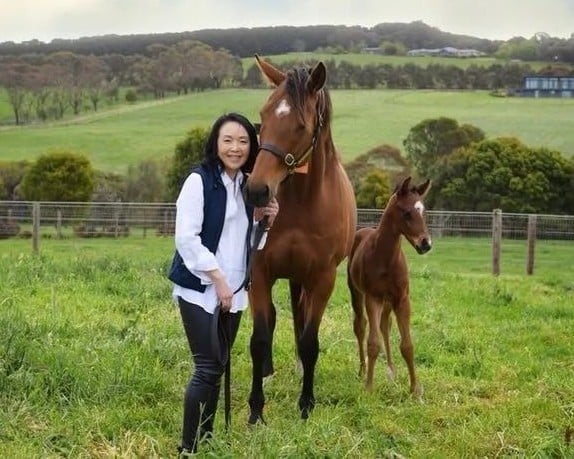
Poon and her partner David Kobritz run Musk Creek Farm in Victoria but she is also a powerful voice for Australia’s Chinese community when it comes to racing.
As an ACJC creator, few are more passionate about connecting Chinese heritage and culture with the opportunities that racing can provide
“The horse is the second most powerful animal in the zodiac, only behind the dragon,” Poon says.
“It is loyal, energetic, and represents the drive you need to move forward in life.”
In Chinese cosmology, fire is the strongest of the five elements, representing energy, urgency, and transformation.
“The Fire Horse is the most powerful; it tells you it’s time to act,” Poon said. “If you want to restart your business, rebuild your family, or reach a new level in life, you’ve got to do it now.”
The horse has long held symbolic significance in Chinese culture, appearing in idioms such as Ma Dao Cheng Gong, meaning “success comes with the arrival of the horse”.
A Fire Horse year is therefore seen as a time of rapid change, bold action and heightened opportunity, encouraging decisiveness and the pursuit of goals with courage, resilience, and enthusiasm.
Across Asia, public celebrations and cultural exhibitions have honoured the horse’s attributes.
More than 98,000 Hong Kong fans packed Sha Tin for the Lunar New Year meeting on Thursday with another 5000 attending Happy Valley, contributing to wagering turnover of almost $326 million.
Besides a Melbourne Racing Club breakfast earlier this week, Poon had been hoping to take the ACJC’s observance to another level on Blue Diamond Stakes day at Caulfield on Saturday.
The ACJC and its members are part of a syndicate that races the Lindsay Park-trained Torture, an acceptor in the Blue Diamond, a $2 million race considered Victoria’s most prestigious for juveniles, before her scratching on Friday.
Debutante Stakes winner Torture’s Blue Diamond bid was highly anticipated among ACJC members but Sydney racing can offer to some consolation.
The syndicate is involved in Group 2 Silver Slipper runner Shiki and the accomplished stayer Just Fine, who resumes in the Group 3 Parramatta Cup.
Just Fine and Shiki each represent an evolving ACJC approach to racing horses since an in-house ownership model was launched.
Bought out of the northern hemisphere as a tried racehorse, Just Fine delivered on the promise of an early return in Australia which Poon admits can be a strong attraction with the Chinese.
“Chinese people haven’t got the patience. They just want to be in the winning circle tomorrow,” she says.
“So buying tried horses is the perfect way. Without my intention of deliberately orchestrating it, it turned out that buying tried horses racing within the five or six months within our purchase is the perfect answer for our Chinese owners.
“It was also the perfect answer to grow the ACJC.”

Canterbury Stakes winner Royal Patronage and a Sydney Cup triumph with Knights Order confirmed the wisdom of that process but the ACJC is also venturing into a domestic market with encouraging results.
“After we taught our owners about success, now we are teaching them to be patient,” Poon said.
“We brought them into two-year-old racing and lo and behold, in the first year, we got Shiki and Torture.”
A Chinese influence on Australian racing is now ever-present since the emergence of Yuesheng Zhang and his formidable racing empire known as Yulong Investments.
Zhang’s outlay in Australia over the past decade has helped supercharge the Australian bloodstock economy but his impact and love for racing doesn’t necessarily resonate with the broader Chinese community who have settled in Australia.
It comes down to perceptions of racing in Asian jurisdictions, according to Poon.
“Whether people come to Australia from Singapore, Malaysia or Hong Kong, they all know about racing because racing is a big part of their life,” she says.
“But it is quite elitist. So if you are not rich enough, you can’t be a member of the Hong Kong Jockey Club.
“When they arrive here in Australia, they just assume that it is just as exclusive as it is in Asia and they probably are also taking part only in the wagering side of the business.”
Out of Australian racing’s egalitarian foundation, the ACJC was founded in 2015 to forge a connection that Poon and Derek Lo thought was a missing link in driving engagement.
“That’s exactly how Australian Chinese Jockey Club started,” Poon said.
Related Articles

Awaiting the facts – Racing Australia publishes Fact Book after delay
Racing Australia’s Fact Book, usually published in December or January each year, has finally made an appearance on Tuesday with the industry none-the-wiser as to the reasons for its delay.
Dubai racing on hold as fallout of Iran conflict spreads
Racing in the United Arab Emirates has been temporarily suspended due to the impacts of the Middle East conflict sparked by military action by the United States and Israel against Iran.
Death of a champion – Melbourne Cup heroine Makybe Diva gone at 27
Three-time Melbourne Cup winner Makybe Diva has died suddenly after a bout of colic.