
Classic’s Angel investors seeking stallion prospect to boost Equine Growth Fund’s fortunes
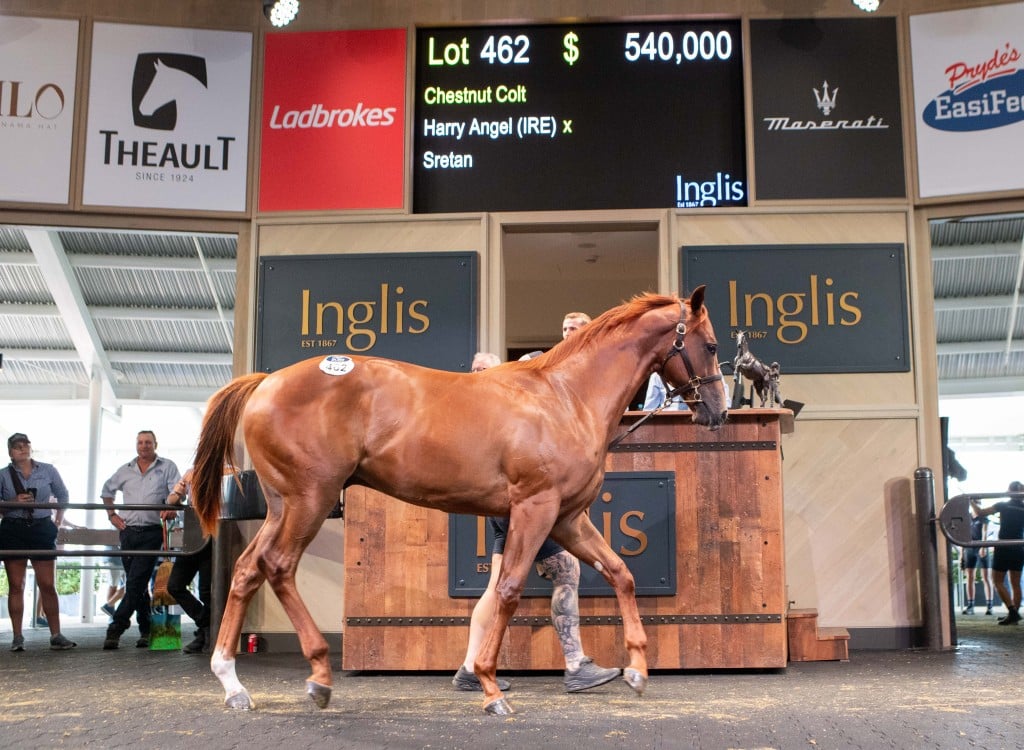
Equine Growth Fund flexed its investment muscle at the Inglis Classic, paying $540,000 for a Harry Angel colt as founder Stefan Pardi detailed the group’s strategy to make a major impression on the Australian sales season.
An international thoroughbred investment group which its founder says is “shooting the lights out” is making good on its promise to buy as many as 100 horses in 2026.
Equine Growth Fund managing director Stefan Pardi maintained that his maiden thoroughbred investment vehicle was returning money to shareholders a little more than a year into its existence.
And the NSW bloodstock industry identity doubled down at the Inglis Classic Yearling Sale by devoting about 2.5 per cent of the second version of fund’s capital on a Harry Angel colt, the brother to Group 2-winning and Group 1-placed Stretan Angel.
Bidding from an upstairs suite at Inglis’ Riverside Stables complex, Equine Growth Fund paid $540,000 for the colt from the draft of Kirks Bridge Farm on Monday, day two of the Classic sale.
“He’s the number one colt in my opinion. I did cross-reference with a few good judges on him. Shane McGrath, I’ll give him a little bit of a plug, was one and I believe he’s one of the best judges in the game,” Pardi told media after purchasing the highest-priced lot of the Classic sale so far.
“He’s a stallion prospect and this is what Equine Growth Fund’s trying to do out of these sales.
“I didn’t really want to stretch myself that far at this sale, but … I just had to go a little bit stronger. I don’t know who the underbidder was, but I’m happy that I’ve got him.”
Pardi was remarkably open about the Equine Growth Fund’s intentions, nearly a month after he said at the Magic Millions that the group planned to buy 100 horses this year in what can be a high-variance pursuit.
“It’s fairly new. We’re hovering at about 58 per cent return in the first fund, so we’re doing pretty well; better than money markets, the way they are at the moment,” he said.
“So, we’re shooting the lights out on our returns.”
He said about 15 people are in the 2026 fund, with $16 million already committed to this year’s bloodstock trading portfolio, which Pardi says will have $25 million at its disposal.
Pardi said the fund has seven staff.
“I put in 10 per cent or 20 per cent of my own money in, so I align myself with my investors. I’ve got skin in the game and I’ve got to make sure I do the right thing by them,” Pardi says.
“Plus, I have a very stringent CIO (chief investment officer) and CEO who really bolt down on what things we buy. We have a stringent criteria, basically.”
A trainer for the Harry Angel colt is yet to be decided, with six or seven stables expressing their interest in having the son of the Darley shuttler ending up in their care.
“The strategy is to buy, I don’t know, maybe 20 or 25 racehorses and the rest is breeding stock, of about 70 or 80,” Pardi said.
The founder of the group understood there was interest from industry observers about the activities of the Equine Growth Fund, but he insists it was being conducted with stringent regulation for the protection of its investors.
“This is the first institutional one (of its type). The others are handshakes and friends, getting together, putting money together, and buying colts and fillies,” he said.
Pardi says the fund was governed by ASIC and it has a separate trustee.
“So it’s institutional grade funding and my CIO and my CEO … are the ones that run it. I’m just there to buy the horses, nurture them and sell them. That’s my job,” he ssaid.
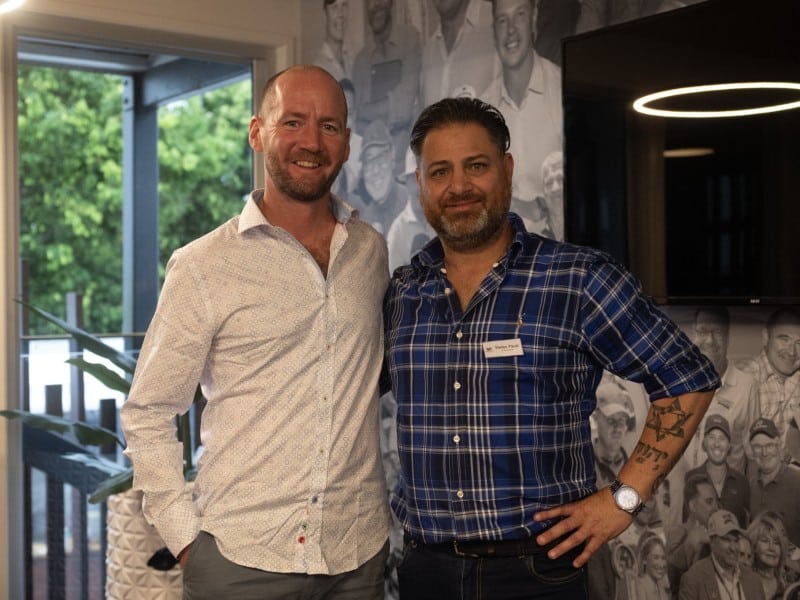
While Pardi suggested the colt could have made considerably more at the Inglis Easter sale, Kirk Bridge Farm’s Brad McCarthy was glad his punt on offering the horse at Classic sale paid off and delivered the Hunter Valley stud with its biggest result.
“I’ve always had a massive, massive opinion of this colt from day one. He was the nicest foal on the farm,” McCarthy said.
“He grew into the nicest weanling, then he grew into the nicest yearling and to come down here and get the support that he got, and all the good judges liked him, so that fills you with a bit of confidence.”
Earlier, Warwick Farm trainer Bryce Heys kept his powder dry on Sunday, but his patience was rewarded on day two with a middle-distance prospect by Castelveccio sold by Arrowfield for $390,000 early on Monday.
Expatriate Kiwi Heys’ training style suggests he’s prepared to play the long game when others aren’t and that will again be the case with the the colt who is out of Panzerfaust, a stakes-performed sister to Group 2 winner Kebede and Group 3-winning sire Panzer Division.
“I think he’ll take time, but he’s quite a big, strong individual, so hopefully he’s got the capacity to be able to train on as an older horse and an older staying horse,” Heys said.
“He’s just the sort of horse that we were looking for, and fortunately not everyone wants that sort of horse
“He’s very well balanced and he’s got great length and we’ve got a couple of horses in the yard at the moment that he sort of reminded us of, which gave us a bit of confidence to buy him.”
After two days of trade, the Classic sale has turned over $39.265 million, up $3 million year-on-year with the clearance rate of 84 per cent also up 7 per cent on 2025.
Inglis Bloodstock chief executive Sebastian Hutch puts the extra spend in part down to more certainty economically.
“I don’t want to be referred to as any sort of economist, but I do think there is a point at which people just grit their teeth and get on with it and at this stage last year, I feel like it was all very (uncertain),” Hutch said.
“We were all waiting for interest rate cuts. Were they going to come, were they not? We hadn’t long had an election this time last year.
“There were a lot of things for people to digest. And at the end of the day, it is unnerving for people.”
The second day’s average was up $9000 on day one, which backed up Hutch’s assessment that it was a stronger session.
“To me, it felt stronger today. Always a level of apprehension coming into Monday after Sunday because we get strong attendance on Sunday,” he said.
“And that sort of environment typically is very conducive to selling horses. Big attendance, lots of people here. On Monday, obviously a lot of people go back to work.
“You feel it’s a quieter day around the complex. But ultimately, everybody who was here was here to do business and a lot of business got done.”
Sale statistics – days 1 and 2
Catalogued 540 (540)
Sold: 402 (373)
Clearance: 84% (77%)
Average: $97,674 ($97,153)
Median: $80,000 ($80,000)
Gross: $39,265,000 ($36,238,000)
Author

Related Articles
Resolute reshuffle – Tutta La Vita sale looms as Ernaux flies the flag
John Stewart remains committed to his Australian interests, despite high-profile mare Tutta La Vita being set for sale on Inglis Digital, with a maiden local stakes win looming through big-money filly Ernaux.
Inglis seeks right balance as it trims Australian Weanling Sale catalogue
Inglis has moderated the size of its Australian Weanling Sale catalogue but remains confident in the foal market following a record result in 2025.
Foal reprieve – Racing Australia’s amnesty opens up second chance for ineligible racehorses
Breeders who have fallen afoul of tighter enforcement of foal registration deadlines will be given a second chance, with Racing Australia announcing an amnesty for horses that had previously been banned from racing.