
Clubbed! – How wagering’s corporate revolution has robbed racing clubs and enriched PRAs
By almost any measure, there has never been so much money in racing. Returns from wagering have grown precipitously over the last decade, particularly benefitting the Principal Racing Authorities (PRAs).
In 2012/13, Racing NSW’s stated revenue/income in its annual report was $104.6 million. Ten years later in 2022/23, that amount stood at $406 million. Similarly, Racing Victoria has grown its topline revenue from $312 million to $554 million in the space of a decade.
Comparisons between the two jurisdictions, while tempting, are difficult to make as their funding models have several major differences. However, the key similarity they do share is that both Racing NSW and Racing Victoria have benefitted from a combination of the ‘race fields’ levy and a substantial increase in thoroughbred wagering.
Over the past 10 years, thoroughbred turnover in Australia grew from $14.5 billion to $26.4 billion, fuelling a similar massive growth in prize money, which has jumped from $554 million to $1.07 billion.
Clubs in trouble
How is it then that while the PRAs are flush with money, the race clubs which underpin the fabric of racing in Australia are in such a perilous financial state?
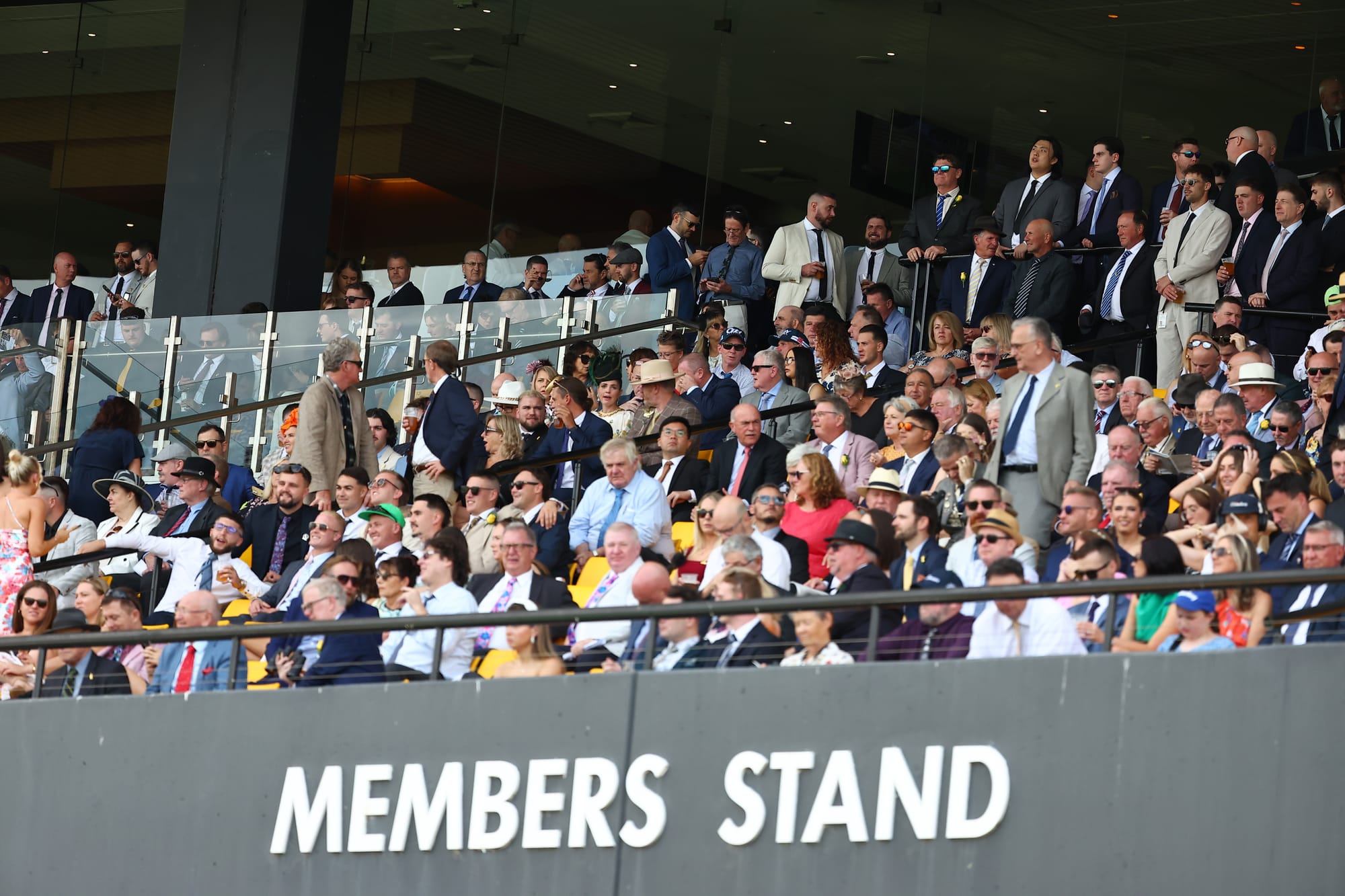
The Australian Turf Club, which generates around 48 per cent of New South Wales racing turnover, is battling for profitability. It recorded a small profit of $364,000 in 2022/23, but it had a $10 million operating deficit, while that deficit was $7 million the year prior.
Similarly, the Victoria Racing Club, which operates Flemington, recorded a $15 million loss in 2022/23, after a near $17 million deficit on core business the year before.
The Melbourne Racing Club, which oversees Caulfield, Sandown and Mornington in Victoria, also reported a loss on its racing business, with other non-racing gaming revenues (read pokies) propping up an ailing racing business model.
Provincial and country race clubs around Australia, the backbone of the grassroots of the industry, are also under significant financial pressure. Those who are in an asset-rich but cash-flow poor state are being forced to consider their options.
The recent example of Goulburn and District Racing Club, which is set to vote on handing over its freehold on its land in exchange for $9.5 million of Racing NSW funding, is just the latest of many examples of clubs having to cash in on their assets in order to assure their future.
There is no greater example of this than what has happened with Rosehill. Confronting a difficult financial future, the ATC has canvassed shutting down and developing the western suburban Sydney course in order to realise what it estimates to be $5 billion in value from the site.
‘Selling the farm’ may mean a secure financial future for the ATC, but it has led to significant opposition from participants, including major trainers Chris Waller and Gai Waterhouse, who see it as an ill-thought-out tactical blunder.
 Bren O’Brien
It’s notable that all three of the metro clubs mentioned have also undertaken expensive infrastructure projects in the past few years. In the case of the MRC, that has prompted planning for the likely sale of Sandown racecourse in order to fully fund the ‘masterplan’ for its Caulfield headquarters.
The pandemic impact
While these one-off infrastructure projects have taken their toll on budgets, it’s also worth noting that the ongoing revenue model of racing at a club level took a massive hit during the pandemic.
The VRC’s overall revenue dropped from $205 million in 2018/19 to $140 million in 2020/21, while the MRC’s slid from $237 million to $189 million across the same period.
The ATC’s ‘racing’ related business also slumped through this period. Commercial revenue, that from sponsorship, membership and events/hospitality, dropped from $74 million in 2018/19 to $48.1 million in 2020/21.
While that revenue has bounced back above pre-pandemic levels now, it has still left a hole in the budgets which has needed filling. It has also put the spotlight on how, while wagering boomed through the pandemic, clubs, particularly NSW clubs, didn’t see the upside.
State versus state
A key difference between the wagering funding model in NSW and Victoria is that in NSW the ‘TAB distribution’, a majority share of the money which comes from the existing agreement with Tabcorp, goes straight to the clubs.
While in theory that should give the NSW clubs greater autonomy, the reality has been very different. As the parimutuel model has declined (and corporate bookmaking has flourished), that TAB funding flowing through to the clubs has flatlined.
In 2014/15, the ATC received $83.5 million from TAB distribution. In 2022/23, that amount had grown slightly to $85.1 million, or 1.9 per cent in nine years. In comparison, across the same period, wagering on Australian thoroughbred racing has increased by 59 per cent, while Racing NSW’s revenue has gone up 288 per cent!
Put simply, the ATC, and the other clubs, have had their wagering revenue tied to an anchored model, while the upside of the wagering boom has flowed to Racing NSW’s burgeoning coffers.
Dependence on PRAs
The ATC’s annual reports show that revenue for the club has continued to increase, from $208 million in 2014/15 to $341 million last year, but increasingly those numbers are being ‘padded’ by Racing NSW’s prize money subsidy.
In 2014/15, that subsidy made up 14.4 per cent of ATC revenue, or $30 million.
In 2022/23, that figure had jumped to 35 per cent, or $119 million. While overall prize money on ATC-run races has rocketed 107 per cent in a decade, only 11 per cent of this increase has come directly from the ATC.
Breaking this down, it’s clear that the ATC has become totally reliant on Racing NSW for the growth of its business.
In comparison, the two major Victorian clubs, who get their industry funding through ‘thoroughbred racing industry distributions’ are less reliant on Racing Victoria. They have also seen an increase in their share as RV’s returns jumped through the pandemic wagering boom.
In 2022-23, 24.4 per cent of the VRC’s revenue came via this source, while for the MRC, it was 30 per cent. Again, the funding models are different, so direct comparison is difficult, but the trend is clear.
Racing NSW’s war chest
And Racing NSW’s increasing financial power extends far beyond funding flowing through to clubs for prize money.
It has used the revenue boom through the pandemic to build a $116 million provision into its books for future ‘Infrastructure funding’.
“This Provision is in addition to the $67 million in grants received from the NSW State Government under the Racing for the Regions Fund, providing a total of $183 million available for capital expenditure,” the 2023 Racing NSW annual report reads.
“These funds will be utilised on a range of projects from construction of stables, new training tracks, course proper works, customer facilities, raceday amenities and jockeys’ rooms (male and female) right across the State. Racing NSW will continue to work with race clubs and participants regarding the allocation of these funds.”
Working with race clubs, as is the case of Goulburn, will possibly see Racing NSW exchange some of these funds for additional land holdings. The Straight has already reported on the $125 million of real estate acquired by Racing NSW since 2018.
Warwick Barr
While clubs battle in the reality of being asset-rich and cash-poor, Racing NSW is using its cash to move itself into an enviable asset position.
And their cash reserves don’t stop there, Racing NSW has also built in a $106 million ‘prizemoney sustainability provision’ “to ensure Racing NSW has sufficient reserves to maintain prizemoney at existing levels for the benefit of stakeholders should wagering revenues decline”.
It has also reserved $36 million in ‘club sustainment provisions’ to be used “to support to Thoroughbred Race Clubs with financial hardship they may run into”.
With such formidable wealth comes formidable power. That has changed the dynamic of the relationships between the PRA and the clubs in NSW in particular.
No longer just a regulator
Some of those who are well-placed to understand the nuance of such arrangements are concerned that this increased power changes the core role of a PRA.
Racing NSW was constituted by the Thoroughbred Racing Act 1996, which sets out its powers as a regulator. But several people The Straight has spoken to on the condition of anonymity have expressed that Racing NSW’s evolving role as discretionary funder of the industry is beyond the original purpose of the Act.
They argue that given Racing NSW’s increasingly powerful position, more scrutiny is required on their activities, with the original legislative framework not designed to support the current level of funding.
Warwick Barr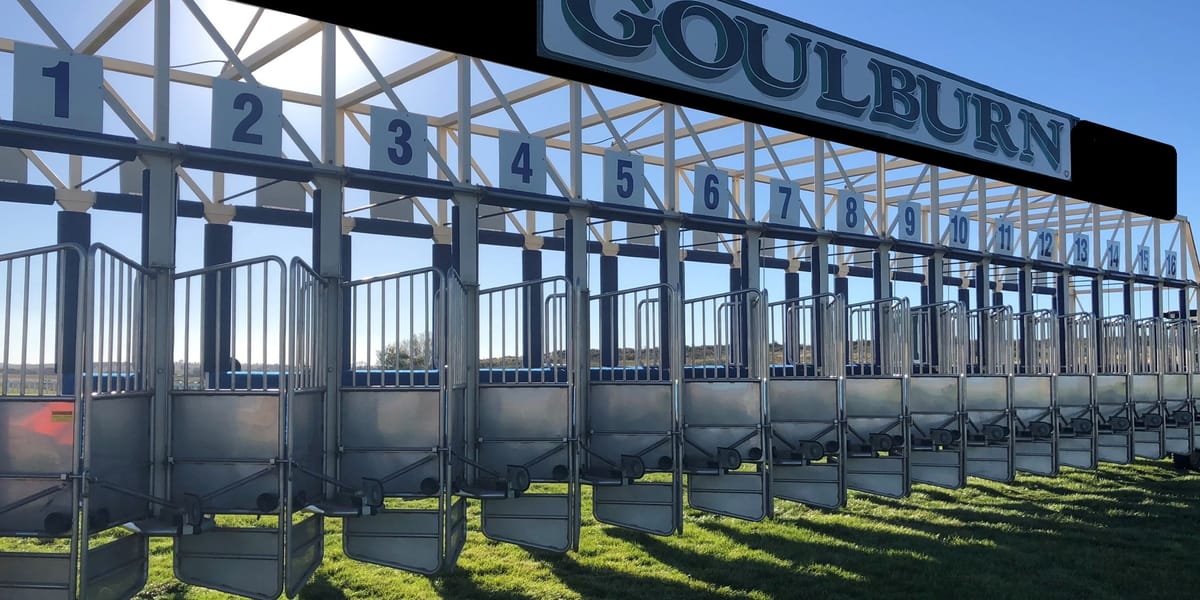
The relationship between the clubs and Racing NSW is also complicated by the fact that while most clubs operate under the Corporations Act, which subjects them to certain responsibilities, Racing NSW operates under the Thoroughbred Racing Act 1996.
Given this, there have been questions raised over whether the takeover of club assets by Racing NSW may breach competition law and draw the attention of the ACCC.
In the case of Rosehill, Racing NSW has stepped carefully, playing a backseat role as the ATC has tried to convince its members to support the redevelopment of one of its most prized assets.
However, there is an increasing expectation that a ‘member vote’ is not the only means to get to the required end, and all options will be considered.
The ‘new’ TAB model
The contrast between the funding models of the two major jurisdictions is set to become even more pronounced after Victoria recently ended its joint venture with Tabcorp, unlocking what RV says is an extra $2 billion worth of value to the Victorian industry over the next decade.
Tabcorp has since said that deal will see it increase its focus on Victoria, which will go from its lowest margin jurisdiction to its highest thanks to the new deal. It has also signed a six-year media and sponsorship agreement with the VRC.
Racing NSW, meanwhile, is in court with Tabcorp, trying to extract more value from its deal which extends until 2033. Tabcorp recently recorded a $732 million impairment charge on its Australian businesses, highlighting its current deal in NSW as a major contributing factor.
All of this in a wagering market that has suddenly hit reverse makes for some interesting times for NSW race clubs in the coming years.
Bren O’Brien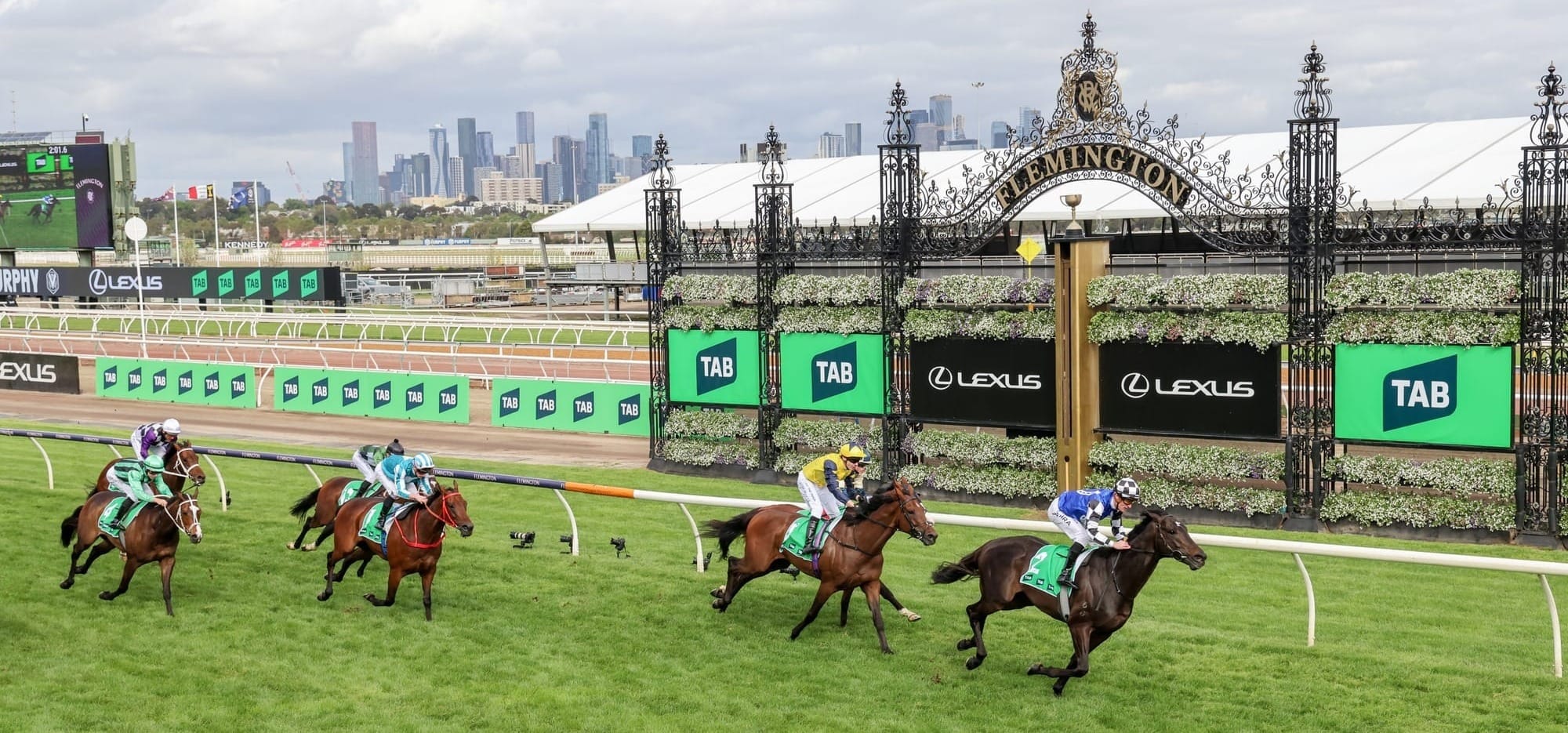
*Note: This article initially stated that the ATC has a $10 million loss last financial year. This has been corrected and clarified as the ATC’s overall position for 2022/23 was in profit, while it had an operational deficit.
Author

Related Articles

Straight Talk – Karaka Day 2 review – Cambridge celebrates $1.1m result, featuring interviews with Brendan Lindsay and Andrew Seabrook
In this episode, Bren and Tim review day two of the NZB National Yearling Sale at Karaka, with interviews with Brendan Lindsay, Andrew Seabrook and Lib Petagna.
Straight Talk – Karaka Day 1 review – $38M Turnover and an $850k Snitzel colt plus interviews with Brent Taylor and Mike Kneebone
In this episode, Bren and Tim review day one of the NZB National Yearling Sale at Karaka, with special interviews with Mike Kneebone and Brent Taylor.
Straight Talk – Karaka – 100th anniversary special preview with John Foote and Andrew Seabrook
In this episode, Bren and Tim preview the NZB National Yearling Sale at Karaka, with special interviews with John Foote and Andrew Seabrook.