
Comment: What’s at stake in the Supreme Court battle between Racing NSW and the Australian Turf Club?
Of all the power battles fought over NSW racing in the past couple of years, the most crucial will occur in the Supreme Court as the Australian Turf Club challenges Racing NSW’s authority to put it into administration, writes Bren O’Brien
COMMENT: In the 26 months since Chris Minns and then-Australian Turf Club chair Peter McGauran stood side-by-side in December 2023 and announced the proposed sale of Rosehill racecourse, NSW racing has been in a state of upheaval and uncertainty.
The grass roots and political reaction to the concept that the ATC’s chief asset could be sold off for housing was such that it tore not only through the broader racing industry, but also the houses of NSW parliament. This week, its ongoing impact hits the hallowed halls of the NSW Supreme Court.
Of all the developments in this era of turmoil – the explosive parliamentary committee, the divisive nature of the Rosehill debate, the defeated vote itself and the subsequent confrontation between Racing NSW and the board of the ATC – this is arguably the most significant moment.
On Thursday and Friday this week, Justice Francois Kunc has the task of determining, from a legal perspective, the limits of Racing NSW’s power when it comes to its clubs, or more specifically, the ATC.
Faced with being put under administration by the regulator, the ATC has asked the court to determine if it is within Racing NSW’s power, under the Thoroughbred Racing Act and the Merger Act, which formed the ATC in 2010, and with consideration of the Corporations Act, to replace the functions of the board with an administrator.
It is a legal argument, much of which will be difficult for the general racing public to understand, but which will, importantly, determine the limits (or otherwise) to Racing NSW’s power after a period where this has been firmly on the industry’s agenda.
Based on what we already know from the December hearing before Justice Kunc, where the ATC successfully argued for a temporary injunction, the club’s argument against the appointment of an administrator will rest on several grounds.
The first concerns the extent of Racing NSW’s powers to regulate a race club. Does its power extend beyond matters on the track and into the commercial operations of a club?
The club’s position is that there has been “regulatory overreach” and Racing NSW does not have the authority to impose an administrator based on its concerns about the ATC’s internal affairs, as opposed to its ability to conduct a race meeting.
This argument has broader implications for Racing NSW’s potential ability not only to regulate clubs but also to regulate the commercial affairs of other licensed entities.
An adverse finding here for the regulator would cast significant doubt on a host of Racing NSW’s current powers.
Another argument likely to be advanced by the ATC applies to its specific circumstances under both the Corporations Act and the Mergers Act, and whether they grant Racing NSW the right to appoint an administrator.
The specific application of this matter to the ATC is crucial to its relationship with Racing NSW and its powers to influence the club’s affairs.
There was also discussion at the preliminary hearing about whether the regulator had been legally reasonable in suggesting it might withdraw “discretionary financial support” for the ATC.
This argument, if put forward by the ATC, would apply to the specific nature of the show-cause process and whether Racing NSW had acted within its powers.
It is a complex legal discussion, but the first two arguments, if put forward, carry much greater significance. Should the ATC win its case, where does that place the power of Racing NSW?
Does its power to regulate start and stop on the racetrack? Are its powers over the ATC different to other clubs? Has it acted in a legally reasonable manner through the show-cause process?
If Racing NSW is successful, where does that leave Sydney’s largest metropolitan club, which controls four major racecourses and has more than 12,000 members?
Moreover, how does any decision influence the actions of the Hazzard Review into the Thoroughbred Racing Act, which is underway and has taken hundreds of submissions from the racing industry?
When the Thoroughbred Racing Act was passed, the NSW racing industry was different to what it looks like today. Racing NSW was born as a regulator to end the conflict of clubs running both the regulatory and commercial aspects of racing.
In 2004/2005, Racing NSW’s total revenue was $6.8 million, while in 2024/2025 it was $410 million. Its commercial role has grown significantly.
The commercial power Racing NSW wields has caused unease across the broader industry.
Brian Nutt, the secretary of the Racing Reform Group, a collection of industry figures seeking change, summed this up with specific reference to the ATC situation.
“We’ve seen this conflict recently with the ATC. They have been involved in commercial negotiations with Racing NSW about sponsorship and hospitality, but they are also licensed by Racing NSW and answerable to them,” he said.
“As we’ve seen, Racing NSW are now trying to put them into administration. How can there be fair commercial negotiations between the two when there is such a power imbalance?”
Justice Kunc will not consider any of these arguments this week; only the application under current law. His ruling can only be superseded by either a further legal appeal or a change in legislation.
But his ruling will provide clarity on where the situation stands regarding the limits of Racing NSW’s powers and whether the state’s racing industry needs major reform.
Author

Related Articles
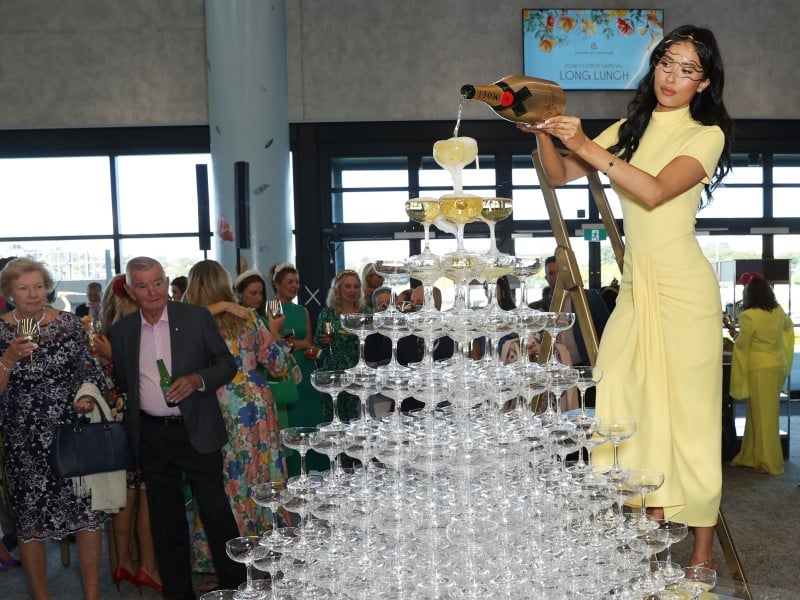
A matter of catering – ATC and Racing NSW pause dispute over theft allegations
Racing NSW has temporarily backed away from a threat that it would commence formal proceedings against the Australian Turf Club over concerns sparked by an internal investigation into possible theft at the race club, after the ATC took the matter to the Supreme Court.
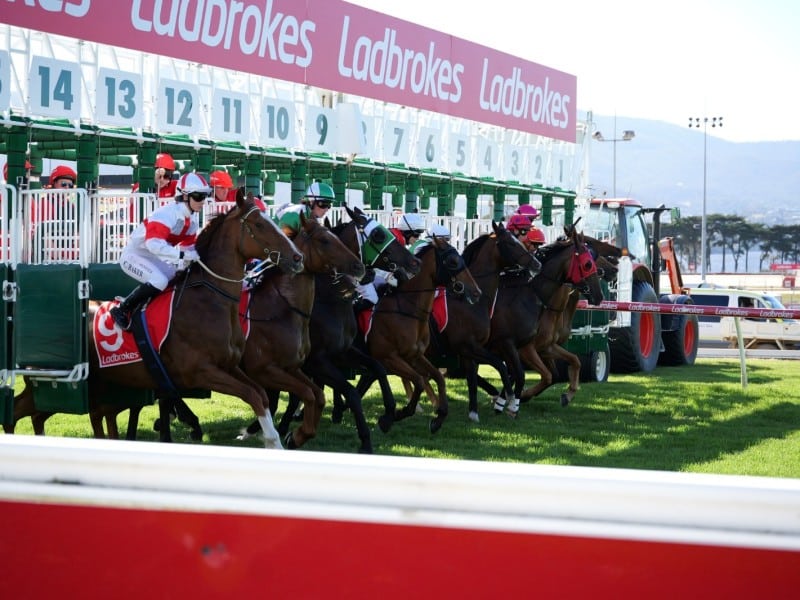
Caught short – Investigations launched over Hobart Cup distance bungle
Multiple investigations have been launched into a blunder which saw one of Tasmania’s biggest races, the Hobart Cup, run short of its advertised distance on Sunday.
RWWA’s sustainability front and centre in major industry review
The future financial sustainability and governance of Racing And Wagering Western Australia are firmly in the sights of a key review by the Roger Cook-led state government, which has released its terms of reference for the inquiry.