
Content costs – Why the nature of racing broadcasts is changing globally
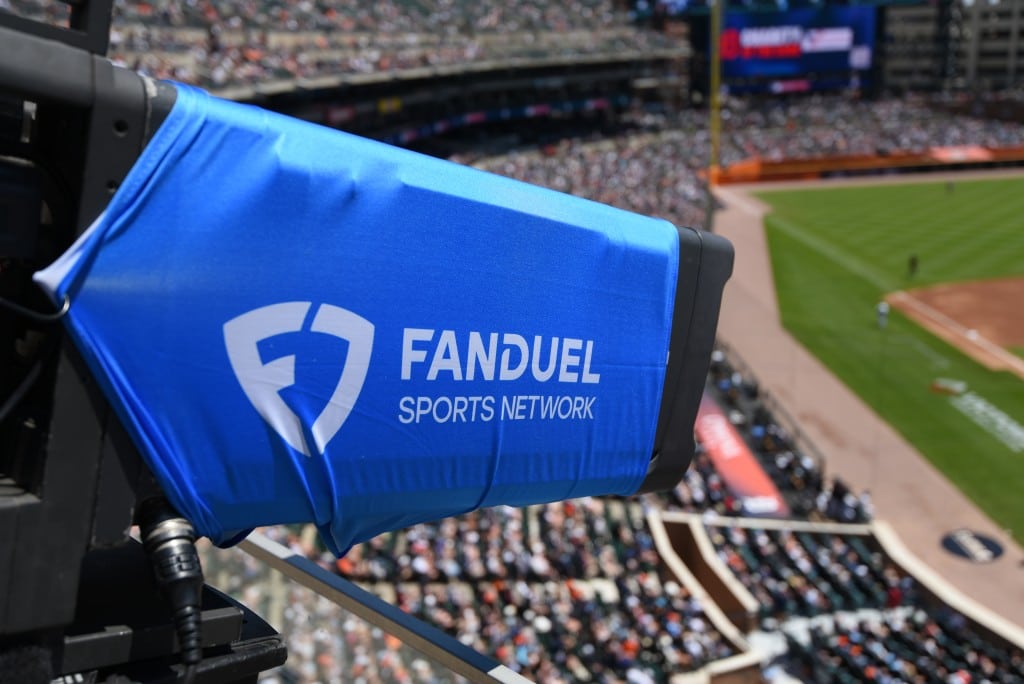
There are a host of local factors in Flutter’s decision to pull the plug on national racing broadcaster FanDuel TV in the United States, but the broader issues should be enough to put racing administrators around the world on notice, especially in Australia.
COMMENT: The fact that racing has traditionally had an older demographic has often meant it hasn’t had the same urgency to adapt to change as the rest of the sports and entertainment industry.
But the decision by global wagering giant Flutter to shut down FanDuel TV in the United States starting in July is a sure sign that, globally, racing’s linear broadcast era is coming to an end.
It is worth noting that there are significant differences between the Australian and American racing and broadcast landscapes, which means the commercial factors that drove this decision differ from those that determine media strategy in this part of the world.
The role that racing plays in the Australian wagering landscape is much greater than it is in the United States, which still relies largely on parimutuel wagering. Betting on racing in the US totalled just over US$11 billion last year, while the burgeoning sports betting market is worth roughly US$160 billion.
On those measures, racing represents 6.4 per cent of the regulated wagering market turnover in the US. The corresponding figure in Australia is around 70 per cent.
Flutter, the parent company of FanDuel (as well as Australian market leader Sportsbet) said it was “directing its investments toward the areas most critical to its long-term roadmap and core businesses” according to the Paulick Report.
Betting companies in the States do not have to rely on racing for product, while in Australia, there is a much more dependent relationship. That is slowly changing, however, and there is an expectation that sports will take the majority turnover market share from racing at some point in the next 10 years.
And that’s where the similarities start.
The key factor in Flutter’s decision, it appears, was the cost of the hosted broadcasts and other programming. There will be less in-studio production with an eventual reduction to simply live broadcasting of racing.
Content costs and racing broadcasts are expensive. They often involve co-ordinating multiple resources across a large area, which requires travel and gear. Doing them in a linear/traditional broadcast context makes it ever more cost-prohibitive.
The final product may make racing appear polished, but in FanDuel’s case, the cost outweighed the reward for its core business.
That is not just an American issue, it is a universal challenge.
The unfortunate part is that when racing broadcasting and content are done well, they have a significantly positive impact on the image of the racing.
It is a natural storytelling medium, with multiple characters and a good dose of fortune thrown in, making it far more fertile for upset results than other sports.
Another universal factor is that excellent storytelling doesn’t necessarily correlate with additional returns for wagering companies.
As good as it is for racing’s broader image, on a cost per acquisition (bet) basis, it struggles to pay its way. There is no such cost for the majority of other sports, which have rich external media coverage that betting companies can capitalise on.
Those sports don’t rely on wagering revenue anywhere to the same degree as racing does. In this situation, what the bookies say goes.
Racing needs to find another way to make it pay or make it cheaper to produce.
Ladbrokes in Australia has invested heavily in racing storytelling over the past five years, producing some excellent content that cuts through far beyond the punting crowd.
But its own challenges and budgetary constraints have seen less and less of this style of content produced over the past 12 months.
Meanwhile, Racing.com reduced headcount significantly last year, pivoting away from a brand-first strategy and feature-led reporting, with costs cited as a factor. Another contributor was declining interest from bookmakers, who underwrite those costs through advertising.
Sky Racing/Tabcorp has also made major changes to content resources, reducing on-air staff and utilising remote broadcasting of races.
Take it from someone who has spent 25-plus years in the media game, when budgets get tight, content is often the first thing in the crosshairs.
In the FanDuel situation, that has been a factor, but so too has the ongoing changing consumer behaviour. Content distribution has changed dramatically and racing has lagged behind globally.
While racing administrators in Australia praise the importance and impact of the Seven Network deal, which gets racing on a mainstream free-to-air channel 52 Saturdays a year, the value of that is next to nothing for the majority of people under 40 who don’t have an aerial connected to their TV.
It’s a similar story for Racing.com’s FTA presence. There is no doubt it has value right now, but what about in a decade’s time?
More and more Australians consume racing through the in-app betting experiences of wagering companies, who will control the broadcast footprint for the next generation of racing fans.
A wagering company’s core business is its gambling product, and while they do see the value and invest in other programming, it will never be worth the same as offering another avenue to bet.
While the approach of Sky and Racing.com will be interesting to follow, so too will be Trackside’s strategy in New Zealand. Entain has significantly developed that product over time, but are the costs of that approach sustainable?
Globally, the racing industry has ceded more control of its broadcast product to third parties. There are clear advantages to that approach, but there are also risks.
One of those is the viewer’s fragmented experience. Australian racing fans are more familiar with their remote controls than any other sports fans, flicking between channels and apps to get the full experience.
In the United States, some are viewing the end of FanDuel as an opportunity to address the core challenges posed by the end of the linear broadcast era.
“As a group, as an industry, racing has done little to carry its own water beyond the core fan base when it comes to strategically marketing either the sport, associated wagering options, new events, affordable horse ownership opportunities, and equine and rider health and safety,” media and racing executive and attorney Drew Couto told TDN America.
“There are exceptions. But far too often we’ve left that to others for whom those aspects of racing were not a core business priority but rather undertaken as a service to the industry.
“But for their generosity and competence when doing so, racing’s leadership has delivered very little in this regard.
“I’m concerned that leadership is only now beginning to understand that racing has found itself once again behind in the technology curve.”
Those comments were made in the American context, but there are so many aspects that ring true here on the other side of the world.
Author

Related Articles
Prime Minister seeks to ‘de-link’ gambling and sport in major move on advertising
Sixteen months after gambling advertising reform was pulled from the political agenda by Prime Minister Anthony Albanese, the federal government is reportedly set to announce a raft of restrictions.

Entain caught up in fast codes class action
Two of Australia’s three biggest bookmakers have now been caught up in class actions which contest the legality of their fast codes in-play betting service, with Entain joining Sportsbet in the sights of lawyers Maurice Blackburn.

‘Sport only works if fans believe the outcome is genuine, unpredictable and fair’ – Australia set to tighten laws on match-fixing and illegal betting
The pending ratification of a global treaty designed to police match-fixing and illegal betting across international borders is set to trigger much stronger federal sports integrity laws in Australia.