
Could global trade storms benefit the Australian thoroughbred industry?
The contrast between global economic uncertainty and the bullishness at the recent Australian Easter Yearling Sale makes sense in the context of the opportunities the crisis presents the Australian market, according to a leading global bloodstock agent.
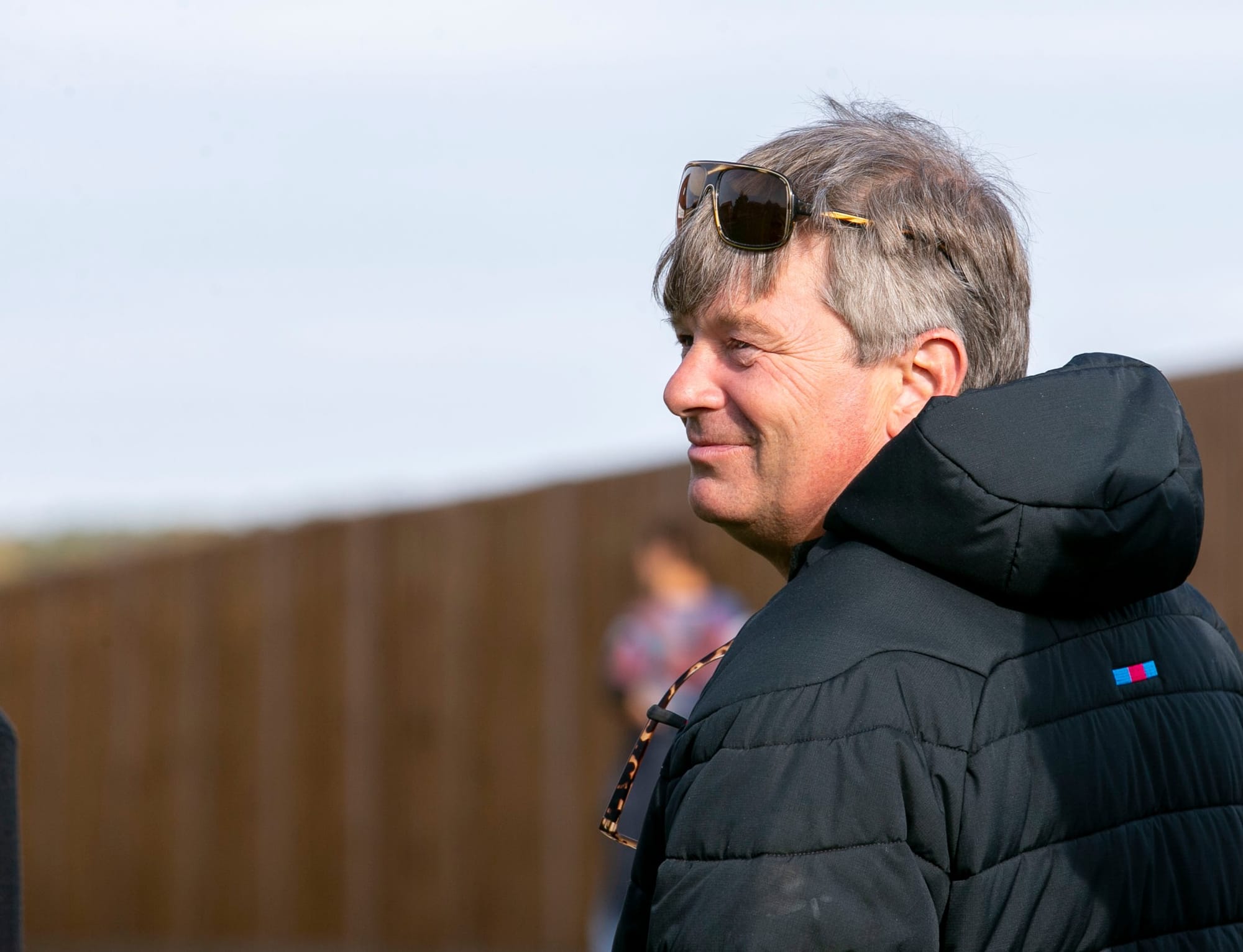
British-born Jamie McCalmont has spent the better part of 40 years doing bloodstock deals on either side of the Atlantic and is better placed than most to assess what the upheaval around tariffs and trade might mean to the global thoroughbred market.
The well-respected and well-connected global player believes the uncertainty regarding the trade of horses in and out of the United States could play into the hands of Australian buyers and sellers.
He was ringside at the Inglis Australian Easter Yearling Sale as international buyers supercharged their spending, making up nearly $40 million of the $150 million splurged across the two days at the Riverside Stables.
That is a jump of nearly $15 million, or 60 per cent of what was spent in 2024, with buyers from New Zealand, Hong Kong, the United States, Japan, South Africa, China, the United Kingdom and the Philippines active.
The comparative low value of the Australian dollar – it was at its lowest in five years during the sale – no doubt played its part, but McCalmont believes that Australia will become an even more attractive market for international investors in the likelihood that tariffs and trade provide barriers to investment in the American market.
“Racing has become considerably global in the last 20 years. I mean, this sale is as global as any sale that you’ll go to. Just look at all the people buying,” McCalmont told The Straight in an exclusive interview.
“So by doing this (tariffs), it’s just such a step backwards. It’s such a step backwards for the thoroughbred breed.”
McCalmont said the European market had benefitted greatly from an increase in American investment in the past two years and that was now far from guaranteed in a world where trade barriers are increased.
“I think what’s a big worry in Europe now is that 10 years ago, Americans bought under 10 yearlings a year from Europe,” he said.
“Last year I’d say they bought 75 to 100. That really made the middle market much stronger than it’s been, and now with what Mr Trump is doing, that could have a massive effect, and I just think a lot of people are very worried.”
While there is no doubt a commercial impact, what concerns McCalmont is what the impact may be on the long-term future of the pedigrees of thoroughbreds globally.
“If you look at America, the bloodlines in America came over from Europe in the 30s and the 40s and the 50s, and then starting with a lot of those good horses in the 70s like Nijinsky, Roberto, Sir Ivor, The Minstrel, and so on, they were all bred in America,” he said.
“Then it kind of flip-flopped back again, and now the Americans have come back trying to repatriate them, which is great.
“These announcements (of tariffs) last week are a massive step backwards. I mean, no one benefits from that. It’s a negative. It doesn’t help their breed, and it’s very sad.”
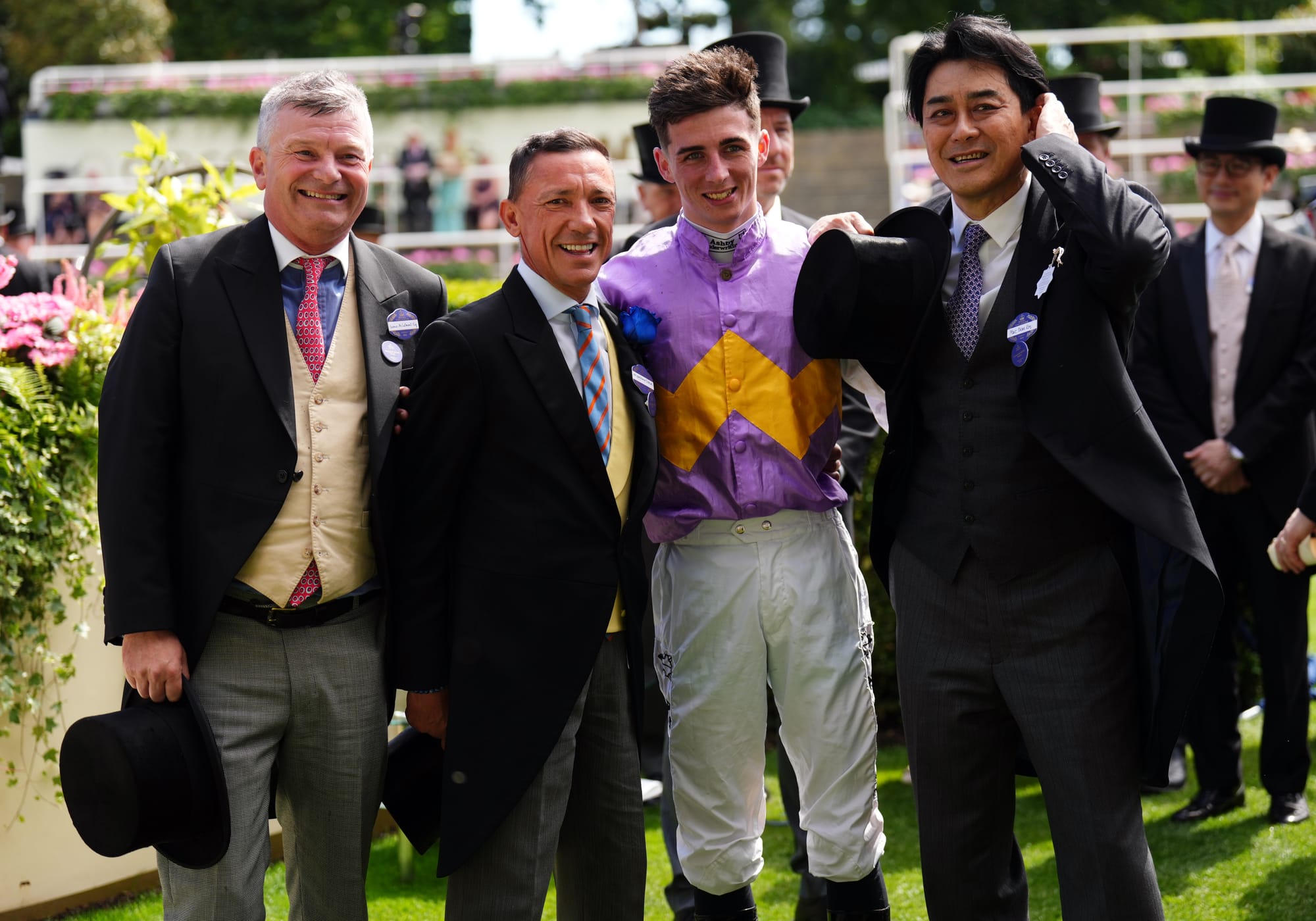
While the Trump presidency is backing away from its original hard-line tariff stance, the uncertainty it creates for a northern hemisphere market which relies on free movement of horses, is set to have global impacts.
The trade in horses from Europe to the United States has been a particular speciality for McCalmont, who lived in California for 10 years between 1988 and 1998.
Whereas once the big European operations, like Juddmonte, would have a string of horses based stateside, that trend has changed, mainly due to the dominance of dirt racing in the United States. That has opened opportunities for Australian investment in European horses in the past decade.
“Australian racing is very interesting for people in Europe to have those kinds of horses here,” he said.
“I’d like to build a better business selling horses from Europe to here for more distance races and I think probably given the American market won’t be as active in Europe, there’s probably some opportunities.
“The American market for those higher-class horses has gone because in California 25 years ago, you had probably eight Group 1 races at a mile-and-a-half, $500,000 plus. Those races today are all Group 3s and $150,000.
“So those kinds of horses, there’s a home for them here. If I was an Australian, I would definitely be very keen on buying those horses.”
McCalmont works closely with Hong Kong-based owner Marc Chan. They have had Group 1 successes in Great Britain and France with horses such Angel Bleu and Kinross.
The pair were at Easter and purchased a Street Boss filly out of an Irish-bred Fastnet Rock mare out of the extended family of Galileo for $800,000, practising what McCalmont preaches about the importance of global pedigrees.
He said Chan, who had prior success in Australia through multiple stakes winner New Mandate, shares that global perspective on the sport having raced horses around the world
“His horses have come from everywhere, from horses in training, foals, two-year-olds, yearlings, and, living in Hong Kong, he’s as interested in racing in Australia as he is in Europe,” he said.
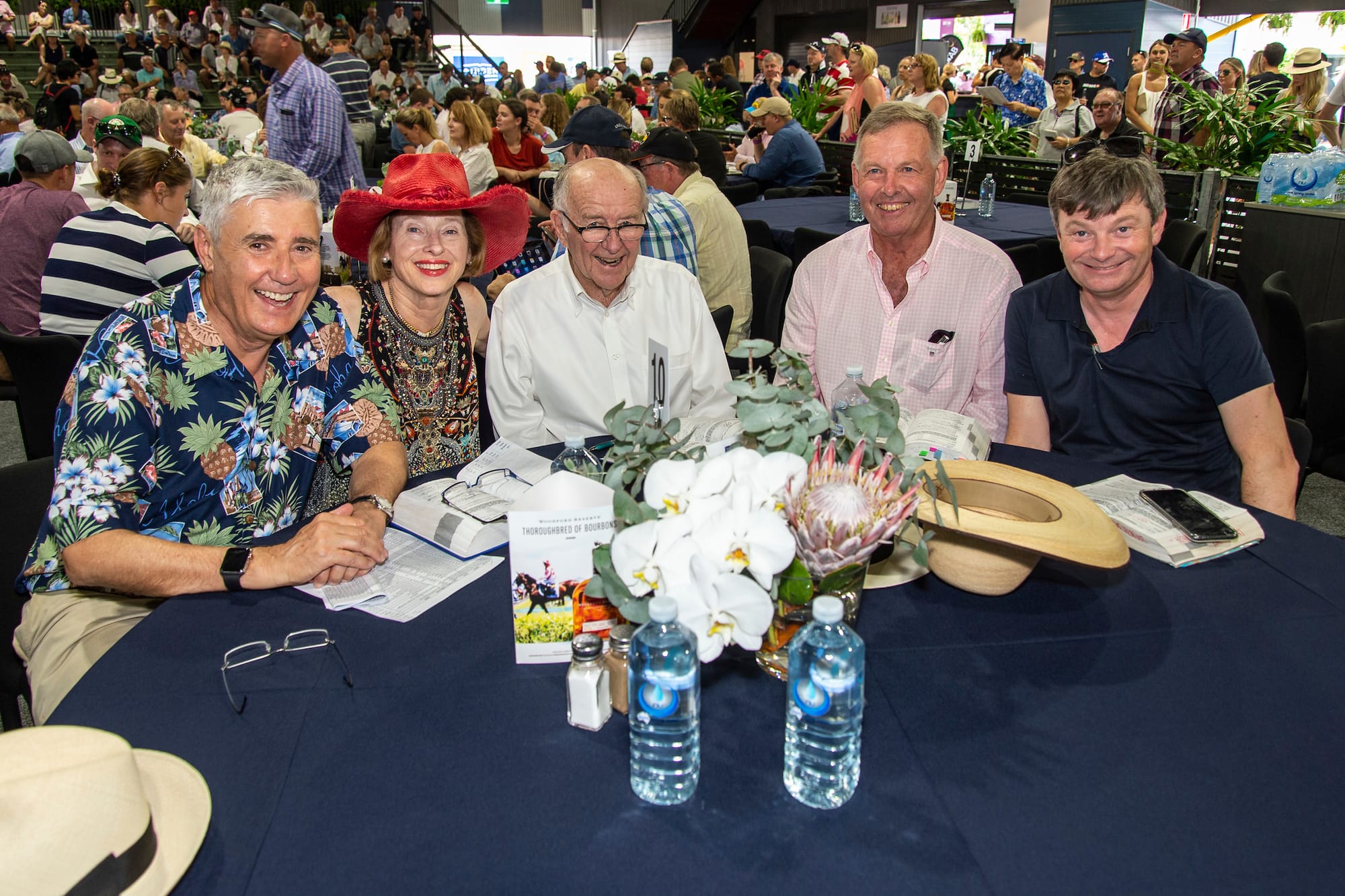
McCalmont’s experience in Australia was sharpened by his previous involvement with the late American investor Jon Kelly and his wife Sarah. They made a substantial splash at yearling sales in Australia late last decade with horses raced with Gai Waterhouse and Adrian Bott.
It was that connection which brought McCalmont back to Australia this year with his daughter Eliza having spent time working for Waterhouse and Bott.
He sees Australia as an ideal location for a young person learning their craft to develop their global understanding.
“Probably 25 years ago, I would have sent her to America, now I’m sending her here,” he said.
“The key to me when it comes to the industry in Australia is the enthusiasm. I think Australia, out of every country, I’ve ever been, you’re sports nuts. I mean, you are sport crazy.
“You believe that you are better than everyone else at every sport, which is fantastic.”
 Tim Rowe
He also manages the interests of Georg van Opel, who has a substantial investment with Coolmore through Westerberg, including in star stallion Wootton Bassett, who is making a major impression in Australia.
For an agent that has developed such a reputation for sourcing future stars, including Royal Ascot winners Sander Camillo and La Chunga out of breeze-up sales around the world, the lack of a dominant two-year-old sales market in Australia does surprise McCalmont.
“Racing has become considerably global in the last 20 years. I mean, this sale (Easter) is as global as any sale that you’ll go to. Just look at all the people buying” – bloodstock agent Jamie McCalmont
While the breeze-up market in Australia did increase in value last year, it still represents only around 5 per cent of the overall unraced horses market, whereas it has historically been around 7 per cent in Europe/UK and 20-25 per cent in the United States.
“That really surprises me with the way that your racing is. And I would have thought that that would have really worked over here,” he said.
“What really attracts people with the whole breeze-up thing, the owners can get very involved in the purchase. where there’s so much more data that they can look at, which they can watch the video.
“Whereas with a yearling sale, they’ve got an agent telling them, he looks this, he looks that.”
The key to successful breeze-up horses, according to McCalmont, is in the preparation by the vendors. It is something which has proven key to New Zealand’s dominant position in the Australasian breeze-up market.
“For years in America, some very good horses have come out of the breeze-ups,” he said. “It’s only in the last sort of ten years in Europe, now every year there’s at least one really good horse that comes out of the breeze-up.
“For the amount of horses sold in those sales, they really do perform. But I think a lot of credit, a lot of that is involved with some very good horsemen doing it.”
Author

Related Articles
‘Darn buoyant’: Lynton Farm targets Classic impact with fledgling operation
Lynton Farm, the Southern Tablelands training base that produced Hellbent and Eckstein, has been reborn under new management, with Jonathan Scully and Jeremy Whale unveiling their second yearling draft at the Inglis Classic.
Written In the Stars – Gray Williamson, master of Mungrup, still
Amid the ups and downs of the thoroughbred breeding game, the coming, and going, of two champion stallions and personal upheaval, Gray Williamson remains content on the same Western Australian farm where he grew up. He tells Jessica Owers, there is much to be positive about.
Clearance, broad engagement key factors for Inglis Classic Yearling Sale
Inglis heads into Sunday’s Classic Yearling Sale on the back of a steady start to the yearling season, with clearance rates and buyer engagement pointing to another competitive sale. Chief executive Sebastian Hutch says conditions feel much the same as last year.