
D-day for black type as international intervention trumps domestic disharmony
It was hoped the Asian Racing Federation’s intervention would be a circuit-breaker in Australia’s entrenched state-by-state battle over the future direction of the black-type pattern. But Bren O’Brien says it is far from assured that a long-term solution can be found.
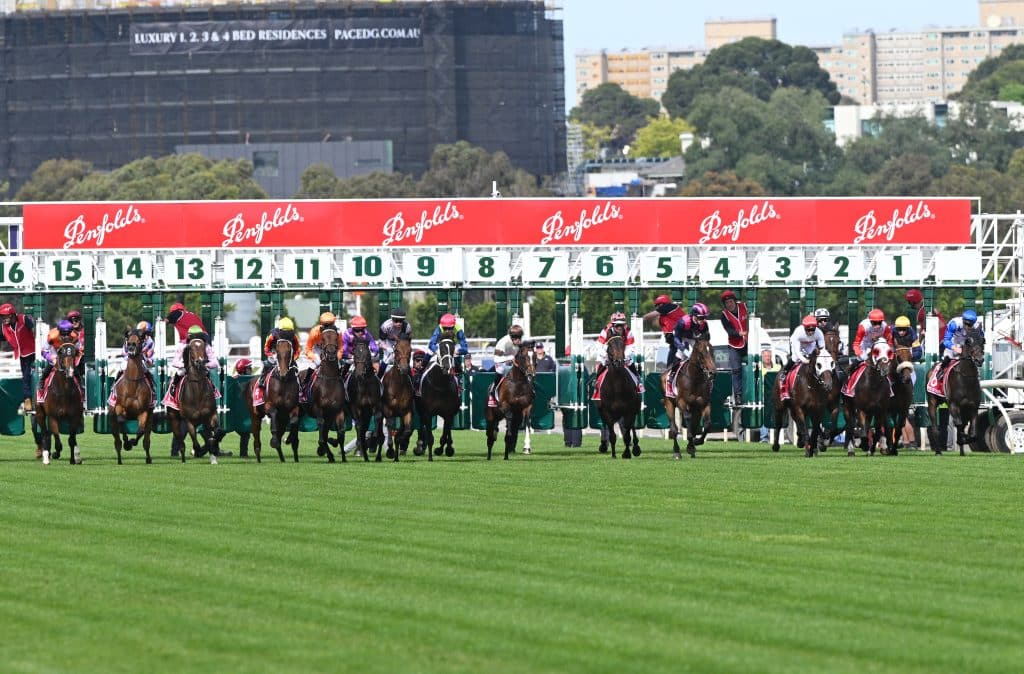
COMMENT: One of the most fundamental aspects of any sport is its fixture. Yet, if you look currently at the Racing Australia website there is no definitive list of the schedule of black-type events for the entire 2025/26 season.
There are links to the past five seasons, including last season where there were 623 stakes races, with 76 Group 1s, 97 Group 2s, 173 Group 3s and 277 Listed races. But the political fight Australian racing has been in about this core component, a feature fixture, would appear to put this one into the ‘too hard basket’ for this season.
And you can’t blame Racing Australia.
On Wednesday, the Asian Racing Federation’s long-brewing frustration on the core issue of Australia’s black-type pattern led to its direct intervention. Its Asian Pattern Committee will now determine how Australia’s black-type races will be scheduled for an indeterminate period.
Imagine for a moment the situation where an international sporting body, let’s say the International Cricket Council, was called in to determine when Australia’s Big Bash or Sheffield Shield matches should be held. Imagine FIFA and FIBA being given the power to schedule domestic football or basketball fixtures.
And all because the local stakeholders couldn’t see through their self interest to give the national body any power to function as it must.
Australian racing is a complex web of stakeholders and vested interests.
It is the biggest country in the Asian Racing Federation by numbers of horses and numbers of races. It has 357 different racetracks, across eight states and territories, made up of PRAs and clubs, all with a vested interest in the fixture.
Uniting those forces is beyond the capability, and indeed the scope of Racing Australia.
Perhaps the Asian Racing Federation believes it can succeed where RA hasn’t, but you get the feeling that won’t eventuate.
The Straight understands that the APC system is based on its Ground Rules, where a Pattern rating achieved over three years is used to determine whether a race is upgraded, downgraded, maintained, or receives a warning of a downgrade.
There is some discretion allowed and PRAs will have the change to argue their case.
Racing NSW CEO Peter V’landys welcomed the move, while the announcement was “acknowledged” by Racing Victoria, who said it was its view that RA should explore an Australian Independent Pattern Committee, comprising suitable industry representatives.
There is still a fundamental divide between those who believe in a rating-led solution and those who want a committee to utilise ratings to then make decisions.
The two states which hold a veto at Racing Australia’s board are clearly still opposed. The umpire may have changed, and the rules may appear slightly different, but the level of disagreement remains the same.
There is also no guarantee that the number of black type races will go down. There will be some downgrades, but they may be usurped by upgrades.
The APC now has seven months to re-assess the Australian black-type calendar and publish their new list for 2026/27. That may not be available, due to the process involved, until the eve of the season.
Those hoping for some significant pattern movement after eight years of infighting, may well get their wish, while others have told The Straight that it is an opportunity to take a breath and revisit the vexing Pattern issue in the new year.
But while the same arguments remain and Australia’s state-based racing authorities are compelled to only act in their own interests, it is hard to see this being the circuit breaker that some had hoped for.
Author

Related Articles
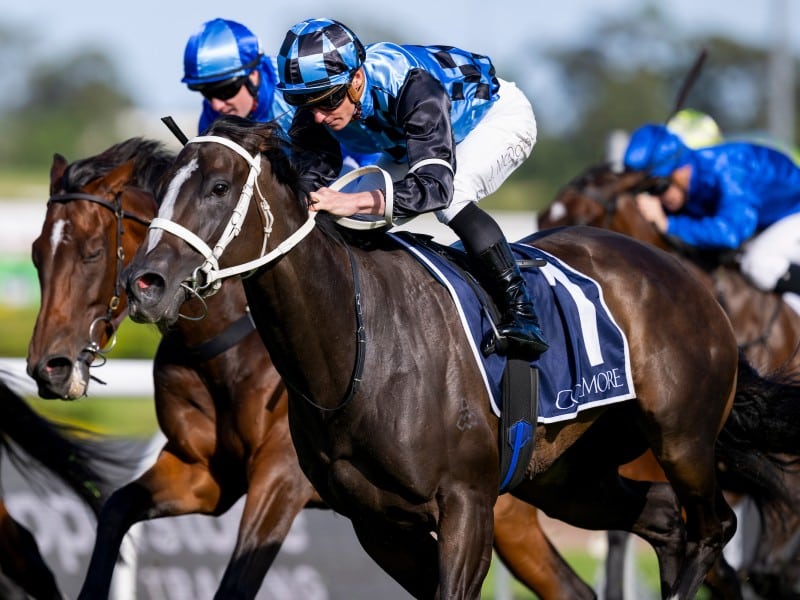
Five things we learned from Saturday – Coolmore Classic edition
In our first edition of our new post-Saturday column, we look at the five things that Saturday’s racing taught us, highlighting James McDonald’s pending milestone, a looming fifth title for a stallion star, the respective rollercoasters of Bjorn Baker and Tony Santic and a new candidate for Australia’s best maiden.

‘Precarious position’ – Racing NSW to appeal ATC ruling citing risk to club funding
A Supreme Court ruling that defined the scope of Racing NSW’s power in relation to race clubs will be appealed by the regulator.

Matthew McGrath to lead new-look RQ board
The man whose industry review set the scene for major changes to Queensland racing, Matthew McGrath, has been appointed as the new chair of Racing Queensland, one of six new faces on the board.