
Flight path – How Cameron Croucher’s career took off after Eliza Park
How does one go from being the CEO of what was Victoria’s largest stud farm to flying horses all over the world?
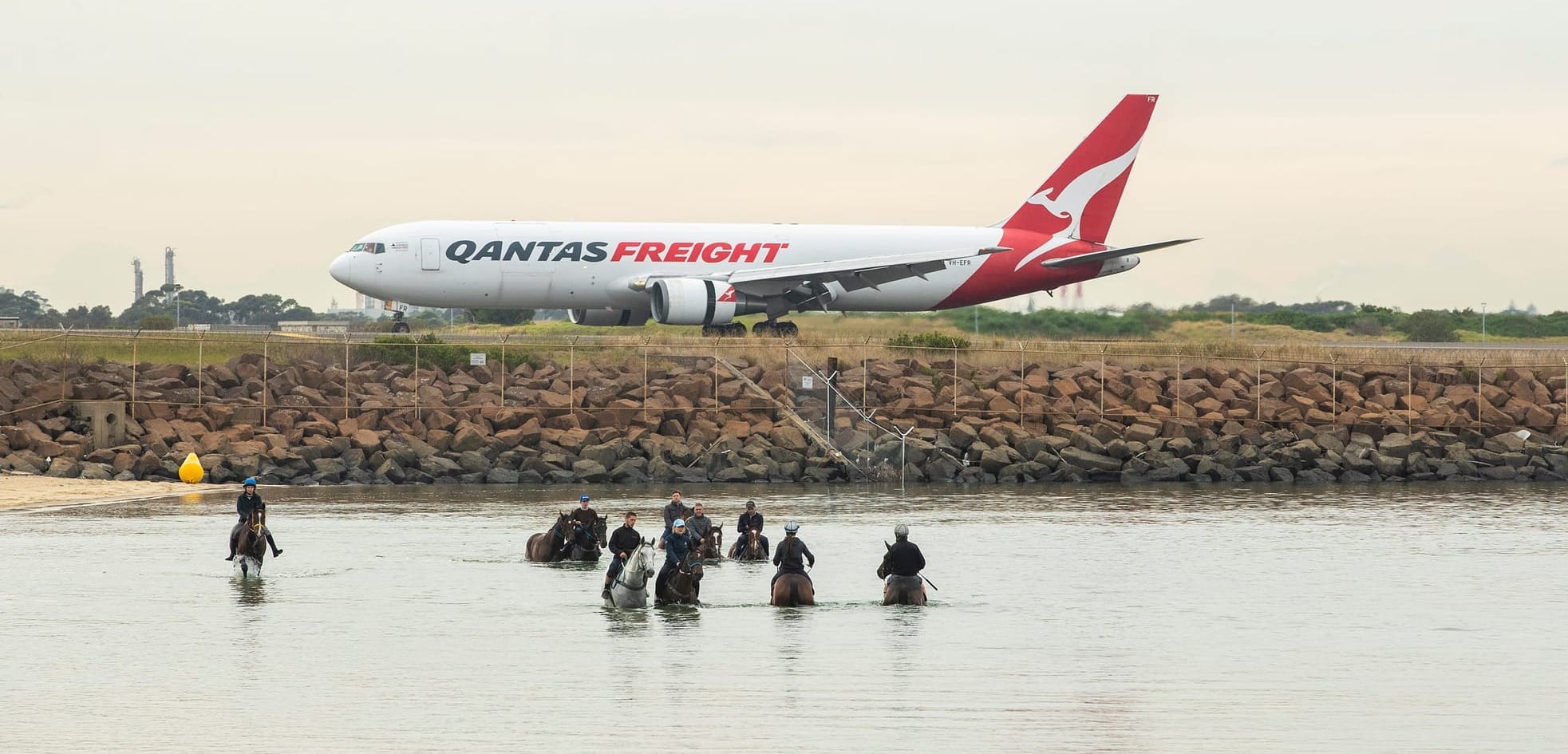
Ask Cameron Croucher, who is probably the only person in Australia to have ever made such a unique career move.
“It was a change of scene, that’s for sure,” he tells The Straight.
“I was with Eliza Park for 15 or 16 years, basically from its inception until it was taken over by Sun Stud in 2013. While I was working out what I was going to do beyond Sun Stud, an opportunity came up to buy a business.”
Eliza Park, in its heyday, was Victoria’s largest thoroughbred farm, owned by Lee Fleming. It stood 11 stallions at its peak including Bel Esprit, Written Tycoon, Shinzig and Statue Of Liberty, Legendary sprinter Black Caviar was conceived on the farm.
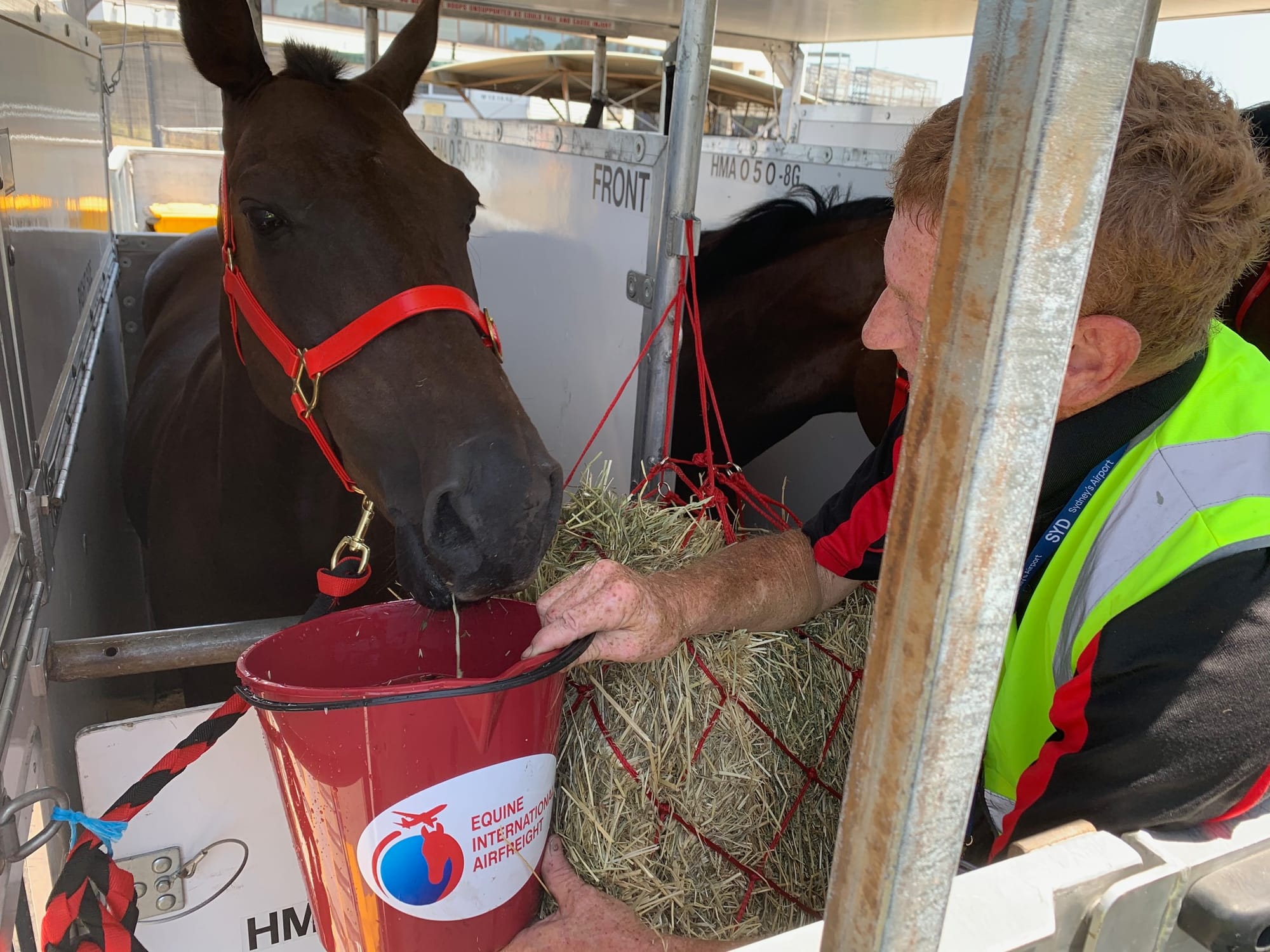
When Eliza Park was sold to the Chinese interests of Sun International, Croucher went in a different personal direction. Alongside Gerry Harvey, he acquired Crispin Bennett International Horse Transport and renamed it Equine International Airfreight (EIAF).
“The following day that I reached an agreement to buy the company, I ran into Gerry Harvey at a horse sale and he asked me what I was up to,” Croucher says. “I told him what I was in the process of doing and he asked if he could get involved. Ever since, Gerry and I have owned EIAF.”
With offices in Sydney, Melbourne and Auckland, and directors that include Magic Millions’s David Chester and former Racing Victoria chairman Rob Roulston, EIAF is one of just three equine freight companies operating within Australia. Only two are Australian-based.
“That was one of the main drivers for me in buying this business,” Croucher says. “There was basically one company that had a stranglehold on the market here, and another in New Zealand, but it was basically those two companies in the southern hemisphere.
“The guy that I bought the business from was a small-time operator, basically running it out of his garage, and I saw a real opportunity to get involved, to lift the profile of the company, run a professional outfit and have some real competition on the freight routes.”

Croucher recalls that, 20 years ago, it cost just over $5000 to ship a horse from Australia to New Zealand. Today, the price is just under $6000.
“I think competition has really kept the prices down because, over the 20 years, they haven’t really changed,” he says.
About 65 per cent of EIAF’s business is racehorses; the rest is general equine, like polo ponies, police horses, sport horses and private imports or exports.
Ninety per cent of that equine movement is international, with only 10 per cent of EIAF’s business involving domestic transport.
Croucher moves horses to Malaysia, Thailand, Japan, the Philippines, much of Europe and the US. He has sent polo ponies to India and a shipment of 25 horses to Lebanon, and, before COVID-19, South Africa was a freight route.
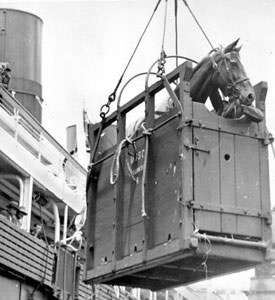
EIAF will use commercial companies like Singapore Airlines to fly its horses, but also specialised freight carriers like Toll Holdings, and, between Croucher and his competitors, around 4000 horses a year are moved in and out of Australia.
“When I was buying the business, I had an idea about how things worked because I’d obviously been involved in moving horses and shuttle stallions around the globe,” he says, alluding to his time at Eliza Park. In 2008, it became the first Australian stud to open an office in Singapore.
“But the intimate details, in terms of what’s involved in dealing with governments and protocols, that was all a steep learning curve for me and you can’t learn it overnight. It takes some time to do and I’m still learning 10 years later.”
Australia’s strict biosecurity protocols are renowned around the world.
Croucher says he could hire someone full-time just to sit, read and digest the paperwork that EIAF receives from government throughout the year.
“Australia, in particular, and the Department of Agriculture, is very risk averse, and rightly so to protect our industry from things like the EI outbreak of 2007. They are the competent authority and, ultimately, they are responsible for what comes in and out of Australia, but they’re a complex organisation.
“It’s difficult keeping up with all their regulatory things that are constantly reviewing and changing. There’s a lot of literature and reading, and it’s very difficult to keep on top of everything for every individual jurisdiction and nation that horses are moving through.”
This is one of the reasons why the costs of importing horses to Australia are so much higher than exporting them.
On average, it costs about $16,000 to send a horse to London, but to bring one in from London, the cost is about $32,000.
Part of this is because Australia, with its location on the world map and its low manufacturing output, imports a lot of freight, and those planes are leaving Australia almost empty. Filling them with horses on the outbound voyage is a bonus for the cargo companies.
“I saw a real opportunity to get involved, to lift the profile of the company, run a professional outfit and have some real competition on the freight routes” – Cameron Croucher
Inbound, however, is another story. Competition for space on planes is higher, as are the biosecurity regulations with quarantine on arrival.
“The Australian government protocols for horses coming in from the northern hemisphere are very, very strict, and quarantine is all government-controlled,” Croucher says. “The charges are astronomical.”
EIAF has a staff of about 40, which includes highly qualified and highly experienced flying grooms who accompany horses on flights. These aren’t just strappers that stand by a horse’s head for 12 hours; they’re flight crews that need to know the machinations of the aircraft on which they’re travelling.
Because vets are rarely on these planes, the grooms are trained in how to administer medication and detect stress in horses before even boarding the air stable, and Croucher himself jumps on a number of routes to check-in with how staff are getting things done.
“I’ll do probably four or five flights a year, travelling with another groom,” he says.
“I like to see how the different grooms do things, and I try to do flights with a different groom each time. It’s quite a big team and it’s quite time-consuming managing that and getting the best out of them, but sharing ideas and having good communication among the group is always beneficial.”
EIAH has flying grooms stationed in Sydney, Melbourne, Brisbane and Auckland. Croucher, on average, gets an application for these positions once a week.
It’s a highly interesting career and, given 65 per cent of EIAH’s business is racehorses, staff are dealing with millions of dollars’ worth of livestock.
Earlier this year, the company flew 33 thoroughbred yearlings, 27 of which were colts, on a charter from Auckland to Brisbane for the Magic Millions Gold Coast Yearling Sale. Because of the value of the stock (they aggregated $8.9 million at the sale), Croucher put a vet on board.
“But we don’t deal with the shuttle stallions,” he says. “Because they can be 20, 30 or 40 million dollars’ worth in value, it’s the type of business where you’ve kind of got to do them all or do none.
“The insurance costs to your business when you’re dealing with such valuable stallions increases so much that those insurances have to be spread across the stallions. If I’m only dealing with three stallions and another company is dealing with 23, I can only split that increase of insurance three ways, and it would not be economical to do so.”
Croucher loves his job. He loves its travel and the variety of environments that it delivers.
Three years ago he was flying in and out of empty airports on cargo planes, enduring five lots of hotel quarantine as the business of flying horses boomed.
Growing up in Sydney, he had many interests, but three in particular stick out for him today; he was fascinated by the horse industry, he was fascinated by planes, and he took a strong interest in geography.
All three have been particularly handy.
 Jessica Owers
Related Articles
🔒 🔒 A deed delayed – Tasmanian racing still awaiting funding certainty past 2029
The long wait for a new funding deed for Tasmanian racing continues with the latest minister responsible for delivering certainty to the industry, Roger Jaensch, saying final details are unlikely to be formalised before the state budget in May next year, while any new agreement is unlikely to be as long as the current 20 years.
John Sadler confirms November 30 end to training operation
After almost 50 years training in his own right, John Sadler will close his stable in late November and join Clinton McDonald in an advisory capacity.

PointsBet suffers revenue hit driven by Australian business
PointsBet has attributed a 16 per cent fall in first-half group revenue to stronger compliance standards in its Australian business and adverse sports results as it expands its mass-market sports customer base.
