
From a flip of the coin to The Everest summit – Ka Ying Rising’s unlikely beginning
The remarkable story of Ka Ying Rising begins not on the racetrack, but with a sub-fertile stallion, a $500 mare and a mating where the odds of success were far longer than those he faces at Randwick on Saturday.
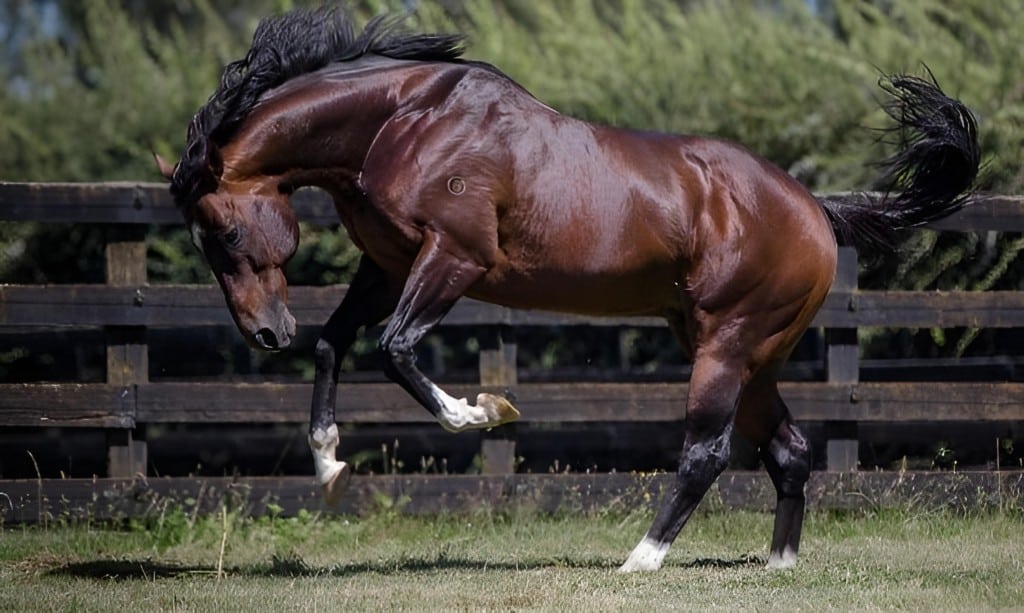
Such are the realities of a sub-fertile stallion like Shamexpress, the chances of Ka Ying Rising being conceived in the first place were much lower than his chances of claiming a second straight Everest at Randwick on Saturday.
When breeder Fraser Auret opted to send his $500 mare Missy Moo to Windsor Park to be bred for the first time, he knew that it was a 50-50 shot whether she would get in foal.
Windsor Park Stud’s Rodney Schick remembers Auret visiting Windsor Park to collect some horses and talking about whether to send the handy racemare to the stallion.
“She had a few soundness issues. And I said, ‘they’re the best to breed from, because you can improve them. They haven’t left it on the track’. And she certainly did that,” Schick told The Straight.
Of the 550 mares that had visited Shamexpress prior to that 2019 season, there were 254 live foals. Auret knew he was effectively flipping a coin, but as fate would have it, Missy Moo got in foal, delivering one of 28 foals for the sire in 2020.
Schick knew early on that the fertility challenges of the Group 1-winning son of O’Reilly weren’t going to resolve themselves.
He would require careful management, but Shamexpress’ progeny were impressive enough, both on type and on the track, to be worth persisting with.
“He’s a beautiful horse. There’s been a lot of publicity around him being sub-fertile. He’s been actually a very, very good stallion for his numbers,” Schick said.
The signs were there from the beginning as he claimed honours as top first-season sire in New Zealand. From his first crop came five stakes winners, including Group 1 winner Coventina Bay.
Eight more stakes winners emerged from his next four crops, giving him 13 stakes winners from 205 runners across those first five crops, at a very decent stakes-winners-to-runners rate of 6.3 per cent.
“He’s left some lovely gallopers,” Schick said. “He’s always got a good horse around.”
His strike rate in the breeding barn was of greater concern for breeders. Sending a mare to a stallion with known fertility issues has its risks, namely missing an opportunity to get a mare in foal.
While there were enough breeders happy to give Shamexpress a shot early in the season, they quickly looked to other covering options if he didn’t hit his mark the first time around.
“It has always been the case if they do come, they might have one go,” he said. “So he’s had to do it the hard way. And he’s done a bloody good job.”
The year that Ka Ying Rising was foaled at Windsor Park, Shamexpress’ book dropped to just 17. From those 2020 matings emerged just seven foals in 2021, a level from which very few stallions rebound, particularly those whose fertility issues made them less desirable.
From Shamexpress’ sixth crop, conceived in 2019 and foaled in the pandemic year of 2020, emerged three stakes winners, including a horse now rated the best in the world.
What Ka Ying Rising has achieved is extraordinary, but, in probability terms at least, has come with high expectations. In 19 races during his 21-race winning streak, he has been shorter than even money, the equivalent odds Auret had of getting Missy Moo in foal to Shamexpress at Windsor Park.
It is a ride that the Schicks and the Windsor Park team have followed closely, all while managing Shamexpress’ fertility as best they can.
Off the back of Ka Ying Rising’s extraordinary run, plus the continued success of Shamexpress’ other progeny, interest has surged in the sire.
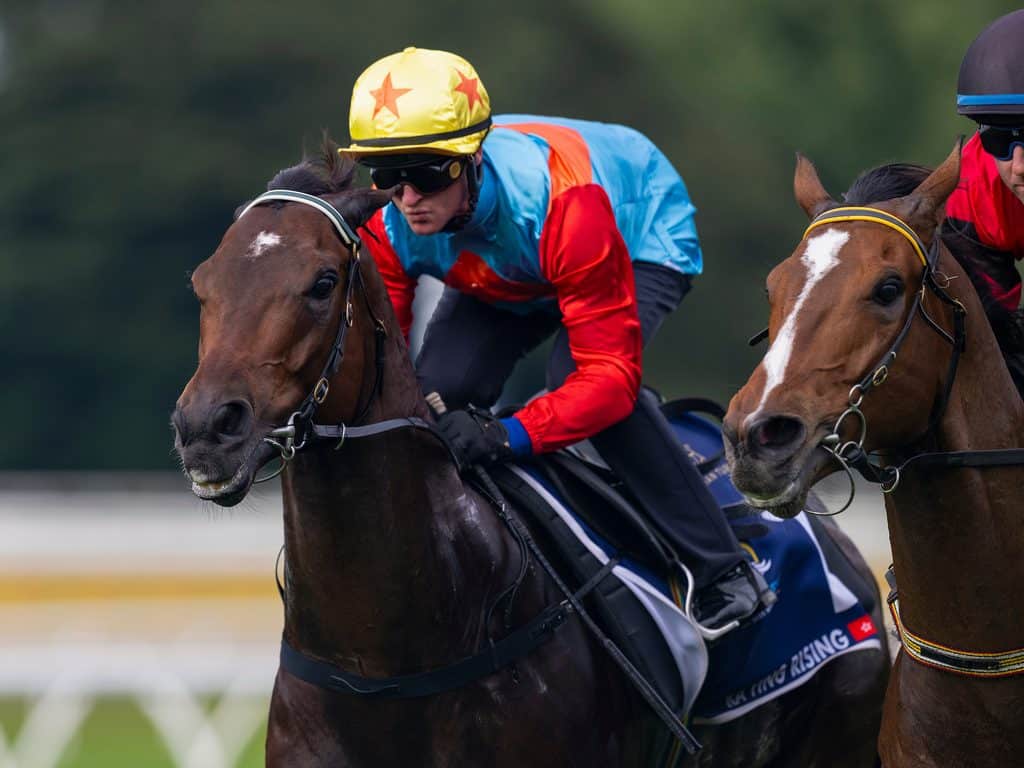
Windsor Park increased his fee from $8000 to $20,000 in 2025 and he had 110 mares, his biggest book in eight years.
However, a bigger book does not always mean bigger crops, and despite the demand, his fertility means that there won’t be a surge in numbers of foals on the ground this spring.
“He served 100 odd last year, but he’ll probably have 35 foals this year,” Schick said. “This year, I think he’s serving, he’ll probably be serving 70 odd mares.”
The smaller book is deliberate.
“This year we’ve just said, ‘look, we don’t want to over-tax him and we don’t want to have too many mares’,” Schick said.
“He sort of hasn’t changed fertility-wise through the process, but over the years we’ve done really well with him.”
Sub-fertile stallions usually have to boast exceptional results to be seen as worth persisting with. Extreme Choice is the best example of that currently in Australia, producing world-leading stats off restricted books.
Shamexpress may not have Extreme Choice’s numbers, but he remains consistent at 6.3 per cent stakes-winners-to-runners and has 64.6 per cent winners-to-runners.
His 2026 fee sits at $25,000, three times what it was two years ago.
At 17, he is still the same strong and striking horse that enticed Windsor Park to stand him in 2014 after a career for Danny O’Brien which included a victory in the Newmarket Handicap.
His fertility numbers look lower on paper in recent years, 43.6 per cent in 2022, then 36.7 per cent and 37.8 per cent in the two seasons since.
“If you get one, that’s good,” Schick said.
But he also points out that it can be attributed to the fact that mares often only visit him once, and if they miss, they are sent elsewhere.
It seems to happen that sometimes the most freakish of racehorses are sired by stallions of much lower profile. Bel Esprit, like Shamexpress, was a good solid stallion who produced an outright superstar in Black Caviar.
There are stories of horses like Zed, who returned from a season serving Clydesdale mares in the New Zealand high country to later produce the champion mare Verry Elleegant.
The Ka Ying Rising story is a bit different to those because from the moment that the mating came into Auret’s mind, there was a better than 50 per cent chance it wouldn’t end up producing a foal.
Enhancing that sense of the unlikely was the fact that Missy Moo only produced two foals before she died in 2021. Ka Ying Glory, by Turn Me Loose and a maiden after eight starts for David Hayes, is the other one.
Missy Moo’s own sire Per Incanto, the American-bred, Italian-raced son of Street Cry, is another unlikely success story, having risen from a $4000 fee to become one of the top sires in New Zealand.
Schick describes Windsor Park’s own role in the Ka Ying Rising story as “neat”. He is the third genuine superstar foaled on the Cambridge farm in the past 30 years, along with Might and Power and So You Think.
Author

Related Articles
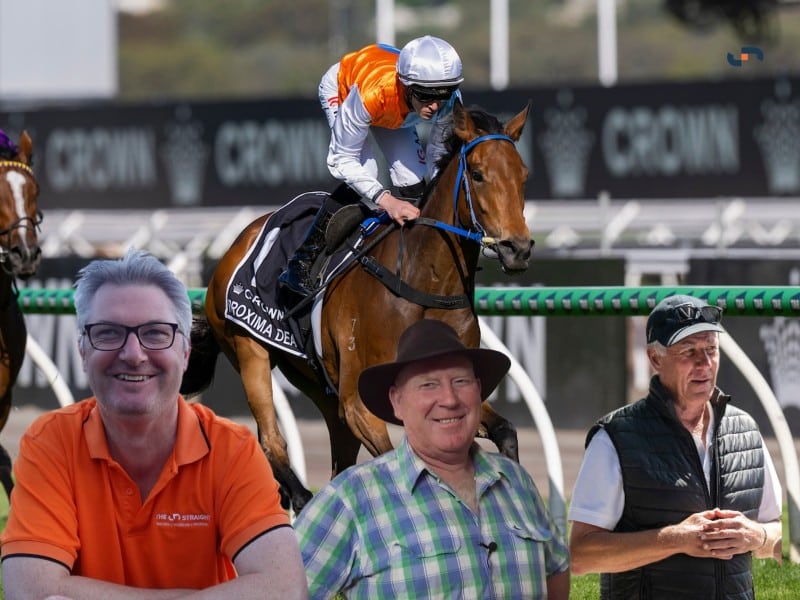
Rowe On Monday – Doc’s Invisible journey, a big week for Three Bridges and Ivan Lister’s honour
In this week’s Rowe On Monday, Tim Rowe chats to Chris “Doc” Lawler about the backstory of impressive VRC Oaks winner Proxima Dea and reveals a battling Victorian trainer is in line for national honours.
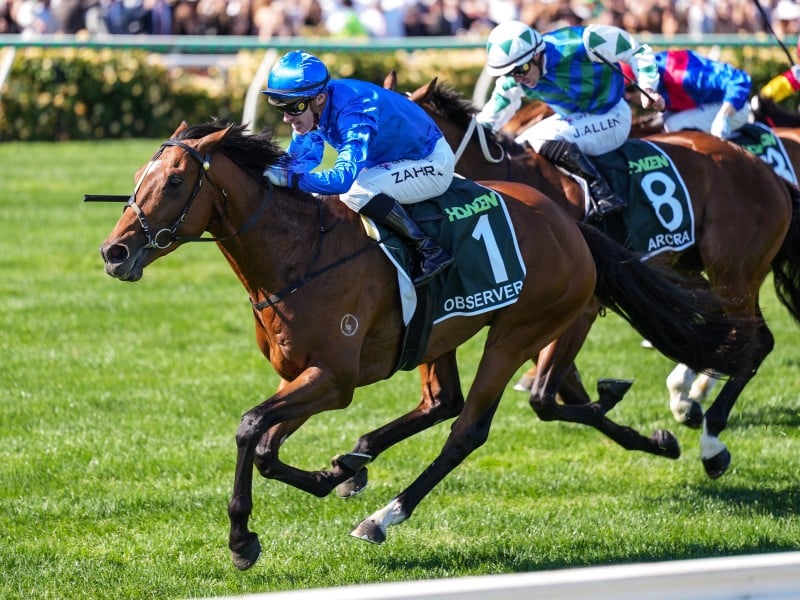
Observer back at stud for Darley after recovery from colic surgery
Darley’s first-season stallion Observer, the Victoria Derby and Australian Guineas winner, has fully recovered from September colic surgery and resumed covering in recent days.
‘Outstanding’ – Magic Millions releases 1280-lot Gold Coast Yearling Sale catalogue
Buoyed by graduate success, Magic Millions has released a bumper 1280-Lot catalogue for its 2027 Yearling Sale on the Gold Coast.
