
🔒 🔒 From equine influenza to The Everest – a timeline of Peter V’landys’ tenure as Racing NSW chief executive
From his arrival in 2004 to his resignation on Thursday, Peter V’landys transformed NSW racing’s finances and national standing while becoming increasingly embroiled in governance disputes.
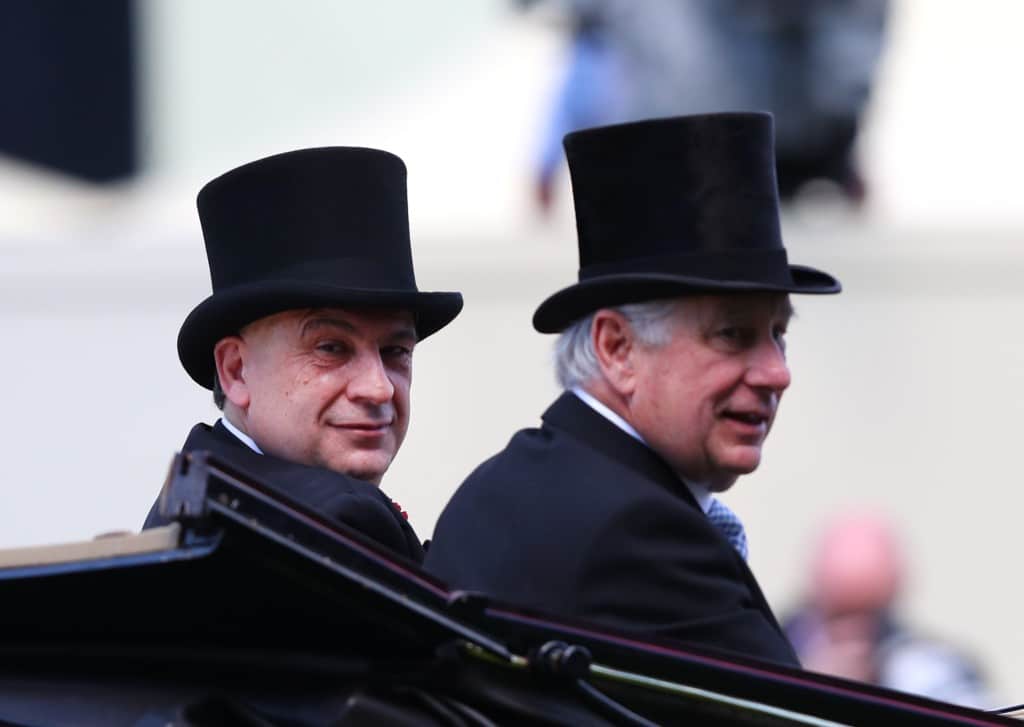
Peter V’landys’ 22 years as Racing NSW chief executive reshaped how NSW racing is funded, programmed and governed, while attracting increasing scrutiny in the latter stages of his tenure.
V’landys walked into Racing NSW on February 23 2004 as a harness racing administrator taking on the thoroughbred code. He left the building for long-service leave in July 2026 as clearly the most powerful figure in Australian racing.
On Thursday, it was confirmed he had resigned from Racing NSW with an announcement that he had been appointed executive chairman of the Australian Rugby League Commission to follow.
His tenure at Racing NSW will finish on November 30, when his current contract with the regulator ends.
It has been an extraordinary period of transformation for racing, not just in NSW, but nationally.
2004 to 2007: Arrival and the equine influenza shutdown
When V’landys took the job, corporate bookmakers held roughly 2 per cent of the wagering market. Within a year, he was arguing that racing should receive a larger return from operators using its product, a position that would define his first decade.
The first crisis arrived in August 2007. Equine influenza spread from the Eastern Creek quarantine facility, making NSW the state hit hardest; racing was cancelled everywhere, and horse movement banned. Roughly 50,000 people worked in the NSW industry at the time, and V’landys became its public voice.
He told media during the shutdown that trainers and owners considered keeping horses confined to their boxes cruel, and that horses already exposed should keep exercising.
Racing NSW coordinated the industry response, including a $235 million rescue package, a $7.5 million NSW government grants scheme and a mortgage-deferral arrangement for participants. The following year brought a smaller disruption when World Youth Day took over Randwick, for which V’landys negotiated a $40 million compensation package.
What EI did for V’landys was cement his reputation as a strong leader in times of crisis. It also gave him the political capital to advance an ambitious reform agenda first outlined in his first strategic plan, released in 2004.
2008 to 2012: Race fields and the High Court
The commercial battle that shaped the next decade began in 2008, when Racing NSW moved to charge wagering operators a 1.5 per cent turnover fee for using NSW race fields. Until then, bookmakers had largely set their own contribution.
Betfair and Sportsbet challenged the legislation. Justice Perram upheld it in the Federal Court in June 2010, Chief Justice Keane dismissed the appeals in November that year, and the two operators sought special leave from the High Court in December.
On March 30 2012, all seven High Court justices dismissed the appeals and ordered the bookmakers to pay Racing NSW’s costs.
Racing NSW had held up to $200 million in reserve while the case ran. After the judgement, $100 million was released for infrastructure and stakes, with the fees expected to generate about $50 million a year.
V’landys said the result was a win for the 50,000 participants who produced the product, and rejected claims that punters would suffer, saying corporate bookmakers had continued to make substantial profits while paying the fee. Then-Racing NSW chairman John Messara described V’landys as the case’s public face. A later industry analysis put race-fields revenue since the judgement at more than $1.35 billion.
Two years earlier, in April 2010, Racing NSW had sold its future revenue from the Trackside computer racing game to Tabcorp for about $150 million, money that funded new spectator facilities at Randwick. With the High Court result secured, metropolitan prize money rose sharply in April 2012, the first clear signal that NSW intended to contest Victoria’s long-held position at the top of the national calendar.
2013 to 2016: Building the Sydney product
Investment in metropolitan racing accelerated through 2013, with the emphasis on race quality and returns to owners. V’landys was appointed a Member of the Order of Australia in the 2014 Australia Day honours.
In 2015, Racing NSW introduced the Highway race series and launched the Country Championships, both designed to give country-trained horses a path into the metropolitan program. That same year a campaign led by Messara secured tax parity with Victoria, worth an estimated $235 million across five years and approximately $90 million annually thereafter.
Sparring with Victorian administrators over the national pattern and the spring spotlight became routine. The dissolution of joint industry broadcaster TVN in late 2014 sparked a fierce turf war between the states, which continues to this day.
2017 to 2019: The Everest era
On February 1 2017, Racing NSW announced The Everest, a 1200-metre slot race worth $10 million, placed deliberately in the middle of the Melbourne spring carnival. The initial model asked slot-holders to commit $600,000 over three years and the concept was marketed as self-funding, with no existing racing revenue directed to the stakes. The first running on October 14 2017 brought a record crowd to Randwick and set a NSW betting record.
The disruption to the broader Australian racing industry was immediate. The sprint race supplanted the Melbourne Cup as Australia’s richest race and reshaped the Sydney spring carnival.
The Kosciuszko followed in October 2018 as a $1.3 million country slot race to be run the same day. That same month the Everest barrier draw was projected onto the sails of the Sydney Opera House, prompting a petition of more than 300,000 signatures in under a week and a national political argument.
The Golden Eagle, a $7.5 million race for four-year-olds, debuted at Rosehill in October 2019, another feature race that challenged Melbourne’s dominance while extending Sydney’s own spring carnival.
By then V’landys had also joined the ARLC as an independent board member in March 2018, and on October 30 2019 he became its chairman, replacing Peter Beattie.
The political aspect of V’landys’ racing role was never far from the surface. In October 2019, the ABC’s 7.30 aired an investigation into the racing industry’s equine welfare practices.
The program included an interview with V’landys, whom he later sued for defamation. The Federal Court dismissed the claim in May 2021, and a 2023 appeal upheld the decision and ordered him to pay the ABC’s costs, while finding the broadcaster had treated him “very shabbily”.
2020 to 2023: COVID-19, record returns and a fractured national body
Racing NSW imposed strict biosecurity controls in March 2020 and racing continued while most sport stopped. Prize money was cut in April 2020. All of it was restored from July 1 2020. The Everest rose to $15 million that spring and the program was built around consecutive Saturdays each carrying at least one $1 million race. Instead of slumping into crisis, racing rode a pandemic-era high.
In NSW, combined prize money, BOBS and bonuses climbed from $173 million in 2014/15 to $382.6 million in 2024-25, while returns to owners and participants reached $407.6 million in the latter year. The Everest and Golden Eagle became the two most wagered races in the state. The Everest was granted Group 1 status in 2024 and the Golden Eagle followed in 2026.
Those gains came at the cost of a breakdown in national relations. Racing Australia’s decision-making stalled because it effectively required unanimity from NSW and Victoria, who used their vetoes to protect state interests.
Messara became independent chair of Racing Australia in May 2021 and resigned after 10 months, describing the experience as “very frustrating”. Racing NSW alleged an anti-competitive effort by other states to exclude it, a dispute that reached the NSW Supreme Court.
2023 to 2025: Rosehill and the question of power
In November 2023, long-time Racing NSW chairman Russell Balding’s term was set to expire with a concerted effort to amend legislation to allow him to stay on. However, that caused political implications for the relatively new NSW Labor government and that was dumped after opposiition and crossbench MPs sought to add more oversight over Racing NSW as part of the package.
It was a sign that Racing NSW, which would later see Saranne Cooke appointed by racing minister David Harris as its new chair, was under the political spotlight which would domonate the final three years of V’landys’ time in charge.
In late 2023, the Australian Turf Club proposed selling Rosehill and Premier Chris Minns announced in December that racing there would cease.
Racing NSW backed the economics behind the sale but V’landys said the industry would participate only if the proceeds served racing:
“We will do our due diligence and we will see if it is good for the racing industry and if it is we’ll certainly participate. But if it isn’t, we won’t,” he said.
It emerged that he and then-chairman Russell Balding had met confidentially with the government three weeks before the announcement.
The NSW Legislative Council voted in May 2024 to establish a select committee inquiry. What followed was a broader examination of Racing NSW’s governance, culture and decision-making under V’landys’ leadership.
V’landys appeared in August 2024 in a hearing that became a confrontation with independent MP Mark Latham. He rejected claims about a toxic culture and interference with stewards, saying: “I’m concerned that some people have made complete fabrications in this inquiry and I’d like to correct some of those falsehoods.”
He later put the potential long-term uplift from the Rosehill sale at $23 billion over 35 years. In November 2024, he denied whistleblower allegations that Racing NSW had improperly claimed JobKeeper, saying any claim was made strictly under the legislation and independently audited.
While ATC members voted down the Rosehill sale, the club remained at the centre of a political fight. In September 2025, Racing NSW threatened to appoint an administrator to the club, citing governance and financial concerns. V’landys denied it was retaliation against directors who opposed the sale: “It had nothing to do with any revenge.” ATC chairman Tim Hale said the club was solvent and asset-rich.
By then, the length of V’landys’ tenure had become a significant point of discussion across the industry. His involvement in rugby league prompted broader discussions about how long he would stay in the top job.
In 2024, as Racing NSW CEO he instigated court proceedings against wagering company Tabcorp over its promotion of feature races which was later resolved.
Then in late 2025, he issued a defamation action against industry publication The Thoroughbred Report, after an article which, among other things, discussed the length of his tenure. That case remains in legal process.
2026: Long-service leave and the NRL
On May 25 2026, NRL chief executive Andrew Abdo announced his move to Tennis Australia. Racing NSW’s board unanimously approved four months’ long-service leave for V’landys from July 15 so he could act as ARLC executive chairman, with Graeme Hinton stepping in as interim chief executive.
The Racing Reform Group called the arrangement “highly unusual” given the Hazzard review of the Thoroughbred Racing Act, the ATC litigation and an Auditor-General report on stalled government-funded projects.
On July 7, V’landys unveiled an NRL media rights deal worth $5.3 billion over seven years, the largest in Australian sport. Asked about racing, he said: “Like I said, I’ll give the game four months to look at it and see what I’m going to do.
“What else is there to achieve? And so that crosses my mind, naturally, because why try to write another chapter when you’ve written a book?”
On Thursday, Racing NSW confirmed he will depart his role, officially, when his contract ends of November 30. Regardless of your perspective, it is the end of one of the most extraordinary executive careers in the history of australian sport, let alone racing.
Author

Related Articles
Golden Rose victory anoints Warwoven as a three-year-old star for Baker and King
Bjorn Baker and Rachel King continued their famed trainer-jockey partnership as Warwoven dominated the Group 1 Golden Rose and announced himself as the best three-year-old in the country.
Waitak holds off Tuxedo to defend Howden Insurance Mile title
Waitak won his fourth Group 1, with a return to the Livamol Classic next on the stable’s agenda.
🔒 🔒 Five candidates contest three BRC board seats as club posts profit boost
Three Brisbane Racing Club directors face re-election in October, as the club marks an improved result over the previous financial year.
