
How a stalled $4 million project divided New Zealand and Australian racing authorities
New Zealand racing has been left with a massive cost blowout and little to show from a multi-million dollar project involving a Racing Australia data system, which was designed to help re-invent the New Zealand Stud Book.
The troubled project, officially put on hold by New Zealand Thoroughbred Racing but with little hope of being revived, has raised tensions between the two national racing bodies, with NZTR left to carry the $4 million in costs.
The proposed venture, which involved New Zealand racing authorities utilising the ‘Single National System’ (SNS) that underpins both Racing Australia’s racing operations and the Australian Stud Book – was touted to be launched last October.
But despite the project costing twice as much as was originally budgeted, NZTR confirmed in its most recent annual report it was on hold.
The Straight understands senior New Zealand racing figures sought compensation from Racing Australia for the deal but were rebuffed.
“The costs blew out. There was a lot of money spent and nothing (was) cheap”, one key source told The Straight, preferring not to be named.
“But it wasn’t like anyone said ‘no, we don’t want to do this’. It was more that the software produced wasn’t compatible with some of our systems, as much as they thought (it would be) when they first went into the contract.”
The SNS performs many key functions in Australian racing, including the operation of the stud book. It’s understood that NZTR was keen to buy a licence to the RA software to build a common data exchange and cost-effective operating platform for both its stud book and racing system.
“The costs blew out. There was a lot of money spent and nothing (was) cheap.”
Stud books are a crucial industry tool for the tracking of horses in the breeding and bloodstock industry, and are held to international standards in accordance with obligations under the International Agreement on Breeding, Racing and Wagering.
In its 2020-21 Annual Report, NZTR indicated it had agreed to ‘link up’ with RA’s Single National System to upgrade its Racing Management System, as well as provide more streamlined data for the two countries’ key industries.
“Racing Australia has already implemented most of the modernisation work that would be required for the NZTR system and employs a large pool of developers.
“Many of the current functions of the NZTR are manual and most of these functions are already automated within SNS, which will have benefits for both stakeholders and NZTR staff.”
It also emphasised that “a dual stud book will assist with border and naming issues and the link with Racing Australia will significantly enhance NZTR’s disaster recovery prospects”.
Within a year, that prediction had been revised. “NZTR continues to work closely with Racing Australia to progress the Single National System project. RA has re-planned their remaining work, which is tracking towards completion in May, 2023. This will enable a potential Go Live of SNS in October, 2023.”
It also highlighted that New Zealand’s track ratings had changed to align with those in Australia, a move “in preparation for NZTR’s shift to SNS and implemented due to the significant amount of work needed to upgrade racing data around horses which were currently racing.
“The change was widely promoted before being introduced (that) provides more consistency for punters who bet across both the NZ and Australian markets”.
But 12 months later, it was clear this working relationship had soured.
“The continued delay to the replacement of our legacy Racing Management System has been frustrating and a review of our IT Roadmap remains a priority in the new season,” the 2022-23 AR says.
“How we improve engagement with our stakeholders through our systems and processes is a key enabler for the future. The Single National System project was put on hold at the end of last season”.

The total cost of the project is listed as just over $4 million, with little or nothing to show yet for that investment for the New Zealand racing industry.
Neither Racing Australia or New Zealand Thoroughbred Racing would offer any further comment on the SNS project, or whether it could be restarted.
Several closely involved in the project also declined to comment on what has led to the current impasse.
But Bernard Saundry, who was NZTR’s chief executive officer when the project started, believes that cooperation between the two racing nations remains imperative.
“It’s important that both countries work together on all things racing for the betterment of customers and breeders,” the current CEO of RSN says.
“Both countries produce great stock and they’ve now got wagering operators in both countries that can supercharge racing in this region. And that’s why they should be working together.”
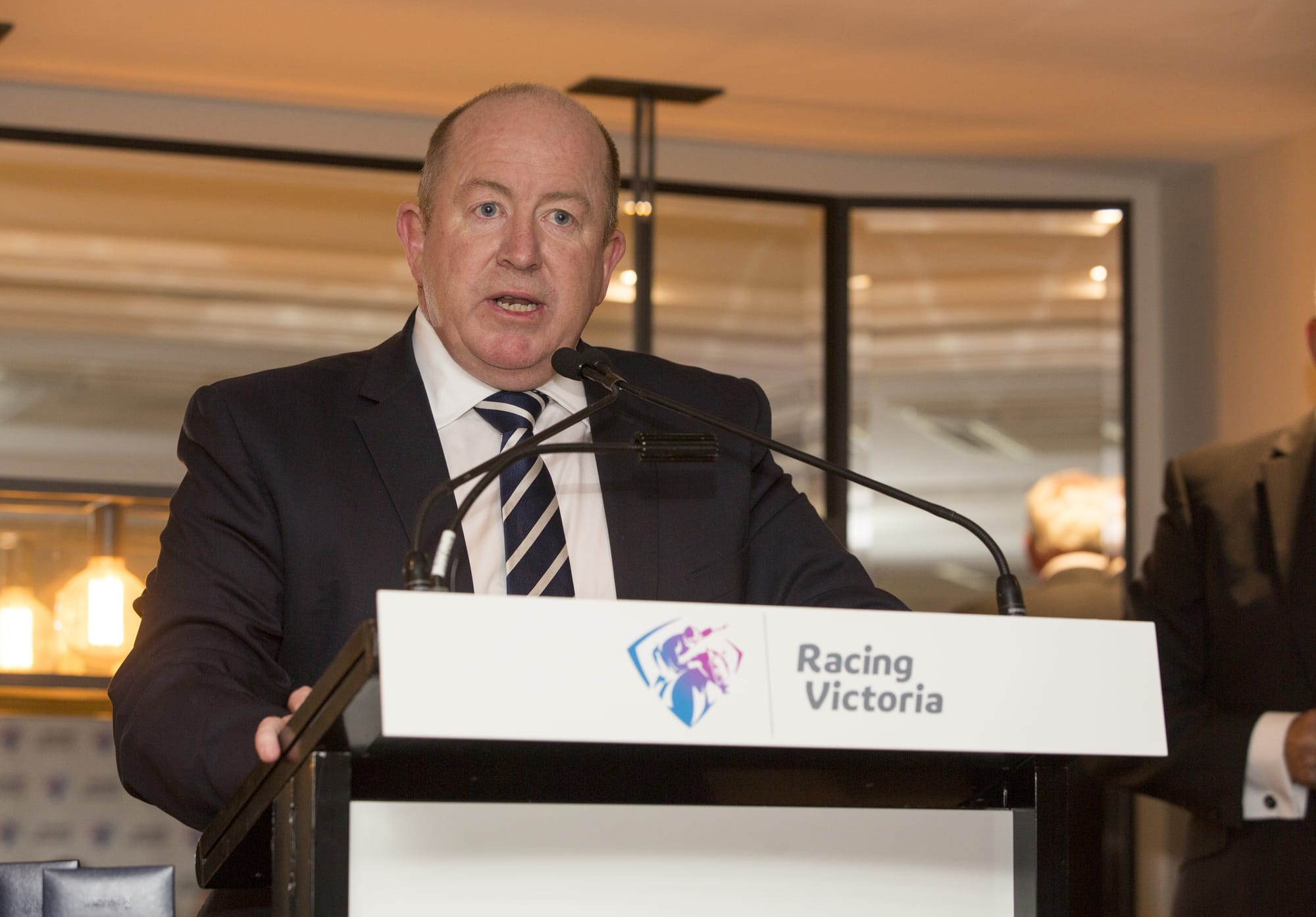
In regards to the operation of stud books, Henry Plumptre, CEO of NZ’s Cambridge Stud, emphasises that keeping both Australian and New Zealand’s editions in proper order is critical.
“Basically the DNA of any breeding jurisdiction is its stud book. That’s what gives it the integrity, that’s what basically keeps the breed and the racehorse in the shape that it’s in. (So) those records have to be maintained,” Plumptre said.
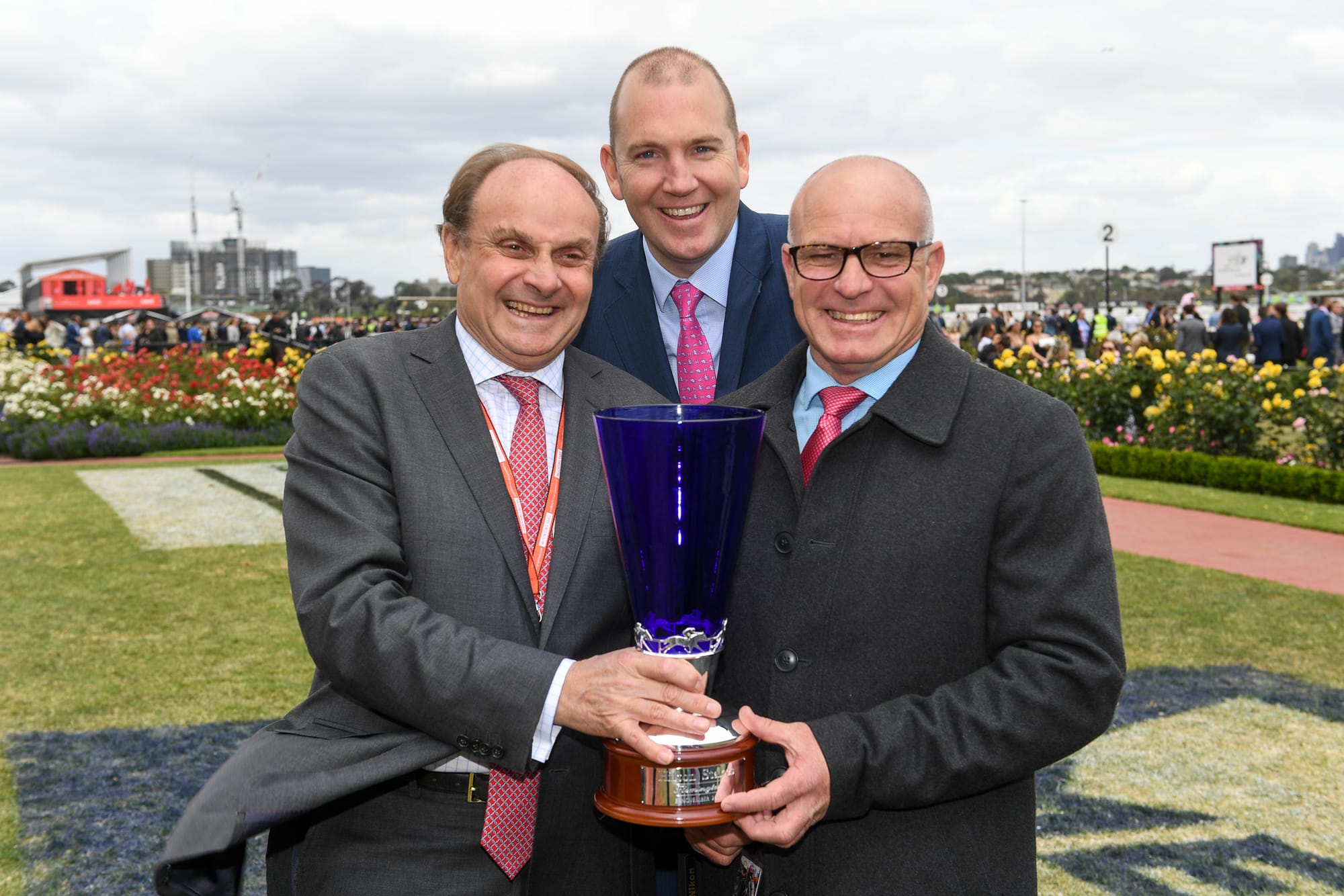
“If you don’t have that central control of the breed – with the registration of everything that’s going on with services, foals, branding, identity kits and microchipping – the whole system falls apart.
“My understanding is the Australian Stud Book is well-advanced and a very good tool still. But like all of these things, you know, they’re only as good as the software now, because it’s all software and websites and computers.”
Related Articles
Straight Talk – Andy Makiv on Godolphin’s future plans, plus racing and politics and the upside for breeze-up sales
In this week’s Straight Talk, Andy Makiv gives insight into Godolphin’s plans after the sale of Crown Lodge, while Tim and Bren chat politics, pacemakers and breeze-ups.
The advertising carve out – What does it mean for racing, wagering and media?
Having spent three years fretting about where the federal government may land on wagering restrictions, thoroughbred, harness and greyhound racing have received a host of specific carve outs which explicitly exclude them from the definition of a ‘sporting event’, but there are still a couple of unanswered questions.
Royal Ascot – Day 2 in Photos
All the action from the second day at Royal Ascot from the view our photographers Bronwen Healy and Darren Tindale from The Image Is Everything.
