
How politics and a proposed advertising ban took the oxygen out of federal wagering reform
A ban on gambling advertising was just one of the 31 recommendations of the You Win Some You Lose More Report, but 1000 days after its release, Bren O’Brien says the political focus on only that one aspect has meant a missed opportunity to create a national approach to wagering reform.
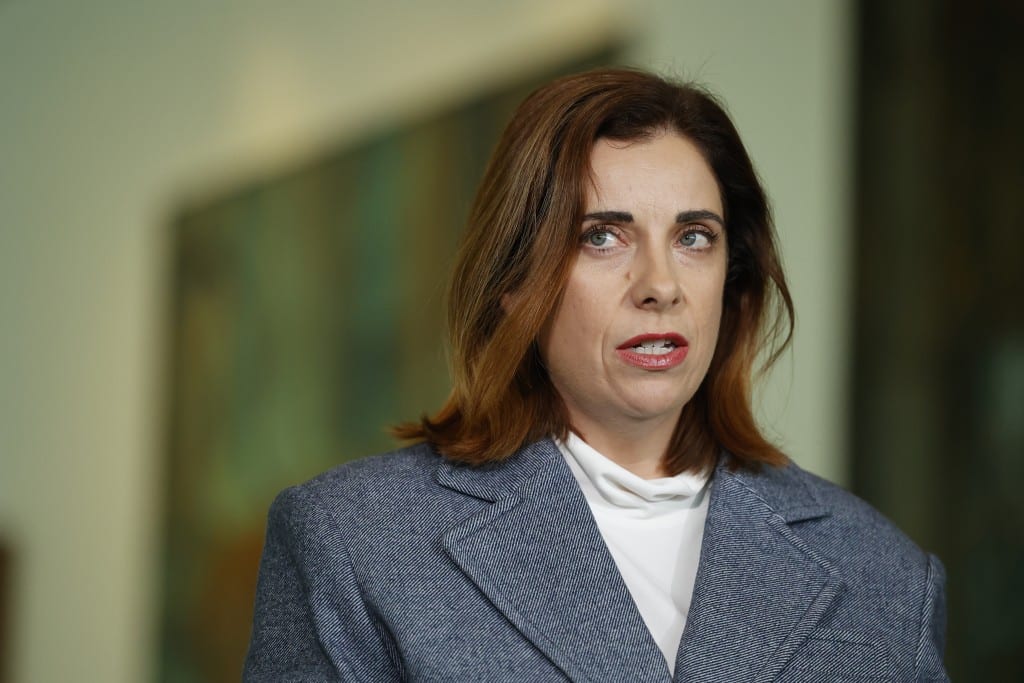
Analysis: When Standing Committee chair Peta Murphy released the You Win Some, You Lose More Report in June 2023, it was the culmination of the most significant federal government inquiry into the multibillion-dollar Australian wagering industry.
The Committee was bipartisan and made 31 recommendations that it said applied “a public health lens to online gambling to reduce harm across the whole Australian population”.
The inquiry itself revealed a disconnect between how wagering companies saw themselves and how society, as reflected in the views of federal politicians, saw them. On one particular day of the hearing, Murphy tore through several wagering executives in what was a “look-at-the-mirror” moment for the industry.
From that public humbling, many of the major players in the wagering game have taken steps to demonstrate an improved contribution, having realised how far out of touch they had been.
The 31 recommendations put forward may have offered the biggest challenge yet to the Australian wagering industry’s social licence, but it also offered an opportunity to forge forward with a national approach in what, from a consumer perspective, is a fragmented market.
But then came the politics. It’s arguable that the politics actually began the moment the report itself was named after a message that became nationally recognised through a tagline from the National Consumer Protection Framework for online wagering.
The proposed phased advertising ban, recommendation 26, immediately sucked up all the political oxygen from the other 30 items put on the agenda.
The capital to be gained from pursuing those reforms proved too valuable, especially when the Albanese government delayed the reforms.
It was particularly useful fodder for those on the crossbench, and even then, opposition leader Peter Dutton used gambling advertising bans for political leverage.
The wagering industry braced for impact. At an industry conference in September 2023, the overwhelming feeling was that it just wanted the band-aid ripped off, so it could move on to whatever the new reality may be.
But that festering band-aid remains.
When the then-Communications Minister Michelle Rowland began discussions with various stakeholders in August 2024, the discussions leaked to the media and caused significant political fallout. Those prosecuting a case for recommendation 26 to be implemented with haste, made merry, as did harm minimisation advocates.
Rowland’s replacement, Anika Wells, has held preliminary discussions but has made little political progress, not helped by questions about how many sporting events she and her husband attended on the public purse, which forced her to keep a low profile.
The government stance, led by the Prime Minister, is that it has done more than any previous government when it comes to gambling harm measures.
Opponents argue, with some merit, that it has lacked the political motivation to tackle the advertising ban because it would significantly impact not only the wagering companies but also the media on which it relied to get its message across.
Keeping the candle burning on the You Win Some, You Lose More Report have been cross-bench MPs like Andrew Wilkie, Kate Chaney, David Pocock and major party backbenchers such as Mike Freelander (Labor) and Simon Kennedy (Liberal).
It is that one recommendation that continues to dominate the discussion. Even this week, on the 1000th day since the report’s release, it was the advertising ban that drew all the attention, with media appearances by independent MP Chaney and the Australian Medical Association.
But as Chaney would well know, having been on the committee that compiled the report, the You Win Some You Lose More Report was about much more than advertising.
Among the other recommendations were aspects such as the establishment of a national regulator, a national ombudsman, nationally consistent minimum bet limits, greater consumer protections, measures to combat illegal gambling, and most critically, a federal minister with a dedicated remit for online gambling harm reduction.
Significantly, it also considered, but did not recommend, affordability checks.
While implementing all of the above recommendations would have required major reforms and serious discussions and negotiations with the states and territories, they should at least have been broadly discussed.
It may have been determined that they were impractical and even not desirable, but at least their feasibility would have been further explored.
Instead, what is a complex industry, with complex challenges that require well-thought-out public policy, has been left in stasis by the simple politics of the advertising ban.
What should have been a reasoned discussion of how Australia wants a regulated and responsible wagering industry to look like in a rapidly evolving international betting landscape has become an argument about just one, albeit important, aspect.
It has become such a politically toxic issue for the government that they seemingly do not want to touch it. However, that approach has had a negative impact on a raft of other measures that could have provided a framework for how the industry moves forward.
It was the ability of politicians, led by the late Peta Murphy, to work across the political divide with a view to wagering harm minimisation to come up with that framework, as imperfect as it may have been.
It was real progress on a necessary step towards a coordinated federal approach to wagering. What was needed was leadership from all sides of the discussion.
But the same political system’s inability to see beyond politics is why many other key and important measures, which could have led the way forward, are being left to wither.
Author

Related Articles
British industry demands stronger action on illegal gambling
In parallel with concerns expressed by the Australian wagering industry, the Betting and Gaming Council in the United Kingdom has outlined a five-point plan to stop British bettors from turning to black-market operators.

Anti-illegal betting council strengthens taskforce with addition of three expert members
The IFHA’s Council on Anti-Illegal Betting and Related Crime has strengthened its global expertise with the appointment of three leading integrity and sports law specialists as it expands international efforts to combat illegal gambling and protect the integrity of racing and sport.

Tricks of the trade – Promotion lotteries in government’s sights
Over 80 companies that offer trade promotion gambling services, including major players in the wagering industry, are set to be impacted by a proposed federal government ban on lottery or sweepstakes products.
