
How punters selling access to their accounts could find themselves out of pocket
Promises of a small windfall could amount to a substantial fine for those who look to sell access to their betting accounts online.
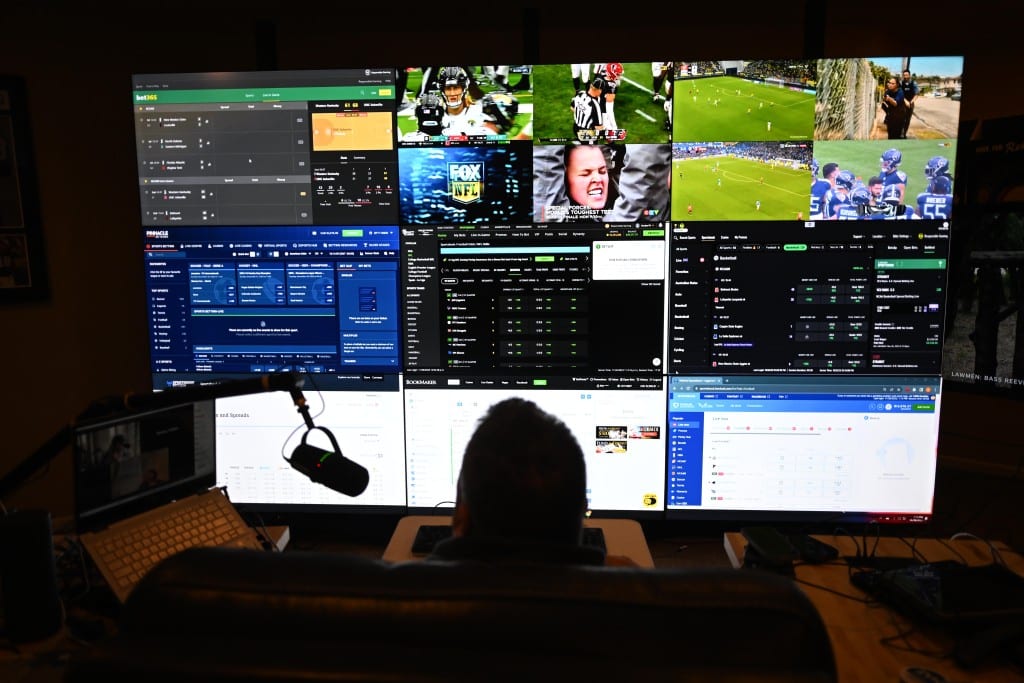
Betting account holders who sell access to their accounts could be risking a fine of up to $18,900, as scrutiny grows on the practice of third-party-operated accounts.
The Straight revealed earlier this month that the Northern Territory Racing and Wagering Commission (NTRWC) issued a reminder to its licensees of the importance of remaining vigilant to any third-party activity that seeks to obtain, use or control customer betting accounts.
Several companies are using social media platforms to promote the purchase of betting accounts for anything from $100 to $800.
While third-party operation of an account is usually against the terms and conditions of a wagering operator and has potential implications when it comes to obligations under anti-money laundering legislation, it could also represent a breach of the Northern Territory Racing and Wagering Act 2024.
The Straight has been made aware that section 275 of the Act, which was significantly upgraded in 2024, specifically addresses what it refers to as “Offences about misrepresentation of identity”.
Under that aspect of the Act, the Director of Racing and Wagering has the power to prosecute, but, to this point, it is believed that it has never used those powers.
It means that those selling the accounts, and those purchasing them, could find themselves lighter in the pocket.
The Act says a person must not misrepresent the person’s identity for the purpose of making a wager.
An offence occurs if a person intentionally makes a wager and intentionally misrepresents the person’s identity to a licensee or the licensee’s employee at the time of purchase.
A breach of this aspect of the Act could result in a maximum fine of 100 penalty units, or $18,900, being levied.
The same penalty applies if the person intentionally presents a false identification document or information to make a wager.
Furthermore, if someone intentionally provides a form of identification to another person, and that identification is used to misrepresent the other person’s identity to make a wager, then they too could be liable to a fine of the same amount.
With strict liability applying to that aspect of the Act, it means that any prosecution would not need to prove intent, negligence, or fault on the part of the person who provided identification, with the focus only on whether the Act occurred.
The law applies to anyone who holds an account with a Northern Territory-licensed wagering operator, which makes up the vast majority of the major licensed corporate bookmakers in Australia, including Sportsbet, Entain, bet365, PointsBet and betr.

As this aspect of the law appears to have never been tested, it is unclear how it would be applied, especially to those who are not physically present in the Northern Territory.
Any prosecution would fall under the remit of the Director of Racing and Wagering, not the Northern Territory Racing and Wagering Commission, which regulates the industry, making any prosecution quite complicated.

Author

Related Articles

Analysis: Japan’s determination to fend off legalised sports betting, despite a massive black market
Japan isn’t alone in confronting the challenge of billions of dollars moving offshore through global black market sports betting platforms, but its determination to keep broad sports betting illegal in the country makes it an even harder task, writes Bren O’Brien.

PointsBet helps power MIXI sales growth
Japanese company MIXI’s investment in publicly listed Australian bookmaker PointsBet has enabled it to supercharge the contribution of the betting side of its business.

Escalante steps down from Virtual Gaming Worlds role after Perth arrest
The arrest of WA-based entrepreneur Laurence Escalante, one of the world’s most successful gambling technology figures, has prompted him to step down as chief executive and executive chairman of Virtual Gaming Worlds.