
How Rachel King became a queen of the Japanese riding ranks
When Rachel King flew back into Sydney recently after a riding stint in Japan, it wasn’t major sporting news. Perhaps it should have been.
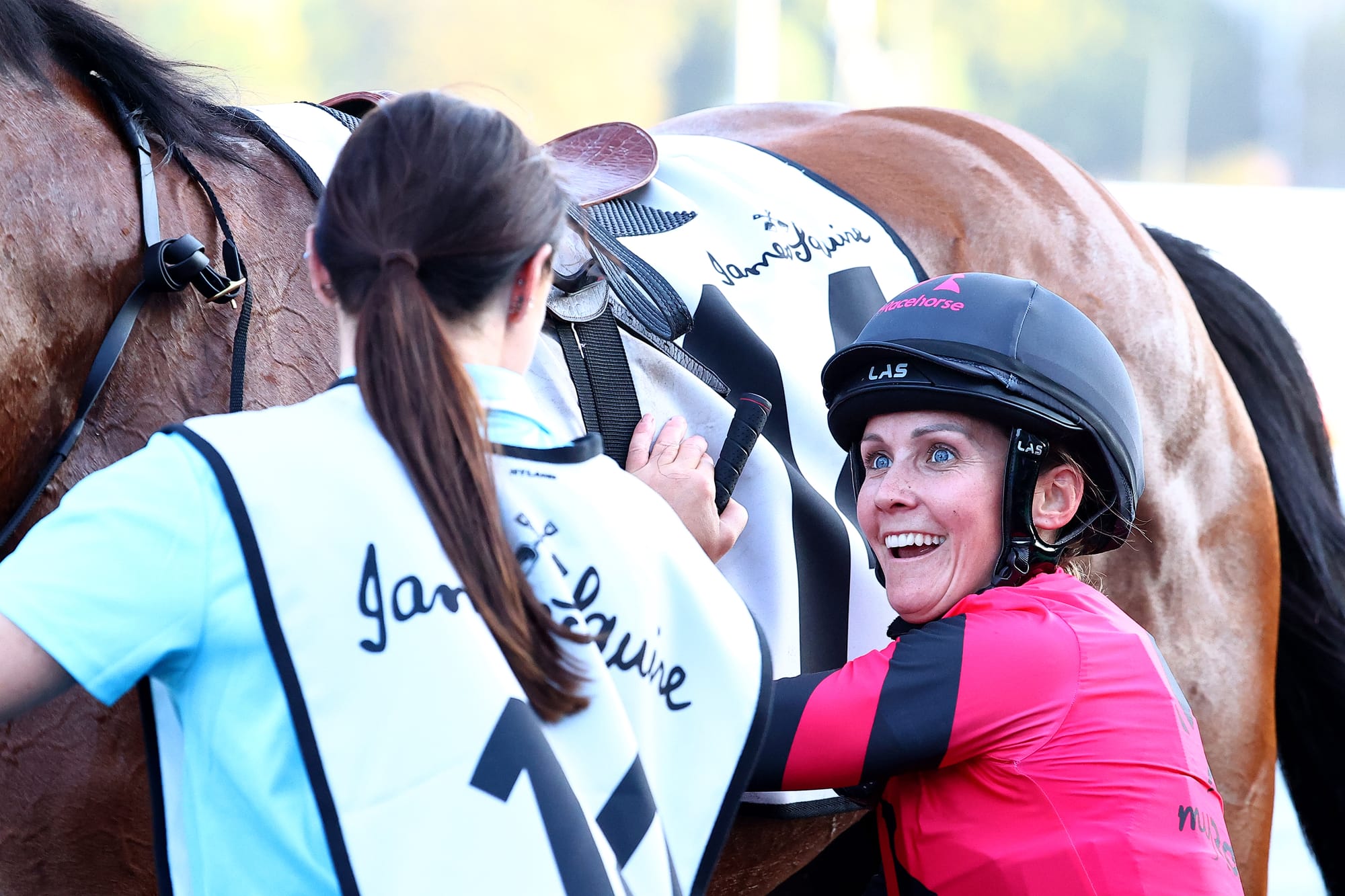
Working in a country foreign to her in terms of custom, culture and language, King achieved remarkable success in just two months.
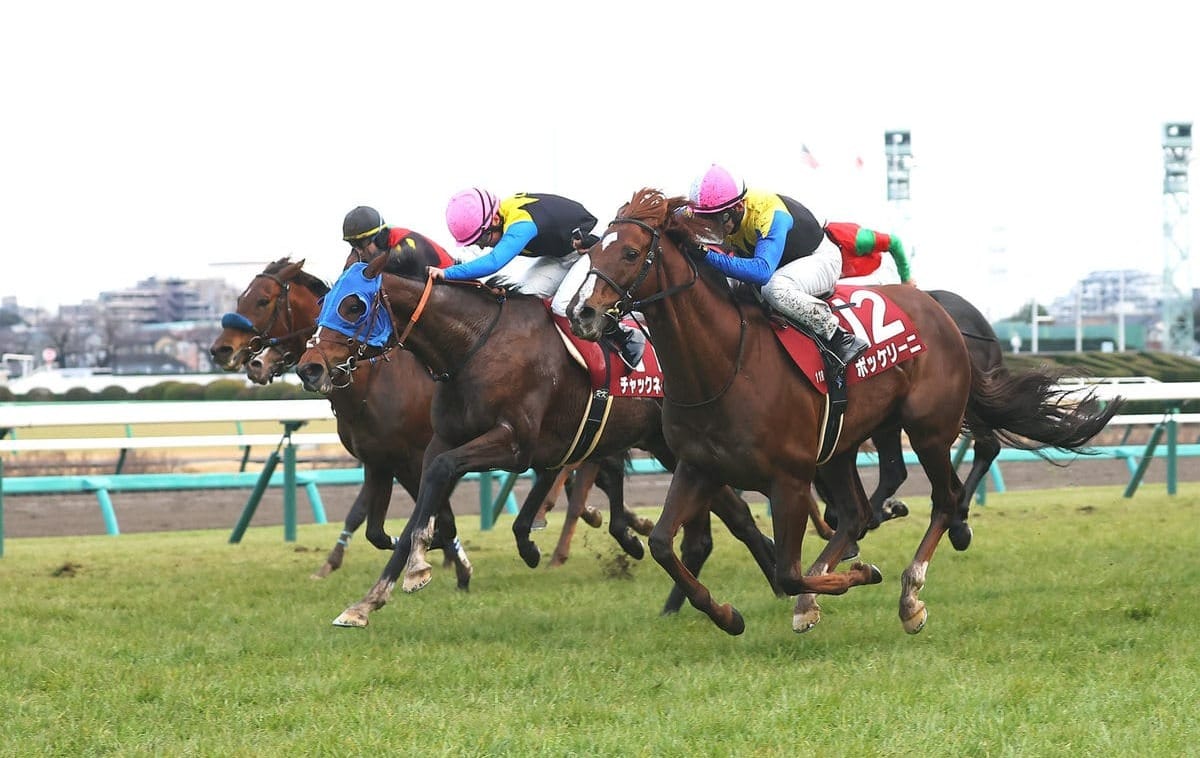
She won 16 of the 139 races she contested, ran second 12 times and third on 17 occasions. She won seven stakes races and became the first visiting female jockey to claim a Group (flat) race, urging Chuck Nate to victory in the Group 2 American Jockey Club Cup for her main trainer and sponsor Noriyuki Hori.
Racegoers often queued for her autograph and cheered ‘King! King! King!’ from around the mounting yard. Such was her accomplishment in this great racing nation, in fact, that she still sits in 14th position on the Japan Racing Association’s jockey rankings.
Born in Waterperry, near Oxford, this highly respected horsewoman started riding at pony club in the UK and took out her British jockey’s licence in 2006.
Her Australian ‘permit’ followed in 2014 and King quickly became well-known here through her association with trainer Gai Waterhouse.
Last spring, Group 1 wins on Just Fine in the Metropolitan at Randwick and Ozzmosis in the Coolmore Stud Stakes at Flemington further boosted her status.
But even such ‘top tier’ victories couldn’t quite prepare her for when, arriving in Japan, she found herself sharing the same specialist interpreter that global champions Ryan Moore and Joao Moreira use when in Tokyo, not to mention premier Aussie rider Damien Lane.
Yet, as exhilarating as this professional adventure proved, it’s the smaller things from her time in Japan that King talks most passionately about, the often invisible ‘specifics’ the country’s horsemen and women value so highly. Especially trainer Noriyuki Hori.
“He’s definitely a perfectionist,” she says. “Nothing is left to chance, which I loved and his staff are the same. They’re very passionate about their horses and just little things, like assessing every move the horse makes; you know, how they’re feeling every day.”
And she means every day, not just race day. Trackwork mornings seem especially crucial.
“The trackwork rider would ride them for their warm-up, walking and riding around the training complex and then I’d meet them before they’d go on the track,” she said.
“And when I got on, I’d give the horse a little trot, make sure I felt the horse was OK, give feedback and then go off and do (the) work.
“I probably gave just as much, or more feedback to the trackwork riders who were riding these horses every day, than the trainers, because they know every little thing about these horses.
“And they would want to know every little thing you felt in every gallop.”
“It probably made me really switch on, even just at trackwork days, just to make sure I could give that really detailed feedback for every horse I rode.”
That detailed-led approach is something she has already adapted to trackwork in Australia.
“Definitely,” she says. “I think my assessment of horses after a gallop, or a race is probably improved. Hopefully, that can help the horse and the trainers I’m riding for.”
It is this kind of attention to detail that King believes lies at the heart of Japanese racing’s much-envied crowd engagement.
“They understand the horses,” King reflects. “They follow the horses religiously, because they’re so passionate about it; you know, they’re there every week.
“They see the care and attention the horses have and then on the other side, they see the work the jockeys are doing, the trainers are doing, how the owners are so involved.
“They’re a fantastic crowd. You can tell their love for the horse, their love for the races. Most of them are probably having a bet as well, but it was definitely a difference just in the way they’re so supportive of the horse, the jockey.
“It was an incredible atmosphere to ride in, just the sheer number of people that go every day, even when it was the middle of winter.”
While jockeys may be idolised, interaction with the crowds, especially pre-race, is actively discouraged.
“Just keep yourself to yourself and sort of look forward,” is how King describes it.
With the 12 races on each of Saturday and Sundays, spaced half an hour apart, it is a potentially frenetic scenario.
“It’s pretty full on,” she admits. “I did have one day where I had 12 (rides) and that was very busy. Not many (jockeys) do actually all 12 races, because it’s a little bit hectic.”
There were other significant differences between Australian and Japanese racing, including the procedures around loading horses into the barriers, while there is an expectation that a horse’s behaviour is the responsibility of the jockey.
“It’s different with the gates, (it’s) similar to being in Europe, I guess,” King says. “They put the horses in, but then they don’t stay with you.”
Which is fine if the horses stay calm. But when they don’t, jockeys are left on their own, and on one occasion, King found herself in a tricky spot.
“They understand the horses. They follow the horses religiously, because they’re so passionate about it; you know, they’re there every week.” – Rachel King
“Just as the gates were opening, my horse lunged forward but then flipped itself over backwards. So it was upside down and facing the wrong way. I managed to cling on to the side a little bit to try and save myself,” she said.
“They probably took a little longer to get out of that situation. It’s just how it works there. In Australia, we’re obviously used to having the barrier attendants in the gates with us, so they’re right there, a little more involved.”
As if to emphasise this disparity in regulation, King also received ‘a small fine’ for her horse’s barrier mishap.
“They see it as, you know, ‘you let your horse behave badly’. They’re real perfectionists. So something that goes wrong, they want to fix it straight away. Someone’s got to be accountable for it and unfortunately, it’s the jockey.”
She also observed the stewards’ rooms in the two countries operate differently.
“I felt like it maybe wasn’t quite as structured (in Japan) as the Australian stewards’ room. You might be there giving your evidence, but – say you’re in an incident with one other jockey – they might not even be in the room.
“So it’s different in that way. I think there could definitely be a little bit more structure, just to help with that … but there’s so much that they do right.”
G3 1600m Tokyo Shimbun Hai:
Won by 7h 1. SAKURA TOUJOURS (Neo Universe) under a peach from the Princess of Pace: Rachel King ,
King’s second Group win on the JRA!
SAKURA TOUJOURS first!
Fav 6. MASKED DIVA blew the start, boxed on well.#JRA pic.twitter.com/nzvLx3RZWD
— Graham Pavey (@LongBallToNoOne) February 4, 2024
Women are also not as prominent in the Japanese riding ranks, even at trackwork, as they are in Australia. King is currently the only woman ranked in the Top 20 on the JRA premiership, but she thinks that is set to change.
The toughness of Japanese-bred thoroughbreds is famous the world over and that resilience was something that left an impression on King
“One thing I noticed was how big and strong they are. They’re running over a mile, 1800m first-up and not a problem. They’re definitely bred very tough,” he said.
It became clear to King that this conditioning starts early in life. Visiting one of the country’s major stud farms, she recalls seeing a two-day-old foal out in the snow. “And when I saw that, I thought ‘well, no wonder these racehorses are so tough when they grow up’. That’s how they start their life.”
While she appreciates the anticipation around the return of Ozzmosis this weekend in the Group 1 Galaxy at Rosehill – the three year old she describes as her “main man” for Sydney’s autumn carnival – she can’t forget the “couple of good Group winners” she rode in Japan.

Chuck Nate was particularly special.
“(He was the horse) I won my first Group 2 on over there. And he was a lovely staying horse that I was hoping they might bring to Sydney actually, for a Sydney Cup,” King said.
“It didn’t quite go that way, but he’s just a really nice, tough stayer.“
At the other end of the scale is a youngster called Dual Wielder, who she rode through his first two starts.
“I won on him the last weekend I was there – and I think, all being well, he’s going to be a very nice horse for the future. He’s a big strong colt with a lot of potential.”
Related Articles

🔒 🔒 National tote cleared for takeoff, testing to commence next week
A humble greyhound race at Mt Gambier or a horse race at Warwick could be set to mark history next Thursday as Tabcorp’s testing of a national tote steps up ahead of an anticipated launch of One Pool early next month.
🔒 🔒 From ‘old news’ to Group 1 headlines – how Cliff Brown found his way back into Australian racing
After 13 years in Singapore, Cliff Brown returned to a changed Australian racing landscape, rebuilding patiently with a small stable now represented by Sepals and Von Hauke in the Sir Rupert Clarke Stakes.

Colic surgery sidelines dual Group 1 winner Observer from stud duties
Darley’s first-season stallion Observer will be rested from stallion duties after an early diagnosis led to surgery overnight, with no date set for his return.
