
How Wordsmith rewrote the course of Tassie racing
For over a decade, the progeny of Wordsmith, most carrying the Gee Gees moniker, dominated Tasmanian racing. But with the passing of owner Paul Geard and the retirement of the prolific chestnut from stud, that era is coming to an end.
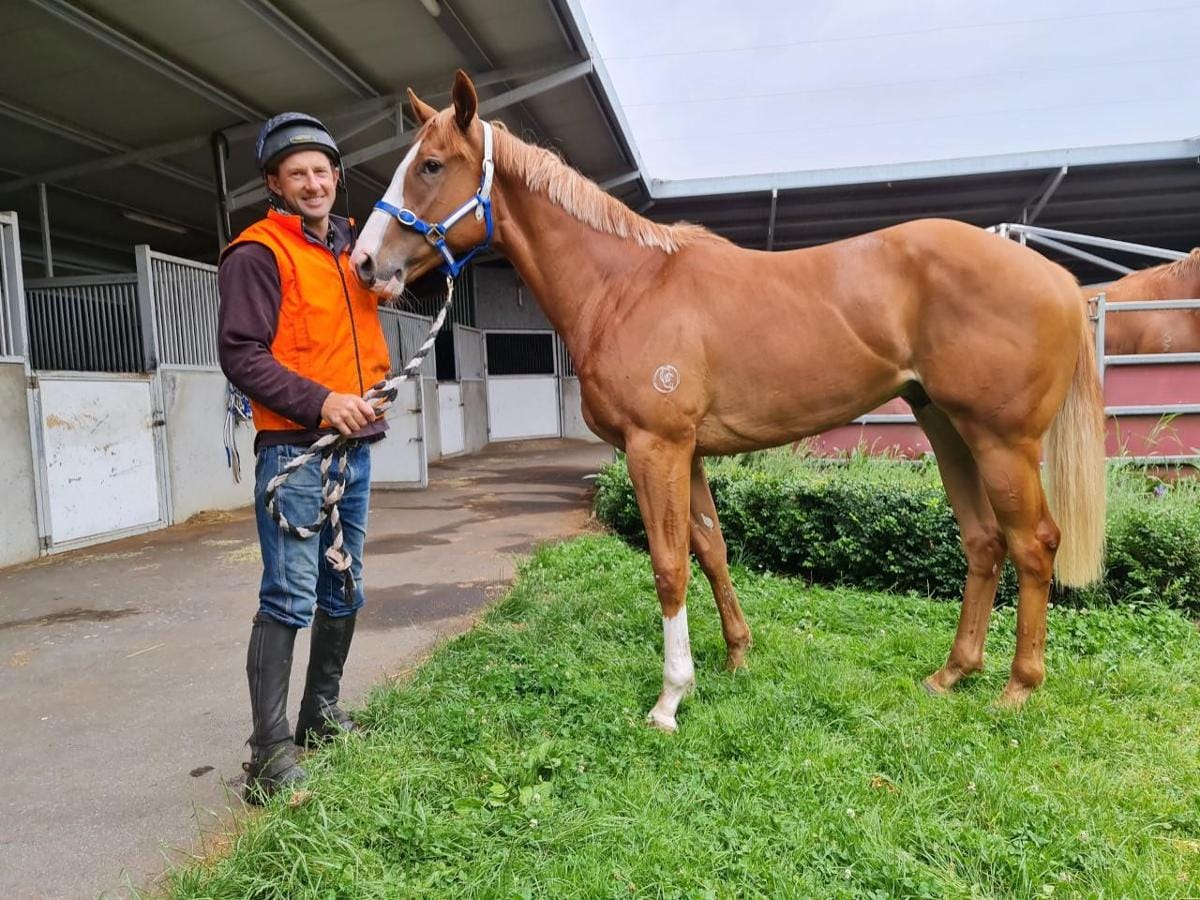
A half an hour north of Hobart, a squiggly coloured chestnut horse resides in a paddock on a large anything-goes farm.
The old horse has a view of his surrounds. In horse racing terms, his kingdom.
He is distinguishable by his markings; a rich red horse with a big splash of a blaze and a single white sock – and an extraordinary CV.
Wordsmith is now 21 and decommissioned.
If there is dark romance in death, then there seems to be some symmetry in the conclusion of Wordsmith’s stud career and the death last year of his elderly owner, Paul Geard.
The story of Wordsmith is a bit like the story of Australia and its former reliance on wool. If Australia once rode on the back of the sheep, then Tasmanian racing rode on the back of Wordsmith and his “Geegee” (or “Gee Gee”) horses.
Geard was much loved – “a farmer at heart” according to trainer Stuart Gandy – and it seemed that every Tasmanian racing participant attended his funeral in March last year. A sense of dread accompanied his passing.
There would now be a large void on an island with a delicately small thoroughbred population.
Could it be filled?
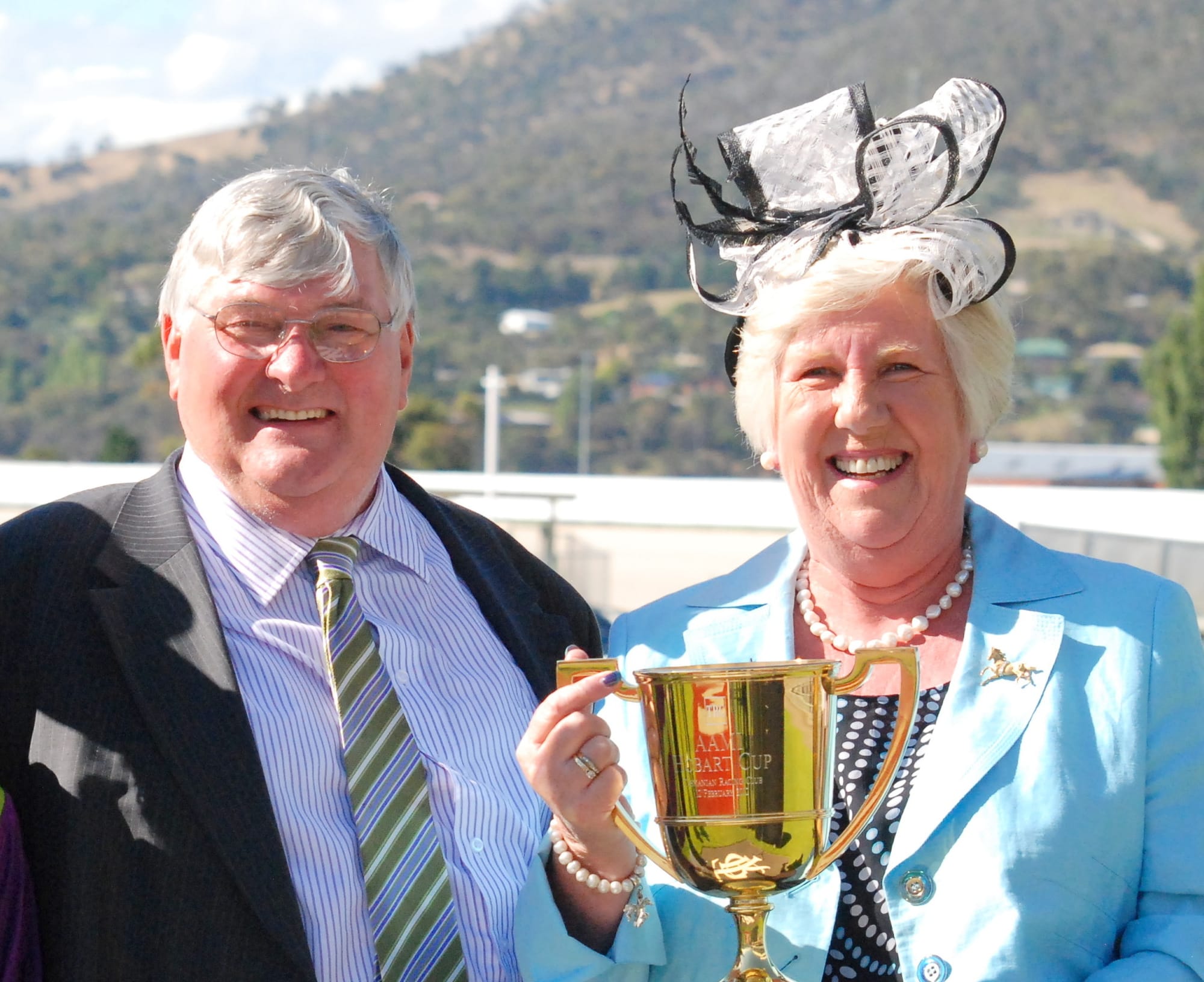
Geard’s “Geegee” horses were not just synonymous with Tasmanian racing but vital to it.
Almost all were sons and daughters of Wordsmith, a once “insignificant” yearling who became a good racehorse then an unwanted stud prospect at an Inglis mixed bloodstock sale.
Geard bought him for $25,000 as a retired four-year-old and took him to the Broadmarsh farm to mate with his mostly bargain-basement mares who shared the property with sheep, dairy and beef cattle. He sold some but raced most.
At last count Wordsmith’s family farm-bred progeny had hauled in $14 million. Little wonder Coolmore sniffed around when Wordsmith’s Tassie two-year-olds started winning with startling regularity 15 years ago.
Coolmore reportedly offered $1 million, the parochial Geard said no thanks, just as Geard had been reluctant to campaign his horses away from Tasmania.
For many seasons, the Wordsmith Geegees, with their distinctive circus-horse markings, numbered four, five or six in what seemed every single race run in Tassie. They won hundreds of them. His winners to foals strike rate was staggering.
In 11 seasons from 2010/11, Wordsmith had 325 foals for 259 runners and 161 winners – of 587 races. They won juvenile races, Oaks and Derbies.
Wordsmith carried the Apple Isle where his progeny raced almost exclusively. Of those 587 races won, less than 40 were outside the island.
Wordsmith progeny statistics by crop (Source: Arion.co.nz)
Little wonder many were wondering about the future of Tassie racing when Geard died.
Family members do not share his passion. Most of the Geegee horses have been on-sold. The moniker will disappear soon enough.
And old mate Wordsmith, the 21-year-old Apache Cat of Tassie racing, can now only rest on his laurels.
Stuart Gandy had been Geard’s private trainer for 15 years. Gandy had 187 wins by Wordsmith horses. Leon, Dean and Trent Wells also trained many of the Wordsmiths, with 147 wins.
Without Geard, Gandy is now on his own and rebuilding. He still has Wordsmiths in the stable. He says the unbeaten two-year-old Geegees Mistruth “could be anything”.
But an era is ending, Gandy says.
“In his prime, he was huge down here. Four or five runners in every race. The Geegees moniker has been huge down here for a long time,” he said.
“They are so easy to deal with. They’re mostly sprinters but they’ve won a Derby, an Oaks, a Devonport Cup, run second in a Hobart Cup; multiple listed two and three-year-old winners.
“In his first season he had 13 runners and 11 individual winners.
“We’ve had some great stallions down here, like Savoir Vivre, Tough Speed, West Quest. Wordsmith came along after them and took over.”
There are so many Wordsmith Geegee winners that the list becomes a bit of a blur. Geegees Golden Girl (Strutt Stakes, Tas Oaks), Gee Gees Top Notch (Elwick Stakes), Gee Gee Secondover (Newmarket) and Geegees Doublejay (15 wins) were among the best.
“You were unlucky if you couldn’t win a race with one of them,” Gandy said.
Ironically, the man who trained Wordsmith was one of the unlucky.
“Had two of them and both were pretty useless,” chuckles Mornington trainer Shane Nichols.
Wordsmith won four of 17 starts for Nichols. His best win was the 2007 The Debonair, usually run at Flemington but run that year over 1200m at Moonee Valley during a Flemington refurbishment.
“He was my first stakes winner, a very special horse for me,” Nichols said.
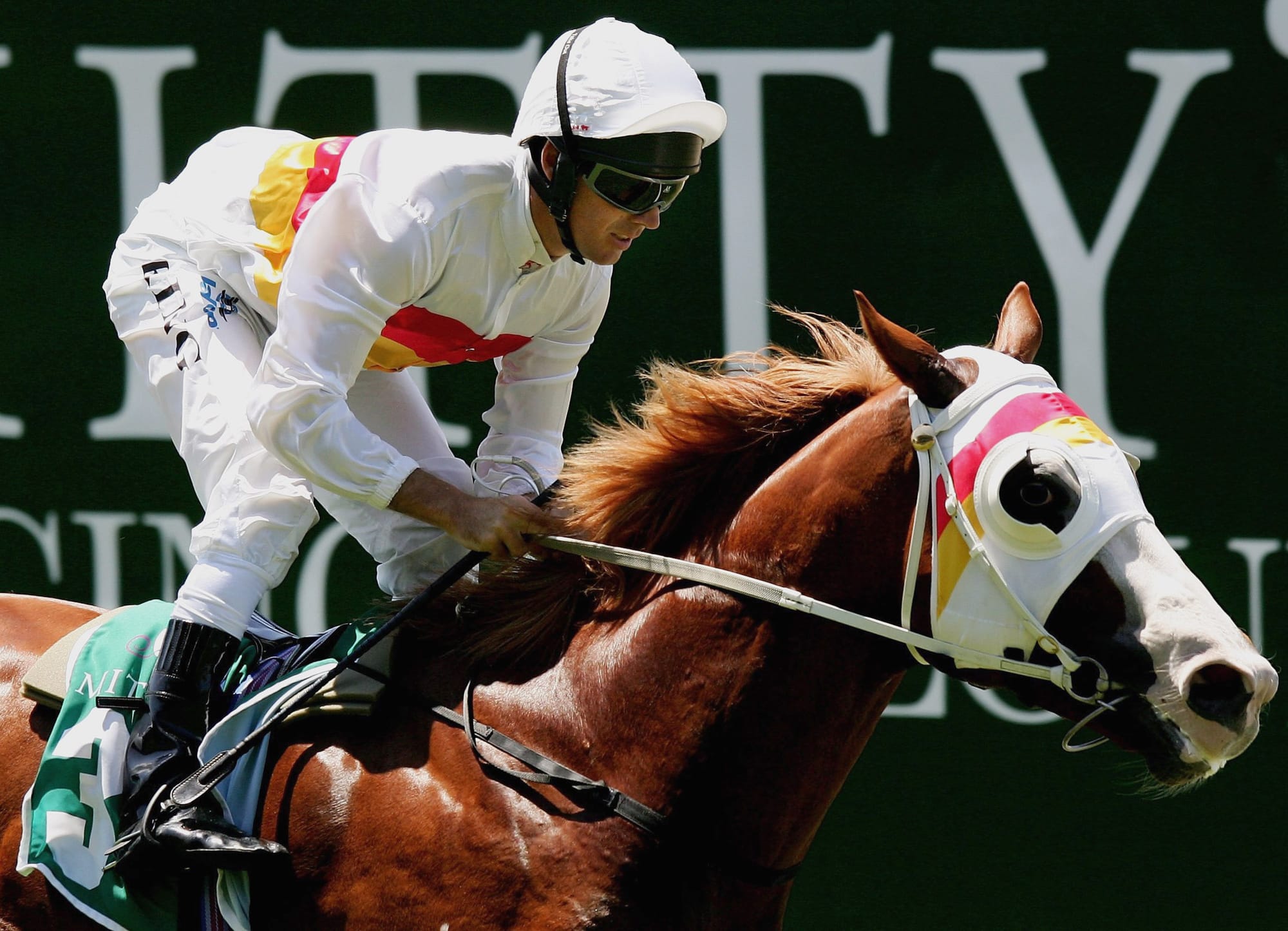
Wordsmith was by Testa Rossa out of one of old Don Brown’s mares, Way With Words, a handy racemare who had already produced a good Nichols runner called Anyways.
He was reared at Yallambee Stud in Victoria and was described by the farm as an “insignificant” weanling who was retained to race by his breeder. He won on debut at Werribee, while technically still a yearling, attracting an $850,000 (rejected) offer from David Hall in Hong Kong.
His form deteriorated late in his career due to multiple ailments, including a bowed tendon and throat issues.
“I’m so proud of the horse. What he did for Tasmanian racing is staggering.” – Shane Nichols
Hence he appeared in an Inglis catalogue where Geard, a fan of the progeny of Testa Rossa, paid a pittance for him.
“I’m so proud of the horse. What he did for Tasmanian racing is staggering,” Nichols said.
Not just Tasmanian racing, Gandy points out.
“A lot of them have unbelievable markings; white legs up to their knees, white stripes around their bellies,’ he said.
“They are very flashy and he has had heaps of off the track horses and won heaps of competitions. They’re quiet, they’re good jumpers. There are lots of them at pony clubs down here.
“Rehoming is a battle for all trainers but the Wordsmiths have been easier than any to rehome.”
 Bren O’Brien
Like all voids, the one left by Wordsmith will be filled, While Tasmanian breeding is on a small scale compared to the mainland, there were 12 active stallions in 2023. However, it is small enough to feel the end of the Wordsmith era.
Likewise the void left by Geard.
For a decade or more prior to Geard’s passing, many wondered out loud what Tassie racing would be like without him and his swarms of Wordsmith Geegees.
As for the old horse with the funny markings, he’s “really well” according to Gandy.
“Who knows, we might put one or two mares to him but he’s done his job, earned his retirement,” he said.
“He’s been some horse.”
Related Articles
Fastest breeze, highest price as Nolen’s Showtime colt shines at Magic Millions
Experienced vendors Tal Nolen and Kenmore Lodge’s Cameron and Kellie Bond came out ahead at a “patchy” Magic Millions Horses in Training Sale with multiple six-figure sales including three of the top four highest-priced lots.
Rowe On Monday – Digging for diamonds, Pinatubo’s strong spring and session plans for Magic Millions
In this week’s Rowe On Monday, G1G’s Gary Diamond on buying, selling and trading future and current stars, some second-season spring joy for Pinatubo and some food for thought as Magic Millions prepares its January catalogue.
Bowditch backing Magic Millions in its quest for breeze-up sale market share
Magic Millions managing director Barry Bowditch is focused on ensuring a strong clearance rate at the company’s Horses in Training Sale on Monday.
