
‘It’s a faceless game’ – Punters urge changes to reinvigorate racing
As wagering on Australian racing continues to plummet, some of those who make a living through betting on it are urging a major change to how it is being promoted.
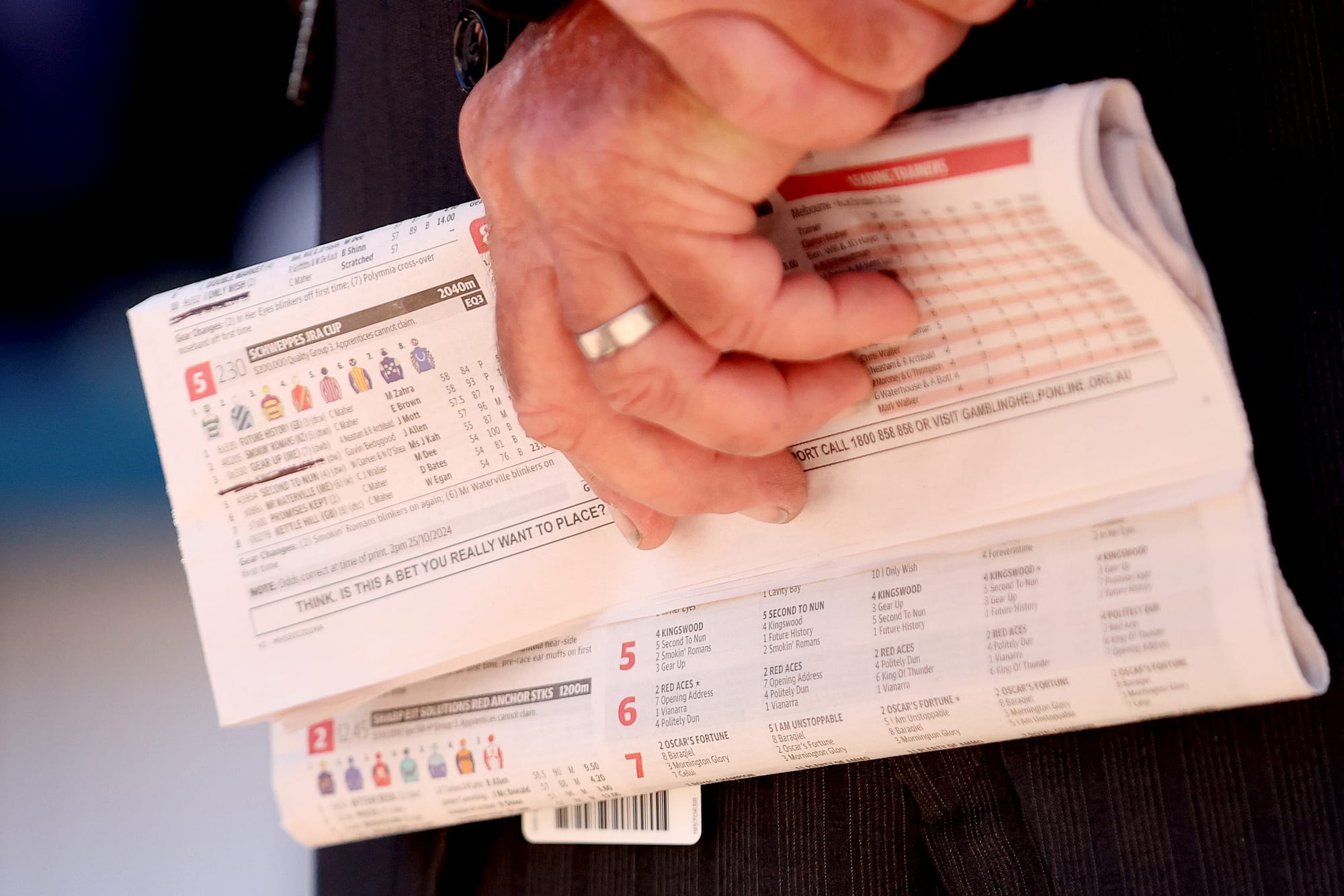
Australian racing’s betting landscape risks becoming indistinguishable from betting on poker machines, according to a prominent professional punter, who believes the corporate wagering landscape has become increasingly “faceless” and focused on marketing rather than bookmaking.
John Walter, a former jockeys’ agent, who worked in the corporate wagering sector and is now a form analyst and professional punter, spoke to the Straight Talk podcast about his broad concerns for the racing industry in light of a massive downturn in wagering on racing of around 20 per cent over the past three years.
The drop in wagering returns is causing a serious challenge for those who run racing, with major drops in revenue and pressures to reduce prize money.
Declining gambling revenue was cited as a key reason for the Australian Turf Club considering the sale of Rosehill, a divisive issue which was recently defeated in a member vote.
Walter and fellow pro punter Nick Heathcote said the current nature of the wagering ecosystem in Australia, compounded by additional regulation, fees and taxation, was acting as a disincentive for people to bet on racing.
“Bookmaking in totality has completely changed. On-course has obviously regressed and with the rise of the corporates, it’s a faceless game,” Walter said in a special edition of Straight Talk to be published this week.
“More and more every day, it’s becoming more like a poker machine. It’s a completely different game (than it was) from a betting perspective,” Walter said.
“Probably the easiest way to sum it up for me. It’s not a game of competition in regards to pricing anymore. It’s a game of competition in regards to marketing, acquiring clients, squeezing the life out of them as much as you can, and holding the people who may be a danger to you at bay as much as you possibly can.”
In a wide-ranging discussion which also covered the challenges faced by trainers and jockeys, and the role of programming, Walter said his experience over the past few years was that sharper punters were being shut out by a system which is focused purely on recreational investment.
“We’ve gone from somewhere near the top of the podium because when the game was built on turnover, the people who were winning or breaking square were highly valuable because we could afford to bet week on week on week, we’d keep coming back. We’d turn over the most money,” he said.
“Now you’ve got to win 10 per cent to 12 per cent to 15 per cent off a client to make them viable where we’ve been pushed below the bottom rung.”
The recent decision by Tabcorp to no longer lead the market when it comes to posting pre- raceday fixed odds for non-metro meetings is just the latest example of the trend towards minimising risk and reducing product offerings, according to Heathcote.
“That’s pretty backward thinking. If I’m a country punter, I’m sitting at the Ararat PubTab on a Friday night, I don’t have any access to my prices until Saturday morning, so I can’t take a multi into Collingwood in the football on a Friday night into the first favourite at Ararat,” he said.
“There’s a million user cases that you can say that that’s a bad thing for racing, not having the product on the shelf. My time at corporate bookmaker Betstar … was all about getting numbers of markets up so customers could look at those markets and then transact into those markets.”

Heathcote said the end of bookmaking products like top fluc and best of the best was also to the detriment and disincentive for betting on racing.
“We’re back to the future a little bit at the moment. We started off with a tote solution at 117 per cent of one tote, then a best tote and SP product, which is 110 per cent, and then now we’re back up to this world tote that we’re all meant to try and digest now at 122 per cent,” Heathcote said.
Walter sees the only way the traditional tote being revived is by dropping takeouts and forcing other bookmakers to re-invest exotic pools back into the tote.
“That instantly brings everyone back into play,” he said. “It brings all the big syndicates, the middle ground players, the guys who break even over the year.”
World Pool, a parimutuel solution spearheaded by the Hong Kong Jockey Club, has been rolled out across major meetings globally, with returns going directly to race clubs.


While it is intended to increase liquidity and therefore enhance price certainty, it has drawn criticism for its increased takeout rate.
“The world tote and the tote product works for a place like Hong Kong that’s got two meetings a week, but we’re being ‘producted’ to death in Australia,” Heathcote said.
“We’re getting asked to bet five or six days a week and we’re diluting the product. The Hong Kong product, it’s like NFL, it’s the cream of the crop, but racing has become like international cricket.”

Both men believe exchange products like Betfair can offer a solution, with due consideration to be given to them being taxed and charged differently that other bookmakers.
“They’re taxed like they’re a bookmaker from day one. And when you stack these taxes on top, I think, their commission, they lose on every bet taken or every winning bet is 80 per cent lost before expenses,” Walter said.
“They’ve had to put in these premium charges, which has driven away a lot of the market sort of seeding players, all the big syndicates, anyone who’s put money into this at their own risk, are sort of walking away because there’s no reward.”
Heathcote believes that Betfair is a product which has considerable value to a professional market, but limited application in a recreational setting
“No one’s mastered the Betfair interface for recreational customers. I can’t see it changing. It’s not a multi-product,” he said.
“It’s not something that Dabble’s got. It’s never going to have the tech sophistication that Ladbrokes or Sportsbet have.
“So those customers are still going to be ring-fenced with the corporate dollar, and that’s going to be fine. But they’ve got the oversight there, though, with Betfair, because all those customers are KYC’s properly. All the AML is perfect, and they’ve got that beautiful oversight on where all the money comes from.”
Author

Related Articles
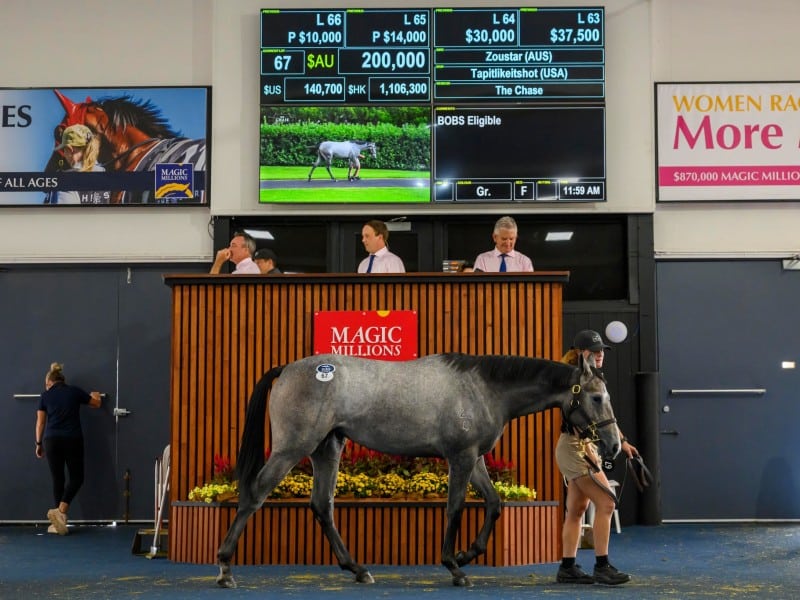
China Horse Club’s Zoustar filly with an American pedigree has a future in the Philippines
Jun Almeda’s $200,000 Zoustar filly headlined a subdued opening session of the Magic Millions Adelaide Yearling Sale as clearance and key metrics fell amid a selective buying bench.

Straight Talk – Golden Slipper preview, J-Mac’s chase for the record, the Hong Kong market and is it the end of cash betting?
Hosts Bren O’Brien and Tim Rowe dissect Golden Slipper day, including James McDonald’s chase for the Group 1 record, and also discuss the likelihood of Hong Kong bloodstock demand surging and a law change which further restricts cash betting.
‘I’m not here to hold the bridle’ – A year in, Kiwi racing boss Ballesty on his plans for New Zealand’s thoroughbred industry
After 12 months in the role, New Zealand Thoroughbred Racing’s chief executive Matt Ballesty is attempting to reposition the national industry for long-term sustainability.