
Japan Cup success completes Aga Khan Stud’s most difficult and remarkable year
Less than 10 months on from the death of the Aga Khan, the legacy of his astute bloodstock judgment has delivered his daughter, Princess Zahra, arguably the greatest year on the track for their horses.
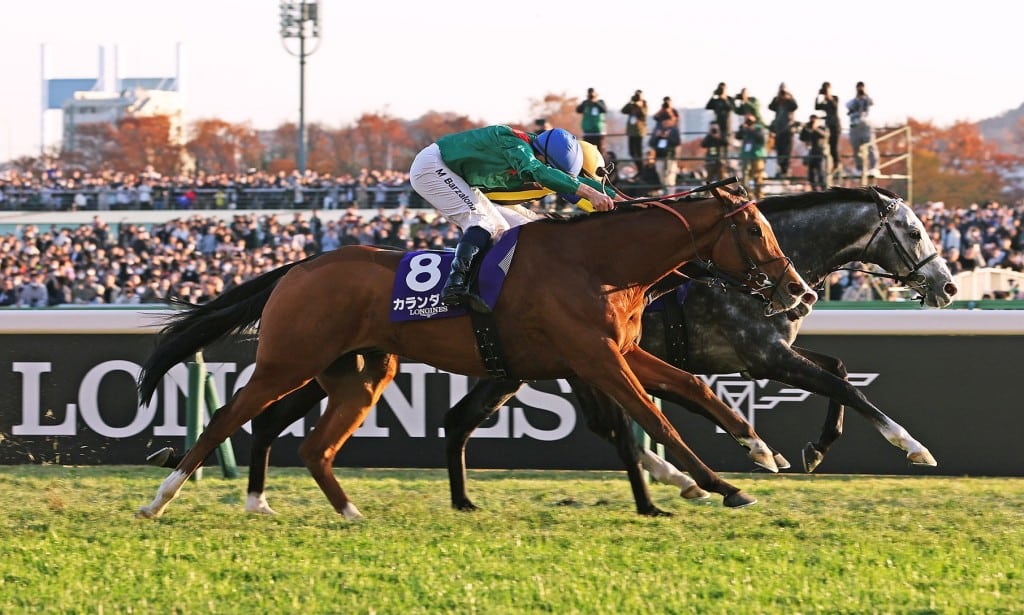
What began as a year of loss for Aga Khan Studs has ended up being its equal most successful in its long history, with Calandagan’s breakthrough Japan Cup win the eighth Group 1 success of 2025 for the famous green and red colours.
The death of His Highness the Aga Khan IV in February was felt around the racing world. Since taking over the bloodstock and racing interests of his late father in 1960 aged 23, he had become one of the world’s most successful breeders and owners, with 176 Group 1 wins.
In that first year, where he was crowned champion owner of France, he won eight Group 1 races across three countries, France, Germany and Ireland.
It would not be until 1999 that the Aga Khan would again win eight Group 1 wins in the same year, one of which was Sinndar, the damsire of Calandagan, while in 2005, Aga Khan-owned horses again won eight Group 1 races.
Upon her father’s death, Princess Zahra Aga Khan assumed the full responsibility of a global bloodstock operation with stud farms in Ireland and France as well as a homebred broodmare band of around 160 and a substantial racing outfit.
Ther has been no sense of a pause in the flow of success during the generational transition and it is arguable that 2025, which has also featured eight Group 1 wins, has been the most successful of all for the Aga Khan Studs.
Within months, the new era had its first Group 1 winner when Zarigana claimed the Poule d’Essai des Pouliches at Longchamp. Two weeks later, the green and red colours again saluted when Candelari claimed the Prix Vicomtesse Vigier.
Then came Calandagan’s turn, having been runner-up in four consecutive Group 1s, he broke through in the Grand Prix Saint Cloud in late June and four weeks later won the King George VI and Queen Elizabeth Stakes at Ascot.
He would win the Champion Stakes at the same venue in October and was recently crowned Cartier Horse Of The Year.
However, as a gelding, he was not eligible to contest the most famous French race, the Prix de l’Arc de Triomphe, a race won by the Aga Khan’s grandfather twice, his father once and the man himself on four occasions, but not since 2008.
Home bred Daryz stepped up to give Princess Zahra her first Arc, a joyous moment after what had begun a difficult year. That came a week after the Aga Khan Stud had its first German Group 1 win in 29 years when Sibayan won the Pries Von Europa.
In order to match the annual record of eight Group 1 victories in the Aga Khan’s colours, another piece of history would have to be created. Calandagan would have to win in Japan.
The last time an Aga Khan horse had contested the Japan Cup was back in 2011, when Shareta ran seventh, ridden by Christophe Lemaire,
The Francis-Henri Graffard-trained Calandagan was considered worthy of another journey, and on Sunday, staging a thrilling duel with local champion Masquerade Ball, incidentally ridden by Lemaire, he and jockey Mikael Barzelona prevailed, becoming the first international horse to win the famous Japanese race in 20 years.
“I was really nervous before the race. It’s one thing bringing the best horse in the world to this race but he faced a really high-quality field,” Graffard said. “Everything seemed to go well but I was looking for Christophe Lemaire (on Masquerade Ball) and he seemed to get a dream run through.
“He went a head up and I thought we were beaten but he’s tough and he battled back. He’s an exceptional horse to have put his head in front on the line.”

The Tokyo track record, and for that matter world record for 2400m, was lowered, stamping the Aga Khan homebred as a true modern great.
And it was a win that came from relatively humble genetic means.
By Coolmore resident Gleneagles, who is a successful but far from superstar stallion, he is the only stakes winner for the three generations since the Aga Khan assumed ownership of his third dam Clodovina in 2005.
More success awaits in 2026, with a gelded Calandagan expected to contest the world’s best races, where he may well be joined by Daryz, who will remain in work as a four-year-old before heading to stud.
Author

Related Articles
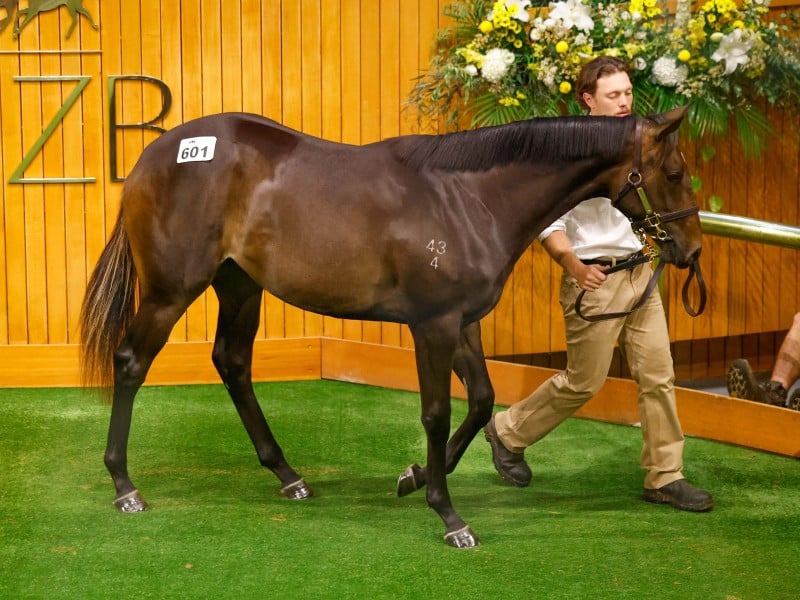
Cambridge’s $200,000 Queen completes leading vendor double at Karaka
Cambridge Stud’s Karaka resurgence continued on Tuesday after the renowned farm sold an Embellish filly out of Queen Of Wizardry for $200,000 to top Book 2 where trade topped $12.1 million.
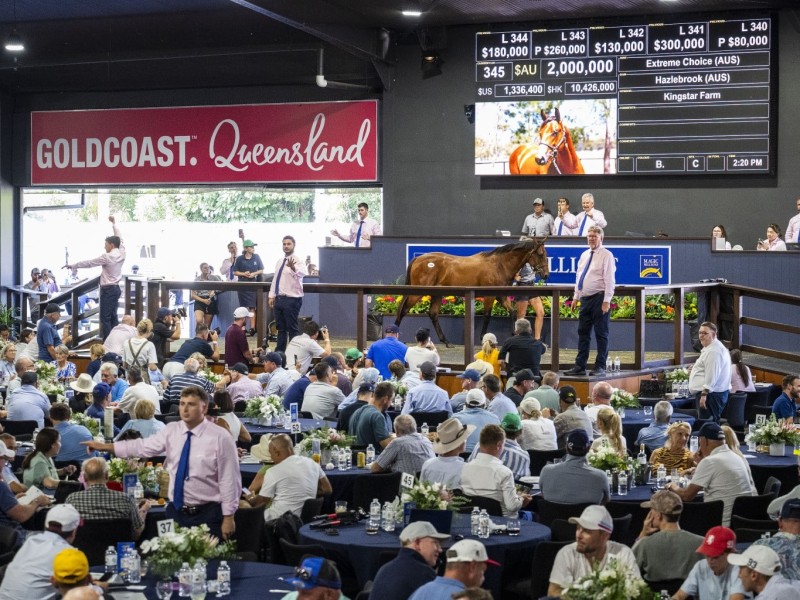
Run The Numbers – The August foal premium
Buyers’ desire to source yearlings with an earlier foaling date is having a significant impact on the Australasian bloodstock market, with August foals commanding a 10 per cent premium compared to average throughout 2025. Run The Numbers digs into the details.
$1.1 million Sword of State colt helps Karaka Book 1 to record heights
Book 1 of the 100th New Zealand Bloodstock National Yearling Sale has concluded on a $1.1 million high, thanks to an in-demand son of Sword Of State.