
‘Leave it to the judge’ – how Natashia Radford broke down racing’s barriers
Since 2015, Natashia Radford has worked as a judge for Racing Victoria, the state’s first female in the role and a position that has, for nearly 200 years, been dominated by an older male demographic.
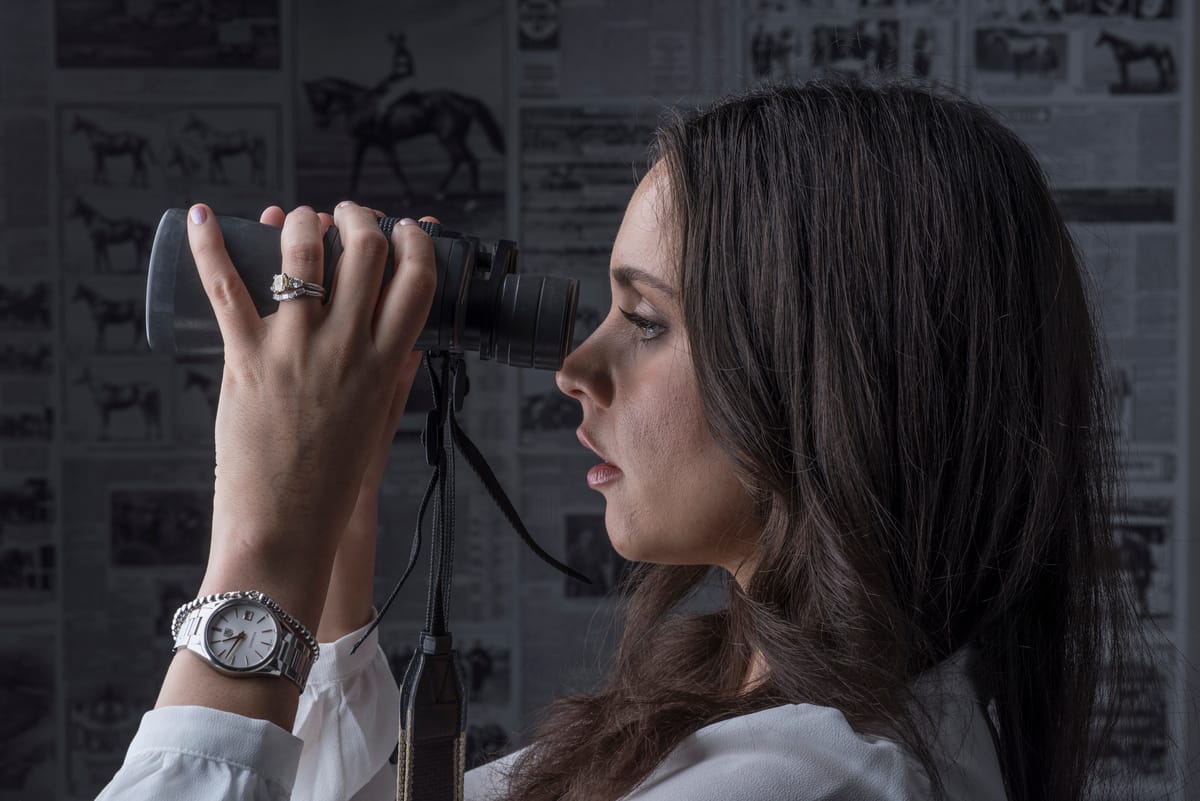
“Before I got this gig with Racing Victoria, I called them every month for over a year to be given a go. I had set up a calendar reminder,” she tells The Straight. “But I’ll make it very clear that they were just waiting for a position to become available. I don’t think it was because I was a woman.”
Traditionally, raceday judges have hung around in their roles for decades, and Radford had to be persistent. When she began beating a path to Racing Victoria for a job, she had spent two years in a similar role at Racing NSW, but the dearth of women in her chosen department didn’t help.
“You have to be persistent, and I would say that to other women,” she says. “But I’m like that with everything in life. If you just sit back, nothing will happen for you.”
Radford made headlines recently when she became Victoria’s first female judge at a metropolitan Group meeting. It had taken the state 186 years to leap that hurdle.
Radford oversaw the Easter Cup meeting at Caulfield on April 6, of which she claimed she was “proud to be making history and memories”.
But the feminist angle wasn’t lost on her. Why aren’t there more women in the judge’s boxes around the country, and why did it take 186 years for this event to happen in Victoria?
“I’ll always be a champion for women,” she says. “Give women a go, let’s get them into overarching positions in our sport because there is definitely a lack of them in these higher-up roles.”
Radford is in her mid-thirties. She is stylish, driven and successful.
At weekends, she can drive anything up to five hours to reach a country meeting for judging duties, and during the week she is a property developer for Mirvac’s commercial arm.
The two careers are different, but Radford says it’s amazing what one sometimes says about the other.

“Racing, it’s almost like it’s done on time,” she says. “You do your time and you move up the rank, whereas in corporate life that’s not really how it works anymore. Is it tradition? I think it must be.
“In corporate circles, you can keep moving up and even though someone might have been there 30 years, you can have the same title as them and you might have only been there five years. It’s based on ability, whereas horse racing is quite different. You do your time and you wait your turn.”
Radford isn’t the first person to observe this about racing. It’s obvious to anyone who shares their corporate career with the sport.
Last year, mental wellness advocate Victoria McArthur, who was brought in by Racing NZ to initiate a code-wide wellbeing program for industry participants, couldn’t believe the decorum and respect that was demanded inside the stewards’ rooms.
She said the ‘sir’ and ‘madam’ vernacular was not only potentially confronting for new and young jockeys; she hadn’t seen it in any other setting for decades.
“There are so many advancements in the white-collar industries, even with policies and procedures to obtain employees,” Radford says. “At Mirvac, everyone has come from a hundred different backgrounds and the best of the best talent has come together, which is why the company is nimble. It’s innovative.
“Whereas if someone has worked in the same industry or the same role for so long, they don’t know any different and this is why racing can be frustrating.”
Radford’s grievance does not affect her everyday duties for Racing Victoria, or her passion for being a judge. It took her a long time to get the opportunity and she loves her job, along with the people in it.
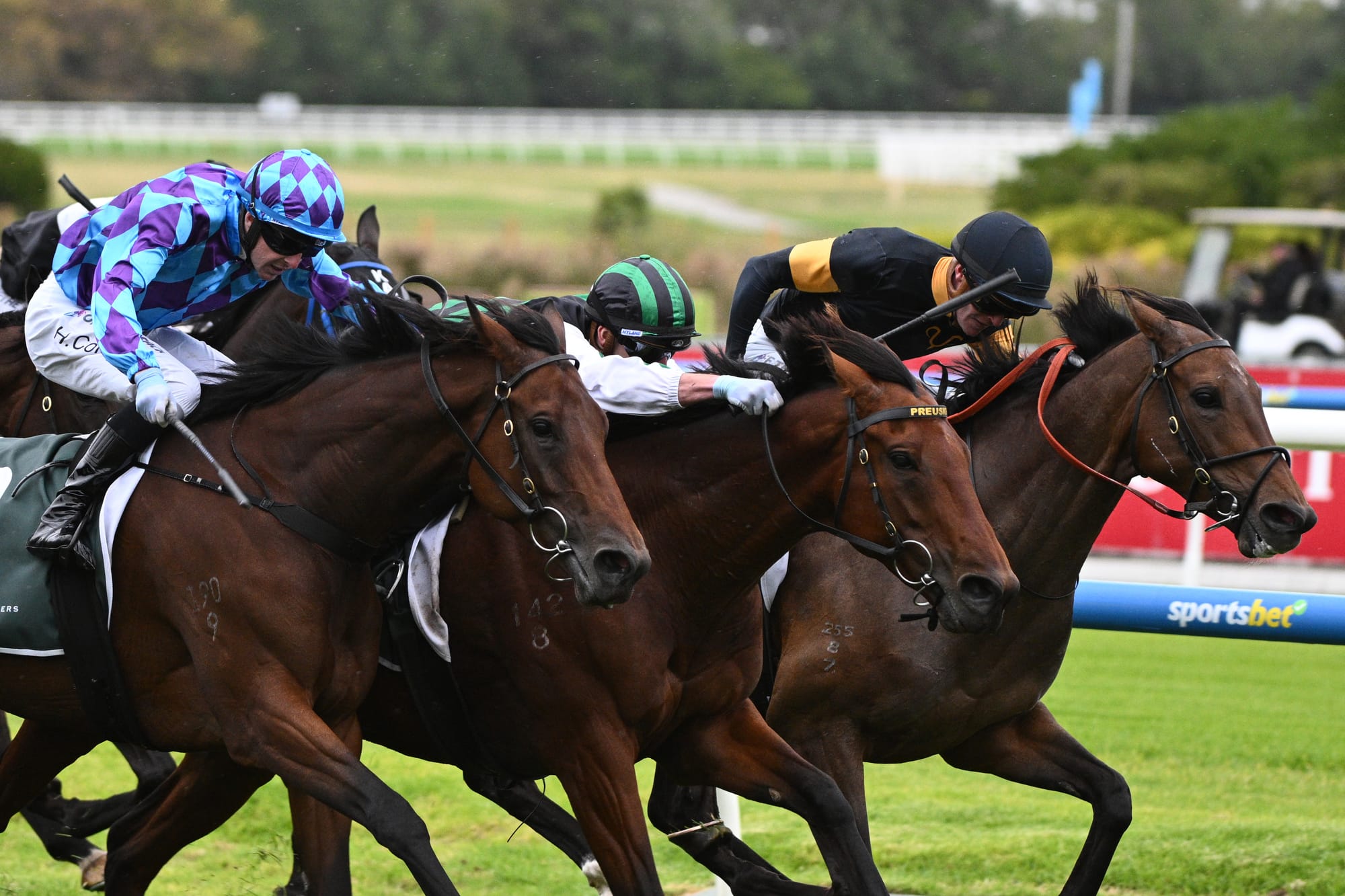
She loves the intelligence that is required of the role, and the speed with which she needs to operate. She loves the long hours on the highway getting to meetings tucked away in far-flung countryside, and she loves the pressure.
“It is such a unique job. You’re never in the same circumstances twice,” she says. “It’s all about confidence in yourself and confidence in your eye because, basically, you have to capture a field within two seconds.”
The role of a judge is to officially declare the order of finish in a horse race. Time is everything in a landscape of instant betting, where payouts can occur without correct weight.
Radford has spent years perfecting her eye-hand coordination such that she doesn’t even need to look down as she writes the order of finish going on before her. It all happens in real time, her observations only wavering when the photo-finish camera is required to determine the result of a a race.
“It takes a long time to train your brain and train your hands, and there’s no room for error,” she says. “At Mirvac, I do close to billion-dollar developments and things go wrong constantly. I don’t have a week where something doesn’t go wrong, and my job is to fix those issues.
“But as a raceday judge, you can’t make mistakes. You can’t have any doubt in yourself.”
Some years ago at Pakenham, Radford learned this lesson the hard way. She officiated a meeting in which one of the results was either a dead heat or the narrowest of photo-finish margins. She can’t recall.

In the aftermath of the result, a trainer posted his discontent on social media, along with a pixelated image of the result, and Radford was flooded with abuse.
“I was crucified,” she says. “It got something like 800 comments on social media, and of course I read some of them. It was really upsetting because it made me second-guess myself, which you just can’t do as a judge.
“But it’s the same for race callers. They get it every week.”
Radford is a Brisbane girl by birth. During her time at Racing NSW she worked in Canberra, but she’s a Melbourne local these days. She goes to the footy and the theatre, and she doesn’t even mind the weather.
“I’ll always be a champion for women. Give women a go, let’s get them into overarching positions in our sport because there is definitely a lack of them in these higher-up roles” – Natashia Radford
Her first introduction to racing was through mucking out boxes as an 18-year-old for Bart Cummings, a part of her life that has given her immense respect for stable staff. All things considered, she’s come a long way quickly.
It took her some time to get past the Pakenham incident, even with the support of her colleagues, peers and Racing Victoria. However, it didn’t dent her enthusiasm for the job, one she sees herself doing full-time in the future.
“That’s the idea,” she says. “I’ve got my eye on judging the Melbourne Cup one day.”
Related Articles

Three-tier racing shake-up looms as NZTR awaits funding clarity for next season
New Zealand Thoroughbred Racing’s proposed three-tier racing structure and delayed funding model have intensified concerns over prize money, infrastructure and the possible divide between metropolitan and regional racing in New Zealand.
Queensland racing looks to Olympics as gateway to international arena
Brisbane racing officials are examining how preparations for the 2032 Olympic Games can be used to help turn its winter carnival into a viable destination for overseas horses.

Straight Talk – Racing Victoria’s vet woes, the state of the high-end mares market and Tabcorp’s banned punters list
Straight Talk looks at Racing Victoria rescinding a chief veterinary appointment, the state of the high-end mares market and Tabcorp’s banned punters list.