
Make-or-break deadline for King Island racing return
King Island Racing Club has set a July 31 deadline for trainers to commit to a proposed 2026/27 season, warning that racing will again be abandoned if it cannot attract enough support as Tasracing concedes the future of racing on the island is uncertain.
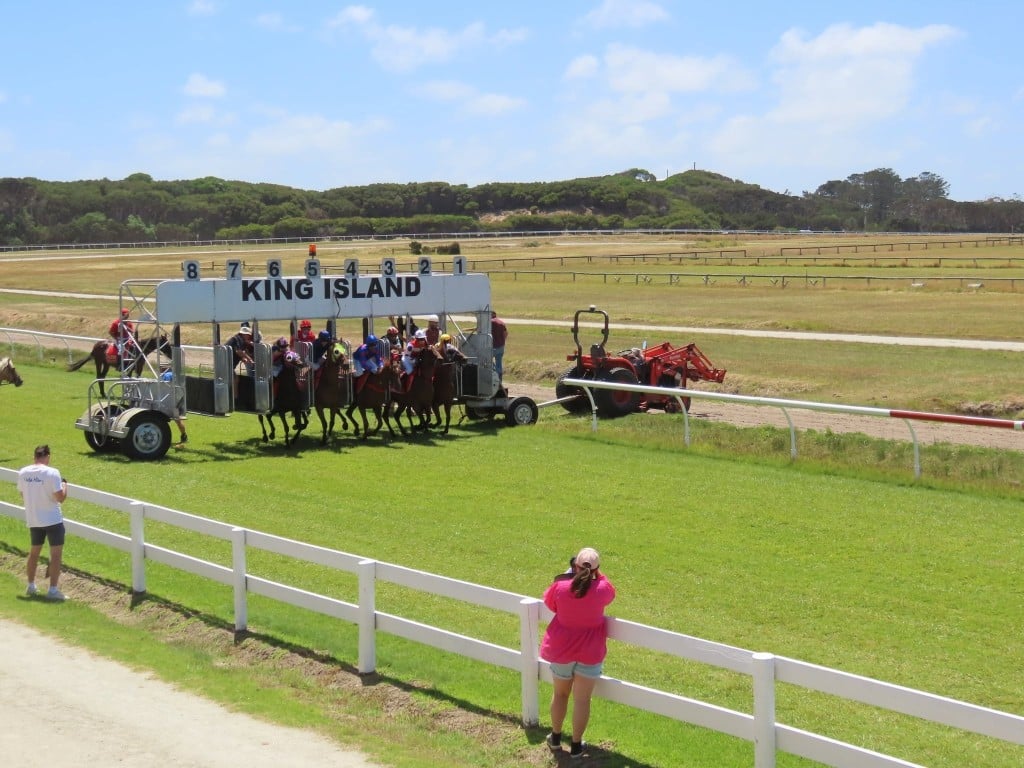
King Island’s bid to revive racing has entered a critical phase, with trainers given until July 31 to commit horses as the club scrambles to satisfy Tasracing’s conditions for reinstatement.
The deadline represents the latest chapter in an 18-month struggle to preserve racing on the Bass Strait island after the 2025/26 season was cancelled because too few mainland and local trainers committed horses.
The Straight has reported extensively on the uncertainty surrounding racing under the auspices of the King Island Racing Club (KIRC), with organisers repeatedly warning of the unique logistical and financial challenges of racing over the summer holiday period.
After months of seeking confirmation about Tasracing’s support package, the club finally received a detailed response last week outlining the minimum benchmarks required for racing to resume.
Under those conditions, each meeting must feature at least five races, with every race requiring a minimum of five acceptors to proceed.
Tasracing has also stipulated that by October 31, the club must identify at least 30 thoroughbreds and standardbreds committed to preparation on King Island before official trials, giving the regulator confidence to allocate operational resources and funding.
The club will also be responsible for coordinating trainer commitments and horse numbers throughout the season.
Tasracing’s financial package includes up to $25,000 in subsidies in addition to the existing $600-per-horse freight allowance, replacing the enhanced prize money model used in previous seasons.
The total costs to Tasracing for all aspects of travel for the racing season exceeds $70,000.
KIRC president Audrey Hamer said the response had arrived only after months of repeated requests.
“I sent an email saying we were having a meeting Wednesday night and we were going to call it quits because we had no correspondence from Tasracing, no support, and then at 4.30 Wednesday before our meeting we got a long email with all these requirements,” Hamer told The Straight.
Despite the late response, Hamer said the club decided to make one final attempt to revive the season.
“We’ll give it a crack with what they’ve sent us,” she said.
Tasracing CEO Andrew Jenkins told The Straight that its ‘suggested minimum requirements’ would provide certainty around viability for the coming season.
“We’ve also provided clarity in that communication of the prize money levels and travel subsidy support that would, once again, be made available for non-King Island participants to travel over and participate in the season,” he said.
The immediate challenge for the club is assembling enough horses within days to justify continuing.
“We need 30 horses, so that’s a lot of horses to find in a very short amount of time,” Hamer said.
She said only limited commitments had been received since the club circulated Tasracing’s requirements to trainers.
The club has proposed a seven-meeting season beginning with official trials in late November before race meetings from December 5 through to Australia Day, while also offering a $2000 incentive for every horse that competes throughout the season.
However, Hamer said uncertainty over whether racing would proceed had made planning increasingly difficult for volunteers and sponsors.
“If they haven’t committed by the 31st of July, if no one’s committed, we’re calling it quits,” she said.
She said the compressed timeframe had made an already difficult task even harder after a full year without racing.
“It’s all so late to try and get everyone sorted and then also for ourselves, for the club … we’re all volunteers,” she said.
“If they haven’t committed by the 31st of July, if no one’s committed, we’re calling it quits”- Audrey Hamer
Hamer said the club understood Tasracing needed participation benchmarks before committing funding, but believed the delayed response had significantly reduced the prospects of rebuilding trainer support.
“I suppose they have to have that sort of thing as well, but they have given us the $600 freight subsidy and added an extra $25,000, so we’ll see what happens,” she said.
Jenkins said Tasracing’s own deadline for whether it proceeds or not with a King Island season is October 31.
“At this stage, I would describe it as uncertain and the requirement that we have suggested to the club in terms of a date, for making a ‘go or no-go’ decision is the 31st of October and that gives us a reasonable amount of lead time,” he said.
“If it is going to go ahead, then we’ll go over and inspect the track and so forth and roster our stewards and other race day staff.”
Jenkins said one of the challenges for Tasracing remained the ability staff the season with stewards, given it was a busy time on the Tasmanian racing calendar.
“The other complexity that’s created with the timing of the season is access to race day staff and, in particular, stewards because we run our integrity unit pretty lean,” he said.
“There’s certain dates where we simply can’t run any more meetings because we physically do not have enough stewards to facilitate an extra meeting.”
Hamer remains convinced the island needs a full season rather than a showcase event to deliver meaningful benefits.
“The reason we want the season to go ahead is for our economic side and also the tourism,” Hamer said.
Jenkins said Tasracing, which derives minimal revenue out of the King Island season, has had ongoing conversations with the state government about the desirability of continuing racing at the track.
“It has always been a broader consideration than just racing because part of the reality here is that racing on King Island is entirely non-commercial intrinsically in that there is no Tab, there is no online wagering,” he said.
“So for many, many years now, the season has been facilitated and funded by Tasracing for the betterment of racing broadly in Tassie, but in particular, of course, the good people of King Island.”
“We have briefed the government in relation to the challenges and uncertainties that we’re currently considering regarding King Island, and we’ll continue to work with the club and see where we land.”
Related Articles

Does Racing NSW’s rapid executive baton change help or hinder Graeme Hinton?
In the four days since Peter V’landys confirmed his departure, Racing NSW’s board has already chosen the man to replace him as chief executive. Graeme Hinton was the obvious choice, but Bren O’Brien questions whether the haste of his appointment might undermine how his leadership is perceived.

Racing NSW board unanimous in appointing Graeme Hinton as new chief executive
Graeme Hinton will formally take over as Racing NSW chief executive on December 1, the day after Peter V’landys ends his 22-year tenure. Racing NSW says it consulted industry stakeholders before confirming Hinton as its next executive leader.

Craig Baker to join NZTR in key racing role
Craig Baker will join New Zealand Thoroughbred Racing on October 27 as NZTR works through racing plans and wider industry changes, with Charlotte Mills’ advisory contract set to end.
