
Ms Represent – Cup fairytale fuels female jockey boom
The wave of success from Australia’s female jockeys, including Saturday’s clean sweep of all races at Morphettville, owes much to the hard-won gains of those trailblazers who came before, writes Matt Stewart.
Consider that racing’s very own ‘misogyny speech’ was delivered less than a decade ago at Flemington and then have a look around.
Consider not-so-recent racetrack history, where white lines separated the sexes and racing was rough and rugged and known as The Sport Of Kings; and think about what occurred at Morphettville last Saturday.
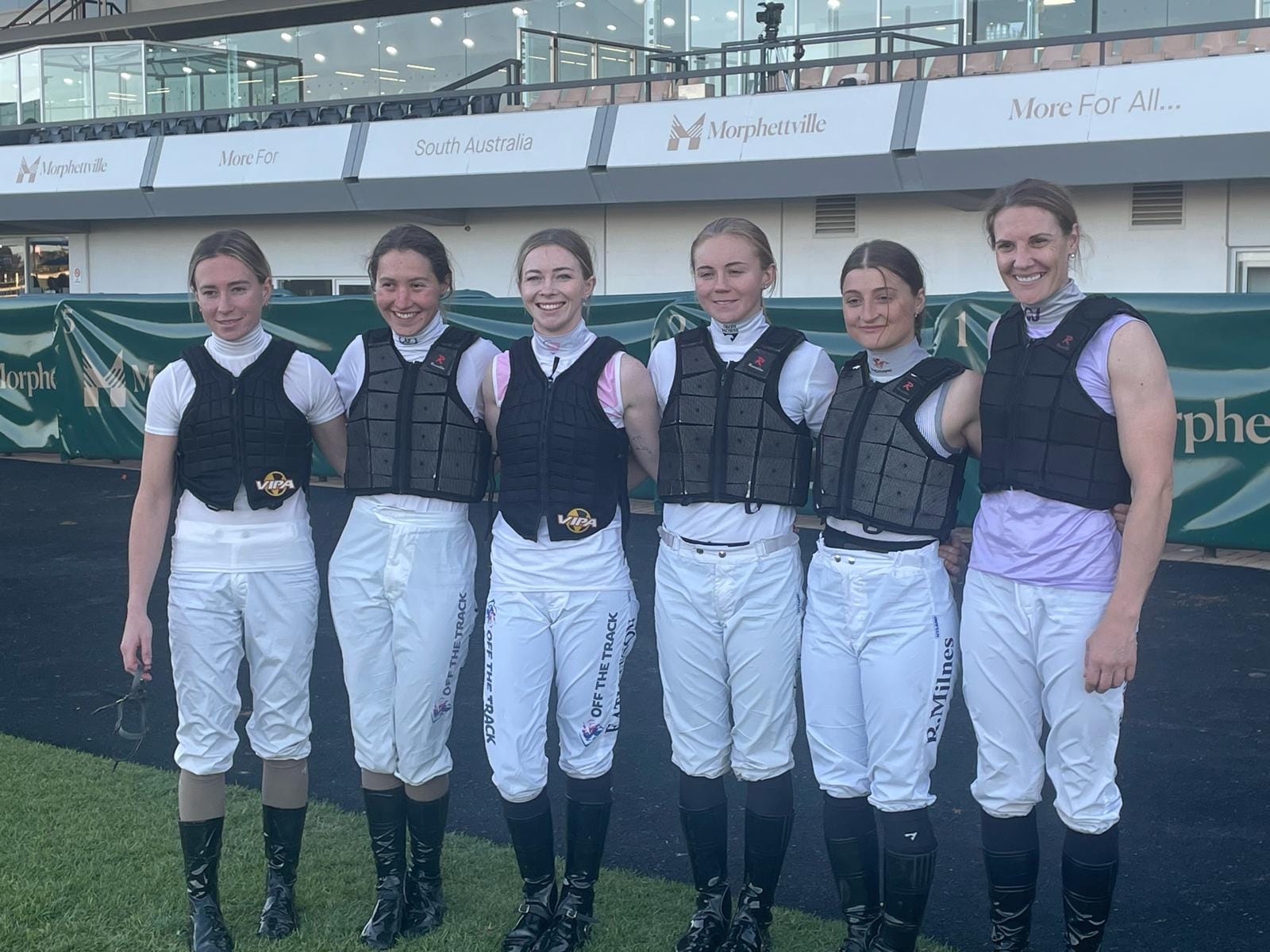
Six female riders won the lot. Three rode doubles. It’s never happened before on a metro track but this day was coming with a rush.
Think about what’s been going on not just here but everywhere. A female, yes a female, not long ago rode the winner of the Grand National Steeplechase at Aintree. National Velvet is now fact not fiction courtesy of Rachael Blackmore.
Consider the rise of Hollie Doyle and Jamie Kah and the trails blazed by them.
Consider the logistical rearrangements that have come with a female jockey – female participant – tsunami that began its surge here after Michelle Payne’s win in the Melbourne Cup, where she took aim at the last embers of gender bigotry.
In South Australia, male jockey rooms are being swapped with the far smaller female rooms. The females commandeered the male jockeys’ room at Broome a year or so ago when they also rode the card. They also rode the card at Kalgoorlie on Sunday.
When Payne’s sisters Maree and Therese were riding mostly bush meets over 20 years ago, caravans were towed to the track to become impromptu female jockeys’ rooms.
Before Michelle Payne’s history-changing win on Prince Of Penzance in 2015, female riders were bit players. One leading male jockey once unfairly described them as “unfit hobbyists”. Go back a couple of generations from that to quaint ladies’ bracelets at picnic tracks.
They don’t yet dominate premiership tables, with just one female in the national top 25, but they are on the march. The list will look very different in five years’ time.
It is world sport’s great revolution and its promoters are yet to grasp it. Animal welfare concerns ease under the less frantic style of female jockeys, who are far less likely to breach whip rules than males; whip rules that have seemingly given women an edge.
It’s the easiest and most ignored sales pitch; the only true level playing field in sport. It’s a message that resonates beyond sport yet where are the billboards?
South Australia’s jockey coach Dean Pettit took a group photo of the six female riders who owned Morphettville last Saturday and posted it on social media. One or two racing websites grabbed it. Yet the Doomben 10,000 was the day’s big racing story.
The rise in numbers and the flipping of the ratios are stunning.
Only one of the 20 apprentice riders working/race riding through the SA apprentice school is male and he’s been stood down on medical grounds because of his weight. “He looked like he could play full forward for the Adelaide Crows,” Pettit said, adding the ratio from the last two intakes has been nine girls, one boy (and he’s from Hong Kong).
In Victoria, 10 girls to one boy in the last intake and in Tasmania, eight of the nine apprentices are female. Twenty-four of the 38 claiming apprentices in NSW are female, ditto six of the 11 currently competing in WA.
Kevin Ring, head of the Tassie jockeys, says “it’s just the way it is. Without the girls you wouldn’t have race meetings at lots of county meetings all around Australia”.
Ring said females had 40 per cent of rides in Tasmania compared to probably 20 per cent a decade ago. At Devonport on Sunday, it was 60 per cent.
Pettit said Queensland and NSW were more male-centric, but ratios were also beginning to swing in those states.
He said that the racing industry workforce was now utterly dependent on females.
“It’s also track riders, ground staff. We have a trackwork skills development program. We had a training day recently and they came from all over. There were 15-18 riders and only three boys,” he said.
“It’s only going to grow. It’s hard to find a boy to be honest. And I don’t think anyone can have an issue with it.
“I just think it is what it is. The girls work hard, they turn up, they’re easy to deal with and they hold their own. They’re in the (jockey) market same as everyone. If they’re good enough they get rides.
“The girls work hard, they turn up, they’re easy to deal with and they hold their own.” – Kevin Ring
“I love working with them even if I sometimes feel like their butler. I joke sometimes that it’s all about hair pins and gloves that don’t damage their nails but these are prime athletes, rising superstars some of them.”
Pettit said that boys increasingly struggled with weight. They also don’t attend pony clubs, the almost all-girl funnel into the racing industry.
“And in South Australia and Victoria, they’re so into their footy. You are not getting the family generations of boys coming through anymore,” he said.
 Matt Stewart
Adelaide, the town that produced Jamie Kah and previously provided the platform for Clare Lindop to tap hard at that glass ceiling, is the nation’s hot spot for female jockeys.
It was showcased last Saturday when Kayla Crowther (double), Rochelle Milnes (double), Alana Livesey (double) and Maggie Collett, Felicity Atkinson and Caitlin Jones took the lot.
Four of the six jockeys are still apprentices. They marked the moment with the photo as well with an excited Lindop, a trailblazer from an earlier era, there to celebrate the milestone.
“I don’t know whether the girls realise how big a deal it is,” Lindop, who was the first woman to ride a Group 1 winner at Flemington, told Racing.com.
“It’s interesting because I always tend to play down the ‘female jockey’ part of the conversation, but it’s still a piece of history so I think it’s important to recognise it.”
Same but different ⭐️@Clare1Lindop re-created an iconic moment on Saturday after the girls took out all 9 races at Morphettville! pic.twitter.com/Jaba4OGBJQ
— Racing SA (@RacingSA) May 20, 2024
Pettit had some enjoyable commentary throughout the day with Jones, who won the second race.
“She walked past me before the race and said she didn’t want to jinx it but did I know girls had won the first five? Then she walked past after race right and said really excited “how many girls riding in the last?” he said.
“It was great how it happened. Jacob Opperman had it won then Felicity Atkinson comes storming down the outside to win her first city race. You couldn’t script it. They were all high-fiving in the jockeys’ room. Amazing stuff.”
All of this came just at the same venue where just a week earlier Kah claimed her fifth Group 1 winner in 11 weeks in The Goodwood aboard Benedetta. Her successes, plus those of Rachel King and Kathy O’Hara, make for eight Australian Group 1 wins for female jockeys this season, a record for any season.
The wave is only building.
Bren O’Brien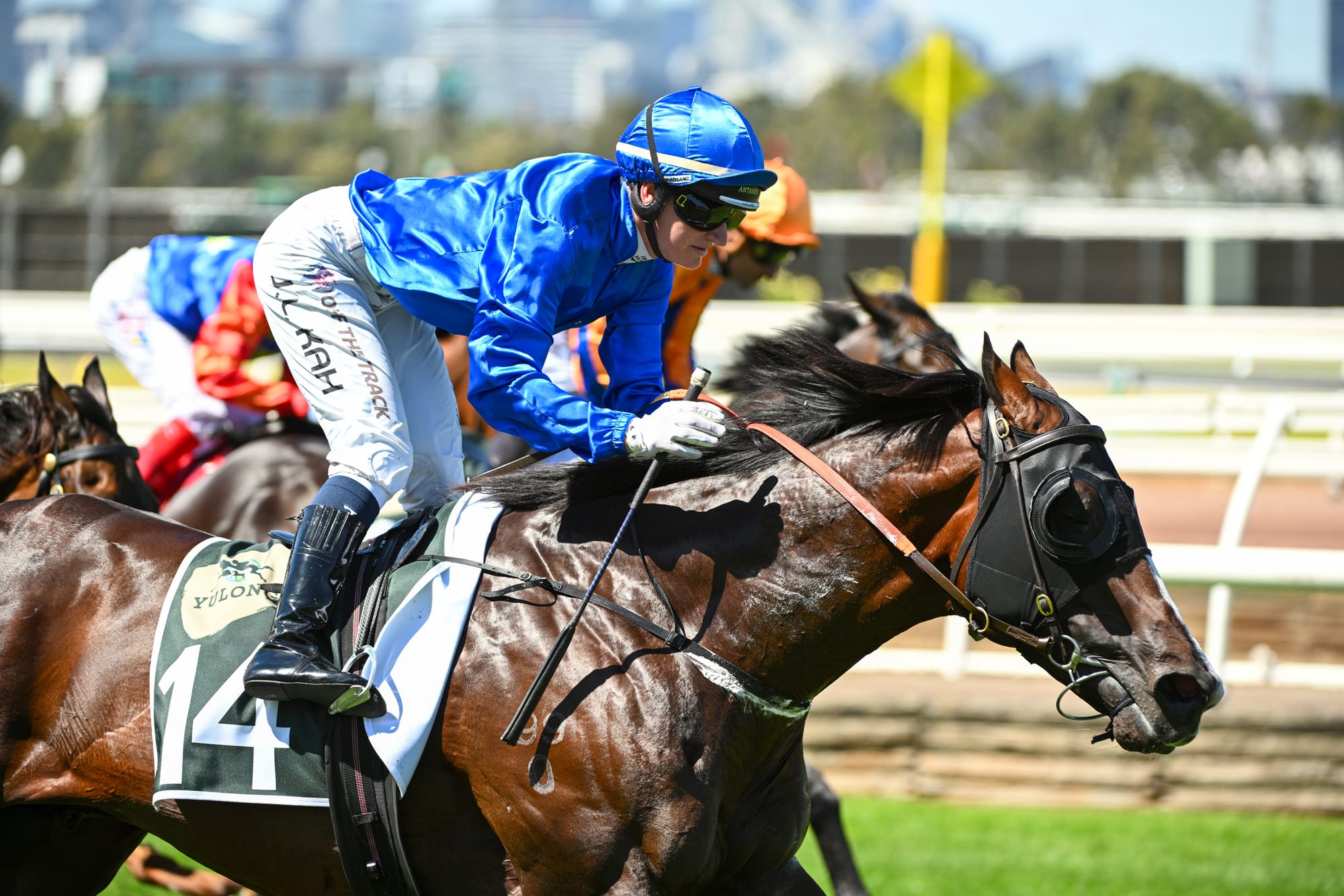
Related Articles
Straight Talk – Magic Millions 2026: $200 million and a market full of buyers
Hosts Bren O’Brien and Tim Rowe review Magic Millions 2026, where book one topped $200 million with an 86%+ clearance and a record breadth of buyers.
Straight Talk – Strong trade continues on day 3, featuring interviews with Barry Bowditch and Daniel Allam
Straight Talk reviews day three of the Magic Millions Gold Coast Yearling Sale, featuring interviews with Barry Bowditch and breeder Daniel Allam.
Straight Talk – Yulong, Coolmore step up, plus interviews with Paul Messara and Jo Griffin
Straight Talk reviews day two of the Magic Millions Gold Coast Yearling Sale, featuring interviews with vendors Paul Messara and Jo Griffin.