
NT law changes put additional heat on corporate bookmakers
Most of Australia’s corporate wagering providers will be governed by a new legal framework after the Northern Territory parliament passed the Racing and Wagering Act 2024.

The new Act, passed last Thursday, will replace the Racing and Betting Act 1983. It will come in from July 1, with Northern Territory Chief Minister Eva Lawler saying it will “provide a robust regulatory framework for one of Australia’s fastest-growing industries – the online wagering industry.”
Overall, 26 corporate bookmakers/betting exchanges are licensed in the Northern Territory, which has become the centre of the industry in Australia, with those businesses responsible for $50 billion in wagering turnover a year.
The Territory has become the centre of the corporate wagering revolution with its lower taxation structure proving attractive for major business, including Bet 365, Sportsbet and Entain, to assume licences, the majority of which are located in Darwin.
Through various licensing fees, taxes and contribution, the Northern Territory parliament heard that the industry was worth about $130 million to the Northern Territory each year. About 600 people are directly employed in racing and wagering businesses in the NT.
“Whatever your personal views on gambling, and we have heard a few today, there is no denying that Australians love a bet and a punt. With more and more of our lives moving online it is not surprising that the online wagering industry continues to grow,” Chief Minister Lawler said.
“This legislation will not only provide the regulatory framework for the online wagering industry but also the Territory’s thoroughbred and greyhound racing industries, which continue to play an important role in the Territory’s economy and on our social calendar.”
Among the major changes the bill will impose is a new body to replace the Northern Territory Racing Commission, which the industry has outgrown.
“The new Racing and Wagering Commission will be an evolution of the existing commission with a stronger focus on wagering rather than simply racing,” Lawler said.

“Increased powers as well as the removal of some administrative functions will allow the new commission to focus on decision-making.”
Included in other aspects of the new Act will be that the wagering companies must have a permanent physical presence in the Northern Territory while those who occupy executive and directorial positions within those companies must be licensed.
“This will allow the commission broad latitude in the investigating and determining whether each person involved in the racing and wagering industry in the Territory is a fit and proper person to hold a licence,” Police Minister Brent Potter told parliament.
“This will ensure that the industry continues to be governed at a world-class standard with only persons of integrity and honesty are involved in the ownership, operation or influence over racing and wagering businesses.”
The new Act also stipulates that failure to comply with conditions of a licence could result in fines of up to $440,000 for each offence, with strict liability imposed and penalties treated as cumulative.
That amount is five times what the maximum penalty was under the Racing and Betting Act 1983, however, only 25 per cent of what was initially proposed as a maximum penalty.
Meanwhile, a new Racing and Wagering levy will be introduced on operators to help fund the new commission.
 Warwick Barr
In terms of the changes to the racing landscape in the Northern Territory, they will be minimal.
The most significant is a clause that obliges race clubs in the Northern Territory to operate in the public interest and for the welfare of animals used in the racing industry.
The Act is subject to review after three years.
Author

Related Articles

Siena Grima fulfils Epsom dream on God’s Window at her first Group 1 ride
Siena Grima and God’s Window delivered Chris Waller his seventh Epsom Handicap, with an upset win in the famous Randwick mile.
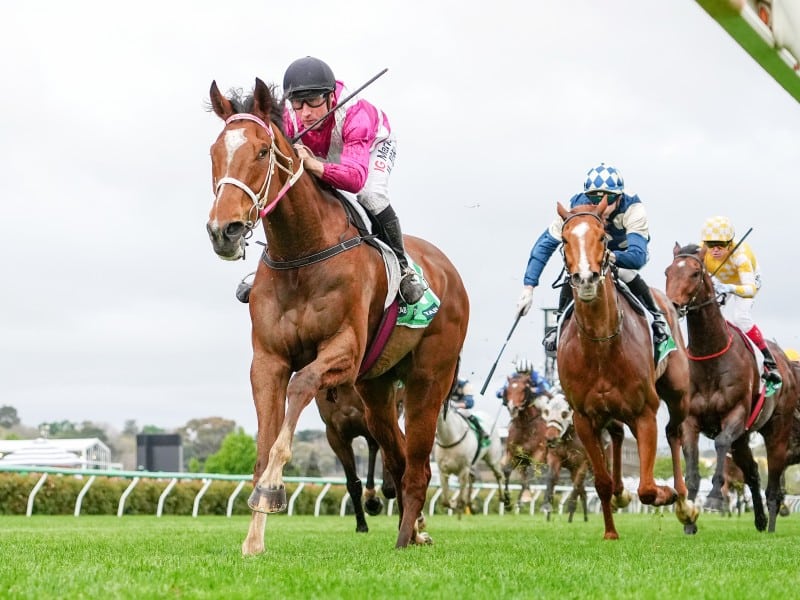
Cosmic Crusader gives Andrea Leek her first Group 1 in Turnbull Stakes
Cosmic Crusader claimed his second Group 1 and William Pike’s 19th in the Turnbull Stakes at Flemington, with a Cox Plate or Caulfield Cup campaign now under consideration.
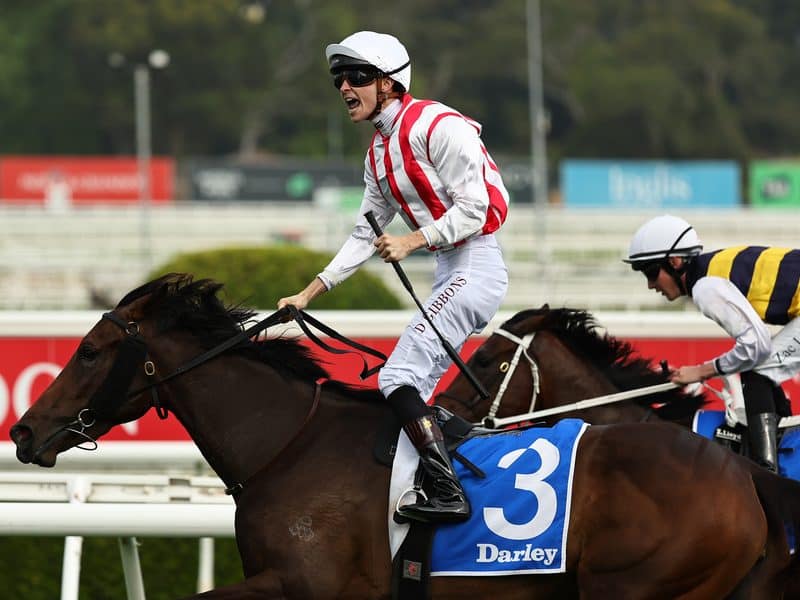
Global Goal wins Flight Stakes to give Dylan Gibbons a third Group 1
John Sargent secured his 12th Group 1 winner as a trainer and Dylan Gibbons his third as a jockey as regally bred Global Goal captured the Flight Stakes at Randwick.
