
Pattern D-Day looms, but impasse likely to continue
A Racing Australia board meeting on Tuesday week could clear the way for a swathe of new Australian black-type races to be added in one fell swoop, potentially swelling an already bloated national Pattern.
As long-running tensions between principal racing authorities and stakeholder groups about the lack of genuine Pattern reform reach another boiling point, Racing Australia’s directors will vote on an updated Black Type Guidelines process on September 2.
But even now, almost a year on from Racing Australia’s stalled attempt to overhaul the nation’s black-type calendar, it is unlikely that the six principal racing authority-nominated directors on the national regulatory board will reach a consensus on how to move forward.
With Racing NSW and Racing Victoria holding powers of veto over Racing Australia, the position of the latter and its chair and RA representative Tim Eddy will ultimately determine whether or not the Pattern Guidelines are passed.
The Straight understands that if the revamped Guidelines gain approval at the Racing Australia meeting, then as many as 38 races nationally could be immediately upgraded to stakes status for the first time, an increase of 7 per cent on the 623 black-type races a season.
And it is believed that another 60 to 80 races which already have black-type status, including up to seven Group 1s, could be upgraded using a rigid ratings-based system, if the new guidelines are ratified.
The development comes after the majority of principal racing authorities last October abandoned reform of Australia’s stakes racing due to stinging criticism from aggrieved stakeholders who believed the Guidelines devalued Australia’s Pattern rather than enhanced it.
Racing NSW, led by chief executive and its Racing Australia-nominated director Peter V’landys, chose to ignore the position of its rival PRAs and added or upgraded 17 stakes races last season in defiance of the failed reform.
The Everest and Victoria’s All-Star Mile did attain internationally recognised Group 1 status ahead of last season’s editions, won by Bella Nipotina and Tom Kitten respectively.
 Bren O’Brien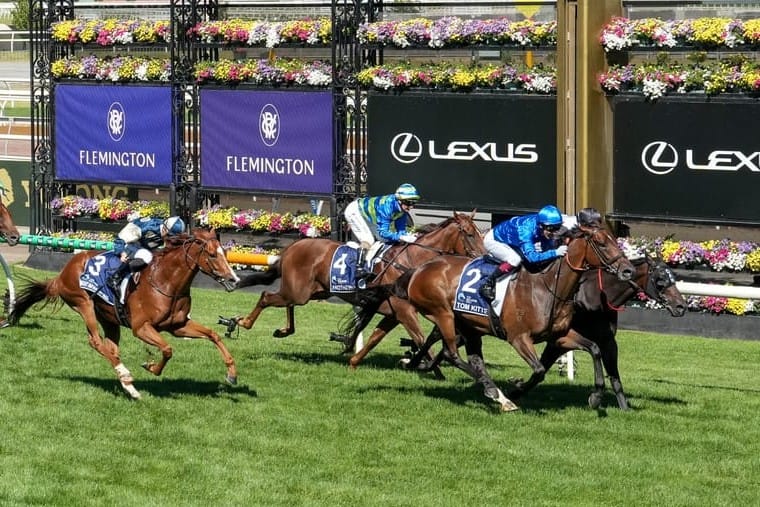
However, the remainder of the changes made by Racing NSW have not been acknowledged by the Asian Pattern Committee or the International Grading and Race Planning Advisory Committee (IRPAC).
As a result, the “black type” of the winners and placegetters of those races have not been reflected in sale catalogues or pedigrees from providers such as Arion.
As another attempt is made to alter the Pattern process, PRAs have quietly been briefing stakeholders about the new Black Type Guidelines while Racing Australia has also been liaising with the Asian Pattern Committee, of which RA director Rob Rorison is a member.
But what threatens their implementation is that many of the concerns which existed last year, leading to the rejection of the 2024 proposal, still remain.
Objectors to that proposal say that it removes the allowance for subjectiveness and for nuances of different racing jurisdictions to be taken into account.
Those concerns include the lack of a Pattern Committee who would use subjective factors and take the specific nature of various jurisdictions into account when determining upgrades and downgrades, that the objectiveness of the ratings-based Guidelines will advantage the biggest states, NSW and Victoria, and that smaller jurisdictions could risk having some of their signature races being stripped of their Group 1 and Group 2 status.
 Bren O’Brien
Under the new Guidelines, Western Australia’s premier race, the Railway Stakes at Ascot, would be in danger of being stripped of its Group 1 status, as could races such as the South Australian and Queensland Derbies while the Group 2 Adelaide and Perth Cups could be downgraded.
For those reasons outlined, The Straight believes that the motion to approve the Guidelines is likely to be voted against when the board meets next week, effectively putting Pattern reform back on ice as has been the case since 2019.
If the motion to enact new Pattern guidelines are once again voted down as expected, where does that leave Racing NSW?
V’landys has made no secret of his desire for the Golden Eagle, Sydney’s $10 million race for four-year-olds, to hold Group 1 status.
He could take his case to the Asian Pattern Committee arguing that the Golden Eagle as well as the $3 million Russell Balding, the sprint race run a fortnight after The Everest, deserves to hold Group 1 status.
It is understood that under the guidelines, both previous and the soon-to-be voted upon incarnation, that the Russell Balding would meet the criteria to be a Group 1 after the ratings achieved by winners Bella Niptona (2023 and 2024) and Private Eye in 2022.
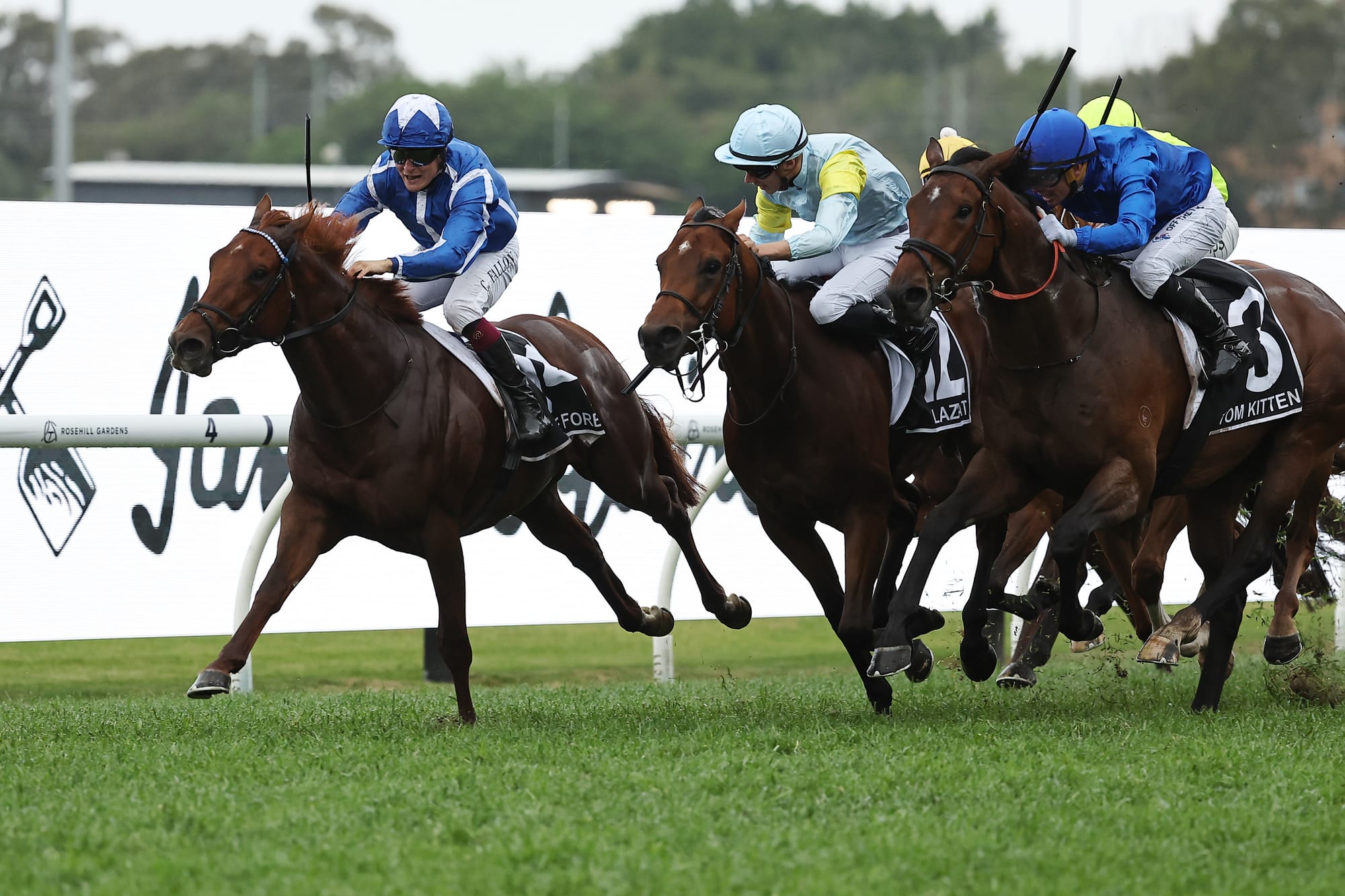
The Golden Eagle narrowly failed to meet the criteria for three consecutive runnings of the race, but last year’s race, won by Lake Forest, contained eight subsequent Group 1 winners.
 Bren O’Brien
Group 1 status could also allow the Golden Eagle-Russell Balding meeting, which will be run at Randwick for the first time on November 1, to be part of the lucrative Hong Kong Jockey Club-conducted World Pool schedule.
V’landys told The Straight in June that the Golden Eagle deserved to have Group 1 status considering the quality of the fields the race has been able to attract since its inception.
“Naturally, we believe the Golden Eagle should be a Group 1,” V’landys said after Golden Eagle runner-up Lazzat’s Queen Elizabeth II Jubilee Stakes win at Royal Ascot.
“It’s a new age race that has gained worldwide attention. It is only going to continue to grow and become more prestigious.”
Seeking clarity about the issue from Racing Australia and various people directly involved in the process has proven difficult, with board members contacted for this story declining to comment, citing their duties as directors to not discuss board matters publicly.
Racing Australia chief executive Paul Eriksson told The Straight that proposed reform of the Pattern was in the hands of the PRAs ahead of the national body’s next board meeting.
“That is with the principal racing authorities at the moment. That’s all the comment I’ve got to make,” Eriksson said, before adding: “Effectively, the PRAs make up the board of Racing Australia, so the board needs to make a final decision.”
Legal advice sought by Racing Australia last year reportedly suggested that the rules pertaining to the Pattern were anti-competitive and potentially breached competition law, which led to the development of the initial Black Type Guidelines, and the reliance solely on handicapper ratings and benchmarks.
 Bren O’Brien
The Asian Pattern Committee is said to have raised its dissatisfaction with an Australian Pattern devised purely by handicapper rating figures and benchmarks. It is understood that Racing Australia has attempted to alleviate some of those concerns in recent months.
The situation has again called into question Racing Australia’s communication and messaging with its stakeholders, a criticism that was levelled against the organisation when it cracked down on late foal ownership declarations with the threat to ban horses from racing earlier this year.
As one former administrator put it, Racing Australia will never function as a truly overarching national body while the two main states, Racing NSW and Racing Victoria, hold the powers of veto.
It would take both PRAs to relinquish that power for meaningful change to occur, according to the former racing industry figure, and in the current administrative landscape that appears highly unlikely any time soon.
Author

Related Articles
Goulburn Race Club CEO Robyn Fife to step down
After overseeing a period of significant change at the Goulburn Race Club, including the handover of the club’s land to Racing NSW, chief executive Robyn Fife has confirmed her 26-year association will come to an end.
Setting a standard – New course looks to lift best practice in racehorse syndication
The need for more established standards of education and ethical conduct in Australia’s world-leading racehorse syndication industry has led to the development of an education program to build understanding among current and prospective syndicators.

Run The Numbers – A fitting farewell for Frankie
Frankie Dettori brought his 40-year riding career to an end with a Grade 1 success on his final day in the saddle. The most prominent global jockey of the past half-century had elite success in 17 different countries, but famously never in Australia. Run The Numbers digs into his remarkable career.