
Proposed NSW track closures add further to greyhound gloom
Greyhound racing in NSW is set for a major restructure, with several racetracks across the state earmarked for closure under recommendations from an industry-commissioned review.
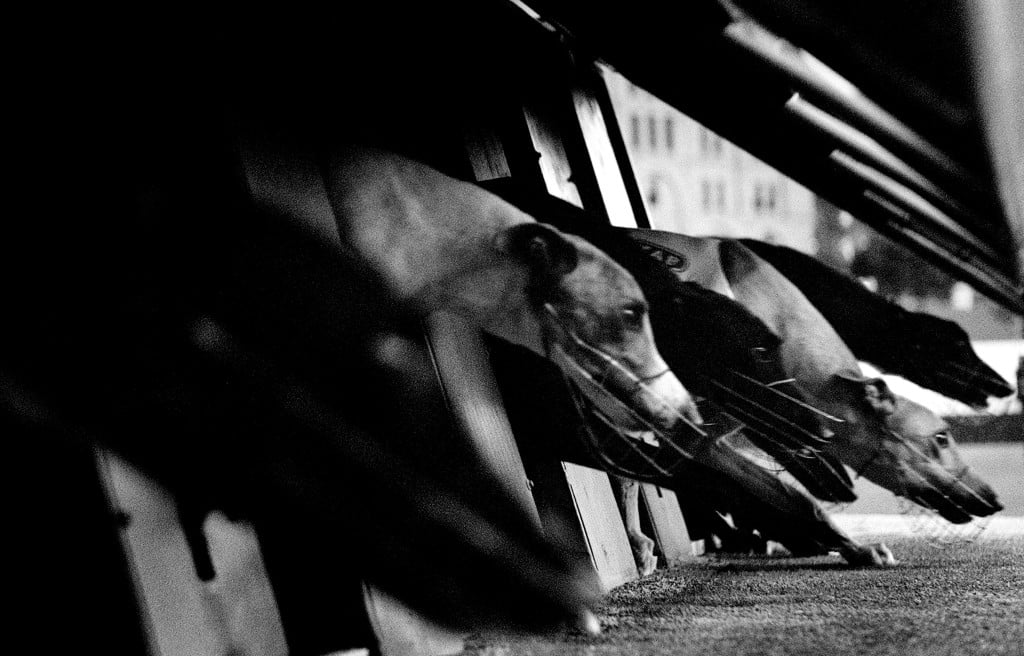
Three regional greyhound racing tracks – Wagga Wagga, Maitland and Broken Hill – are slated for closure under sweeping changes recommended in a new report into the future of the sport in NSW.
The Racetrack Optimisation Report by Deloitte Australia proposes cutting the number of racetracks across the state from 25 to 15.
Commissioned by Greyhound Racing NSW (GRNSW), the report also outlines the potential for a second-stage reduction to 12 as part of an ambitious plan to make the industry more sustainable and financially viable.
In May, industry stakeholders met at the GRNSW Industry Future Summit, where there was unanimous agreement that “optimisation” was critical to the sport’s long-term survival.
GRNSW’s announcement comes as it awaits a government decision on an extension of the lease at Sydney’s Wentworth Park before confirming the future of metropolitan racing.
The industry’s lease at the track expires in 2027 with the NSW government expected to make a decision on an extension by the end of 2025.
Deloitte’s independent analysis has since recommended a three-stage implementation plan to reshape the state’s racing footprint.
Under the first stage, all remaining non-TAB tracks – including Coonamble, Kempsey, Moree, Potts Park, Tamworth, Wauchope and Young – will close by the end of 2025.
Some may continue to operate as trial tracks if their local clubs choose to do so.
Lithgow, previously a non-TAB venue, will be upgraded and incorporated into the 15-track network.
The second stage, to be completed by June 30, 2026, will see the closure of the three TAB tracks at Wagga Wagga, Maitland and Broken Hill in a move that GRNSW chief executive Steve Griffin acknowledged would be difficult for regional communities.
“Greyhound Racing NSW has been in contact with all of the clubs which will be impacted by the optimisation recommendations,” Griffin said.
“We have spoken at length about the process and why their respective clubs sit where they are in the optimisation recommendations.”
The closure of the three TAB venues follows the recent end of racing at Dapto, leaving 15 TAB tracks across the state.
Deloitte’s report also canvasses the possibility of a third phase of closures, but it suggests GRNSW monitor a demand for racing and financial performance before making further cuts.
Griffin said the Deloitte review provided a pragmatic framework for reform.
“While this was never going to be an easy task, Deloitte ensured that as an industry we can make accurate and measured evidence-based decisions for the future betterment of greyhound racing in NSW,” he said.
The report has been made public on the GRNSW website, and affected clubs have been invited to provide feedback.
Griffin said the changes, though painful, were essential.
“Everyone unanimously agreed at our Industry Future Summit that we have too many racetracks in NSW and we need optimisation,” he said.
“With optimisation we will be able to lower costs, maximise returns, and ensure clubs become more financially independent.”
If the recommendations are adopted, the closures of Wagga Wagga, Maitland and Broken Hill will mark a major shift in the landscape of NSW greyhound racing as the industry fights for long-term survival amid financial and social pressures that have led to the demise of the code in the ACT and a planned Tasmanian shut down in 2029.
It is believed GRNSW had been planning to announce the track closures following the release of the long-awaited NSW government-commissioned The Drake report into the regulator and the wider industry.
But instead of waiting for the report to be made public, the GRNSW board has tried to control its own destiny by acting on the Deloitte findings.
GRNSW reported a $16.7 million loss in its most recent annual report filed on Novemebr last year, as wagering income from TAB and corporate bookmakers fell, and Race Fields Information Use (RFIU) fees dropped by $4.8 million.
Year-on-year wagering on greyhound racing from 2022/23 to 2023/24 saw a decline of eight per cent, with a total of $2.67 billion wagered.
Related Articles
The ‘agitators’ strike back – Racing NSW chair criticised for prize money-focused boast
A powerful thoroughbred industry group has criticised a recent notice sent to NSW racing participants, saying the missive authored by Racing NSW chair Dr Saranne Cooke left several key questions around board governance unanswered.

Acting chair Jane Seawright resigns from Racing Queensland board
Jane Seawright has announced her departure from Racing Queensland after seven years as a director, as the state government moves to overhaul racing governance and expand the board’s structure.
Redgum rising – how a stable is blooming with a four-legged billboard
More than two decades on from Hollow Bullet, Redgum Racing remains a working partnership between John McArdle and Brent Clayton that has made the most of its opportunities to return the stable to top-level racing.