
Rowe On Monday – Derby winner’s sales dilemma, is sex bias a myth and sons of a star in demand

In this week’s Rowe On Monday, Tim explores how a near miss led Simon Delzoppo to breed a SA Derby winner, questions if sex bias in a stallion’s progeny is a real factor or just perception and looks at the flow of Zoustar’s sons headed to stud.
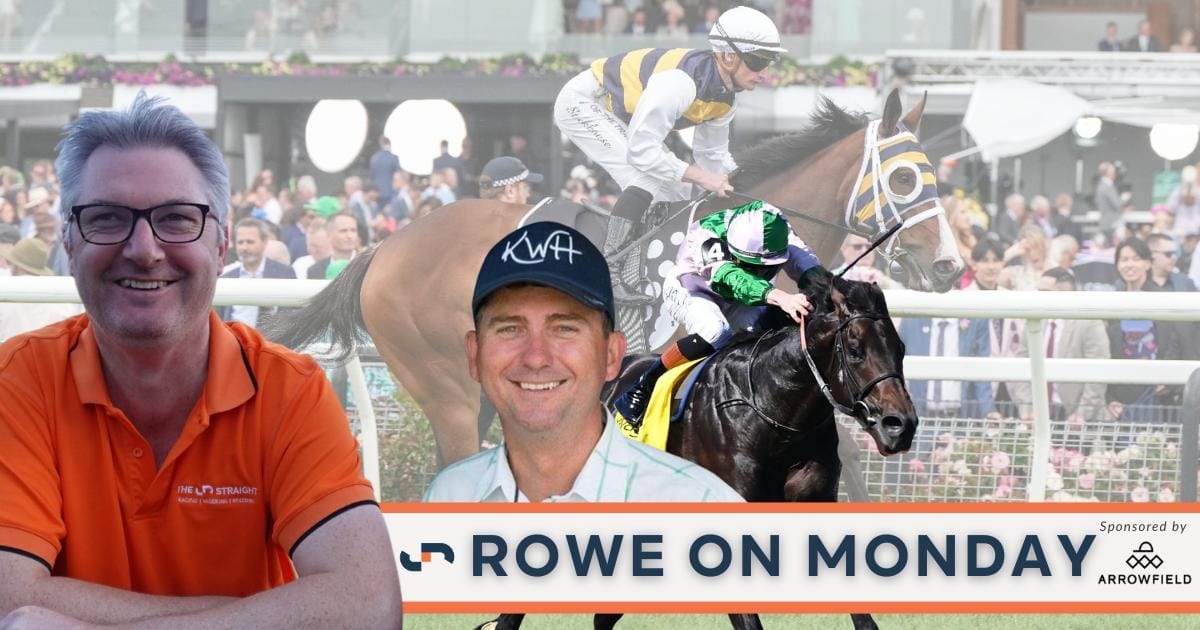
Delzoppo about to cash in after maiden Group 1 with Femminile
In 2020, IT entrepreneur Simon Delzoppo attempted to buy a showpiece mare who could spearhead his boutique breeding operation into a commercially successful operation.
As it turned out, under the guidance by bloodstock agent Neil Jenkinson, Delzoppo and his wife Mimi went hard for Star Thoroughbreds’ Group 1-winning mare Invincibella at the Magic Millions National Sale that year.
They stretched the budget beyond a million dollars but couldn’t match Tom Magnier, who paid $1.3 million for Invincibella, the same sale the Coolmore principal outlaid $4.2 million for Sunlight.
Despite missing out on Invincibella, Delzoppo and Jenkinson did by a mare privately to go to stud that spring, the Rob Heathcote-trained stakes-placed Femme Fireball, a winner of seven of her 23 starts.
Invincibella has proven to be a wise investment for Coolmore, but so too has Femme Fireball for the Delzoppos’ Aralet Pty Ltd.
It’s FEMMINILE’s G1 South Australian Derby!
The @OTIRacing 3YO becomes the fourth filly since 2015 to beat the boys, joining Delicacy, Qafila and Coco Sun! #WorldPool pic.twitter.com/pIzM2ywYGP
— World Pool (@WorldPool) May 3, 2025
Femme Fireball is now the dam of Group 1 winner, Saturday’s South Australian Derby scorer Femminile, the first elite level winner for Delzoppo and the first Group 1-winning filly or mare for her Arrowfield-based sire Dundeel. He is the sire of eight Group 1-winning colts or geldings including sire sons Super Seth and Castelvecchio.
Delzoppo retained a 50 per cent share in Femminile after she was sold at the 2023 Inglis Easter sale for $150,000 after initially being passed in.
“There were no (veterinary) horror stories, she’s just always been a nice filly. So, we took her to the sales and didn’t sell her. We didn’t really have any great interest in her (from buyers), even though she was a lovely filly,” Jenkinson recalled.
“You know, there’s a sex bias at the sales. The trainers didn’t really want to look at them, the Dundeel fillies.”
That’s when Jenkinson called on Femminile’s trainer Phillip Stokes and agent Rick Connolly, who agreed to buy her, and subsequently OTI Racing’s Terry Henderson stepped in.
“Phillip had a Dundeel winner for Terry on the Saturday and it might have been a Tuesday and Phillip rang me to say Terry was going to come and have a look at that filly,” Jenkinson said.
“And then a few hours later, Terry rings me, and I’ve known Terry for 25 years, asking, ‘what can you tell me about her? I said,’mate, pretty much all the things I told Phillip. She’s a nice filly. She’s never had a vet bill and she was bred on great country at Vinery.”
Another hour or two passed and a deal was reached, with Delzoppo and Henderson’s clients racing the filly in partnership.
“It’s been a good story ever since, really,” says Jenkinson whose clients also enjoyed success on Sunday when $400,000 yearling buy Lubrication won the $1 million The Archer slot race at Rockhampton.
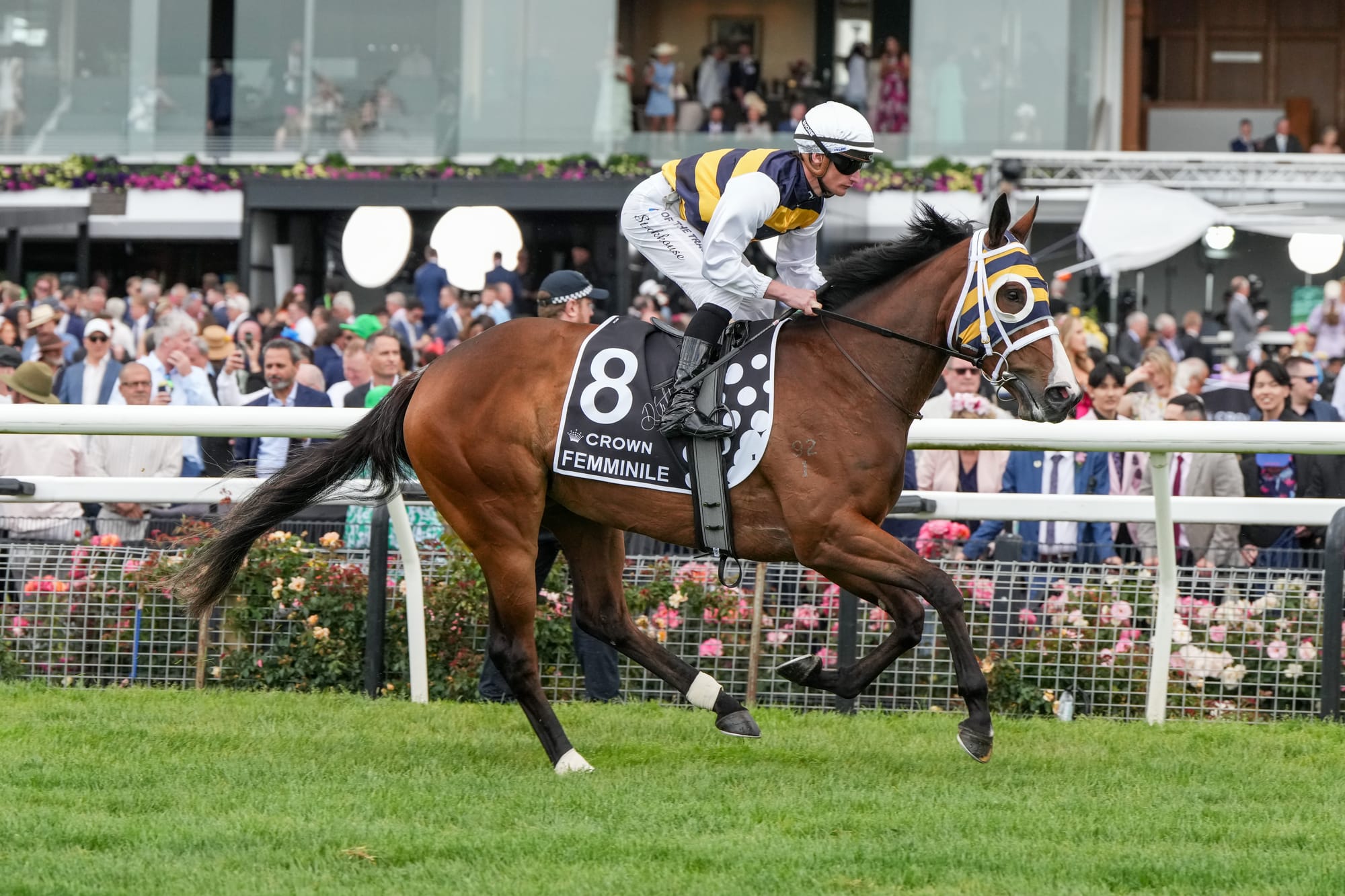
Three-year-old Femminile, who could continue her autumn campaign in Queensland, and Femme Fireball are both catalogued for the Magic Millions National Broodmare Sale later this month.
Jenkinson says it’s a “really fluid situation” given the changing fortunes of Femminile and Femme Fireball.
“The first year that they sort of became really interested, we were under bidder on Invincibella at a really high level and I said to him, ‘you know, there’s a lot of risk involved in that (proposition), breeding to high-priced stallions and things, so we sort of didn’t go back to that mark,” Jenkinson said.
“We haven’t really made too many plans about what we might buy or sell this year. We’ve worked at trading out some of the mares off the bottom end that haven’t thrown the types or got the results that we needed.
“But then Femme Fireball was listed for sale before (Femminile) won the Derby, so there’s lots of discussions to be had about what goes and what stays home.
“Femme Fireball’s in foal to Anamoe, so she’d be a very valuable mare at the moment and to take a profit and reinvest wouldn’t be the silliest thing in the world to do, would it?”
Not as simple as a sex bias?
Once the market has stamped a stallion as XYZ it’s almost impossible to alter buyers’ perceptions even when statistics paint a different picture.
Apparent sex biases with the progeny of certain stallions is one of those “knocks” sires have to overcome and make it a difficult conundrum for breeders to consider when determining their matings.
But it is possible that much of the sex bias of a certain sire could simply be attributable to variance.
In Dundeel’s case, 25 of his 36 stakes winners have been colts or geldings – and eight of his nine Group 1 winners. In contrast, The Autumn Sun’s three Group 1 winners are fillies while 45 of Wootton Bassett’s 60 stakes winners have been colts.
Tassort, whose oldest progeny are just three-year-olds, has sired two stakes winners, both fillies, while just one of his five stakes horses is male.
But is it too early to stamp a horse? Darley’s former shuttler Medaglia d’Oro, a top stallion in both hemispheres, is the sire of 185 stakes winners, with 103 of them being fillies or mares and 82 colts or geldings.
But the “bias” switches when just looking at Medaglia d’Oro’s southern hemisphere crops, with 23 of his 32 Australian-conceived stakes winnings being colts or geldings, among them being Hong Kong champion Golden Sixty, Golden Slipper winner Vancouver and Golden Rose winner Astern.
Flit, a Thousand Guineas winner, is Medaglia d’Oro’s sole southern hemisphere-bred Group 1 winner.
Toronado has also, rightly or wrongly, been perceived as a colts and geldings stallion, particularly due to the success in the sales ring and on the racetrack with a focus on Hong Kong, but statistically it’s not an overwhelming bias, with 23 stakes winners being colts or geldings and 20 being fillies and mares.
Jenkinson, who recommended the mating of Dundeel’s South Australian Derby-winning filly Femminile, was cautioned against making too many hard and fast rules when it came to sex biases.
“I think the biggest thing for sex bias with fillies, and I think it’s the case with him (Dundeel), is you can buy a filly by him that’s big and strong and got substance, but he tends to throw that little bit of High Chaparral/ Sadler’s Wells into them,” Jenkinson said.
“And if you buy the ones that are a bit lighter and weaker, they just don’t make it, do they? Whether they don’t do well enough or they’re not strong enough, whatever (the reason) is.
“But just the year before, I bought a filly in Melbourne called Oceans Of Energy, and she was a big, strong filly. She won two races as a two-year-old (for trainer Matthew Dunn).
“Talking to John O’Shea, I think he also had a filly by Dundeel who’d won a two-year-old race as well.
“I guess you could call it a sex bias, but I think probably more about their type.”

Even three-time champion sire I Am Invincible, who has eight sire sons at stud, has had to wear the perception of being a fillies’ stallion.
He has sired 66 stakes-winning fillies and 51 colts or geldings, with 10 of his 17 Group 1 winners being fillies but Yarraman Park’s Harry Mitchell has strongly argued previously that the split would be more evenly distributed if more of I Am Invincible’s colts were gelded.
I Am Invincible sired the ATC Sires’ Produce Stakes-winning colt Vinrock last month to add to his Group 1-winning tally for colts.
The colt v filly bias of Australia’s champion stallions was explored further in a recent Run The Numbers column.
Jenkinson pointed to the late Eureka Stud stallion Semipalatinsk as an example of where perception wasn’t necessarily reality when it came to sex biases.
“When I was very young in the game, Semipalatinsk, not to say he had a sex bias, but early doors, most of his best horses were fillies, but I think by the time he got through his career, that evened up to be not that noticeable,” Jenkinson said (Semipalatinsk sired 23 stakes winners, nine being colts or geldings and 14 being fillies).
“That was the first time I sort of talked about or knew about horses that seemingly were better with a particular sex.”
 Bren O’Brien
Zoustar’s sons in demand
One stallion who doesn’t appear to have a sex bias is Widden’s Zoustar – he’s the sire of 65 stakes winners; 33 colts and geldings and 32 fillies – and his sons are in hot demand.
In the space of three days, Yulong announced Zoustar’s multiple Group 1-placed three-year-old Growing Empire would be retired to its Victorian farm at a fee of $22,000 and Nick Taylor’s Riverstone Lodge confirmed that Breeders’ Cup winner Starlust would stand in the Hunter Valley this year.
A northern hemisphere-bred son of Zoustar, the Ralph Beckett-trained Starlust could round out his racing career in Group 1 races in the UK prior to entering quarantine to come to Australia.
A four-year-old, Starlust is entered for the King Charles III Stakes at Royal Ascot on June 17. He will stand for a fee of $27,500.
 Bren O’Brien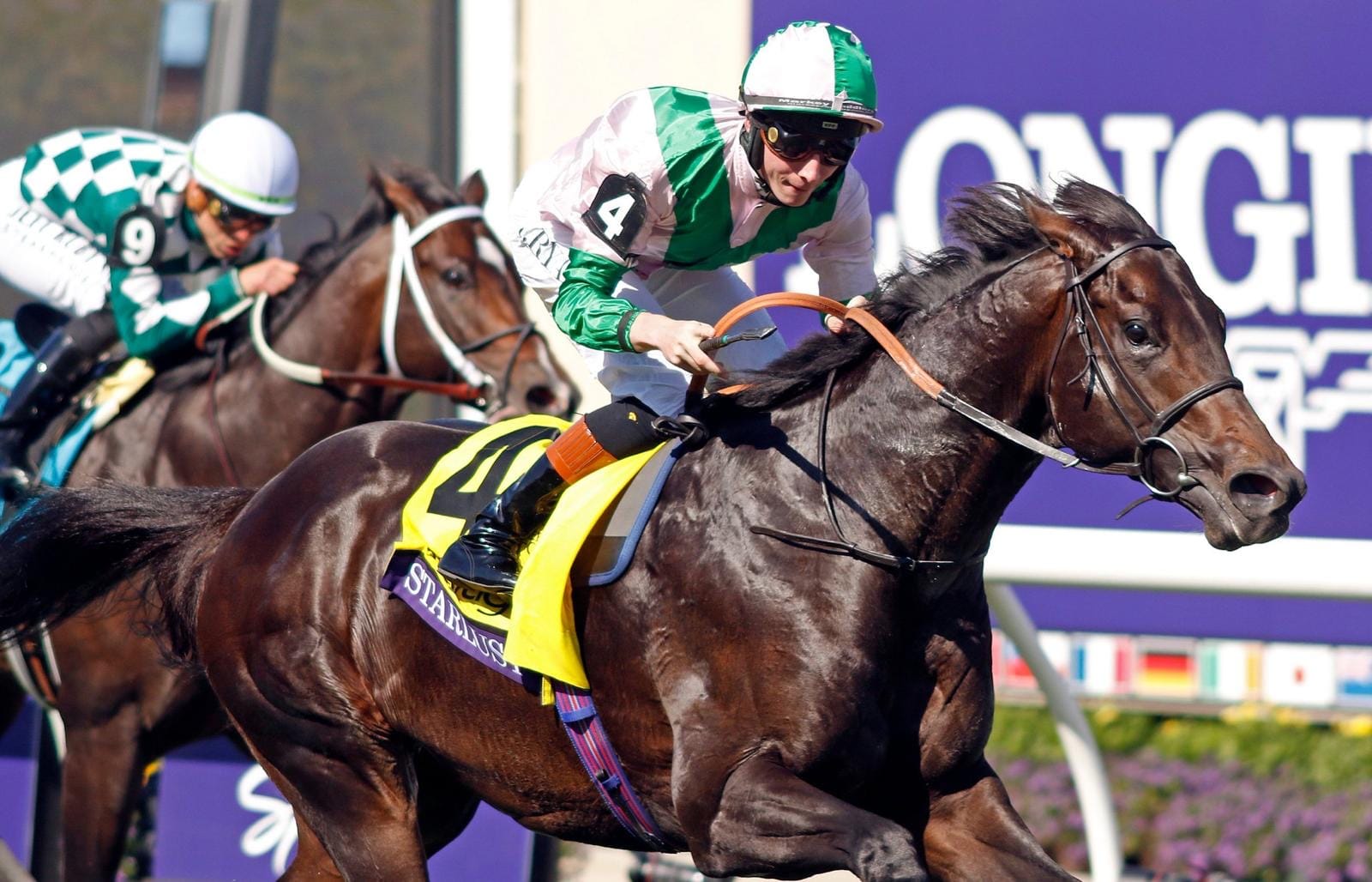
Zoustar, meanwhile, is closing the gap on Pride Of Dubai for the Australian general sires’ title, with just $317,000 separating the pair.
Pride Of Jenni, the rising eight-year-old frontrunner, helped her sire maintain a buffer over Zoustar with her win at Listed level at Caulfield on Saturday with a comfortable 2.25-length win in Melbourne.
However, Zoustar is sure to have plenty of Queensland winter carnival ammunition while his daughter Climbing Star, already a Group 1 winner, is entered for The Goodwood at Morphettville on Saturday.
Author
Related Articles

What will be the five biggest breeding and bloodstock stories in 2026?
Senior journalist Tim Rowe examines what the hottest issues in the Australian bloodstock and breeding industry will be in the new year.

Run The Numbers – The world’s most successful sires of 2025
With the calendar year about to come to its conclusion, Run The Numbers looks at which sires are the global leaders for overall winners, with a former shuttle sire to Australia leading the way.
The Top Five Australian-bred stars of 2025
A look at the top five most impactful Australian-bred thoroughbreds of 2025.