
Run The Numbers – Karaka review, and the importance of checking twice
When a record Book 1 at Karaka closed last Tuesday, the stats told New Zealand Bloodstock that Australian investment had jumped significantly at its marquee sale.
“The Australian spend was up $7 million, while the domestic bench was up $2 million on last year,” chief executive Andrew Seabrook said immediately after the completion of the third day.
The numbers were certainly red hot. The Book 1 average of $168,257 was the highest ever, while the overall spend on Book 1 of more than $80.3 million was the highest it has been since 2018.
However, curiously, when the details and numbers were finalised later in the week, it turned out that Australian investment had actually fallen year on year by more than $800,000, while it was New Zealand investment that jumped $5.5 million and overseas spend by over $5.1 million.
Karaka Book 1 Buyer location – 2023 and 2024 aggregate comparison
So how does this happen? Well, the finalised paperwork must have involved some clarification of where certain horses were purchased. This can often happen although a major variation such as this is rare in yearling sale stats. That change fundamentally altered the narrative of the premium aspect of the sale.
That is not a criticism of Seabrook – he spoke with the information he had at his disposal at that moment – but just a reminder to all of us who analyse these markets to always redo the maths a few days later.
Indeed, by the end of Book 2, the trend towards local investment was even more pronounced. This year at Karaka, New Zealand buyers spent 44.3 per cent of the money on 56.6 per cent of horses. That is a major change from last year when they spent 40.7 per cent of the money on 51.1 per cent on the horses.
In real terms, the locals spent close to $7.3 million more than they did in 2023 and secured an extra 43 horses.
The key was the breadth of Kiwi buyers. While Te Akau’s David Ellis topped the buyers list for the 19th consecutive year, he actually spent slightly less than he did last year. He was one of 200 individual buyers from New Zealand at Karaka this year as compared to 163 last year, a 23 per cent increase.
In comparison, Australian investment fell $1.36 million to 40.6 per cent of aggregate, while they secured 28 fewer horses, 258, than 12 months ago.
However, overseas buyers, including Australians, did dominate the top end, buying 16 of the top 19 priced yearlings over the sale. Hong Kong investment grew from $9.2 million to $11.6 million, headed by the Hong Kong Jockey Club who spent $2.7 million on eight lots this year compared to $1.47 million on five lots in 2023.
Karaka Book 1 and 2 – Buyer location – 2023
Karaka Book 1 and 2 – Buyer location – 2024
The Australian influence was expected to be slightly muted, with the bloodstock market softer over the past 12 months after a period of historic highs. More competition from Kiwi buyers also meant it was harder to land the targets they wanted.
So, in that regard, the result met expectations. The anecdotal reports from Australian trainers that they didn’t quite get the numbers they wanted is good news for Inglis, in terms of demand, ahead of the Classic Sale and Premier Sale over the next month.
So what else did the stats from Karaka tell us?
A look at the overall stallion stats were an endorsement for the further rise of Proisir. The Rich Hill Stud resident has had an extraordinary past 12 months on the track, which is now backed up in the sales ring. His 29 yearlings sold at Karaka averaged $266,552. Last year, he had 45 sell for an average of $113,078.
When you consider those Proisir yearlings selling at Karaka this year, including Lot 21, the $1.6 million sale-topping filly, were bred on a service fee of $17,500, it has been an amazing success story for those breeders who have supported him.
The numbers he is putting up, not only on the track, but now in the breeding barn and in the sales ring, have a resonance with what we have seen from dual champion Australian stallion I Am Invincible over the past decade.
Savabeel’s average was $261,463, up considerably from $233,710 last year, while first-season Cambridge Stud sire Hello Youmzain also fared well, with an average of $153,100 off an introductory service fee of $30,000.
The average colt across the entire 2024 catalogue averaged slightly more – $123,447 – than the fillies did ($121,710). This flipped the script from last year when fillies at the Karaka yearling sale averaged more than the colts – $112,518 to $109,077.
 NZ Racing Desk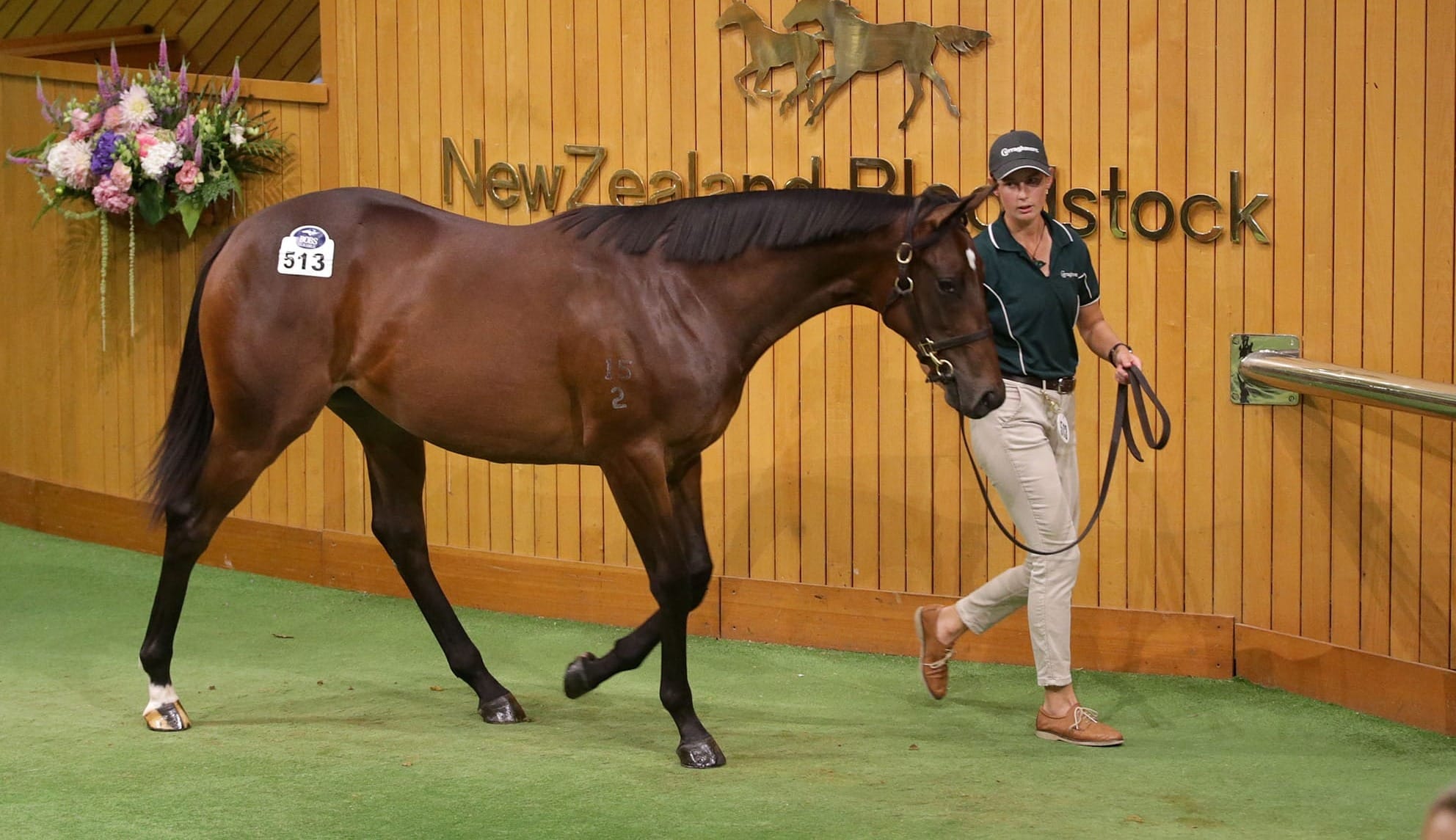
The overall average of $122,406 across both books is a 10.9 per cent jump from last year when it was $110,396, while the median of $90,000 was also higher than the $80,000 it was last year.
A breakdown of the deciles, that is the 10 per cent market segments, show there isn’t a lot between the two years. The bottom 70 per cent of the market is nearly identical, with the major difference made in the top end. There were 17 lots above $500,000 this year compared to just six last year.
Does the increase in average price change the ‘value’ proposition which has been a hallmark of Karaka for so many years? Hardly.
The average price of a Karaka yearling since 2017 has been less than $100,000. Those sales have produced 265 stakes winners, a strike rate of 4.6 per cent, and 55 individual Group 1 winners at just under one per cent. Those numbers stand up very well to any yearling sale in the world.
Market breakdown by decile NZB Karaka 2024 to 2023
*Data from NZB
Author

Related Articles
🔒 🔒 Makybe Diva owner Santic to lease Victorian thoroughbred property after 23 years
Owner and breeder Tony Santic is leasing his property near Geelong, which is named in honour of his three-time Melbourne Cup winner Makybe Diva, through Donovan & Co Property Specialists.
Run The Numbers – A proven ‘colonial’ formula
Both General Nediym and Snitzel were champion sprinters who became highly influential stallions. As this week’s Run The Numbers finds out, the combination of their bloodlines is now becoming one of Australia’s most successful on the track.
🔒 🔒 Anamoe anticipation – First-season flurry of names for freshman sires
Some of Australia’s biggest training operations have secured early access to Anamoe’s first crop, with the Darley resident dominating the list of named juveniles ahead of the 2026/27 season.
