
Run The Numbers – The August foal premium
Buyers’ desire to source yearlings with an earlier foaling date is having a significant impact on the Australasian bloodstock market, with August foals commanding a 10 per cent premium compared to average throughout 2025. Run The Numbers digs into the details.
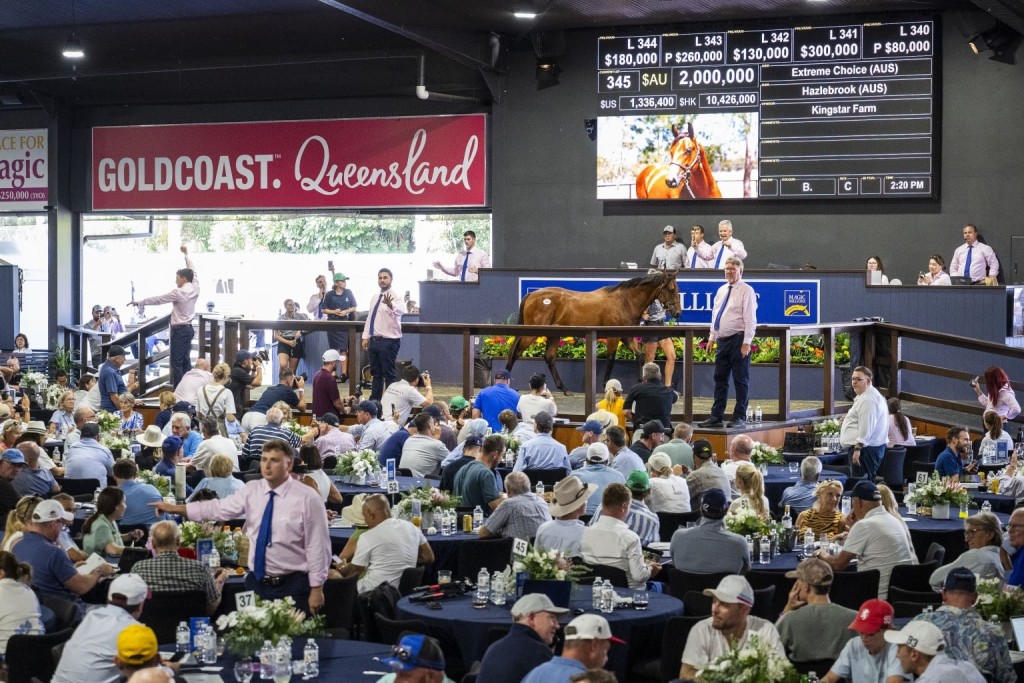
At the recent Magic Millions Gold Coast Yearling Sale, seven of the 15 seven-figure lots sold were foaled in August. The average price of an August foal at that sale was nearly $20,000 more than the overall average in Book 1, and perhaps more significantly, the August average was 25 per cent higher than those sold with an October foaling date.
The pattern was not quite as evident in this week’s New Zealand Bloodstock National Yearling Sale at Karaka, where August-foaled yearlings did have a slightly higher average than the overall – $189,675, compared to $187,257. September-foaled yearlings, meanwhile, average over $200,000.
The desirability of earlier foals is well known in the yearling market, where horses are still in an accelerated development stage and there can be a big difference in how a horse looks and parades from month to month.
Averages by month foaled from the 2026 yearling sales to date
| Month | Magic Millions | NZB Karaka |
| Jul | $186,250 | $256,667 |
| Aug | $248,115 | $189,675 |
| Sep | $233,883 | $201,190 |
| Oct | $187,291 | $173,564 |
| Nov | $200,125 | $176,792 |
| Dec | Nil | $230,000 |
At a January yearling sale, we are looking at a substantial difference of as much as four months between the oldest horses in a yearling catalogue and the youngest. In the context of 18 months of development compared to 14 months, it can create a substantial difference.
The market generally offers earlier foals to respond to this buyer preference. Last year, across Australia and New Zealand’s select sales (MM Gold Coast, Karaka Book 1, and Inglis Easter, Classic and Premier), there were 2578 yearlings sold. Of those, 24.6 per cent were August foals, 35.2 per cent were September foals, and 30 per cent October foals.
November foals represented 9.4 per cent of those numbers, while July foals were just 0.66 and December 0.08 per cent.
Commercial breeders know the preference of the market and like to produce August foals, but that means they have to get mares into a cover in the first month of the southern hemisphere breeding season.
The rewards for doing so are clear in the overall averages split by foaling month across the 2025 Australasian yearling sales season.
Yearlings foaled in July averaged the highest at $252,647, while August foals were $233,842. Then followed September at $216,630, October at $196,895 and November at $176,149. There were only two December foals sold across those select sales at an average of $62,500.
For comparison, the average across those 2578 yearlings sold in 2025 was $211,226.
While the 2026 data from the Gold Coast might indicate that earlier foals would be more advantageous at earlier sales, the data from 2025 does not support this.
Looking at the 2025 Magic Millions Gold Coast sale, August foals averaged less than the overall average ($266,045 v $269,305). Instead, it was September foals which averaged the highest at $288,357.
However, in a reverse of this year’s result, August foaled yearlings were dominant at the NZB Sale in Karaka last year, with an average of $209,942, well above the overall book 1 average of $160.570.
An important footnote is that August foals are less common at Kiwi sales, with 18 per cent of overall sold in 2025 as compared to 24.6 per cent overall.
At last year’s Inglis Classic Sale, August foals averaged less than the overall average ($92,263 as compared to $92,514), while at Inglis Premier it was only marginally above ($137,823 as compared to $134,939).
However, at the final select yearling sale of the season, Inglis Easter, the August foal premium is substantial. In 2025, the average for an August-foaled yearling was $549,774, over $100,000 more than the sale average of $447,832. That is a 22.8 per cent premium.
Part of that could be attributed to the fact that the best pedigreed mares tend to be given first access to the best stallions. In that case, it would have a positive impact on the resultant yearling price as it slightly skews the data.
The data is far from perfect and does vary from season to season, but it does give an excellent idea of trend and backs up the market preference for foals born earlier in the spring.
As per how foaling date impacts race performance, that’s for another day, but data compiled by this columnist in 2023 shows 19.8 per cent of southern hemisphere-bred Australia Group 1 winners over the prior decade were foaled in August, 37.2 per cent in September, 27.4 per cent in October and 15.2 per cent in November.
Just one Group 1 winner in that decade from 2012/13 to 2022/23 was foaled in July and just one in December. We’ll aim to update you on the data set in the coming weeks.
Yearling averages by month in 2025 select Australasian yearling sales
| Month | Average | Total sold |
| Jul | $252,647 | 17 |
| Aug | $233,843 | 633 |
| Sep | $216,631 | 908 |
| Oct | $196,895 | 775 |
| Nov | $176,149 | 243 |
| Dec | $62,500 | 2 |
| Overall | $211,226 | 2578 |
Author

Related Articles
Run The Numbers – Sires and buyers – The stats that point to a healthy 2026 yearling market
It was more than just an improved clearance rate on the Gold Coast, which gave strong signs of confidence in the Australian yearling market, with a record number of buyers on the sheets. Run The Numbers digs into the details.
Run The Numbers – All-in on Alabama as Yulong bids to create Australia’s next superstar stallion
Recently published data revealed Yulong’s rising star Alabama Express covered no fewer than 21 Group 1-winning mares in 2025, confirming the son of Redoute’s Choice’s status as No.1 seed at Australia’s biggest breeding operation. Run The Numbers breaks down his career at stud so far.
Run The Numbers – Who is Australia’s greatest two-year-old sire?
The number of two-year-olds racing in Australia might be on the decline but the importance of elite juvenile racing remains as strong as ever. Run The Numbers looks at who the most influential stallions are in this aspect of Australian racing.