
Setting a standard – New course looks to lift best practice in racehorse syndication
The need for more established standards of education and ethical conduct in Australia’s world-leading racehorse syndication industry has led to the development of an education program to build understanding among current and prospective syndicators.

The growth of Australia’s racehorse syndication sector, along with a heightened focus on compliance, has prompted the development of an education course to enhance regulatory understanding and promote ethical practice and professionalism across the thoroughbred industry.
Syndication has become a hallmark of the Australian racing industry over the last 30 years, leading to diversified ownership structures that are the envy of other jurisdictions worldwide.
Recent figures show that one in every 201 Australians owns a share in a racehorse. That puts Australia’s ownership levels at five and a half times Ireland’s, 25 times the United Kingdom’s, and 90 times the United States’.
With nearly 60,000 of the 137,000 racehorse owners involved through over 12,000 separate syndicates, the syndication industry has become big business, with the conduct of registered syndicates regulated by state-based PRAs on behalf of the Australian Securities and Investments Commission (ASIC).
ASIC treats syndicated ownership as a managed investment, which means individuals involved in promoting or selling syndicated interests must not only hold the appropriate ASIC licence but also meet specific education and competency requirements.
It is a complex process that puts significant responsibilities on syndicators and their staff and creates regulatory and compliance concerns for the broader industry.
Stable Connect, which holds an Australian Financial Services Licence and facilitates the licences of 36 syndicators, has partnered with financial services educator Kaplan Professional to create an education program, Investing In Horse Syndicates.
Stable Connect Director Adam Tims said it was important for the industry to lead the way when it came to creating benchmarks and best practice, and education was a core component of that.
“This is not about reacting to possible regulatory change – it is about demonstrating leadership and encouraging best practice across the industry,” Tims said.
“Horse racing syndicates sit at the intersection of sport and financial participation, and participants deserve clarity, education and ethical conduct that sets a standard for the wider industry.”
Tims said the program was designed to provide clear, structured education on how horse racing syndicates operate, how they are regulated, and the responsibilities of authorised representatives, without assuming those involved had a technical understanding of finance.
“If people are involved in promoting or selling interests in horses, it is important they clearly understand the rules, the risks and their responsibilities,” he said.
“This course is about giving owners the confidence that comes from understanding how syndicates work, what the risks are and what is expected of them.”
The course is delivered digitally through interactive learning modules and assessments, is designed to be completed over 12 weeks, and provides a certificate on completion.
Kaplan Professional’s involvement ensured that the course is “practical, clear and directly relevant to the industry,” according to Tims.
Kaplan Professional chief executive Brian Knight said the education provider had a long-standing role in setting instructional standards, with the course already available for enrolment online.
“Kaplan Professional has been educating Australia’s financial services industry for decades, and that experience is critical when supporting emerging or specialised areas such as horse racing syndicates,” he said.
“High-quality education helps people make informed decisions, understand their obligations and participate with confidence – whether in traditional financial services or at the intersection of sport and investment.”
“By partnering with Stable Connect, we are supporting an initiative that lifts capability across the industry and demonstrates how education can play a meaningful role in strengthening professionalism and trust.”
Author

Related Articles
Caught short – Investigations launched over Hobart Cup distance bungle
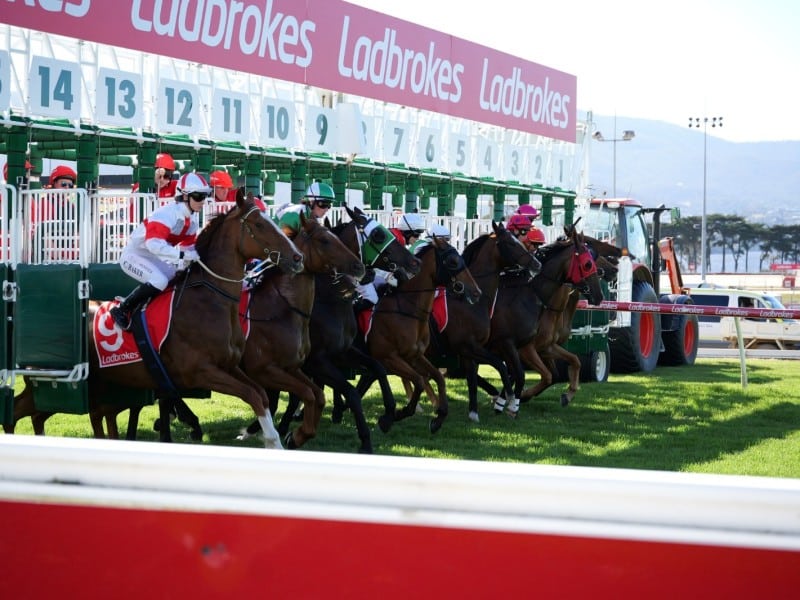
Multiple investigations have been launched into a blunder which saw one of Tasmania’s biggest races, the Hobart Cup, run short of its advertised distance on Sunday.

RWWA’s sustainability front and centre in major industry review
The future financial sustainability and governance of Racing And Wagering Western Australia are firmly in the sights of a key review by the Roger Cook-led state government, which has released its terms of reference for the inquiry.
A voice for all ages – how John Tapp became a podcast pioneer in Australian racing
The Australian thoroughbred industry has gradually found its voice in the digital age. But it is not an influencer or a Gen Z star who is leading the way. Instead, it’s one of the industry’s most recognisable and enduring personalities who is proving it’s never too late to learn something new.