Straight Up – Thoroughbred racing and the increasing cost of doing business

In this edition:
- The rising cost of racing – New analysis points to owners’ increasing pain
- ‘You hang on too long and you go crazy’ – Brian Smith’s colourful training journey nears its end
- The right vintage – Sires’ a stepping stone for promising Bootlegger
- Hutchison swings axe at RSN – Felgate and Harford among high-profile talent to leave racing broadcaster
- Deed of uncertainty – Racing’s funding future under Tasmanian election spotlight

Between sittings of a NSW parliamentary inquiry into the unsolicited proposal attached to the subsequently failed Rosehill sale process, Racing NSW produced a draft strategic plan document that most likely resonates more today than it did a year ago.
Under fire from various sectors of the industry, Racing NSW chief executive Peter V’landys launched a vehement defence of the regulator’s track record during his appearance at the hearing.
As he singled out “wealthy breeders”, V’landys also played the populist card, claiming NSW owners needed to be incentivised amid rising costs.
“… at the moment the owners are losing $100 million a year so we need to correct that disparity for them to continue to invest,” V’landys told the inquiry.
“With no horses and no trainers and jockeys you don’t have an industry. So the funding model at the moment is designed to distribute the maximum to participants. That’s what it’s designed to do and that’s what it’s doing.”

By the time the seemingly hastily updated strategic plan was published a few weeks later, Racing NSW’s figures explaining the annual loss had blown out to $273 million.
“One of the most common items of feedback received from owners and trainers is that the costs to train a horse are getting too high,” the document claimed.
“There are costs that are unreasonable and the industry needs to become more efficient to reduce these costs of ownership.
“Defraying costs to owners through prizemoney is essential, but reducing unreasonable costs and increasing efficiencies in the first place is just as important.”
According to figures presented in the document, it costs more than $70,000 annually to own a racehorse that is trained out of a metropolitan stable.
The expenses associated with racehorse ownership have been highlighted again this week with the release of independent analysis from the thoroughbred accounting and business advisory firm Stable Financial.
Among the more jarring figures revealed is that the average daily training fees for top trainers in NSW and Victoria have risen by nearly 8 per cent since 2023.
Those cost increases have been cited as a cause for owners seeking to reduce their shareholdings in horses or exit horse ownership completely.
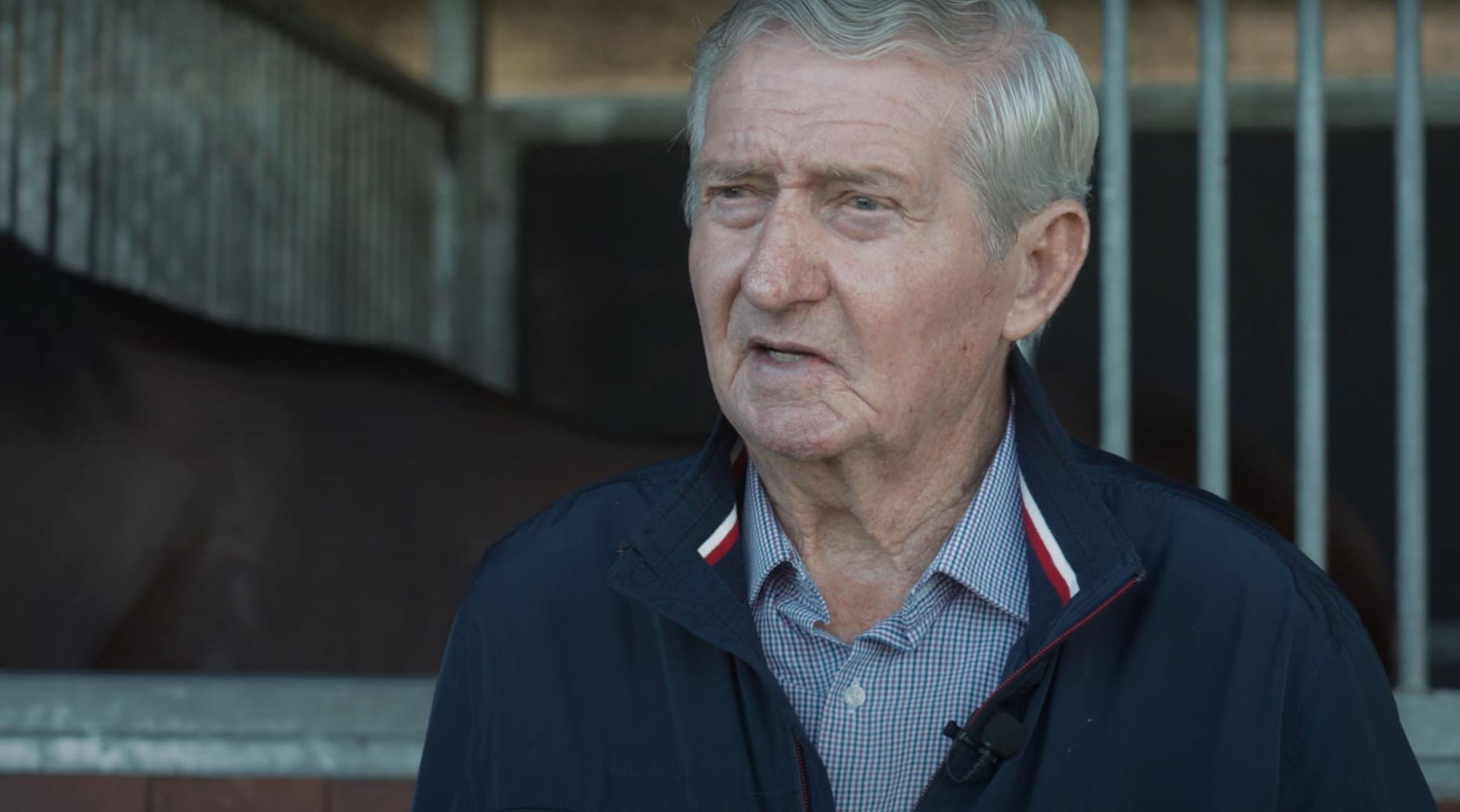
Solving the issue will have its complexities, and it is not something that Brian Smith will have to worry about as he prepares to wind up a decorated training that has only days to run.
Known for his quirky ways as a trainer, Smith showed why he was ahead of his time when he decided to send outstanding stayer Balmerino to Europe to contest the Prix de l’Arc de Triomphe.
As Matt Stewart found out this week, Balmerino’s near-miss when second to Alleged remains a bone of contention for Smith almost 50 years on.
At 84, Smith will close what’s left of his Brisbane stable at the end of the season.
‘You hang on too long and you go crazy’ –
Brian Smith’s colourful training journey nears its end
On the racing front, an “off-Broadway” stakes race will close out two-year-old black-type racing in Australia for 2024/25.
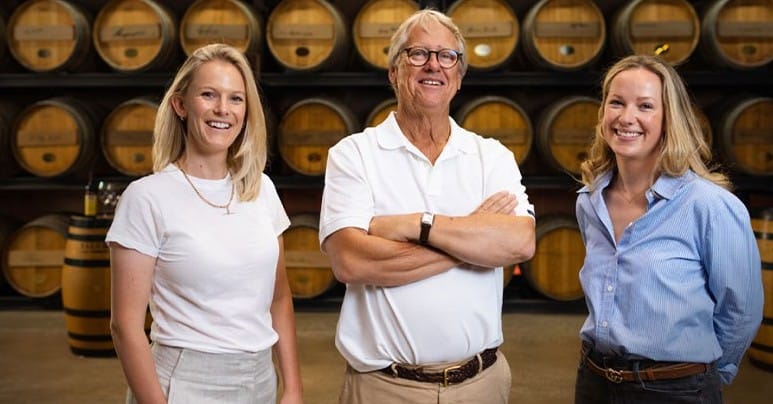
The Group 3 South Australian Sires’ Produce Stakes at Morphettville on Saturday will be an especially important race for Robert Hill-Smith, who shares ownership in Too Darn Hot youngster Bootlegger.
Hill-Smith is famous in viticultural circles but his family has a proud history in thoroughbred racing and a Sires’ win with a horse he couldn’t sell as a yearling and has since rejected Hong Kong overtures will be something worth toasting.
In the racing media space this week, the consequences from SEN’s acquisition of Melbourne radio station RSN have started.
SEN boss Craig Hutchison has already announced lay-offs, with Racing Pulse host Michael Felgate among the high-profile casualties of a deal that will come into effect on September 1.
The fallout from the Tasmanian state election is likely to be just as swift with Labor favoured to return to power when Tasmanians go to the polls on Saturday.
As Bren O’Brien reported this week, the election comes at a delicate time for the future of Tasracing’s funding model.
What you may have missed this week:
- Overseas punters, simulcast meetings help Hong Kong Jockey Club increase seasonal betting turnover
- Godolphin’s SA Derby placegetter Lavalier heading west after $380,000 online sale
- Fastnet’s Rock’s record HK season
- Run The Numbers – Bjorn’s babies shine as Gai and Adrian’s juvenile fortunes decline
- MIXI lodges PointsBet bidder statement, becomes substantial shareholder
- Fireburn’s bright – Golden Slipper winner’s first-born foal sells for $3.3 million in Japan
- Rowe On Monday – In Flight follows a Proven path, the Middle East’s influence on Europe, Aussies in Japan, Seoul winner for Pierata
Don’t forget to check out this week’s edition of the Straight Talk Podcast as Bren O’Brien and Tim Rowe discuss the rising costs of horse racing and its implications while providing extensive interviews with international steward Fin Powrie and Inglis’ Angus Robertson.

Straight Talk Podcast – Rising owner costs, global stewarding and racing with Fin Powrie and Inglis’ Angus Robertson on the power of the digital market
Enjoy your racing weekend,
Warwick Barr
Senior Editor
The Straight