
🔒 🔒 A bet each-way – the complexities of a relationship when media meets the business of betting
The union between media and wagering remains fluid and convoluted as both industries weigh the costs and opportunities of controlling sports content, reaching audiences and converting attention into commercial returns.
Wagering operators as broadcasters and media groups as would-be bookmakers. Let’s just say it’s complicated.
In a digital world, many examples show how the lines between the two industries have blurred as each seeks a bigger share of the sports audience and the revenue it can generate.
At face value, the convergence should be a matched bet made in wagering heaven.
But does control of a media platform give a wagering company a commercial advantage, or does it simply expose the business to another set of expensive risks?
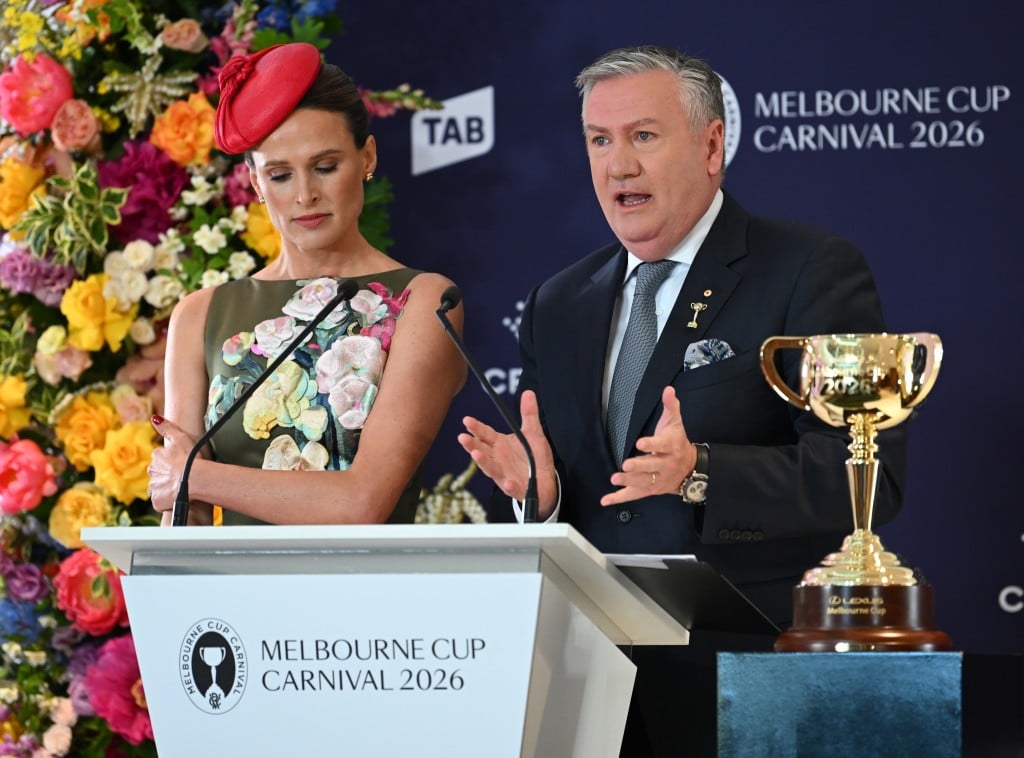
As the Melbourne Cup approaches, it’s appropriate to take a trip down memory lane.
News Corp’s backing of betr offers a timely example of a media company using its reach to launch a wagering venture, while Tabcorp’s reported interest in acquiring Foxtel points in the opposite direction.
Tabcorp has experienced both sides of that equation, making its reported interest in Foxtel particularly intriguing as the racing industry considers how it will reach audiences in the years ahead.
In October 2022, News Corp backed the launch of betr with a high-profile Melbourne Cup promotion offering 100/1 on every runner for bets up to $10, using the reach of its newspapers, radio, television and digital platforms to attract customers to the new bookmaker.
The campaign showed the appeal of pairing a media empire with a wagering product, but the relationship didn’t last in its original form.
Liquor & Gaming NSW later fined betr $210,000 for inducement advertising, and News Corp sold its stake in the bookmaker in 2023.
The experience echoed an earlier attempt to enter both sectors when Tabcorp launched Sun Bets in Britain in August 2016 under a 10-year agreement with News UK, seeking to turn The Sun’s reach and digital platforms into a competitive advantage in the British wagering market.
The venture attracted more than 300,000 registered users, but numbers did not translate into the performance Tabcorp needed, prompting a leadership reset and redundancies in June 2017 before the company warned later that year it would seriously consider withdrawing unless results improved.
Sun Bets ceased trading in July 2018, with Tabcorp agreeing to pay News UK £39.5 million, then about A$71 million, to exit the agreement, while expecting an after-tax charge of approximately A$91 million in FY2018 and further closure costs of up to A$10 million in FY2019.
“While we didn’t get it right, we have taken valuable learnings from the Sun Bets start-up process and operations which will inform our approach across our portfolio,” then-Tabcorp chief executive David Attenborough said.
“International businesses aren’t wrong. The Sun Bets business is not making the money that it needs to.”
Sun Bets also attracted unwanted attention in 2017 when it offered odds of 8/1 on Sutton United reserve goalkeeper Wayne Shaw eating a pie during an FA Cup match, an episode that led Britain’s Gambling Commission to fine the operator £84,000.
The United States has provided another example of the risks of joining media brands with wagering products.
Fox Bet, a partnership between Fox Corporation and The Stars Group, closed in 2023 after struggling to establish itself in a market dominated by larger operators, despite the visibility and promotional opportunities available through Fox Sports.
More recently, ESPN and gambling operator PENN Entertainment agreed to terminate their ESPN BET partnership in December 2025, ending a deal originally structured for a decade after the two sides failed to meet their ambitions for the product.
PENN later moved its US sportsbook brand to theScore Bet, seeking to tie wagering more directly to its own sports-media platform, while ESPN pursued other betting-related media and marketing arrangements.
These examples show that a powerful sports brand can introduce a betting product to millions of potential customers, but it can’t guarantee market share or profitability.
Media exposure is an advantage, not a substitute for a competitive wagering operation.
These experiences contrast with Tabcorp’s reported approach to Foxtel owner DAZN, which suggests the wagering (and media) operator may now be considering the opposite by broadening its media footprint rather than relying on a media partner to promote its betting business.
Discussions were reported as preliminary and DAZN chief executive Shay Segev subsequently said the company was not looking to sell Foxtel and was investing in its future.
The interest nevertheless fits Tabcorp’s stated ambition to develop a standalone racing and sports media business, diversify revenue and build a more integrated media platform.
It is an understandable attraction for Tabcorp, though, given Foxtel’s portfolio includes Fox Sports and Kayo, offering access to a much broader sports audience than Tabcorp’s own Sky Racing operation.
A larger platform could potentially connect sports rights, subscriptions, advertising, sponsorship, content and wagering, giving Tabcorp more ways to reach customers and generate revenue beyond its core betting products.
Its FY2026 results provide context for the search for growth: domestic sports turnover rose 8.3 per cent, racing turnover fell 1.1 per cent, and media revenue rose 1.9 per cent to $377.8 million.
Those figures do not explain the reported Foxtel interest, but they underline the commercial pressure on a wagering company such as Tabcorp to find sustainable ways to reach audiences in a competitive market.
The reverse strategy is also under scrutiny in the United States, where FanDuel is winding down its dedicated racing network, formerly known as TVG, despite retaining its racing wagering operations.
FanDuel has said the investment required to sustain a linear network no longer aligns with its long-term strategy, showing how a wagering company can still value racing as a betting product while deciding a dedicated television channel isn’t the best use of capital.
That decision poses a question for racing. Does the future lie in traditional channels, streaming services, or a combination of both?
The Melbourne Cup offers an important Australian counterpoint: Nine’s 2025 broadcast attracted an average national Total TV audience of 2.079 million for the race itself, while the national reach was 2.316 million and the 9Now streaming audience reached 463,000, up 24.8 per cent on 2024.
Over the four-day carnival, 5.5 million Australians tuned in to Nine’s coverage, with streaming growth driving year-on-year audience gains across all four race days.
Figures suggest free-to-air television remains a powerful platform for racing’s biggest event, while streaming growth shows viewers are increasingly comfortable accessing the same coverage digitally.
The challenge is translating that reach into sustained interest for the other 364 days a year. Anecdotally, the Seven Network’s multi-state coverage of Saturday racing seems well received across most of the industry.
While traditional television continues to serve audiences who value continuous live coverage, streaming could ultimately offer greater choice over races and meetings, alongside highlights, interviews, behind-the-scenes material, and personalised content.
But neither a streaming platform nor a larger media portfolio guarantees commercial success, as Sun Bets showed: a major publisher’s reach could not compensate for a wagering operation that failed to meet its financial expectations.
The intersection of media and wagering is therefore not simply a contest to own more of the customer relationship; it is a test of whether businesses can turn audience access into lasting engagement and returns.
For Tabcorp, the reported Foxtel interest would represent a different proposition from its ill-fated Sun Bets venture.
But the underlying question is familiar: how much should a wagering company invest in reaching customers before the cost of owning that relationship outweighs the benefit?
For racing, the stakes are even higher, because the industry needs its product to stay visible and accessible as viewing habits change.
The Melbourne Cup shows that racing can still command a mass audience, while FanDuel’s retreat and Tabcorp’s reported ambitions expose the commercial uncertainty surrounding the platforms that will carry the sport forward.
If there is a next phase, it may not be about choosing between media and wagering, or television and streaming, but finding a sustainable way to make each strengthen the other.
Related Articles
🔒 🔒 What Star’s $260 million AUSTRAC penalty may mean for Entain and Tabcorp
While the casino sector has been left reeling after Star Entertainment was forced to pay $260 million in fines for anti-money laundering and counter-terrorism financing program failures, two of Australia’s big three wagering companies watched with interest.
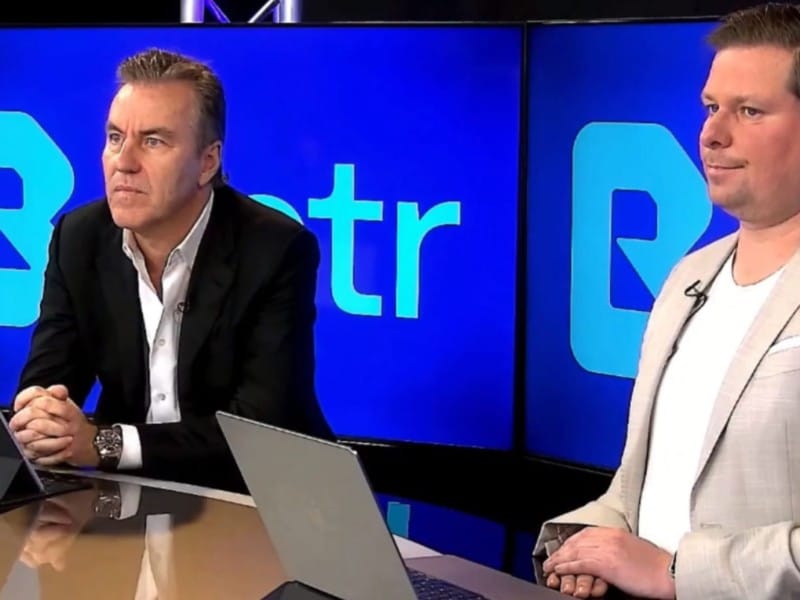
Betr lifts first-quarter turnover 19 per cent and holds FY27 earnings guidance
ASX-listed bookmaker betr believes it is taking market share from rivals after lifting its September-quarter turnover by 19.1 per cent and reaffirming its FY27 earnings guidance, with its net win margin rebounding in the first three weeks of October.

🔒 🔒 NSW regulators investigating Apollo Tech collapse
Wagering tech company Apollo Tech has entered liquidation, prompting a NSW regulatory investigation into its collapse and possible impact on online bookmakers, as investors question where their money went.
