
The race for Australia’s own Triple Crown
The Triple Crown has been at the centrepiece of American racing for over a century but has been elevated even further in prominence thanks to the recent Netflix series. Could Australia follow suit with its own version, over sprint distances in the Sydney spring?
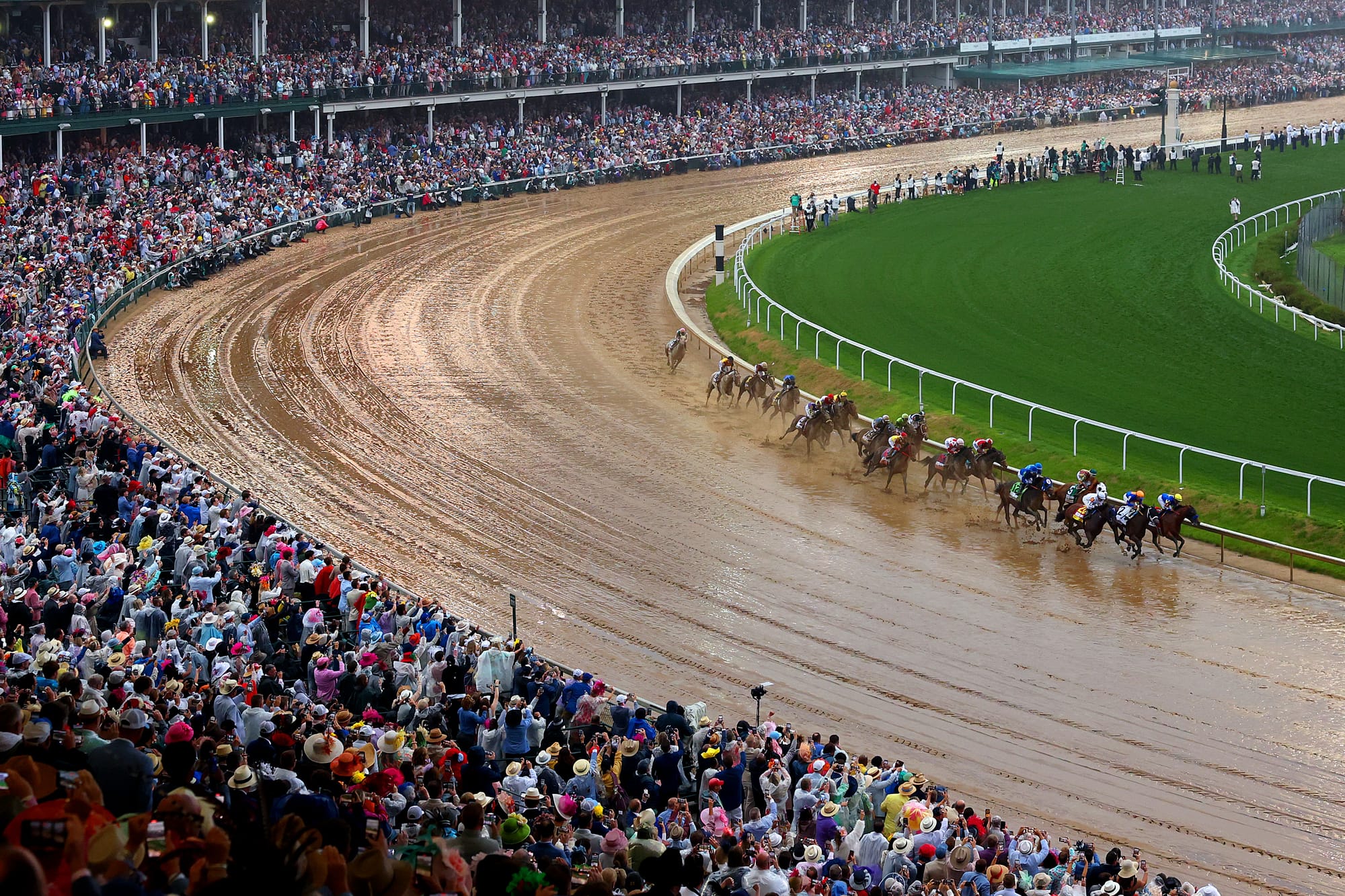
Comment: The United States did not invent the concept of the Triple Crown – it emanated from Great Britain when a horse called West Australian won the 2000 Guineas, Derby and St Leger in 1853 – but American racing has made the idea its own as a promotional exercise for its best and brightest since it was formally adopted in 1950.
The Triple Crown are bywords for elite equine achievement in the United States, even during the 37-year gap between when Affirmed completed the famed treble in 1978 and when American Pharaoh broke the drought in 2015. Justify (2018) is the only one to have done it since.
While the complete Triple Crown set is the holy grail, the individual contests across the Kentucky Derby, Preakness and Belmont, have also been the main stage of American racing, even during an era where the Breeders’ Cup has grown massively in profile.
Much like the term “Grand Slam” in tennis came to represent the individual events, as well as someone winning all four titles in a single year, the separate parts of the Triple Crown are their own special events.
When the same documentary makers who crafted the now-famed Drive To Survive series in Formula 1 went looking for the best format for something similar in horse racing, the Triple Crown made perfect sense. Three events, multiple characters and storylines and all the glitz and glamour of life on the track.
It was a relatively straightforward execution, and one which, while it may not have hit the nerve of the core racing fan or punter, engaged a much broader audience in racing. A recent surge in the bloodstock industry in the United States has been attributed to the ‘Race For the Crown/Netflix effect’, although a generous government change to tax deductions also helped.
The UK version of the Triple Crown is still discussed, although it receives nowhere near the same level of promotion. It hasn’t been achieved since Nijinsky in 1970, with the St Leger’s timing seen as a disincentive to participation. It is rarely attempted in modern UK racing.
Japan has developed its three-year-old Triple Crown into a broader relevance, probably second only to the United States. Taking in the Satsuki Sho and Tokyo Yushun in the spring and Kikuka Sho in the autumn, it was last swept by the champion Contrail and includes 21st-century winners Orfevre and Deep Impact.
The concept has never really caught fire in Australia despite being applied to a few different scenarios. The three Sydney Group 1 two-year-old races, the Golden Slipper, the Sires’ Produce and the Champagne Stakes have been referred to as a Triple Crown, a sweep last claimed by Pierro in 2012.
The Triple Crown term has also been applied to the trio of autumn three-year-old Group 1s in Sydney, the Randwick Guineas, Rosehill Guineas and the ATC Derby. Dundeel was the last horse to win all three of those races in 2013, but it has never carried the broader recognition.
Melbourne tried to establish a rival concept across its three-year-old races from 1998 to 2000, the Alister Clark, AAMI Classic and Australian Guineas and it was claimed by Pins in 2000, but it did not gain traction.
Of course, Melbourne has had its own unofficial sprint Triple Crown series for many years, across the Lightning Stakes, Oakleigh Plate and Newmarket Handicap. Placid Ark famously won all three races in the 1980s and there was a $1 million bonus on offer for the winner of all three as recently as a decade ago.
However, the concept never truly gained broader acclaim, and the sprint landscape in Australia has since been transformed by The Everest.
 Tim Rowe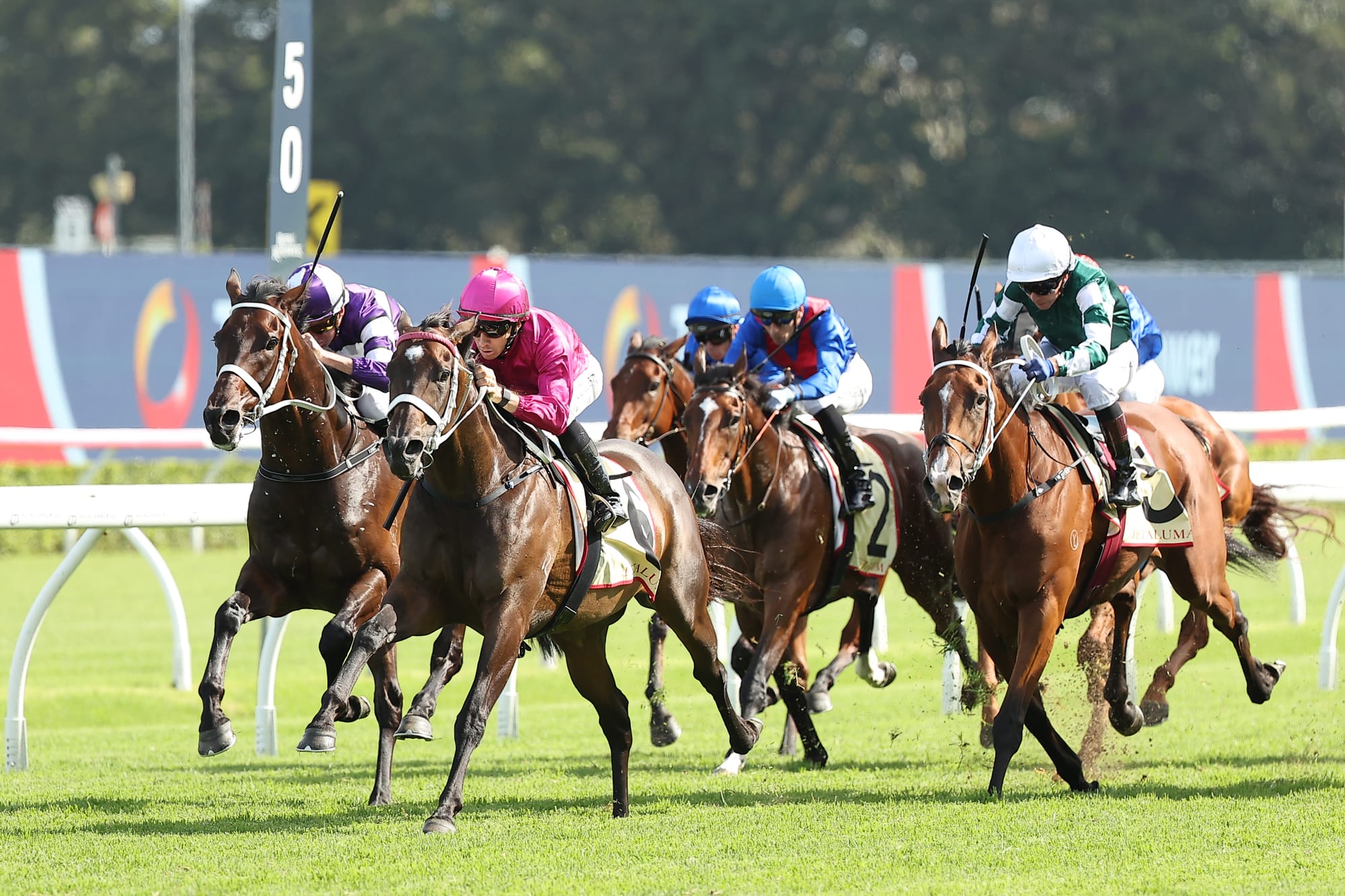
Which brings us to the possible next incarnation of the Australian Triple Crown.
The Straight reported this week that two key sprint races either side of The Everest, the Premiere Stakes and the Russell Balding Stakes, were put forward as Group 1 prospects to the Asian Pattern Committee.
Leaving aside for one minute concerns over the Australian Group 1 calendar being flooded, it is possible that Racing NSW and its cavalier chief executive Peter V’landys is trying to build its own version of the sprint Triple Crown.
V’landys’ greatest success story as an administrator has been The Everest, a concept he readily admits was borrowed from the Pegasus World Cup concept in the United States. The Pegasus may have faded, but The Everest has continued to grow.
With the Randwick sprint as its centrepiece, it is entirely feasible V’landys and his team are constructing a run of three races which would provide NSW racing with a six-week window of prominence and an argument to be the greatest set of sprint races in the world.
It would work from both a marketing and programming point of view, incentivising international participation, and providing a legitimate alternative for European and American horses which may be otherwise set for the Breeders’ Cup Sprints, which, while important, do play second fiddle to the other races across that program.
It also doubles down on Australian thoroughbred racing’s genetic strength, sprinting. It’s hard to see how Australia’s biggest studs and breeders wouldn’t throw their support behind a trio of Group 1 races, given the opportunities it would offer in terms of marketing future stallions.
The Group 1 approval for the Premiere and the Russell Balding is still uncertain, and will no doubt be contested, but if it could land, it is the perfect platform for NSW racing to take another chunk out of Victoria’s long-term dominance of the spring.
V’landys has already spoken of engaging international broadcasters in documentary-style coverage of Sydney’s biggest race and what would make a better setting than Australia’s own Race for The Crown.
It may not win many friends around the Racing Australia board table, but the form guide suggests that this is not something V’landys cares about when it comes to growing the profile of Sydney racing.
Author

Related Articles
Goulburn Race Club CEO Robyn Fife to step down
After overseeing a period of significant change at the Goulburn Race Club, including the handover of the club’s land to Racing NSW, chief executive Robyn Fife has confirmed her 26-year association will come to an end.
Setting a standard – New course looks to lift best practice in racehorse syndication
The need for more established standards of education and ethical conduct in Australia’s world-leading racehorse syndication industry has led to the development of an education program to build understanding among current and prospective syndicators.
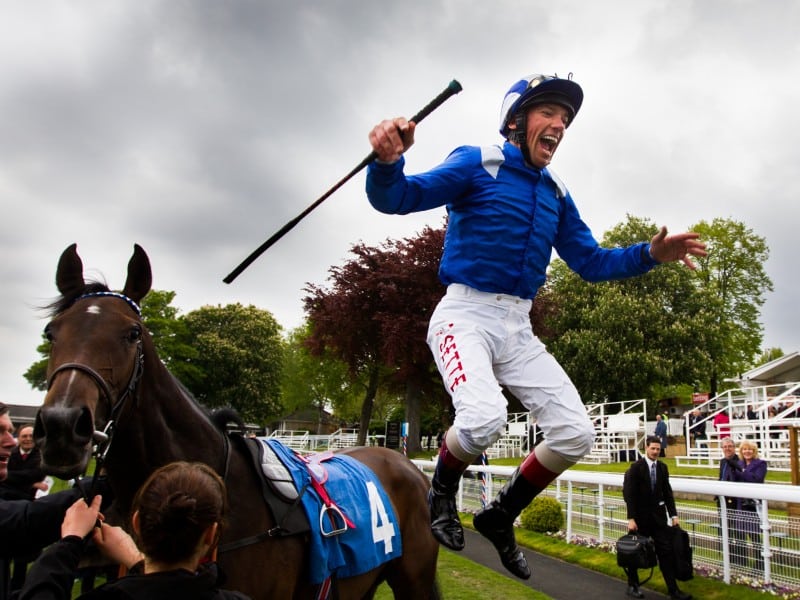
Run The Numbers – A fitting farewell for Frankie
Frankie Dettori brought his 40-year riding career to an end with a Grade 1 success on his final day in the saddle. The most prominent global jockey of the past half-century had elite success in 17 different countries, but famously never in Australia. Run The Numbers digs into his remarkable career.