
‘The ingredients are there’ – Rogers’ plans to transform the VRC gather pace
Six months since joining the Victoria Racing Club, chief executive Kylie Rogers still has a lot of questions to answer but says she can now see her way through the clouds which had enveloped Flemington.

The cards were firmly on the table when Kylie Rogers walked into the Victoria Racing Club chief executive’s role on September 1.
The final 2023/24 financial figure of a $24.2 million loss might not have yet been published, but Australia’s largest racing club knew it was well in the red when Rogers began in her new job.
It was a fifth straight year of operational losses, totalling $87 million. The Club Stand, built, unfortunately in terms of timing, on the eve of a global pandemic, had saddled the VRC with considerable debt. There were other issues as well, including flatlining revenue and spiralling costs.
When the annual report was announced in November, Rogers’ profile was kept out of it. It was chairman Neil Wilson who was front and centre. He acknowledged that the former AFL executive’s “fresh perspectives” were crucial to the future prosperity of the VRC.
Rogers’ situation was not that dissimilar to her old AFL boss Gillon McLachlan at Tabcorp. The trash was being taken out, giving her the context for sweeping change.
While the VRC board negotiated the storm over the anaemic balance sheet, issues not of the new CEO’s making, Rogers was given the time and space to make the changes she felt were needed.
“I knew what I was going into. And the job was pretty clear for me. And that was to revitalise our club and work hard to drive profitability, to improve culture and set a really clear purpose and strategy for our business to thrive,” Rogers tells The Straight in an extensive interview.
“Every day, to be truthful, has been a challenge but with every challenge is an opportunity. It is my job to ensure the VRC and Flemington Place is a thriving precinct, a profitable precinct, and we put our members at the heart of that. And that’s what I’m focused on.”
Identifying a challenge and solving it are, of course, two different things. While the VRC’s problems are in many ways complex, they are also fairly straightforward. Its core business, hosting racedays, is not profitable for a considerable chunk of the year.
When asked how many of the club’s annual 21 racedays are profitable, Rogers answers “surprisingly more than you would think”. That, of course, depends on your expectations.
“We struggle during public holidays because of the rates we pay and we are not profitable on those days,” she said. The VRC’s race schedule includes racing on New Year’s Day and Anzac Day.
“It is a discussion that we are having with RV around the scheduling of races. To ensure that we can put our best foot forward to be profitable.”
“There is one other race day where we are not. There are a number where we break even and then there are those where we make money.”
Rogers sees a crucial aspect of her job is to ensure every one of the VRC’s race days is profitable.
“And how are we profitable? We have the right supplier deals. We have great racing. We utilise our park. We grow our attendance base. We grow our engagement with our members,” she says.
The VRC’s 34,000 members, by far the largest of any racing club in Australia, are in Rogers’ mind, its greatest commercial opportunity.
“The ingredients are there. It is how do we better build a relationship with every single one of our 35,000 members,” she said.
“There is a cohort of our members that buy a membership because they just want to go to the carnival. That is great. What do you want during the carnival? How do I make that experience better for you? And maybe, just maybe, if I replicate some of that, you might come during autumn. Maybe, just maybe, you might come during summer.
“And then for those 8000 that come every race day, regardless of the weather, why do you do that? What is important to you? How do we make sure you bring a friend next time? How do we make sure you bring a family the week after that? How do we grow?”
 Bren O’Brien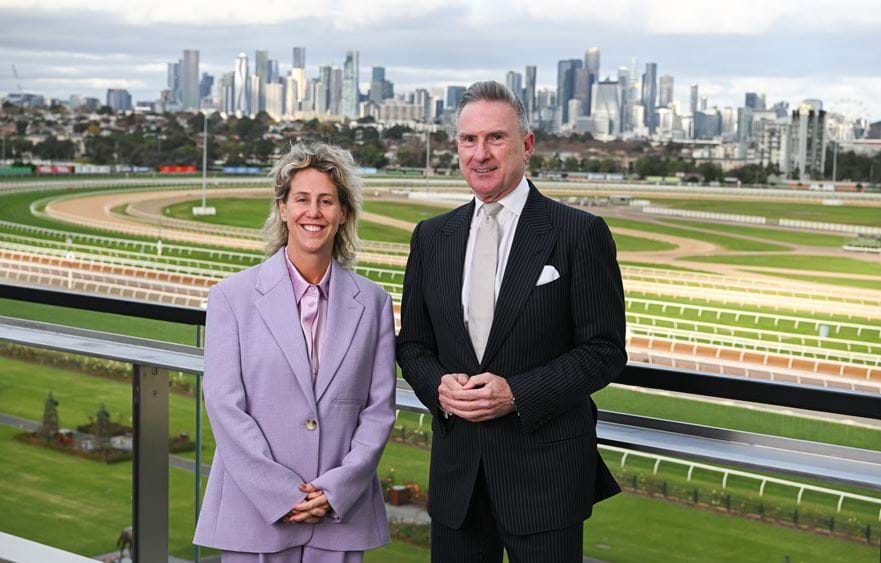
The potential membership base is also key in Rogers’ planning. She is eager to point out that 45 per cent of the general admission crowds during the spring was under 30 years of age.
“How do we make sure they’re coming more often? So, we’ve got the boys. How do we utilise our pillars of fashion and beauty to bring more girls?” she said.
“And we’re coming up with data strategies, content strategies, brand strategies to have meaningful conversations with these audience segments to drive a larger audience base.”
Some innovations are new ideas, and some are refreshing old ones, like the return of Fashions On the Field to autumn racing for the first time in 18 years.
It is clear that Rogers has more questions than answers at the moment.
Her rhetorical flair is a nod to her previous time at the AFL, and before that at media brands Mamamia and Channel 10.
But her enthusiasm for the challenge of being the VRC’s CEO and with it, Australia’s highest profile female racing executive, should not be mistaken for it being straightforward.
“It’s interesting you ask that today because for the first time since I arrived on the 1st of September, I had a moment today where I felt like, I think we can do this. I felt really positive,” she said.
The VRC’s balance sheet issues owe as much to the costs of running a racing business as they do the missed commercial opportunities. The club had become bloated in its resourcing, and changes needed to be made quickly. As part of that restructure, 40 jobs were axed, while others were created.
“I needed the right people sitting in the right places doing the right things. Therefore, we underwent a really tough organisational restructure. And no secret, we had a very clear cost management plan. We needed to identify why we are spending to the levels we are spending,” she said.
The club endured a wave of negative publicity and feedback from its members over its decision to close the Club Stand during the New Year’s Day meeting. That blowback from that proved a lesson for the new regime.
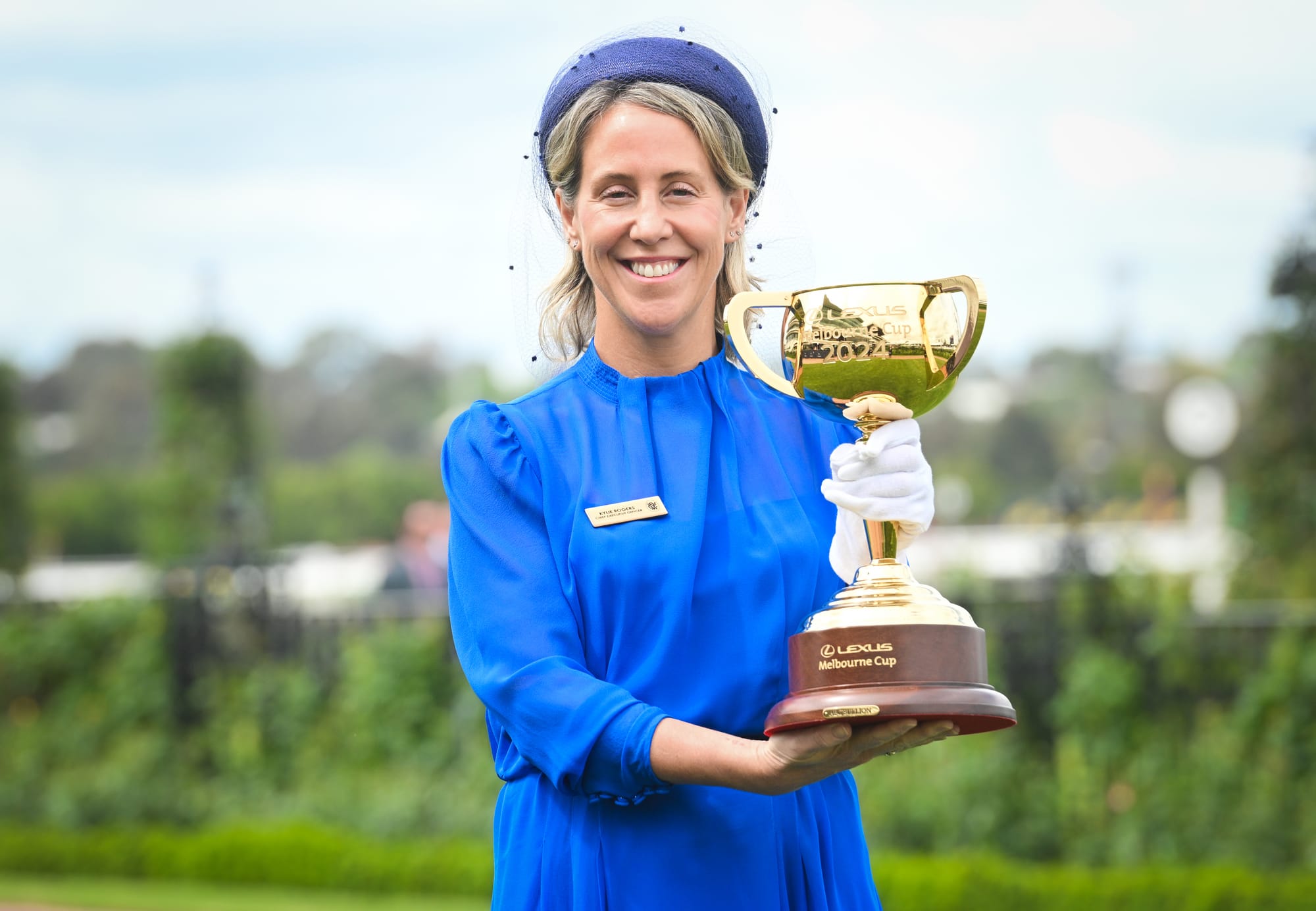
“I won’t apologise for making hard calls to ensure we’re utilising our park in the right way based on attendance forecasts,” she said.
“My lesson in that was we had to make that decision late and ideally you’d make that much sooner and communicate to every member around why we did it. And so they understood it properly.
“I am working hard with my operations and facilities team to ensure moving forward that we can actually isolate different parts of the club stand. Right now, my only option is to turn every room on, or turn every room off.”
Rogers’ laser focus on costs ensured that racing during the summer period met the club’s budget for the “first time in years”.
Autumn has also been successful, but the status quo is not good enough for a racing club in the VRC’s financial position. Rogers’ mandate from the board is for growth.
Bringing people back to the racetrack and addressing aspects like the costs of raceday are part of that, but there are broader strategies.
“The ingredients are there. It is how do we better build a relationship with every single one of our 35,000 members” – Victoria Racing Club chief executive Kylie Rogers
There’s 127 hectares to commercialise in different ways outside of racedays, seven hectares of which is owned by the club.
Flemington has been accused of being its own island among the inner-western suburbs of Melbourne, and Rogers sees engagement with the local community as a huge opportunity.
“How are we driving permanent food and beverage precincts?” she asks.
“How do we utilise our exquisite elms precinct next to the river where there are community areas for our neighbourhoods and others to come in with permanent restaurants and bars?”
“Where are our partnerships with Riding With The Disabled and Racing Hearts and equine therapy and having meaningful relationships with our neighbourhood and our community, the Royal Children’s Hospital?
“That is what’s all part of our master plan vision, and we’re in the early stages of that. But that is how we open ourselves out to more people and we diversify our revenues.”
Rogers rifles off the questions she wants the VRC to answer with the sense of someone who has come from outside the racing bubble. Those “fresh perspectives” that chairman Neil Wilson had espoused are evident in both the content of the tone of what she is saying.
To this point, she lacks the weariness in her voice that many weather-beaten racing executives carry due to the political nature of a role which is designed to change an industry which, because it marches to the beat of its own drum, has been accused of not living in the reality of the broader world in which it exists.
 Bren O’Brien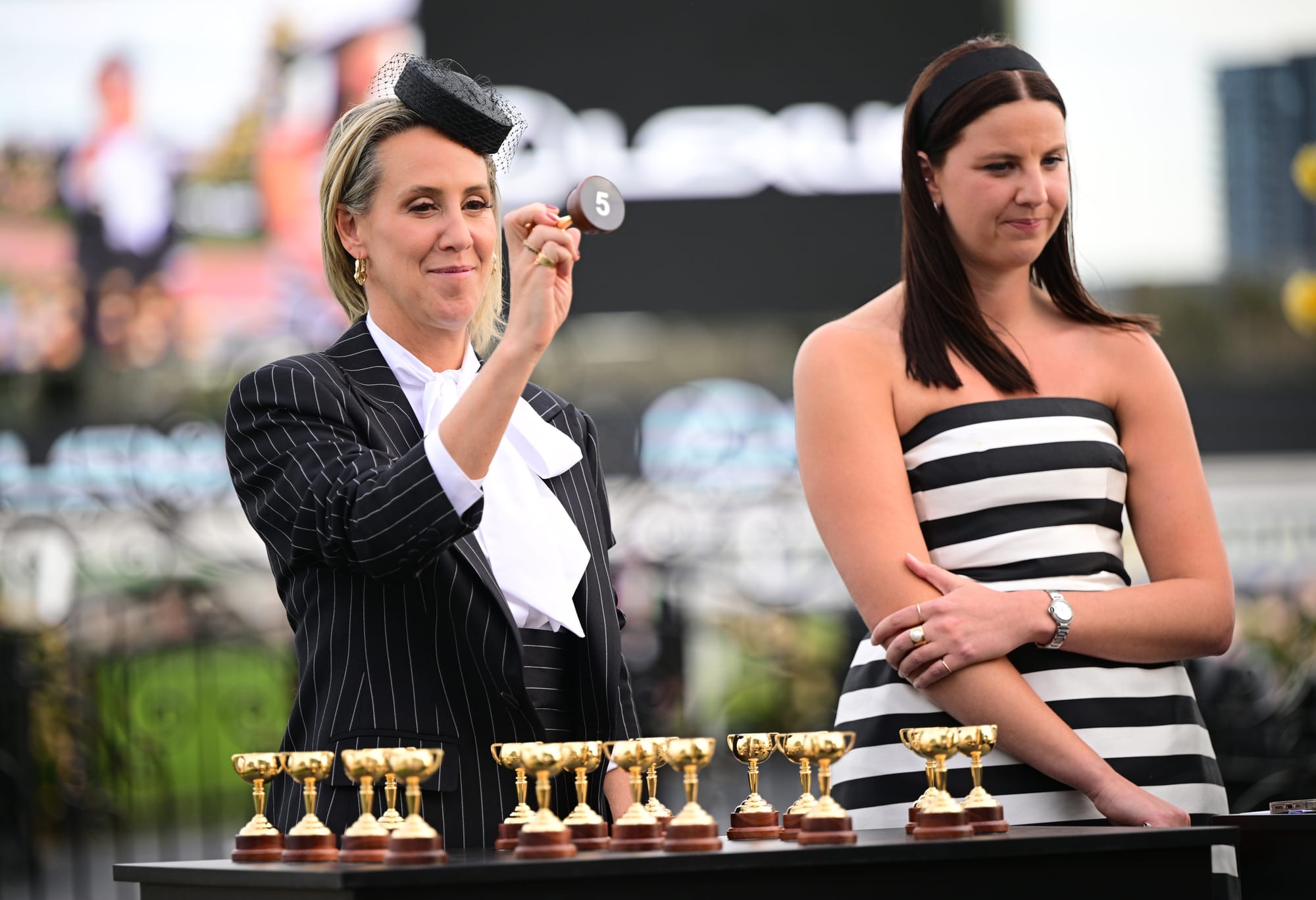
That she is a female chief executive would not be relevant or noteworthy in many other industries. But racing’s senior executive make-up nationally has and still is almost exclusively male.
The “fresh perspectives” continued with her key executive appointments to date.
Into the VRC have/will come Tania Abbotto (chief operating officer), Fran Vavallo (chief commercial officer), and Adam Forsyth (chief financial officer) as well as Nikki Clarkson (chief marketing officer).
“You always need a balance between experts of your core business and those that are going to come in with fresh thinking and often different disciplines and skill sets. And I always say it’s the ingredients that make the dish so spectacular,” Rogers said.
“I have a very rich racing team at board level. I have a very rich racing team who run my racing department and my tracks. But I have to marry that up with entrepreneurial thinking. I have to marry that up with operational and facility skill sets. I have to marry that up with data and marketing skills.”
It is a major executive refresh, but one that Rogers says is crucial to develop the ideas which are going to transform the VRC.
“Tanya Abotto came from Sportsbet, a seasoned executive who has deep knowledge of our number one revenue lever for the industry. She has the rigour and discipline around processes and operations to drive our facility hard and smart,” she said.
“Adam Forsyth is an experienced CFO who worked for CUB and Asahi Beverages and just more recently Brown Brothers. He knows food and beverage. So he has that skill.
“Fran has come from Tennis Australia. She ran my commercial division at Mamamia. She knows partnerships. She knows brand. She knows activations. She knows the festivalisation of sport.
“Nikki Clarkson, media and marketing, content, performance marketing. We sell tickets. So we need to have a level of retail lens and a level of performance marketing so we know where every dollar goes and the return on that dollar.”
Rogers says these changes and new perspectives will allow the new regime to take the VRC to another level as a business.
“I walked into the AFL, having not worked in the industry before and I’ve walked into racing, never worked in the industry before. But I know one thing,” she said.
“Sport is a connector. And sport is a place of belonging and it’s a community and it’s about hope.”
Author

Related Articles
Losing Sleip – Trainers call for trial of lameness app before mandatory introduction
NSW trainers have urged Racing NSW to trial the Sleip AI lameness detection app before mandating its full use across the state, citing unanswered questions over costs, compliance and how the technology’s findings will be applied.
Hinton in the Hunter could be an early statement of intent
Graeme Hinton’s four-month stint as Racing NSW’s acting chief executive presents an early opportunity to mend strained relations with breeders by engaging directly with the Hunter Valley’s influential thoroughbred industry, writes Tim Rowe.

Straight Talk – Magic Millions in spotlight, plus interviews with Anthony Mithen, Tom Magnier and Julia Ritchie
Straight Talk takes on the Gold Coast with special interviews with Barry Bowditch, Anthony Mithen, Tom Magnier and Julia Ritchie.
