
The scope and size of employment in Australia’s thoroughbred industry
Australia’s thoroughbred industry carries considerable political and social weight, contributing not just as a sporting pastime but as a fully fledged industry. But exactly how big is it, and exactly how many people does it employ? We have pulled together the latest national estimates and state-by-state figures.
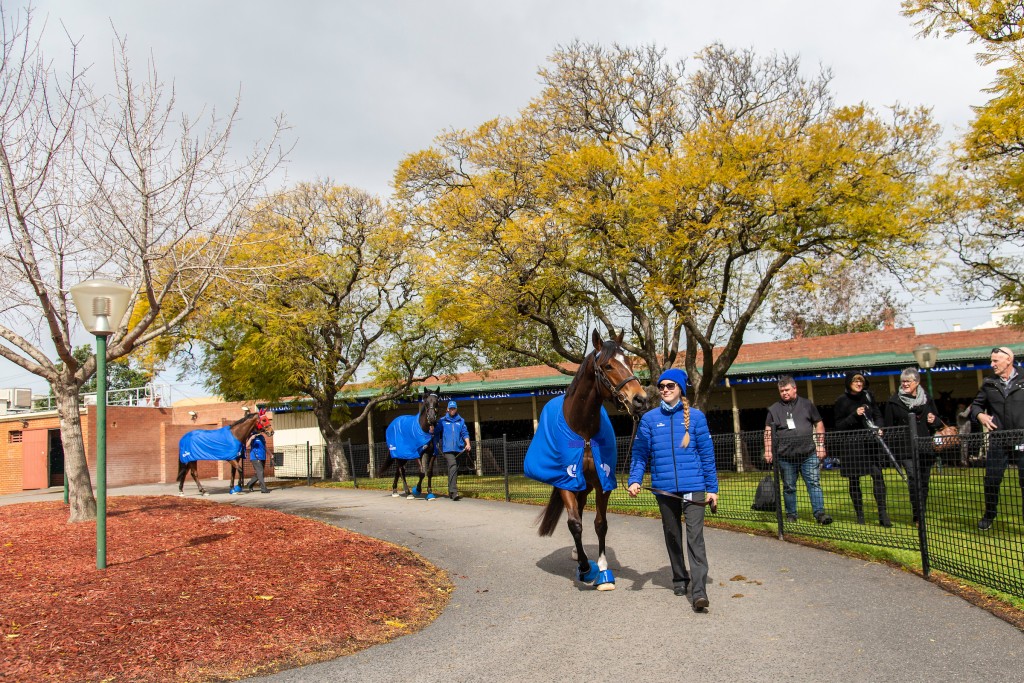
The Australian thoroughbred industry’s workforce extends well beyond trainers and jockeys. Breeding farms, training stables, race clubs and industry bodies employ thousands of people, while suppliers broaden the employment footprint through services such as veterinary care, feed and transport.
The available industry studies show where that work is sustained, but do not provide a single, comparable breakdown across every sector and state. Their figures tend to distinguish between paid roles, full-time equivalent workloads and participation by owners and volunteers – a distinction that matters when assessing racing’s contribution to employment.
Racing Australia estimates thoroughbred racing provides approximately 75,000 jobs across Australia, without labelling that figure a full-time equivalent (FTE) measure. Its broader participation estimate approaches 160,000 employees, participants and volunteers, with 63 per cent of those residing in regional areas.
An earlier IER assessment put thoroughbred racing’s direct employment at 48,680 full-time equivalents in 2005/06, spanning breeding, training, racing and wagering.
A more recent IER study, commissioned by AgriFutures Australia, found thoroughbred breeding alone supported 9268 FTE jobs in 2022/23: 4273 directly sustained by breeding activity and 4995 through flow-on effects. Associated wages and salaries totalled $814.5 million.
The study separately counted 16,711 employee roles, comprising 10,200 full-time, 3269 part-time and 3242 casual roles. Another 6130 breeder roles and 10,603 volunteer roles brought participation to 33,444. Individuals can occupy multiple categories, so this is not a unique-worker total.
The FTE estimate models employment sustained by expenditure, using a 38-hour full-time workload. It includes suppliers and broader economic activity across veterinary services, feed, transport, retail, accommodation, manufacturing and construction.
Australia also had 2661 trainers and 850 riders recorded in the 2024/25 Racing Australia Fact Book.
Separately, ownership supplies the investment behind much of that work. The Fact Book counted 137,186 individuals with interests in horses that raced, including leaseholders and syndicate members but excluding micro-syndicates. Its separate counts of 12,039 syndicates and 59,471 syndicate members overlap with those ownership figures.
State racing footprints already incorporate breeding and wagering.
NSW
In NSW, thoroughbred breeding supported 4738 FTE jobs in 2022/23, a sector-specific footprint that cannot serve as a statewide racing employment estimate. The national breeding study assigned 2446 direct FTE and 2293 flow-on FTE to NSW.
The Hunter Valley accounted for 3756 FTE and $757.4 million in value added. Across NSW, the study counted 8710 breeding employee roles, 2073 breeders and 3175 volunteers. NSW produced 5349 foals, or 42.5 per cent of the study’s national crop.
Racing Australia recorded 635 NSW-licensed trainers and 233 riders in 2024/25, including 65 apprentices and 26 amateurs. These licence counts include ACT trainers and jockeys licensed by Racing NSW.
Racing NSW’s 2024 Strategic Plan estimated owners spent $567 million annually on training, spelling, veterinary, racing and other costs in 2023/24, excluding acquisition or breeding.
The NSW figures presented here do not provide a current statewide employment breakdown directly comparable with those of the other states.
The most recent NSW Government study came in 2014 and found racing was a $3.3 billion industry in the state, with over 90,000 people directly participating in the racing industry as employees, participants or volunteers.
The report said economic activity generated by the racing industry sustained more than 27,550 full-time equivalent positions across NSW.
Victoria
Thoroughbred racing supported 24,618 FTE jobs in Victoria in 2024/25, including flow-on employment, according to IER’s Victorian racing industry study, released earlier this year. The wider three-code footprint was 33,456 FTE, with 15,755 directly sustained.
The thoroughbred staff categories comprised 3532 stable employees, 1168 breeders’ staff, 5405 racing-club and industry staff, and 286 jockeys and drivers in the study’s combined riding category. The club-and-industry figure includes Racing Victoria and on-course TAB staff.
Inner Melbourne accounted for 12,992 thoroughbred FTE and outer Melbourne for 5143. Hume supported 2438 and Ballarat 1059. These regional estimates include supplier and flow-on jobs as well as work within racing businesses.
Thoroughbred preparation generated about $591 million in expenditure, with more than 40 per cent occurring in Outer Melbourne. Breeding expenditure was $265.7 million, concentrated in Hume, which accounted for $155.2 million.
Victoria’s three-code FTE estimate was below the 34,900 reported for 2018/19, despite direct expenditure rising from $3.2 billion to $3.9 billion. Higher spending does not automatically translate into more FTE employment.
Queensland
Queensland thoroughbred racing supported 10,813 FTE jobs in 2024/25. IER’s study covered all three codes, which together sustained 13,994 FTE: 6608 direct and 7386 flow-on.
The thoroughbred role counts included 3040 stable employees, 674 breeders’ staff, 4055 racing-club and industry staff and 204 jockeys. The combined industry category includes Racing Queensland, TAB and Queensland Racing Integrity Commission staff, with some positions allocated between codes.
Regional Queensland accounted for 2564 thoroughbred stable employee roles. The broader thoroughbred FTE footprint was largest in Brisbane at 4483, followed by the Gold Coast at 1866 and Darling Downs-Maranoa at 1047.
Thoroughbred horse preparation generated $367.9 million in expenditure, including $103.2 million on the Gold Coast. Breeding generated $121.5 million. Across all codes, Racing Queensland and clubs generated a $637 million expenditure impact through activities including race meetings, maintenance, administration and prize money.
South Australia
South Australian thoroughbred racing supported 3,522 FTE jobs in 2024/25, within IER’s three-code total of 5,041. The study incorporated additional survey information on direct employment and gross wages into its modelling.
Its thoroughbred employee categories comprised 1080 racing-club and industry staff, 475 stable employees and 176 breeders’ staff. Trainers, jockeys, owners and volunteers were counted separately; combined thoroughbred participation totalled 13,182 roles.
Adelaide supported 2088 thoroughbred FTE, Outer Adelaide 497 and Murraylands 384. Horse preparation generated about $139 million in expenditure, with Murraylands accounting for $35.4 million, while thoroughbred breeding generated $20.9 million.
Western Australia
Western Australia’s available statewide study covers 2021/22. IER estimated 6673 thoroughbred FTE within an all-code footprint of 10,249, comprising 4948 direct and 5301 flow-on jobs.
The thoroughbred categories counted 3547 racing-club and industry staff, 1447 stable employees, 265 breeders’ staff and 55 jockeys. The combined industry category included Racing and Wagering Western Australia and TAB employees.
Perth accounted for 3633 thoroughbred FTE and Peel 787. Regional areas contained 906 thoroughbred stable employee roles. Thoroughbred breeding generated $42.5 million in expenditure, with Wheatbelt, South West and Peel the principal centres.
Tasmania
Tasmanian thoroughbred racing supported 873 FTE jobs in 2021/22, according to IER’s study commissioned by Tasracing. The three-code footprint totalled 1735 FTE, with 993 directly sustained by racing activity and the remainder in support industries.
The thoroughbred role counts included 488 racing-club and industry staff, 286 stable employees, 74 breeders’ staff and 26 jockeys. The study recorded 3796 thoroughbred participation roles, including owners, breeders, trainers and volunteers. It notes duplication within participation categories, so that total is not a unique-worker headcount.
Regional Tasmania accounted for 373 thoroughbred FTE, compared with 316 in Hobart and 184 in Launceston. These estimates include flow-on employment. Thoroughbred breeding generated $10.7 million in expenditure, with $7.6 million occurring in the state’s North region.
Wagering
Industry body Responsible Wagering Australia reports that wagering contributes more than $5.8 billion to the Australian economy each year and supports more than 32,000 jobs.
Author

Related Articles
🔒 🔒 The Everest’s new summit – Can the slot model sustain its next phase?
As The Everest approaches its 10th edition, even the most ardent critics of Racing NSW could not deny the success of a one-time “pop-up’ race that has become the Group 1 centrepiece of racing in NSW. But how does the race evolve into its second decade, and will the slot format sustain that industry engagement?
🔒 🔒 Perth Racing flags profitability challenge despite gains
Perth Racing has reduced its annual loss but remains under pressure to turn stronger revenue, increased activity and major investment into sustainable returns as the WA racing industry awaits the findings of an independent funding and sustainability review.
New Zealand equine safety initiative targets earlier injury-risk detection
The New Zealand Equine Safety Initiative will combine development, training and veterinary records with movement data and blood research, aiming to give breeders, trainers and veterinarians earlier warnings of injury risk.
