
Urge to merge wanes, as the court of Kanga is put under the spotlight
Less than four months after meeting to discuss the possibility of a merger, the Victoria Racing Club and the Melbourne Racing Club could not be further apart on the issue. Bren O’Brien ponders whether it was the consolidation of power which spooked the VRC.
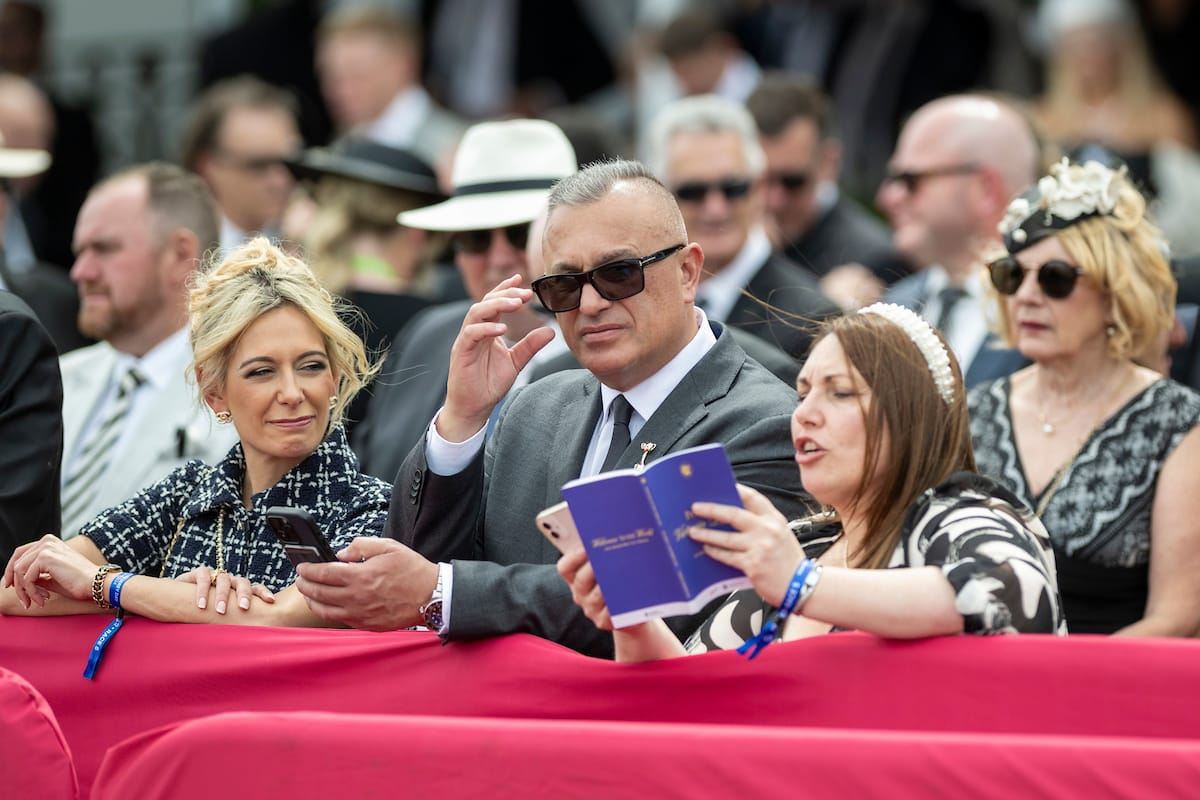
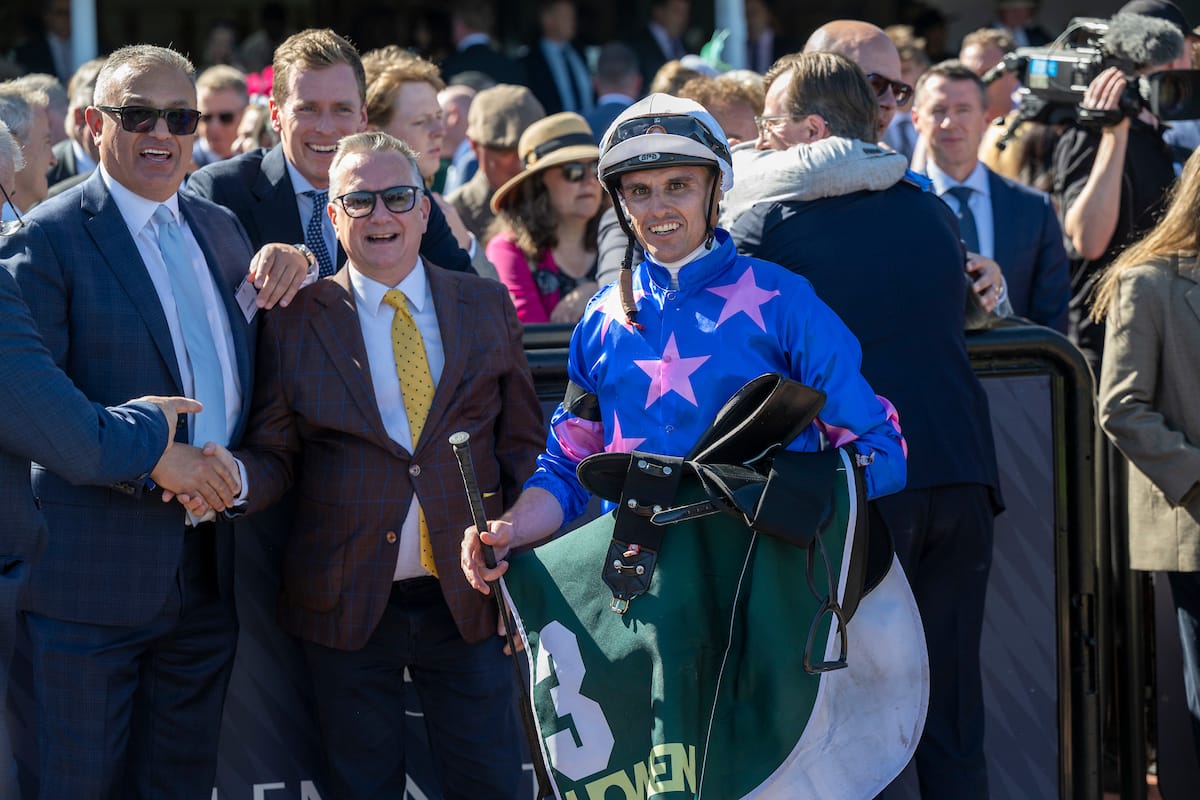
As Melbourne Racing Club chairman John Kanga stood on the terrace of the Rooftop Bar at Flemington on March 1, celebrating the Australian Guineas win of his horse Feroce with trainer Dom Sutton and other owners, the rapid pace of his racing ascent must have flicked through his mind.
Two days prior, he had met at the Toorak mansion of billionaire businessman Jonathan Munz with key members of the VRC board, chairman Neil Wilson and vice-chairman Michael Ramsden, to discuss a plan to unite the Victoria Racing Club and MRC.
In the previous six months, he had upended and re-assembled the MRC committee, saved Sandown, moved the Caulfield mounting yard, slashed food and drink prices and finalised a plan to sell off a section of the course which would eliminate the debts incurred by a previous administration.
He had also hired a new chief executive, the highly regarded Tom Reilly, to help execute his vision. Not even a Caulfield grandstand fire could dampen the spirits of a man who seemed to be on a mission. He appeared to be part-racing administrator and part-superhero. He also had the media on speed dial and would not miss a chance for a handshake and a chat.
He had owned Group 1 winners before, but at Flemington on that perfect autumn day, everything was coming up Kanga. A man known for his love of a Pepsi drank out of the Australian Guineas trophy.
“Winners just win,” he said passing by, flashing that million-dollar grin.
In racing terms, he was on top of the world. From the rooftop bar, he certainly couldn’t have had a better view of Flemington, a place which according to the plans hatched less than 48 hours prior, may become part of his domain.
It was somewhat ironic that the very place he and his fellow connections, including Collingwood coach Craig McRae, were celebrating, the Club Stand, had played a role in bringing the VRC to a point where a merger might at least be a consideration.
According to reports out of the secret meeting, the merger plan was for the VRC name to be retained, and the administrative base to be split between the VRC’s Epsom Road headquarters and the MRC’s base at Caulfield.
The VRC’s financial issues have been well documented. It reported a loss of $24 million in 2023/24, following on from a $15 million loss in the year prior. The timing of the pandemic after the constriction of the Club Stand could not have been worse.
The MRC’s recent financial challenges, meanwhile, had been more of a wobble. Some strategic missteps may have temporarily smashed the bottom line, but the fundamentals were still good. Revenue was strong. And Kanga was on the case.
The prospect of a merger between Victoria’s race clubs has been on the agenda for at least 20 years. Ten years ago, former Racing Victoria chairman David Moodie spearheaded an aggressive agenda in this regard but in the end, had run afoul of politics.
 Bren O’Brien
Former RV CEO Andrew Jones wrote in an article for The Age last year that it had been obvious to the racing industry for decades that Melbourne’s clubs should come together.
“The real barrier to club consolidation is club leaders. Committees don’t like to vote themselves out of office, and prefer to focus on projects at their own club rather than looking at the bigger picture. The fastest horse in racing has always been Self-Interest,” he said.
Either Jones was looking into a crystal ball, or he had seen this movie before.
No sooner had The Age reported the details of the February meeting between club officials and Munz last Thursday, the VRC got the message out to members that a merger was off the table.
“We are not pursuing or engaging on club merger activity and we have no reason, financial or otherwise to do this at this time,” a joint statement from CEO Kylie Rogers and chairman Neil Wilson said last Thursday.
“We remain committed to working alongside Racing Victoria and the broader industry for the betterment of Victorian racing.
“Our focus is squarely on strengthening the VRC – growing our club, backing our members and partners, and building on the success of the Melbourne Cup Carnival.”
So what happened?
It might be that the VRC didn’t see the opportunity in a merger. Sources spoken to by The Straight indicate that the financial benefits of bringing the clubs together are overstated.
While they are both racing clubs, their business models are quite different, and even in terms of racing product, you have a club which hosts 21 meetings a year at Australia’s most iconic racecourse, looking to combine with one that hosts 82 across three venues.
“It’s a bit like trying to bring together Gucci on one hand and Myer on the other,” one source said. “Both may be fashion brands, but they exist for different reasons.”
The VRC’s revenue is $216.6 million and it turned over $1.6 billion in wagering, while it has net assets of $182 million.
In comparison, the MRC’s revenue last financial year was $260 million with turnover of $2.1 billion and net assets of over $620 million.
But what may have proven the broader concern for the VRC is not the consolidation of the businesses, but the consolidation of power.
If the reports of that meeting at Munz’s mansion in February are correct, then Wilson was to be chairman of the combined club before Kanga took power.
 Matt Stewart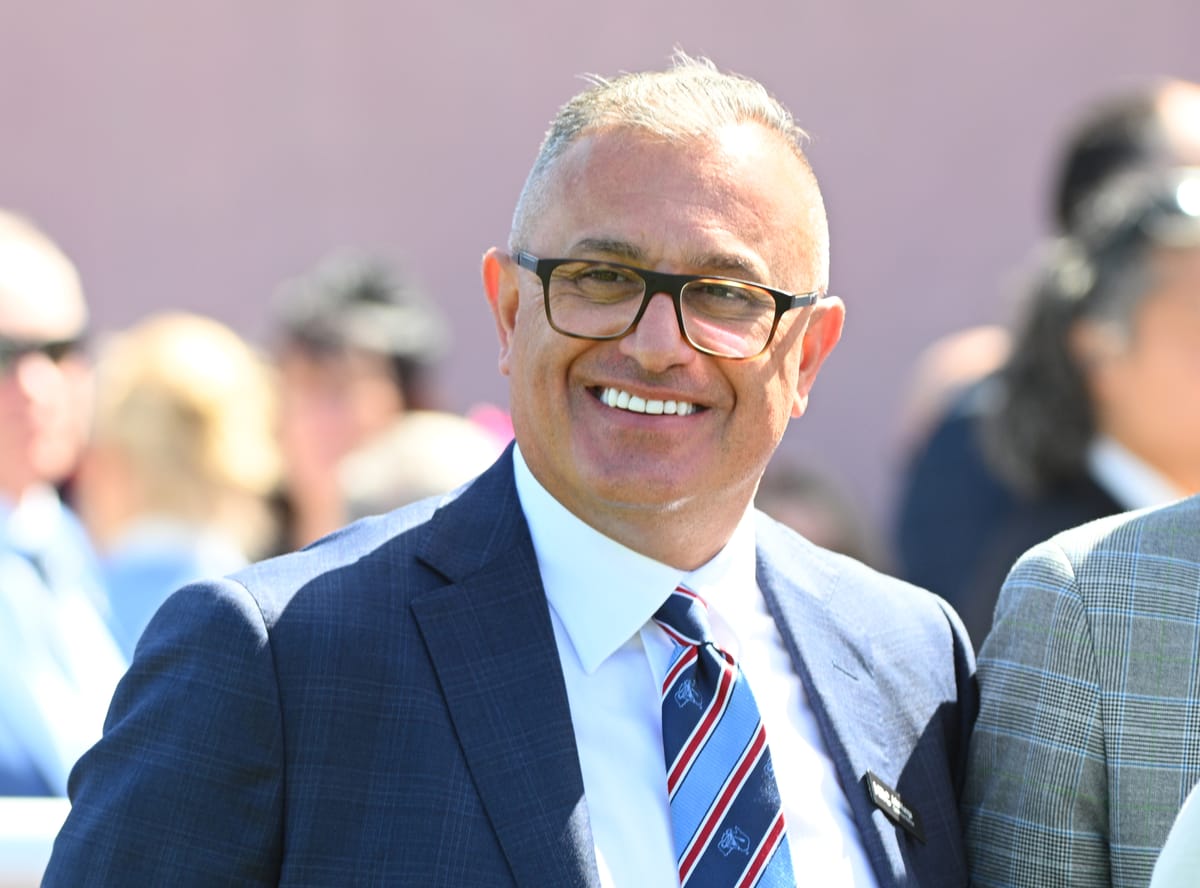
It’s safe to say that the growing profile of Kanga is no longer seen as a net positive by rival clubs as the charm of the million-dollar smile and the endless enthusiasm has begun to wear off.
Accusations of betrayed confidences and leaks have emanated across the industry in recent weeks, as the cordial relationship between various stakeholders broke down. After a brief burst of cooperation, Victorian racing politics has quickly reverted to type.
Then came the first major “black eye” of the new MRC regime. The departure of Reilly last week was a shock for many, but how it was handled and communicated created even greater concern for those in the industry.
A chaotic, rambling press release, published through selected media, pointed to trouble in the house of Kanga.
Kanga’s decision to immediately appoint Tanya Fullarton, a long-term ally of Munz, into the role of chief operating officer, raised eyebrows, although he backed her experience and credentials to handle the responsibility of nearly 100 staff.

It then emerged that a key committee member, Barb Saunders, with significant expertise in governance, had departed in protest at the way Kanga was going about the executive change.
Further to this, Kanga confirmed there would be no new CEO and he would serve as executive chairman of the club.
The man who had published his phone number on X to anyone who wished to talk to him has now suddenly turned off his mobile to all but a select one or two people.
If this is the start of the second act of the latest MRC drama, then it promises to be a fascinating one and Kanga remains central.
The man himself has noted there are two versions of him, the effervescent “Kanga” and the shrewd and smart finance businessman, John Kanga. He told The Straight last year that which one showed up depended on what was needed.
Intriguingly, those who have known him for years tend to refer to him as John, while those who knew little about him until he rose to the profile of MRC chairman inevitably call him “Kanga”.
Such has been the influence he has built that which version we see more of in this second act may well define the future direction, not only of the MRC, but the Victorian thoroughbred industry.
Author

Related Articles
Letter To The Editor – Arthur Mitchell – How did we get here?
Arthur Mitchell, principal of Yarraman Park Stud, has submitted a letter to the editor regarding his concerns about the current state of the racing industry in New South Wales.
Written In the Stars – ‘A very blessed life’ – Walden, WinStar and winning
As a kid, Elliott Walden thought his farm life in Kentucky was boring, but after a detour via the training ranks, he became, through his association with WinStar farm, one of the most successful and revered figures in American breeding and bloodstock. He reflects on his journey with Jessica Owers in Written In the Stars.
Straight Talk – Perth & Tassie sales, Waikato’s generational plans with Mark Chittick and racing’s shifting sponsorships
In this episode, Bren and Tim preview the key yearling sales in Perth and Tasmania, interview Mark Chittick on generational change at Waikato Stud and chat ATC v Racing NSW and shifts in racing sponsorships.