
What will be the five biggest breeding and bloodstock stories in 2026?
Senior journalist Tim Rowe examines what the hottest issues in the Australian bloodstock and breeding industry will be in the new year.
When it comes to breeding, it’s a slow process. It takes five years from the time a stallion retires to stud to when his first crop of two-year-olds hit the track.
Thus, it’s a time-consuming and expensive business, breeding horses.
While fortunes can be made and lost in the space of 60 to 90 seconds on the track – think of a Golden Slipper-winning colt, for example – the primary production side of the thoroughbred business is one of patience.
As the New Year closes in, what transpires in 2026 in breeding and bloodstock will likely have been months and years in the making.
It shapes as another pivotal 12 months for the industry, both in the short and long-term, and we attempt to predict what some of those issues may be.
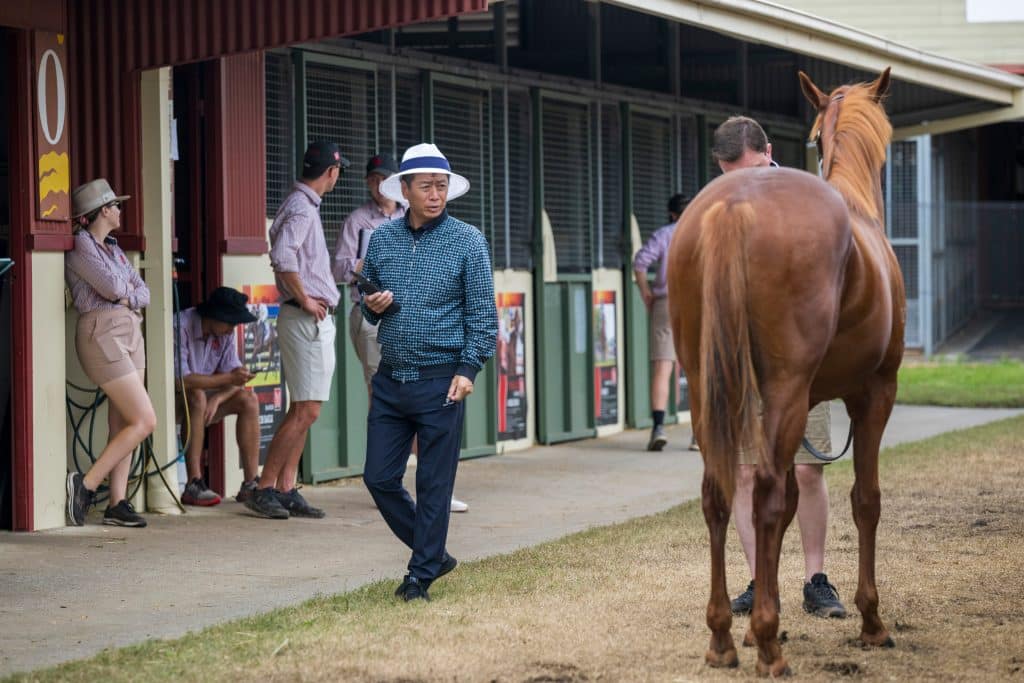
5. Zhang Yuesheng attends an Australian yearling sale
The Gold Coast in January is as much about people watching as it is about buying horses.
Who is aligned with whom, which trainers have secured the backing of big-spending owners, and who is seen at Bundall, or Broadbeach, inevitably fuels speculation.
In early 2026, much of that attention will be focused on one man: Yulong founder Zhang Yuesheng.
As much as Jun Zhang, Mr Zhang’s son-in-law, has endeavored to dismiss the scaremongering to anyone who asks, The Straight included, the conjecture just won’t stop.
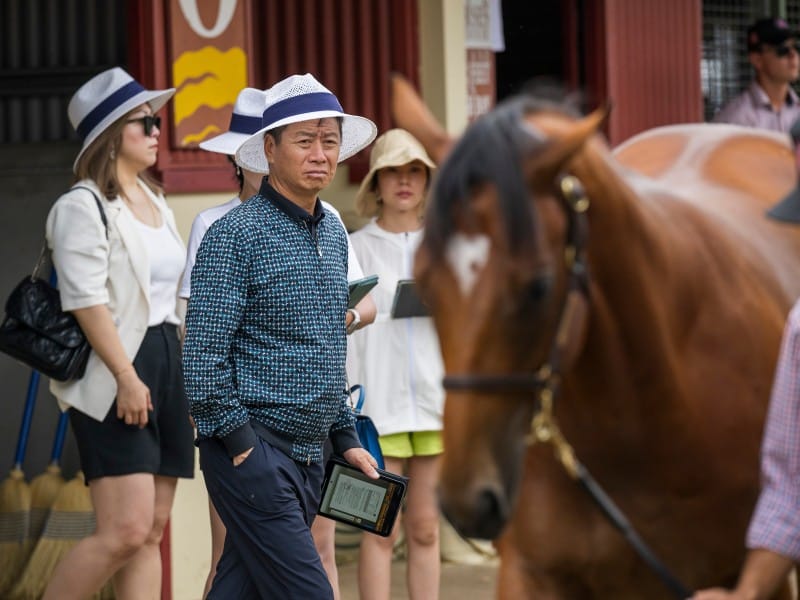
Zhang was absent during the spring carnival, even when Via Sistina won her second Cox Plate and before that a non-attendee on Everest day at Randwick when Yulong had two horses in the $20 million race.
Jun Zhang, though, has maintained that his father-in-law will be at the Gold Coast for the Magic Millions where Yulong has 69 yearlings catalogued and that he has been busy in his home country of China managing his other extensive business interests.
A sighting of Mr Zhang on the Gold Coast would put an end to the ongoing speculation.
One of the strengths of the Australian industry is that it isn’t reliant on any one major buyer, and the syndication model has served the industry well, but no one has invested more money into the sector than Zhang.
So, if he was to pull back – and there’s been no signs that he has or will, judging by the European and US breeding stock sales in recent months – it would have a material impact on the bloodstock economy.
4. Stallion ranks
Zoustar achieved what most pundits thought was only a matter of time, winning his maiden general Australian sires’ premiership last season.
But it was a tough year for many stud farms, with the deaths of Snitzel, So You Think and Wootton Bassett all significant losses to the Stud Book.
It’s the “proven” middle rung of stallions who have an important part to play in the next few years in providing a reliable source of stakes winners that are sought after by all ends of the market.
Hellbent stands alongside his sire I Am Invincible, and comparisons are inevitable beyond the stable boxes at Yarraman Park. At the same point in their careers, Hellbent has a way to go to catch his remarkable father, with nine stakes winners compared to 25.
But Hellbent has two Group 1 winners compared to three sired by I Am Invincible at the same point in their careers. He also has three Group 2 winners compared to four.
Darley’s Harry Angel also started at a modest service fee but has achieved much success, particularly with his southern hemisphere crop.
Again compared to I Am Invincible, a three-time champion sire, Harry Angel has three more individual stakes winners at the same stage of his career, albeit with the advantage of shuttling.
He looms as a continuing influence on the Australian Stud Book with his outcross pedigree.
Then there’s Capitalist, who is 12 but feels like he’s been around forever.
He’s a prolific winner getter and perhaps suffers from the fact that almost every stable “has had one” and trainers’ owners often want the shiny new toy rather than going back to well by purchasing another Capitalist.
But at the same stage of his career as four-time champion sire Snitzel, Capitalist has one more stakes winner, 27 to 26, and two Group 1 winners compared to Snitzel’s three.
By service fee at least, Capitalist’s best crops are two and three-year-olds and it’s only a matter of time before he too turns those regular winners into more high-end black-type scorers.
3. Online market hots up
Magic Millions re-entered the digital market late in 2025, and not before time.
It’s going to be a slow burn in taking it up to Inglis, which dominates the online thoroughbred auction space, but it’ll become increasingly important as breeders and vendors look at the best way to sell their stock.
For mares’ sales, in particular, below the highly commercial the online market is becoming more appealing every day.
There’s nothing quite like a live auction, and the effect that can have on buyers, so Magic Millions’ race fillies and mares breeding stock session and Inglis’ Chairman’s Sale will retain pride of place but expect other sales to be condensed or be axed in 2026.
Magic Millions also opened up its March Yearling Sale on the Gold Coast to non-QTIS eligible horses.
Interstate support from vendors could come at the expense of the company’s Adelaide Yearling Sale and Inglis’ HTBA sale.
2. The year for property sales
At the risk of repeating last year’s piece, a number of prominent farms were placed on the market, and as yet there hasn’t been any confirmed sales.
Will 2026 be the year when trade occurs?
As mentioned earlier, Zhang Yuesheng could be the key to facilitating a purchase of properties in the Hunter Valley, with his son-in-law Jun Zhang making no secret of the fact that Yulong has ambitions to have a stud in Australia’s breeding heartland of Scone.
Mitch Cunningham and his family chose to move in a different direction with Ridgmont Farm in the heart of the Segenhoe Valley by selling up and agisting their significant bloodstock interests.
There have been a couple of nibbles from buyers but nothing has come to fruition, as yet.
Peter and Glen Carrick have placed Noorilim Park in Victoria’s Goulburn Valley on the market, but again no buyer has yet been willing to put pen to paper.
There are other farms, which aren’t advertised, that could also be bought if the right offer was to be received for these highly capitalised properties.
1. The Pattern
Movement on Australia’s inert Pattern process occurred in the final weeks of 2025, with the Asian Racing Federation intervening after a year of infighting between the Racing Australia board.
When we wrote about this issue at this time last year, it was suggested that there would be more pressure to come on Racing Australia to achieve meaningful change to end an eight-year black type impasse.
As Racing Australia chair Rob Rorrison told this publication recently, he thought he’d negotiated a truce, and a way forward, in July and August this year.
However, the black type motion didn’t get to a vote at the national body’s September board meeting and a revised plan was voted down in December, leading to the Asian Racing Federation stepping in.
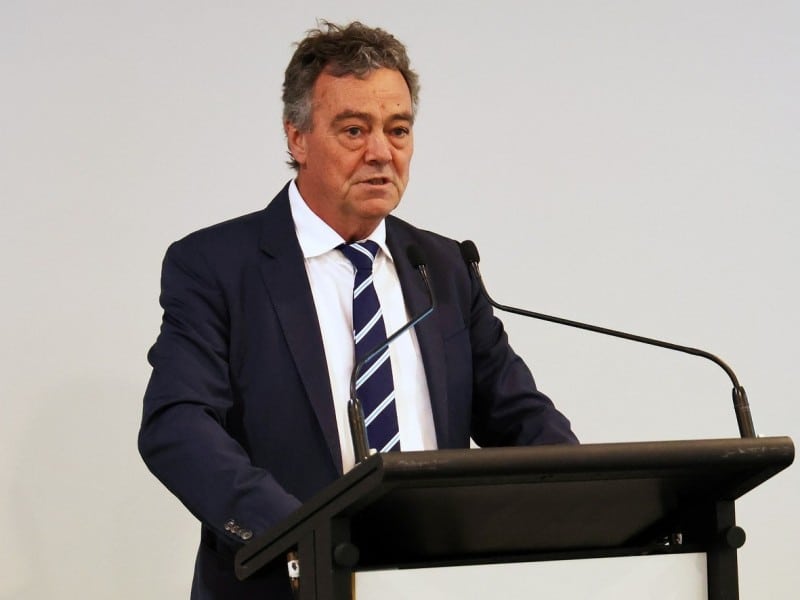
The ARF and its Asian Pattern Committee will determine Australia’s Pattern on a temporary basis, but in 2026 stakeholders will push for a Pattern framework that complies with APC Ground Rules that will allow the country to control its own stakes race calendar.
The formation of the Australian Racing Industry Alliance, chaired by Jonathan Munz, means the powerful lobby group will continue to agitate for change, or for the ARF to bypass RA and implement the ARIA plan.
That plan involves a large committee of industry figures, with its size meaning not one faction could dominate.

Author

Related Articles

Run The Numbers – The world’s most successful sires of 2025
With the calendar year about to come to its conclusion, Run The Numbers looks at which sires are the global leaders for overall winners, with a former shuttle sire to Australia leading the way.
The Top Five Australian-bred stars of 2025
A look at the top five most impactful Australian-bred thoroughbreds of 2025.
Rowe On Monday – Unit a tribute to Merrick, American Pattern discord and farewell to Mahler
In this week’s Rowe On Monday, the bittersweet story of the success of emerging two-year-old Unit Five, why changes in the Pattern are not only causing confusion in Australia, and a tribute to a one-time Melbourne Cup placegetter who made a major mark in Ireland.