
Who stands up for racing’s future? What Australia can learn from Britain’s racing tax reprieve
The complex relationship between wagering and racing makes it hard to determine whether the British thoroughbred industry will ultimately be better off despite dodging a feared rise in betting tax. The situation should act as a lesson for Australia, writes Bren O’Brien.
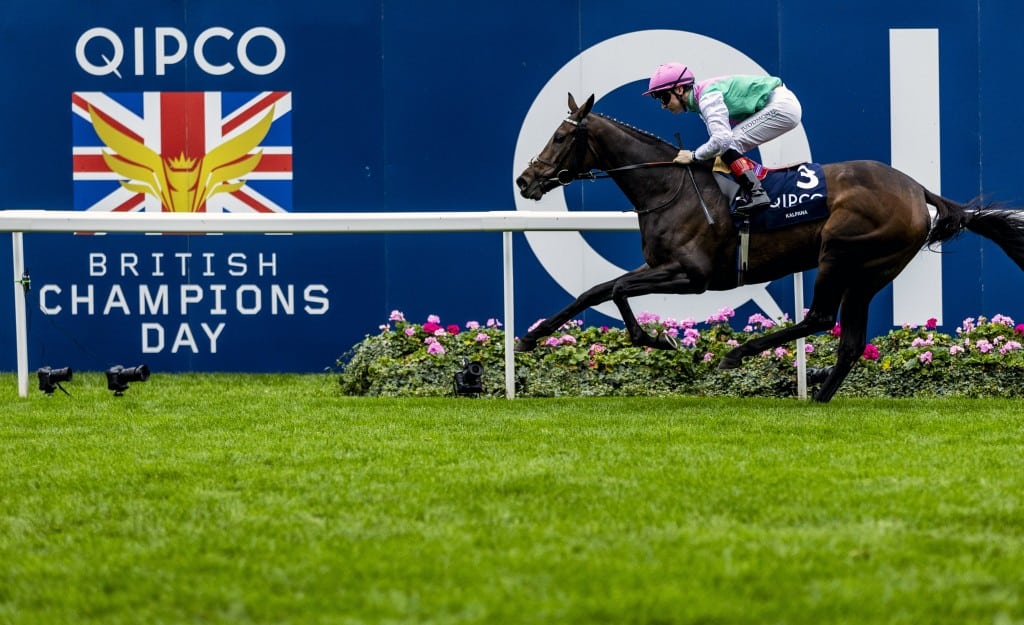
COMMENT: The British racing industry may have spared what had been characterised as a disastrous tax hike, but it had barely been allowed to take a breath before it was sharply reminded where its bread was buttered.
Off the back of a public campaign against a mooted tax rise on betting on racing from 15 to 21 per cent, the racing industry, the second biggest spectator sport in Britain behind football, seemed to have won the argument, convincing Chancellor Rachel Reeves that it should be exempt from any increase.
It should have been a monumental moment, with the industry seemingly having dodged a £330 million bullet thanks to strong advocacy, including a day-long strike in September.
“We have seen the power of our industry speaking with one voice,” British Horseracing Authority (BHA) acting chief executive Brant Dunshea told the BBC.
“The Chancellor has listened to our concerns and rightly recognised that racing is a unique national asset – culturally, socially and economically – and we welcome this support.”
Except that Reeves had also announced increased taxes on other forms of betting. The levy on online sports betting will jump from 15 per cent to 25 per cent in April 2027, while a remote gaming duty, paid on online casino betting, will rise from 21 to 40 per cent from April 2026.
In creating a case for racing being an exception, the remainder of the British gambling eco-system had been slugged, as the government sought to generate an extra £1.1 billion annually from the gambling industry by 2031.
The British racing industry’s sense of relief was drowned out by the dramatic reaction of the gambling industry, which underwrites it.
Betting and Gaming Council chief executive Grainne Hurst described the rises as “a devastating hammer blow to tens of thousands of people working in the industry across the UK, and millions of customers who enjoy a bet”.
“The government’s Budget is a massive win for the incredibly harmful, unsafe, unregulated gambling black market, which pays no tax and offers none of the protections that exist in the regulated sector.”
Within 24 hours, analysts were warning of over $1 billion in annual profit downgrades across the gambling industry.
British gambling companies confirmed one of the first things that will be changed will be their marketing and promotion spending. That specifically includes horse racing sponsorship.
And while the corporate profits may slump, the cost of additional taxes, as usual, will be borne by the punters through lower returns.
It quickly became apparent that any positive for racing out of the British situation comes with an immediate negative, because of the industry’s reliance on the wagering industry.
Sound familiar?
While there are major differences in the regulatory and taxation set-up in Australia and Great Britain, the themes are the same.
Australian racing authorities are optimistic that if the federal government ever acts on advertising reform, promotion of betting on racing will receive a carve-out.
That may well be the case, but the British situation shows that what happens in one area of the wagering industry will always affect another.
An end to promotions such as free bets or deposit matches would impact racing turnover, and ultimately the money flowing back to fund racing.
Then there is the sponsorship discussion, where even signage at racetracks could come under question. The Straight understands that policymakers were unaware of this implication as they discussed possible changes.
It is for this reason that it was surprising that when the parliamentary inquiry, which would form the ‘You Win Some, You Lose More’ report, was conducted in 2023, there was no appearance at the public hearings from the racing industry.
There were representatives of major sports as well as the heads of the major wagering companies, but apart from written submissions from Racing Victoria and Racing NSW, two of the 161 submissions received, racing, which derives over 90 per cent of its revenue from wagering in one form or another, did not appear to be at the table.
It may have well been that they weren’t invited, or they felt comfortable that their interests were being represented, but given the knock-on impact of advertising reforms, you might have hoped for a stronger presence.
It raises the question that in the hypothetical situation, the federal government decided to impose an additional tax on wagering, would the Australian racing industry unite in the same way that happened in the UK?
The bookies, who deal with the divided nature of the Australian racing landscape on a daily basis, would frame ‘No’ as an odds-on favourite.
State-by-state parochialism in racing may have, in part, helped drive engagement, but it has also diminished the industry’s ability to unite on almost every major issue.
It leaves the wagering companies, and their appointed lobbyists, to do the heavy lifting when it comes to engaging with federal policy discussion.
The challenge with that is that while racing has a near-complete reliance on wagering, the Australian wagering industry is becoming less and less dependent on racing. A 50-50 split between Australian sports and racing turnover seems inevitable in the next decade.
While there is evidence that racing’s three-year turnover decline may be coming to an end, it is still ceding market share to sport. Bookmakers say the two market segments are complementary, but in terms of upside, sports betting offers the best opportunity.
It means racing’s influence, politically, is waning. It can not accept that its best interests will always be represented by others.
Racing may be run by state legislation, with state-based regulators and state-based taxes such as Point Of Consumption, but the politics of gambling regulation is becoming increasingly important at the federal level.
The threat to racing’s future may not come from a national tax proposal, as it did in Great Britain, but from other measures.
Just last week, federal Independent MP Andrew Wilkie introduced an amendment to the Interactive Gambling Bill which would expressly prohibit betting on greyhound racing.
It had little hope of getting the support it needed, but it was an example of how federal law could be used to shape a racing industry so reliant on gambling.
Ask the question again. If Australian racing had to stand up for its survival, what would that look like?
Author

Related Articles
Caught short – Investigations launched over Hobart Cup distance bungle
Multiple investigations have been launched into a blunder which saw one of Tasmania’s biggest races, the Hobart Cup, run short of its advertised distance on Sunday.
RWWA’s sustainability front and centre in major industry review
The future financial sustainability and governance of Racing And Wagering Western Australia are firmly in the sights of a key review by the Roger Cook-led state government, which has released its terms of reference for the inquiry.
A voice for all ages – how John Tapp became a podcast pioneer in Australian racing
The Australian thoroughbred industry has gradually found its voice in the digital age. But it is not an influencer or a Gen Z star who is leading the way. Instead, it’s one of the industry’s most recognisable and enduring personalities who is proving it’s never too late to learn something new.