
Written In The Stars – A Cat of a different colour
Apache Cat was born to stand out, be it on the racetrack, in the paddock or in retirement, as an ambassador for the industry. As the first equine subject of Written In the Stars, Jessica Owers found out from those closest to him that he was never destined to be “just another brown horse”.
There are certain horses whose kinship is with the racetrack, not the establishment. Think the Takeover Targets as opposed to the Storm Boys or Autumn Glows.
Often, they are the horses that do it the hard way for any jockey with any weight against whoever shows up in any place in the world. It’s for these horses that the race-going public saves much of its affection.
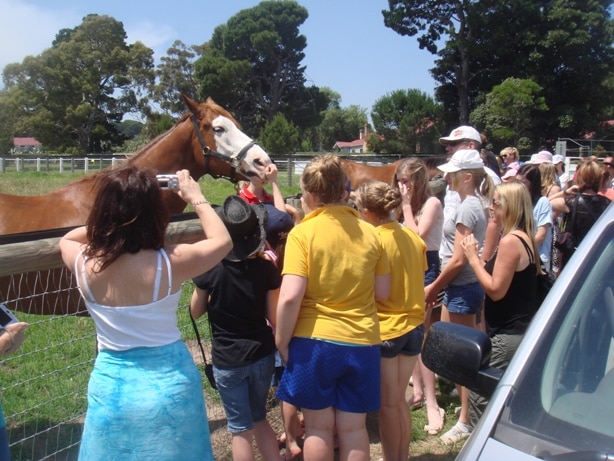
And so, it was with Apache Cat some 20 years ago, the Australian sprinter who looked more like an Indian pony than an English bloodhorse. Except for a Stud Book registration and shoulder brands, you had to look twice for the racehorse.
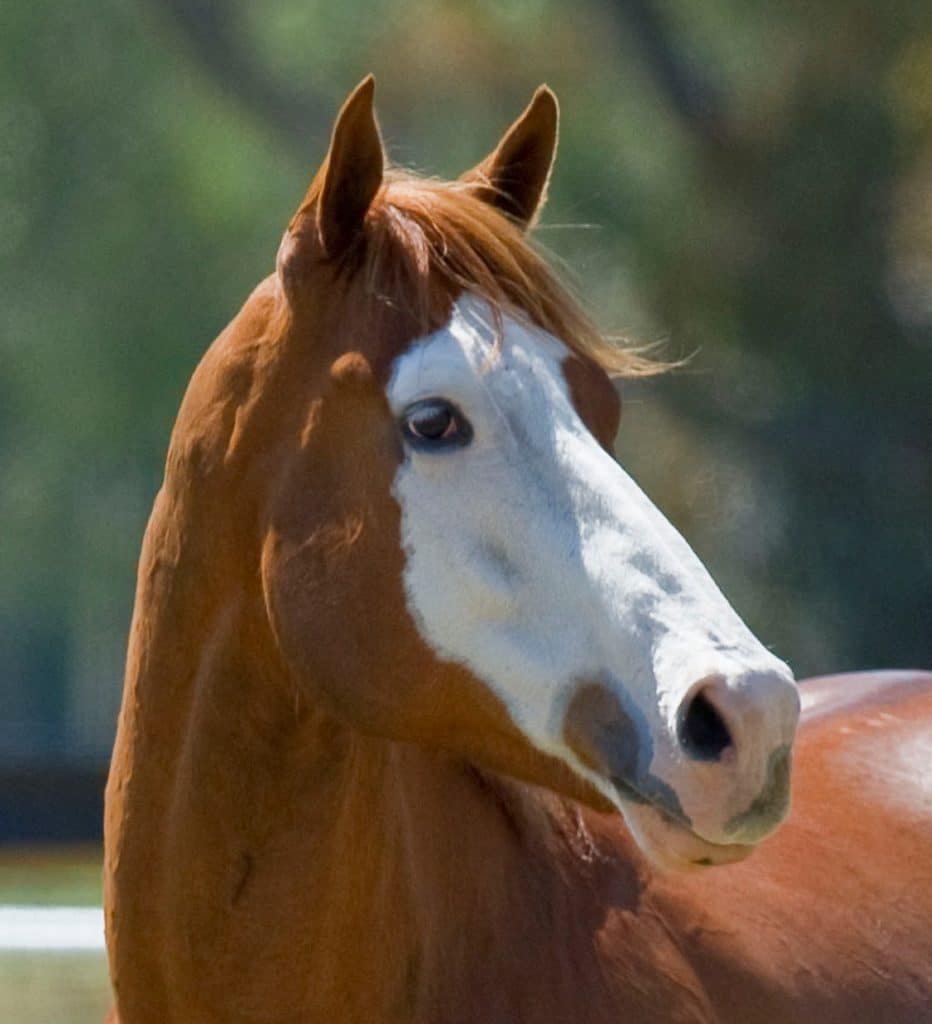
He was not classically beautiful. His pedigree wasn’t fashionable, and he wasn’t huge or small or long or short-coupled. Without his white face and stockings, he might have been the most average chestnut you ever saw.
There were better racehorses. Over a mile and beyond, he had trouble with Haradasun and Fields Of Omagh, but put him in a sprint field, and you were better to get out of the way.
And there was toughness. The injury that retired Apache Cat in 2009 was his first injury, a small sesamoid fracture that showed up after the Hong Kong International Sprint with Damien Oliver. They could have patched him up, for he was a no-limping, stricken warrior, but, in the end, it proved the swansong of a career that lasted 43 races, 19 victories, a string of eight Group 1 wins in three cities, and just over 35 miles of hard running.
Andrew Clarke is in charge of Apache Cat these days, the chief executive and veterinary director of Living Legends, where the horse lives. He tells The Straight: “Apache Cat had an X-factor about him, a Michael Jordan sort of self. He had the face, as we all know, and he had the look, but he had a presence too.
“It’s like the arrogance you see in some sporting people, how they carry themselves, and not every horse has it, I can tell you.”
The blood, they say, is the hottest in the redheads. The day that Apache Cat arrived at Living Legends, he tore up his field like someone had just insulted his mother.
“There he was, this redhead bouncing around his paddock,” Clarke says. “But it was very early when I thought he might be a bit of a poster boy for us. He was a sprinter and he had his moments, but he was also a really independent horse, which has made it pretty easy for us to do anything with him.”
This year, Living Legends is celebrating its 20th anniversary. As a home for 39 retired champion racehorses, its purpose is to promote life after racing via a human-equine connection.
It has been one of the most successful ventures of its kind, modelled off Old Friends in Kentucky and the former Home of Rest for Horses, now called The Horse Trust, in the UK. Apache Cat, since 2010, has been one of its most folkish off-track ambassadors.
However, it wouldn’t be fair to say he is the second coming of Subzero, the latter occupying a place in racing lore that was hard-won and harder to better. Subzero died in 2020 with a Melbourne Cup on his shelf and a life after racing spent in hospices, schools and pubs.
Nevertheless, Apache Cat and his distinctive livery have popped up around Australia regularly, including a trackside appearance in Brisbane, in the Melbourne Cup parades and at the VRC Summer Fun Race Day and Good Friday Appeal. To Melbournites, he has filled the vacancy of Subzero’s departure.
“He has, but the horses at Living Legends all have their different followings,” Clarke says. “We had Might And Power of course, and Saintly. Saintly was hugely popular because he had that Bart connection, and I think we took Brew into a bar once with Kerrin McEvoy.
“We took Patch (Apache Cat) to Queensland and visited the casino with him, and we got Twilight Payment from Lloyd Williams and he’s probably the horse that we could take into hospitals. Some of them, like Prince Of Penzance, come in and it takes them a while to mellow, but Twilight Payment (they call him ‘Twiggy’) walked right into a photo shoot with Delta Goodrem and blew me away. He was the perfect ambassador from day one.”
Living Legends doesn’t elevate any one horse over another. It exists to promote the various talents of many horses in their lives after racing.
As such, while it would be easy to peg the dazzling Apache Cat as the charity’s star, in fact he isn’t. He is one of many alongside the already mentioned, and Santa Ana Lane, Silent Witness, Lankan Rupee, Behemoth and Efficient, among others. Chautauqua is there now too, quietly slipping away from a career in the showring.
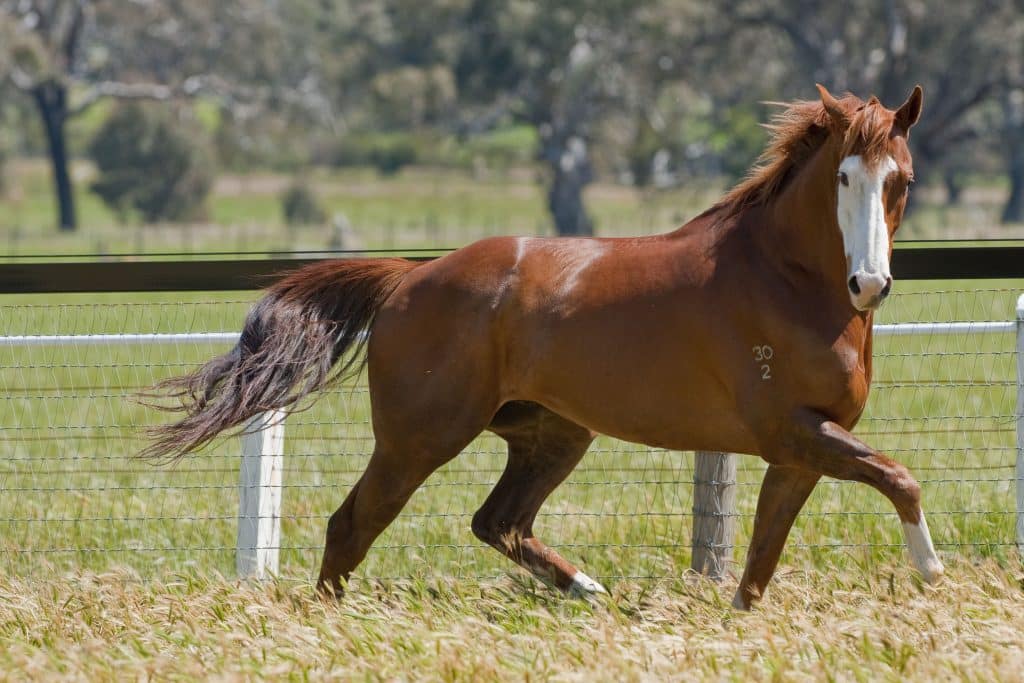
“There is no doubt Patch is a standout,” Clarke says. “You can be anywhere on the property and see him and you know it’s ‘the cat’. He’s 23 now and still well over 16 hands, and he’s got a magnificent top and body condition.
“He still has his front shoes on with that little bit of arthritis in his fetlocks. He is inclined to have a bit of bog spavin (fluid-filled swelling) as well, like the footballers, but he’s otherwise a happy bloke in his retirement.”
Every so often, though less often than she would like, Robyn Lawrie gets to Living Legends to visit her horse. She was one of the small group of owners in Apache Cat during his career, her late husband Paul Radford the managing owner.
Lawrie tells The Straight that she struggles to find words to describe the years they raced Apache Cat, but then goes on to do so beautifully.
She remembers Tennessee Blaze, the horse’s dam, who “wasn’t any great star”, and the day-old Apache Cat who was “this odd-looking young fellow” at Chatswood Stud in a field with Pompeii Ruler. She remembers plenty of rudeness about the horse’s looks when he entered training.
“One guy at Flemington one morning said he looked like an old draught horse, and I bristled,” Lawrie says. “It was funny then how he evolved from being an unattractive horse to being a horse that everyone looked at and said ‘wow’.”
At home at Fingal on the Mornington Peninsula, not yards from the boundary fence of the old Markdel property, Lawrie’s home is decorated with Apache Cat memories, like his headcollar and blinkers, countless photographs. People have made fools of themselves over far lesser horses.
“It was a dream, those years with him,” she says. “When you have a horse like him, it seems kind of easy, and then you keep breeding all these other horses and you realise how hard it actually is. You know after their first race that you haven’t got another Apache Cat.
“Nowadays, if I can win a race in the country, or even run third, that’s pretty good.”
Apache Cat won close to $4.6 million during years that weren’t remotely as flush as today’s. His eight Group 1 victories make him, albeit arguably, the most credentialled racehorse at Living Legends. The first of those victories, in an Australian Guineas, marked its 20th anniversary last week.
Lawrie isn’t certain, but she thinks it was the late Dean Lester who crunched the numbers on the gelding’s record in mid-2007, finding that trainer Greg Eurell would be better advised to tackle the sprint courses with the horse instead.
“It’s amazing to think he ran in the Cox Plate, isn’t it?” Lawrie says. “And he wasn’t disgraced.”
Paul Radford died at home five years ago this month. It’s a sad memory for Lawrie, even sadder when she considers that eventually their champion racehorse will drop his topline, hollow out and grow old too. No matter how good the life he has led, it will be hard to let go.
“I was talking to David Brideoake one morning, who was training a couple of my horses then, and he said to me, ‘you’ll get another good horse again soon, you will’. And I said to David that I think I might have had my turn, and he just turned to me and said, ‘yeah, I think you might have too’.”
Lawrie, Radford and the small group of owners were part of the Apache Cat fairytale. They weren’t breeding aristocracy. They didn’t have a horse that was going to enrich the breed at stud. They were, to the letter, racetrackers that simply loved the game.
Tennessee Blaze cost them $6000 and hardly won it back in competition, and they bred her for nine years on a shoestring before getting Apache Cat because, Lawrie says, they were young enough to be filled with hope.
It feels like they belong with the Joe Janiaks and Harry Telfords that line the walls of this rich sport.
“He was an absolutely amazing time,” Lawrie says. “It wasn’t even that he could run so fast or his ability to dig so deep. It was the fact that he tried so hard at everything. Even in retirement, he knows he has a job out there at Living Legends, and he does it.
“I don’t know what goes on in his head. When I go out there to see him, he’s not really sure who I am but you can see him thinking, ‘thanks very much for coming’. He finds most things all quite interesting, and he was like that when he was racing and he’s still like that.”
Seventy-five years ago, someone wrote of the great Man ‘o War that magnificent though he was, he was still a horse and his interests lay in hard oats, clean hay, a good grooming and a comfortable stall. You get the impression that these simple needs would not keep Apache Cat going.
“You know after their first race that you haven’t got another Apache Cat” – Robyn Lawrie
It’s why he has been filmed staring at trackwork, why he was the best “man” at a wedding, why he has opened car dealerships like it was 1987, and why he led Paul Radford’s funeral on April 12, 2021.
People reach out their hands to the famous white nose still, as they always have, and introductions are rarely required. It’s one of the perks of not being just another brown horse.
Related Articles

Written In The Stars – A decade on – How Adrian Bott found his way in the shadow of Tulloch Lodge legends
Soft-spoken and studiously modest, Adrian Bott has spent a decade alongside Gai Waterhouse shaping Tulloch Lodge’s modern chapter. He talks to Jessica Owers about balancing pressure and expectation, all the while proving the quietest voices in racing can still command the highest respect.
Written In the Stars – ‘A very blessed life’ – Walden, WinStar and winning
As a kid, Elliott Walden thought his farm life in Kentucky was boring, but after a detour via the training ranks, he became, through his association with WinStar farm, one of the most successful and revered figures in American breeding and bloodstock. He reflects on his journey with Jessica Owers in Written In the Stars.
Written In the Stars – Gray Williamson, master of Mungrup, still
Amid the ups and downs of the thoroughbred breeding game, the coming, and going, of two champion stallions and personal upheaval, Gray Williamson remains content on the same Western Australian farm where he grew up. He tells Jessica Owers, there is much to be positive about.