
Written In the Stars – ‘A very blessed life’ – Walden, WinStar and winning
As a kid, Elliott Walden thought his farm life in Kentucky was boring, but after a detour via the training ranks, he became, through his association with WinStar farm, one of the most successful and revered figures in American breeding and bloodstock. He reflects on his journey with Jessica Owers in Written In the Stars.
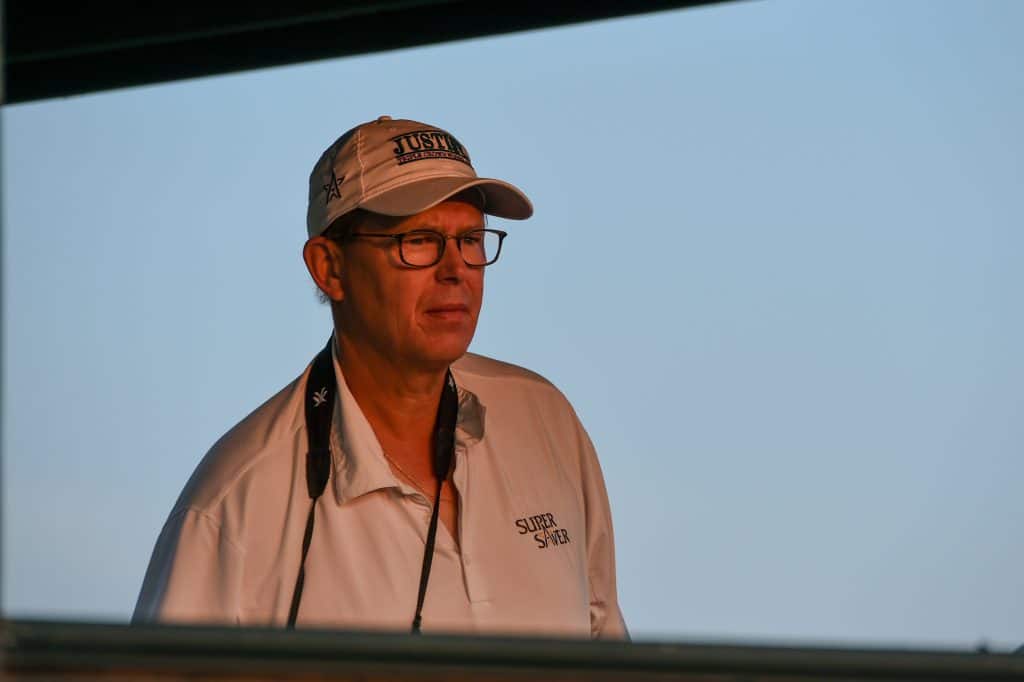
As Elliott Walden announced his departure from WinStar, another icon of the Kentucky farm, Distorted Humor, made his own permanent and poignant exit.
Walden, 63 years old and for decades the WinStar president, CEO and racing manager, was stepping aside in pursuit of a quieter life, while Distorted Humor, vintage 33, died as the January snows blew into Kentucky.
“He was a phenomenal horse,” Walden tells The Straight, in full acceptance that WinStar Farm wouldn’t be here without the stallion.
“He was a horse that infused a tremendous amount of excitement into WinStar, and a tremendous amount of capital. He ended up standing for $300,000, becoming a better stallion than he was a racehorse, and he was a pretty good racehorse.”
Distorted Humor, by Forty Niner, was WinStar’s foundation stallion, bought with the farm, with first foals on the ground, in the year 2000. He produced the Kentucky Derby winner Funny Cide in that first crop. He also shuttled to Australia, standing two seasons at Peter and Pauline Liston’s Grand Lodge Stud in Victoria
However, for Walden the kicker isn’t how good the stallion became. The kicker is that, in an earlier life, he trained the horse through a track career that netted four Graded stakes victories, including a speed record at Keeneland that stood for 22 years.
“He wasn’t an easy horse to train,” Walden says. “He was extremely fast but he was aggressive. Seeing the legacy he’s left on the breed today, and he’s the broodmare sire of four of our own stallions, has been just incredible.”
In early February, Walden announced his stepping aside from WinStar. He had led the farm in an administerial sense since 2005, but from April 1 his duties will fall on Gerry Duffy (though Walden will shadow Duffy until October, when the major American sales are done).
All at WinStar have confirmed that the shift is a matter of timing, with the farm allowing space for the rise of Preston Troutt, son of WinStar’s owner Kenny Troutt, himself a billionaire Texan and a firm friend of Walden.
“Kenny and I think alike,” Walden says. “We’re not afraid to make a decision and, if we make a wrong one, we take the opportunity to correct it. I think he saw that in me from the very beginning, and he trusted me to deliver what he wanted from WinStar. And I trusted him to be able to deliver the resources to make it a success, which he did.”
Kenny Troutt is best known in American business as the man who founded long-distance phone company Excel Communications, which he sold in 1998 for $3.5 billion.
With money in his pocket, in 2000 Troutt bought the old Prestonwood Farm along the Pisgah Pike in Kentucky, which today is WinStar Farm and one of the five big guns of American breeding.
At that time, Troutt needed a private trainer to grow the WinStar brand on the racetrack, and he approached Walden, who had just finished the North American racing season ranked third in the national training table.
“I had a horse with the Preston brothers, who owned Prestonwood Farm, called Victory Gallop, and that horse won the Belmont in 1998 and became Older Horse Champion in 1999,” Walden says. “The Preston boys were Texans, like Kenny, and Kenny started following that horse around with them. He ended up coming to Saratoga where we won the Whitney, and Kenny just loved Saratoga. He said to me, right then, that this was all he wanted to do.
“We struck it off in those years I was training Victory Gallop and we’ve had a great relationship since. He ended up buying the farm from the Prestons in 2000, starting with 400 acres and now there’s 2200 acres.”
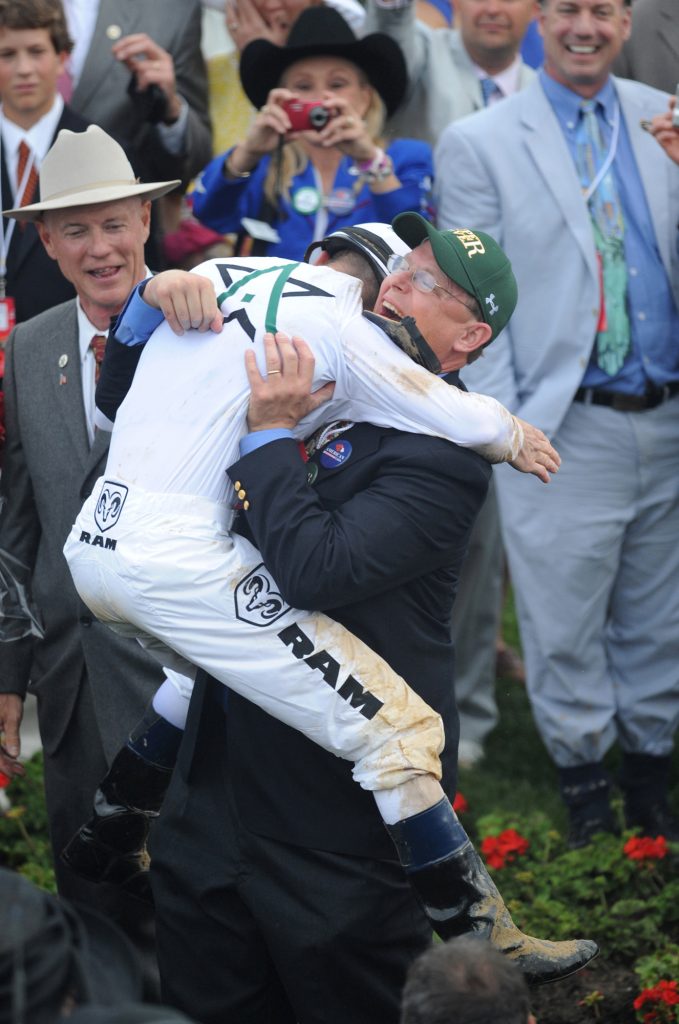
Image by David Lee Hartlage, special to The Courier-Journal (supplied by WinStar Farm)
That year, Walden wound up his public stable and migrated into the Kentucky-based private operation at WinStar. However, it didn’t work out as he and Troutt had planned.
“We had some success, but the success that I’d had as a public trainer slowed right up when I went private for Kenny. I went from having a tonne of clients, a lot of horses, three divisions and a lot of action down to 50 horses, and it got to the stage where the weight of every horse started adding up. In 2005 Kenny and I sat down and admitted that it wasn’t working the way it was working.”
In his professional life, Walden had only ever known the training game. He had grown up as the son of Kentucky studmaster Ben Walden Sr, late of Dearborn Farm with its three stallions and 30 mares. In the end, Walden ended up at WinStar just five miles down the road from home.
“As a kid, I had always thought the farm was boring,” he says. “I didn’t think there was enough going on, which is why I was attracted to the racetrack in the first place. I grew up on the farm until I was 15, and then I went to the track and worked for Leroy Jolley and John Ward in the summers, and then for John Gosden before I started training.
“There was never any question whatsoever that I was going to do something else. I never wavered about becoming a trainer, and that was a tremendous advantage. From the time I was 12 I was intentional about what I wanted to do, and I tried to learn something every day, whether it was from the hot walker, the groom, the blacksmith or the foreman.”
Being 6’5”, Walden didn’t cut his teeth in the saddle. Despite his father’s good standing (and his brother, Ben P. Walden Jr, founded the Vinery outfit off Dearborn Farm in the 1980s), he went his own way and made his own mark.
He took out his licence in 1985 and got 1017 total career wins, following the racing season across the continent for victories that included the Florida Oaks, Arkansas Derby, Hollywood Derby and the Belmont and Whitney handicaps.
Victory Gallop, Distorted Humor and License Fee were three of his very good ones.
“My dad paved the way for me in some ways,” Walden says. “One, because he was a good man who treated people well, and a good name is a real advantage.
“The other thing is that he was a very good horseman and we were able to talk about things, and as I’ve told my son, Will, who is training now, ‘you’ll always know what I know’, so I say go learn what somebody else knows and you’ll have double the knowledge.”
Will Walden, in his 30s, is up-and-coming around the Keeneland backstretch, but his story is down dale from his father’s.
He is a recovered drug addict, now sober and dashingly honest about the demons that nearly stole his life, numbering heroin, crack cocaine, alcohol, homelessness, hospitals, rehab and jail. For Elliott Walden, a devout Christian since 1994, it was a hell of a journey.
“Will was always asking me about the horses. He was very inquisitive about that, but the problem was that he wouldn’t listen to me on life.
“But that was his journey, and it was a really difficult one. It was 12 years of living hell and if I didn’t have my faith, and if my wife Rebecca didn’t have her faith, I don’t know if we would have gotten through it to look back.”
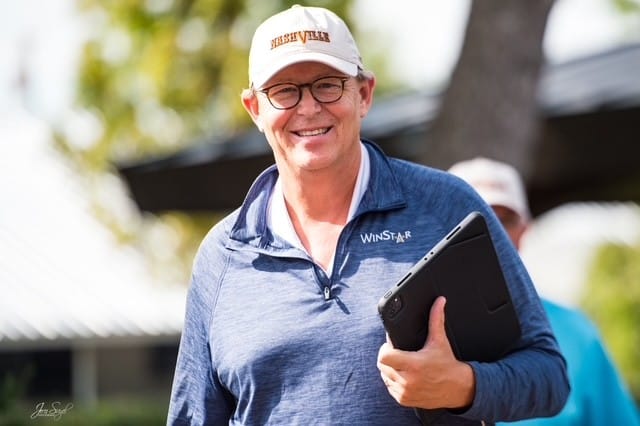
Will Walden ended up at Shepherds House, a drug treatment facility in downtown Lexington. He clawed back enough of his old life to get on his feet, get a few horses and get going. He has made a name for himself as a nifty trainer of cheap horses, but also as a harbour for the troubled and affected.
“We can see the good that’s come out of it now” Elliott says. “You can’t see it in the despair of the moment, but afterwards you can see it, and I thank God every day that Will has come out of it because there are some parents whose kids never came out of it, and Will is fighting for those kids every day.”
In Walden’s recollections, it’s obvious that he walked every step of his son’s journey, albeit in hand with his high-rolling, high-demand career at WinStar Farm. He says he fought bitterly with himself during Will’s darkest moments, determined not to save his son lest he not save himself.
“And I think that’s the only thing that did save him,” he says. “You feel like you’re helping your child when you bail them out, and everybody’s circumstance is different, but for Rebecca and I, it wasn’t until we completely let Will fall on those hard times – let him hit rock bottom without picking him up, bailing him out, paying for his apartment and his food, letting him completely rest in the decisions that he was making – did he ever decide to come out of it.
“He always knew he could call, and he always knew that we would pick up the phone, but we loved him enough to turn him loose and let him find out what he needed to do.”
Will Walden’s story is a popular one in Kentucky. It’s a popular one in wider racing. For Elliott Walden, it was a walk through the valley of patience.
But he speaks so carefully, and with such fairness in his sentences and such principles as seem lifted straight from scripture, that you wonder how he was so successful leading such a huge enterprise as WinStar for 20 years through cut-throat competition.
And those 20 years included guiding the WinStar-owned Justify through the Triple Crown, and watching Super Saver win the Kentucky Derby, and two Eclipse Awards for Outstanding Breeder.
“I wouldn’t say I’m the most humble person in the world,” he says. “It’s something I aspire to, but it’s not easy to live that out in a competitive environment (like racing) where you’re conditioned to compete.
“Some people would say that I could be tough to work for, but I’m not tough to be tough. I’m tough to get the best out of you, and I don’t expect you to do anything that I wouldn’t do myself. I want to be fair and I want to excel, and I want to drive that to our team.
“Our vision at WinStar is to be the premier thoroughbred farm in the world in a way that brings glory to God, and we do that by raising superior horses using the most caring and innovative practices while loving our neighbours as ourselves, be they employees, clients or vendors.”
Walden was WinStar’s private trainer for exactly five years, but when both he and Troutt concluded that it wasn’t an arrangement that was working, Walden was reworked into the farm’s administration. That was in 2005, and his brilliance as an overseer, be it the stallions or mares or racing string, is inarguable.
However, he refuses credit for WinStar’s trajectory.
“It’s not about one person. It’s about the team and the quality of the horses,” he says. “Back in 2005, when I realised it wasn’t working and the success that I’d had as a trainer before I went private just wasn’t happening, I acknowledged that. I had always felt like I would train my whole life, and when it wasn’t going well, at the time it felt like a bit of a failure, or a trial, a challenge.
“But it actually created a better life for me, a very blessed life. I look back and I can see the good that came out of it. So when Kenny Troutt walked in on me in 2005 and said, ‘hey, we gotta do something different here’, I looked at it as an opportunity instead of the world’s falling apart.”
Under Walden’s watch, WinStar has risen to the assaulting heights of North American racing. Its horses have won the Triple Crown contests, Santa Anita Derby, Haskell Invitational, Kentucky Oaks, Dubai World Cup, Breeders’ Cup Dirt Mile, and so many more.
Its pale white silks and all-American green star have been associated with such partners as SF Bloodstock, China Horse Club and Starlight Racing, and its stallions have included More Than Ready, Pioneerof The Nile, Speightstown, Tiznow and, of course, Distorted Humor.
In another life, Justify would have joined them had he not been sold to a competitor (Coolmore) via an offer WinStar wouldn’t refuse.
For Walden, it’s been a hell of a life at the top.
“This role, and WinStar, it’s not for everybody,” he says. “What I mean by that is that there’s a level of commitment that’s expected. There’s an integrity that’s expected. There’s hard work that’s expected, and not everybody’s up for that. I’m going to miss that commitment.”
Walden doesn’t over-value his part, but he doesn’t under-value it either. His true value, he knows, is written in the WinStar story.
Related Articles

Written In The Stars – A decade on – How Adrian Bott found his way in the shadow of Tulloch Lodge legends
Soft-spoken and studiously modest, Adrian Bott has spent a decade alongside Gai Waterhouse shaping Tulloch Lodge’s modern chapter. He talks to Jessica Owers about balancing pressure and expectation, all the while proving the quietest voices in racing can still command the highest respect.
Written In the Stars – Gray Williamson, master of Mungrup, still
Amid the ups and downs of the thoroughbred breeding game, the coming, and going, of two champion stallions and personal upheaval, Gray Williamson remains content on the same Western Australian farm where he grew up. He tells Jessica Owers, there is much to be positive about.
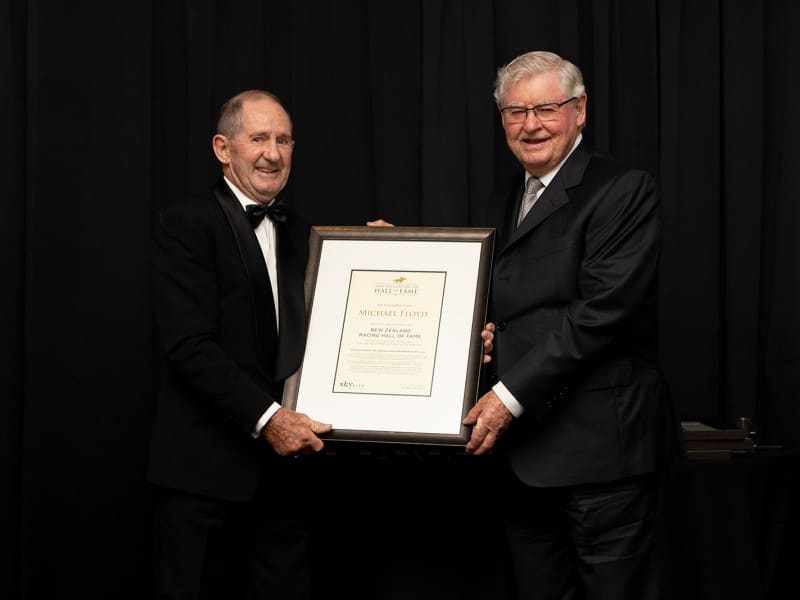
Written In The Stars – Michael Floyd – The father of Karaka
In the century of selling at the National Yearling Sale, there have been few figures as significant as Michael Floyd. In this week’s Written In the Stars, Jessica Owers speaks to the man whose vision brought the iconic sales complex at Karaka to life.