
Written In The Stars – Magic Millions and the importance of location, location, location
A glorified ‘hay shed’ built on a six-acre plot of flat land between a racecourse and a swamp becomes the epicentre of the Australian thoroughbred industry every January. Jessica Owers looks at how Magic Millions’ Bundall bush block became an Australian racing icon.
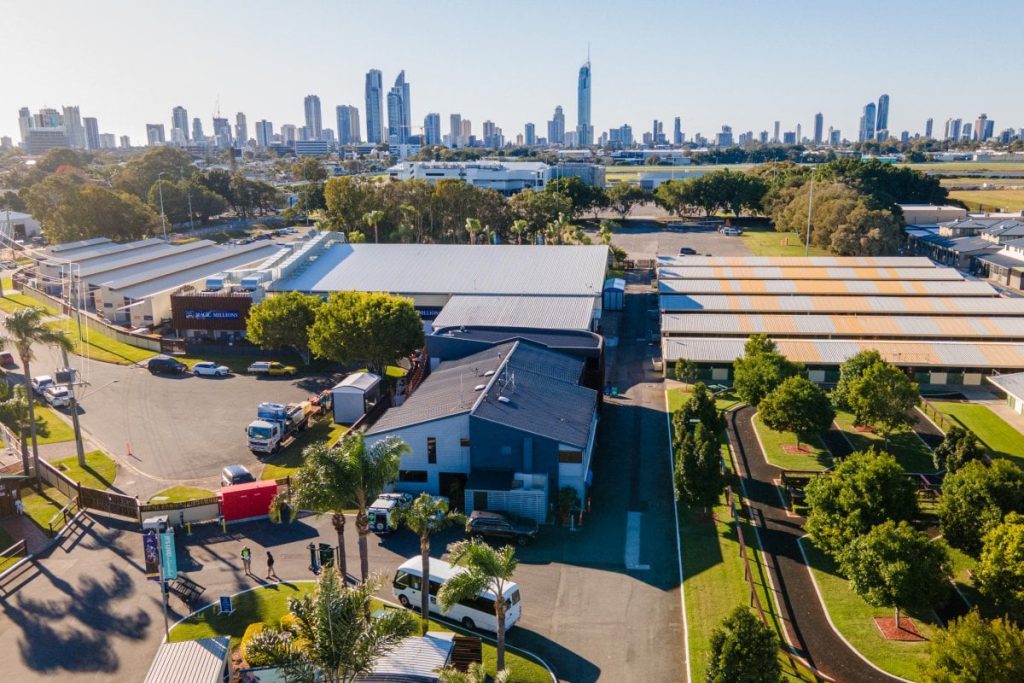
Of all the sale grounds of the world’s major auction houses sat down in a room together, Magic Millions would be the fast-talking, hard-living panjandrum with a year-round tan in boardies and a pair of thongs.
At least, that’s what the Gold Coast will have you believe.
That a thoroughbred auction house has thrived for over 45 years in Australia’s liveliest tourist strip is one thing. That it has thrived because of it is another.
“But I’ll be honest, there was always doubt in my mind whether the Gold Coast was going to work,” says David Chester, the company’s international sales director, who sailed into Magic Millions in its foundation year, 1980, and never sailed out.
Chester says that, without an international airport and Brisbane being nearly two hours away, not to mention that no auction company had existed outside of an Australian capital, the Gold Coast had every excuse to fail.
“If you’d said back in ’80, ’81 or ‘82 that we’d eventually have the biggest sales in the southern hemisphere, they would have shot you.”
Chester is only half-joking. He remembers a Gold Coast that danced to the tune of its spivs, crooks and brown paper bags. The meter maids were the harmless end of the early Gold Coast.
The strip, epicentre Surfers Paradise, was once likened to Chicago for its pace of change, and these days, the presence of Magic Millions on the ‘Glitter Strip’ is like an auction house sat on the Costa del Sol of Spain, or on Florida’s sunny Atlantic edge.
“There was so much about it that shouldn’t have worked,” Chester says, but as the company acknowledges 40 years of the ‘Magic Millions’ concept, and 46 years of trading horses, it clearly has worked.
Most people know the bones of the story. Carl Waugh, a man of imperious will, started an auction house in the 1980s that went bust in the 1990s and re-emerged under Gerry Harvey, John Singleton and others. In fact, the story is far richer.
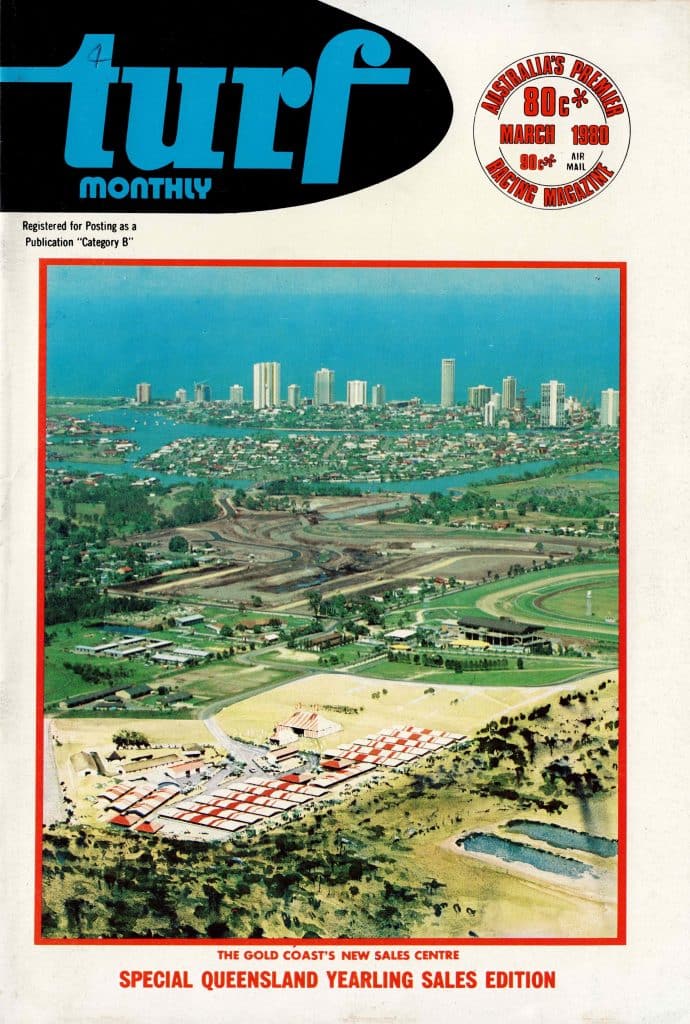
Magic Millions began life in 1978 as the Gold Coast Convention and Sales Centre when Waugh, a sweary Queensland cattleman of high ideas, bought a parcel of land at 28 Ascot Court in Bundall. He paid $166,000.
Lot 9 was just over six acres at the end of the present cul-de-sac. It was scrubland to the east, swampland to the west, and a place so thick with flies and smells that few had seen any potential in it.
It belonged to the nearby Gold Coast Turf Club (GCTC), which was selling off the street as a proposed training precinct. Later, the whole neighbourhood would be equine-zoned, meaning it could not be sold off for commercial or domestic development.
An inspection of the Queensland Government’s aerial archives shows that, in 1976, the site of Magic Millions had no paved street, no canal to the west, and no buildings. The only notable landmark was the water-filled borrow pit (now named Black Swan Lake), which was a deep hole once cut to supply soil to the turf club.
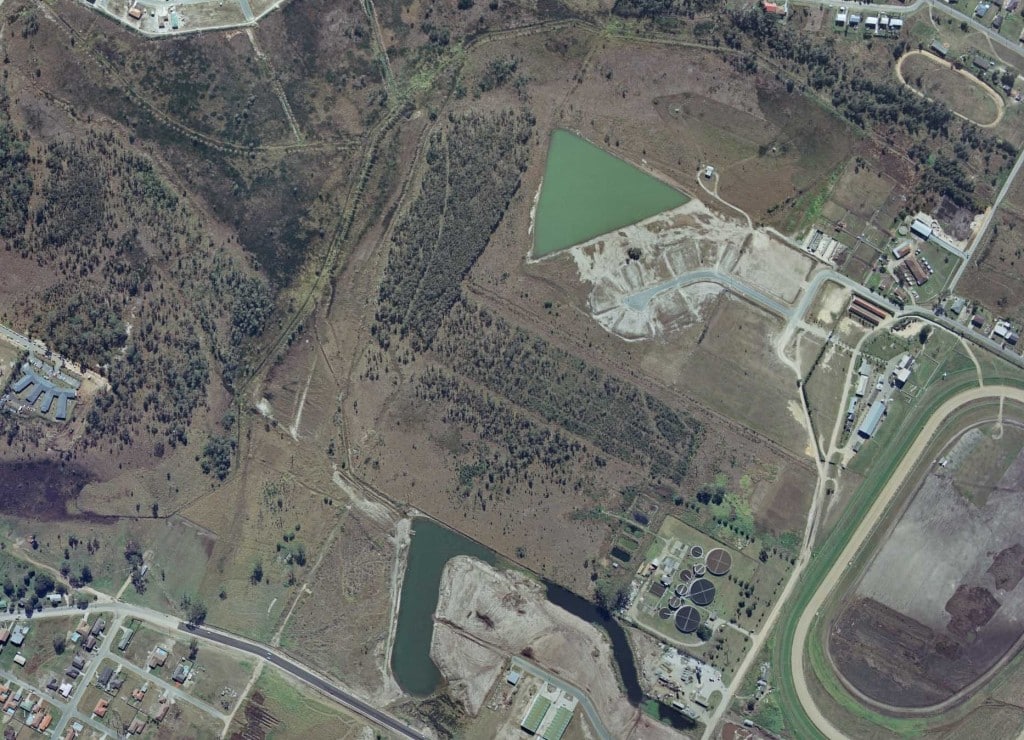
At almost two miles due east, Surfers Paradise was still a centre of mostly low-rise, blond-brick malls and motels, only a dozen high-rises poking up.
But Australia was taking to its beaches with vigour, a lifestyle trend that had started in the 1920s, and with the 1980s arrived a culture in southeast Queensland of not just pleasure and promiscuity, but of near-unchecked skyward development.
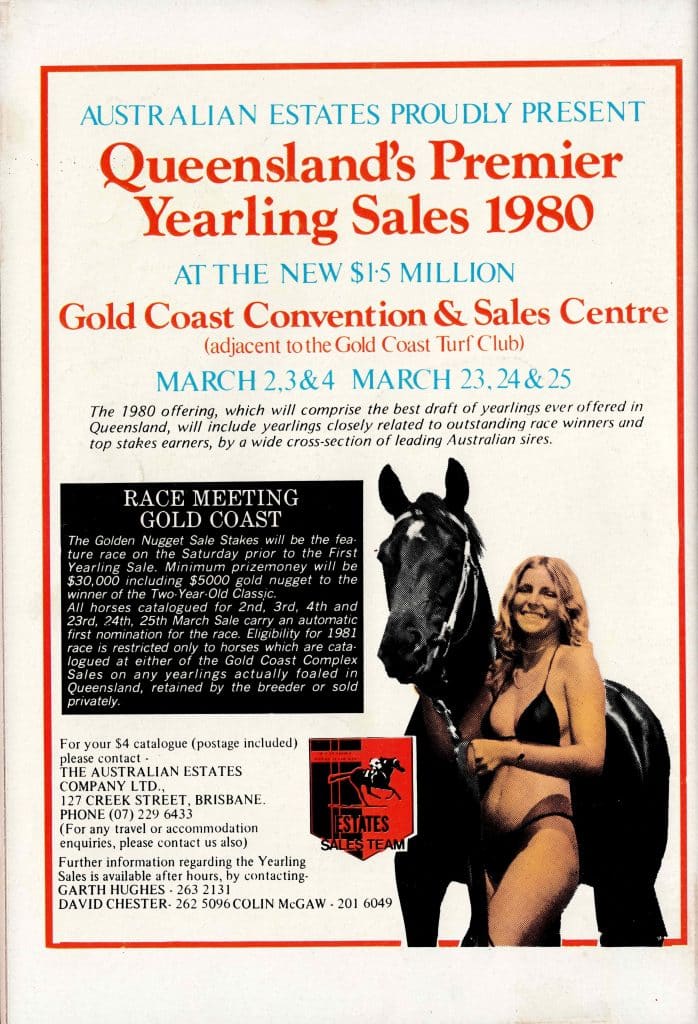
At Ascot Court, Caul Waugh’s yearling complex was 18 months in the building and, when the first yearling sale occurred there in March 1980, vendors were surprised. From the rolling stable doors to a feed room and wash bay every 13 boxes, it was something Queensland vendors had never seen.
The flat space had been carefully curated for 412 stables in 16 blocks, with gables that hung wide enough to shelter staff and horses when outside their accommodations. At the time, one studmaster told Racetrack that his horses had never done so well in an auction environment.
In 1986, the Magic Millions concept emerged. By then, nothing had turned a place around so fast as had tourism on the Gold Coast, and the auction house hitched its wagon.
Waugh promoted his sales with sunshine, surfboards and sex. He hired models to stroll around the complex in bikinis and knotted tees. He stocked the bars sky-high with Foster’s Lager, which leapt aboard as the first sponsor of a yearling sale in Australia. There was even a Miss Magic Millions pageant.
The atmosphere at Waugh’s sales reflected the sun-kissed, easy-living ambience of its location, and it worked. Studmasters brought their wives, their girlfriends (sometimes both), their kids, their kids’ friends and their own friends such that January turned into a working holiday for much of the Australian breeding industry.
“The Gold Coast was, and still is, the holiday capital of the country,” Chester says. “Everyone wanted to come here, and what we still find is those extra people coming along to the sale who aren’t genuine buyers but who are friends of genuine buyers.
“I’m always getting phone calls to add a few extra to someone’s table, so we are always welcoming people to the sale who are coming along for the first time.”
One of the best examples of this was in 1986, the year of the inaugural Magic Million Yearling Sale. That year, the catalogue’s top lot was not Snippets, but a colt by Roman Prince bought by local grocer Joe George, who also owned the Bombay Rock nightclub with his brothers in Surfers Paradise. George had never owned a horse before, but the Magic Million spectacle drew him in.
“Still to this day, people get blinded by the Gold Coast. It’s still doing its job,” Chester says. “People come here, they do their business and they head straight over to Broadbeach when the sale finishes to the bars, clubs or whatever.
“It’s a package, and for a lot of our families, it’s their annual holiday.”
With the 1990s, the fortunes of the auction house changed dramatically, as it did for many in the industry at that time, including Tommy Smith and Bart Cummings.
Magic Millions became unlucky bycatch in a financial disaster that brought down empires in the southern cities, and the company poked along like a wounded stag from 1990 until 1994.
But out of that emerged arguably the biggest selling point of the January sale – its ringside dining – courtesy of the auction house’s then managing director, New Zealander Don Hancock, who has never been short of a good idea.
“Yes, it was my idea that we establish part of the auditorium for ringside dining and give it a try,” he tells The Straight. “I have to admit that, at the time, it was experimental, but it was really a success from the first moment.
“It was pretty crude that first year. We set aside a quarter of the auditorium with just basic tables and chairs and a catering service, but vendors took to it immediately. Today you can see that a good 80 per cent of the auditorium is set up for wining and dining, and it grew like that from day one.”
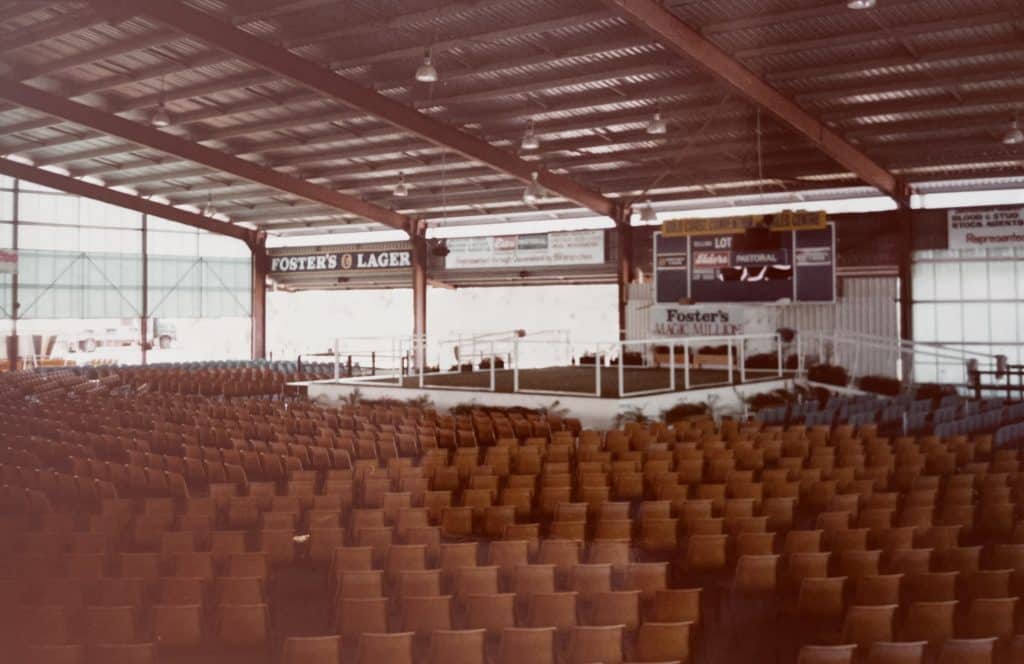
The auditorium Hancock speaks of is the original Magic Millions sale ring, finished in 1981 and widely known, and still in retro circles, as “the hay shed”.
“It was a shed, but it was absolutely ideal for this climate,” Chester says, though Hancock remembers years when the sides of the auditorium, which can be fully raised like garage doors, presented their problems.
“In the early days of ringside catering, there was no air conditioning,” Hancock says. “By golly, when the sides were open it was like an oven.”
The auditorium has been painted and prettied over the years, and the tables are larger, but it’s still the same steel-and-aluminium structure that Waugh commissioned over 45 years ago. But no one is coming to Magic Millions looking for red cedar timber and cathedral ceilings. Instead, they want the summer breezes, red-hot footpaths and palm trees that lean out of the way for views of the Surfers Paradise skyline.
“There’s no question about it, the climate of the Gold Coast is part of the Magic Millions package,” Hancock says. “And that auditorium has improved over the years to cope with the heat.
“It doesn’t surprise me either that the ringside dining concept has been so successful, because if you look at the way racecourses have evolved over the same period of time, we’ve seen a bigger social aspect creep into racing crowds, just as it has into yearling sale crowds.”
On complex in January, you’ll see almost as many women as men. That, Hancock says, is a direct throwback to early ringside dining, which appealed to the wives of vendors considerably and, consequently, resulted in many more women getting involved in the Magic Millions Yearling Sale.
“There were suddenly many more women in attendance at the sales, and that made for an atmosphere,” Hancock says. “I noticed very quickly that the female attendance at a Magic Millions sale became stronger than at any other sale I witnessed anywhere in the world.
“And that’s why, in 2012, when Katie and Gerry introduced the Magic Millions Racing Women, and all the incentives that went with that, I said to Gerry that it was the best thing that had happened to horse sales since the introduction of the Magic Millions race.
“It was Katie who recognised that there were women in town and they wanted to be part of the whole occasion.”
Architecturally, there is no city in Australia like the Gold Coast. It has been described as like an architect’s model which fell off a table and washed up on a pristine stretch of coastline. In Australia, only Canberra is another conceptual, designed-for-purpose city.
That purpose of being runs parallel at Magic Millions.
Arguably, there is no other thoroughbred auction house in the world that exists because of its location. When the Gold Coast was offered up in the 1970s as an alternative to Brisbane for selling yearlings, it was with its glassy city and dramatic coastline in mind.
“If you’d said back in ’80, ’81 or ‘82 that we’d eventually have the biggest sales in the southern hemisphere, they would have shot you” – Magic Millions stalwart David Chester
Unlike Kentucky and Newmarket, the Gold Coast wasn’t a throbbing horse centre, and, unlike Sydney, Melbourne and Adelaide, it wasn’t a capital city with all the convenience of capital-city amenities.
Despite this, the enterprise at 28 Ascot Court bloomed, and the fortunes of Magic Millions have followed those of the cityscape around it. The Gold Coast has shed its shameless iniquity of the 1980s for today’s themes of fun and family.
And, at Bundall, Carl Waugh’s complex remains largely unchanged, not out of neglect but out of functionality.
“Tell me another sale in the world that gets the number of people that the Gold Coast gets,” Chester says. “Tell me another sale ring anywhere that can house a thousand people for ringside dining. We’ve needed that hay shed, and I don’t think there any plans to change it. Why would you?”
Related Articles
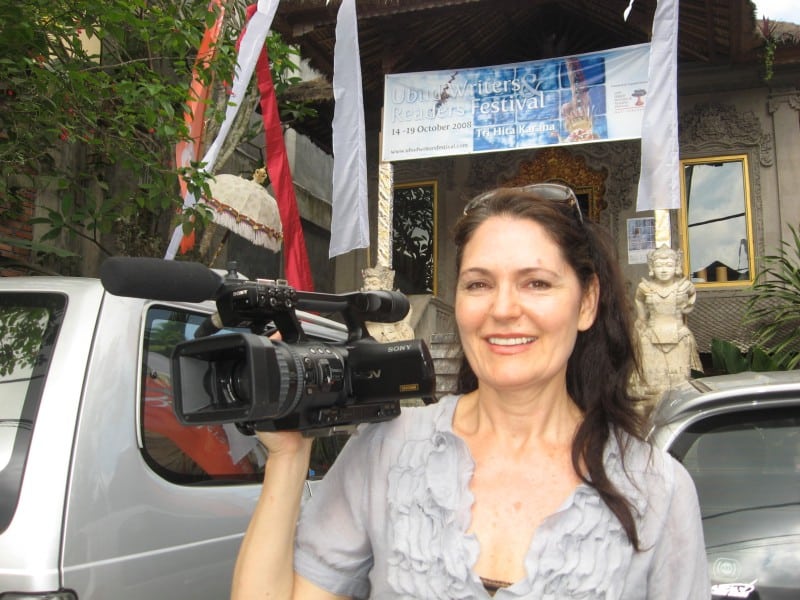
Written In The Stars – ‘Rest in pieces’ – Phar Lap and Kerry Negara
For Kerry Negara, the death of Phar Lap remains a mystery wrapped in misinformation. But, as Jessica Owers discovered, the Melbourne filmmaker is determined to separate fact from fiction in the enduring fascination with the legendary thoroughbred.
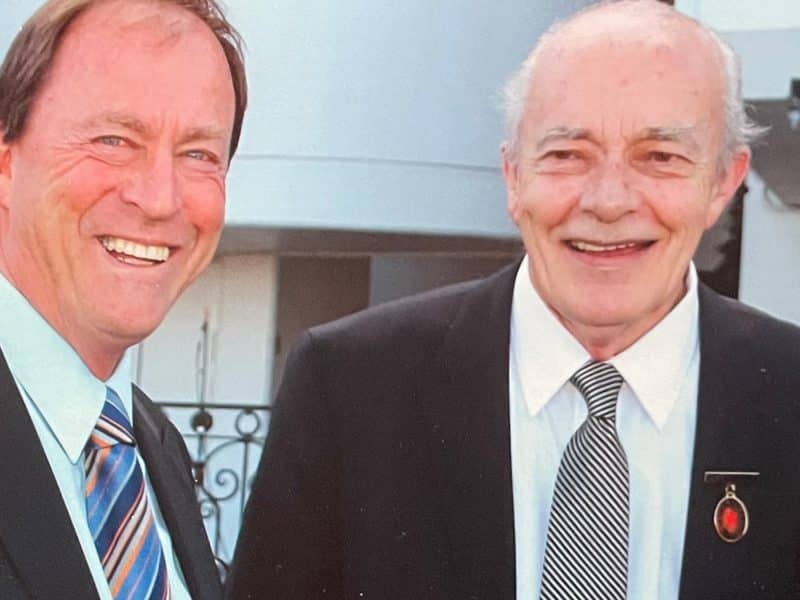
Written in The Stars – Neil Kearney on racing’s lost romance
For four decades, Neil Kearney used his ‘gift of the gab’ to tell racing’s greatest stories. He tells Jessica Owers how racing’s narrative changed for him and reflects on the characters and legends that made his job as a storyteller all the more enjoyable.
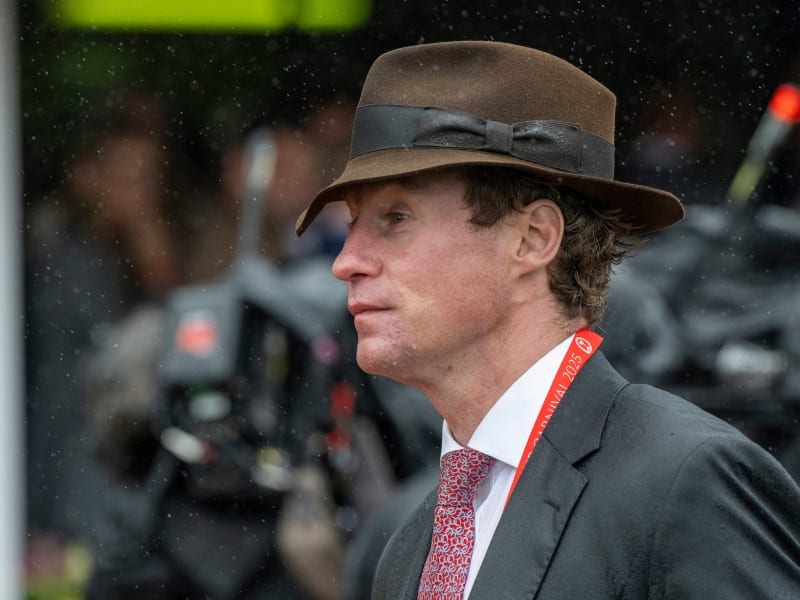
Written In The Stars – Sebastian Hutch – When it rains, sell umbrellas
Stuck on the wall of Sebastian Hutch’s office at Inglis are a host of sayings that remind the Inglis Bloodstock CEO of the things that matter most in his job. He talks to Jessica Owers about staying on message and the philosophy which has underpinned his success.