
Written In The Stars – ‘Rest in pieces’ – Phar Lap and Kerry Negara
For Kerry Negara, the death of Phar Lap remains a mystery wrapped in misinformation. But, as Jessica Owers discovered, the Melbourne filmmaker is determined to separate fact from fiction in the enduring fascination with the legendary thoroughbred.

If, in 2026, Australian breeders had access to a complete set of DNA instructions for Phar Lap, would they use it?
“Phar Lap’s genome is the whole story of him as a horse, all of his DNA,” says Melbourne filmmaker Kerry Negara. “It will show what his muscles and his heart were like, what it was physically that made him the winner that he was.
“It won’t say anything about the nurturing he got from Tommy Woodcock, but, on a purely scientific basis, it could be very interesting.”
The Phar Lap genome is real, and it belongs to Negara, cultivated in the last year or so in a French lab in Toulouse from strands of Phar Lap’s tail hair. How Negara, a storyteller in film, radio and television, got the hair is down to a direct connection to Tommy Woodcock, Phar Lap’s fabled strapper.
“Emma Woodcock, Tommy’s wife, took a few strands of Phar Lap’s tail in 1931 when he was spelling at Bacchus Marsh,” Negara tells The Straight. “In those days, they used to put hair in a locket, and I think that was her intention with these three or four strands, to spin them into something to put inside a locket.
“But she didn’t ever do it. She always just kept them in this beautiful little 1930s envelope with ‘Phar Lap’s tail’ written on it in her handwriting. When I got interested in Phar Lap’s story, my father, who had been given the envelope by Emma, gave it to me.”
Tommy Woodcock had trained horses owned by Negara’s grandfather, and the families were tight. The Woodcocks had lived out their lives on a homestead owned by Negara’s parents, Cliff and Thelma Hinchliffe. Emma died in 1983, Tommy two years later.
Negara took the hairs she had inherited to the world’s pre-eminent equine genome scientist, Professor Ludovic Orlando in Toulose, who used up each of the strands to make the genome. It’s been a lengthy process, and ownership of it can’t be formalised until Orlando completes a scientific paper on it.
“I’m getting advice on what to do with it after that,” Negara says. “There are many racehorse owners and breeders these days who get the genomes done of the horses they’re breeding, just so they can look at their potential. I wonder if they could compare their own horse’s genome to Phar Lap’s, which could be interesting and informative.”
Genome testing is common in Australian racing via screenings for such things as coat colour, parentage and genetic traits. Thoroughbred breeders have always been united in their desires to breed a champion and, as science quickens, things like DNA are expected to play a bigger hand.
Eventually, could the axiom “breed the best to the best and hope for the best” be redundant?
“I’m relying on breeders to tell me what they might do with Phar Lap’s genome because I’m certainly not interested in cloning,” Negara says. “I wouldn’t want that to happen.”
Genomes are fundamental to cloning because cloning is, at its most basic, assembling a new genome from one that already exists. It’s not a new science but it’s not perfect, and cloning Phar Lap could, and would, incite national uproar.
So what are Negara’s options when the genome is handed over to her?
“People could pay for access to it for a year, or they could pay for lifetime access,” she says. “I’m still receiving advice on that, but we’ll be putting a few options out there.”
Negara isn’t a horse breeder, but she is a largely unacknowledged expert on Phar Lap. Growing up with Tommy Woodcock in her childhood – she called him Mr Woody and heard first-hand stories of the horse that reached few ears.
One story, in particular, haunted her. It was that Phar Lap’s heart, today on permanent display in the National Museum of Australia (NMA) and one of its most traffic-heavy exhibits, is not actually Phar Lap’s.
“The original heart, the one that belonged to Phar Lap, was all cut up in that first autopsy in 1932,” Negara says. “The heart they sent to Australia is the heart of a draught horse.”
This story didn’t come from Woodcock. It came from the late journalist Peter Luck, who died in 2017. Luck was a storyteller of the old school, “a formidable journalist and writer with a strong Australian bend”, according to Peter FitzSimons.
Sometime in the late 1980s, Luck interviewed Mary McCann, daughter of veterinarian Bill Neilsen, who travelled with Phar Lap to North America in 1932 and who was central in events surrounding the horse’s death.
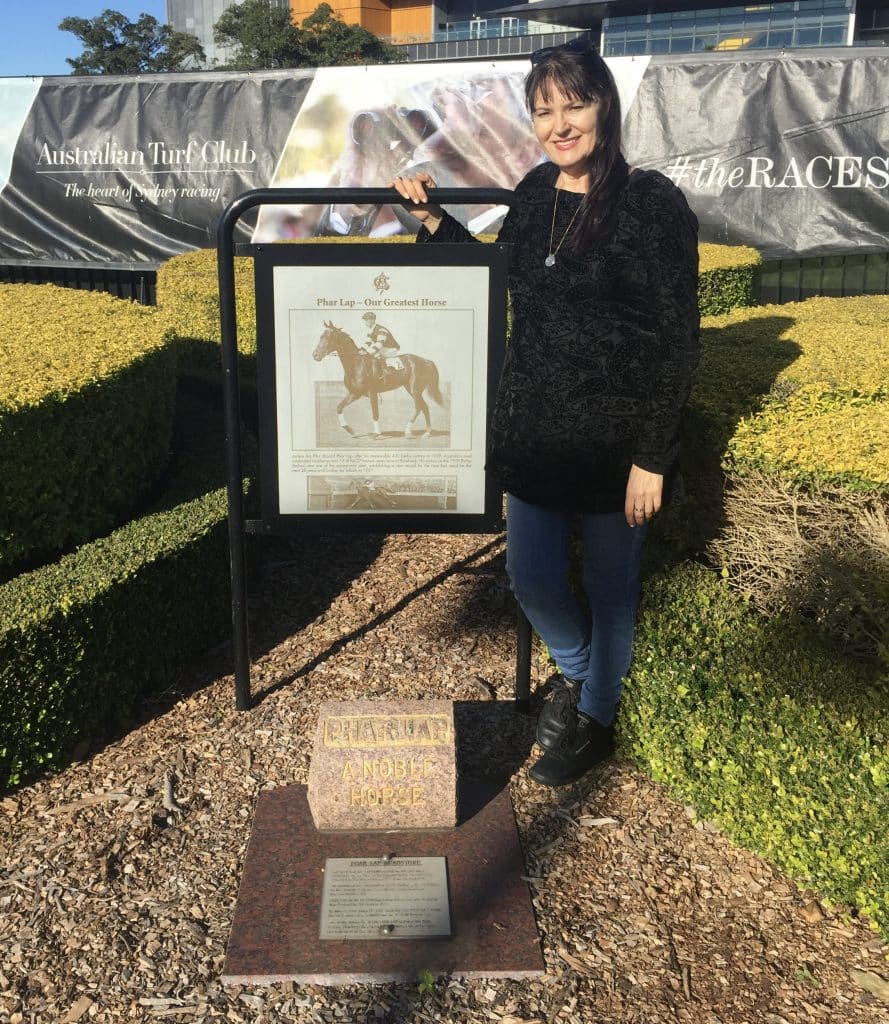
McCann told Luck in a recorded interview, broadcast to Australian audiences, that her father had told her firsthand that Phar Lap’s heart had been “cut to pieces in the first postmortem” and that the heart that had arrived in Australia was a ruse. It had belonged to an unlucky draught horse at Menlo Park in California, where Phar Lap had died on April 5, 1932.
“Tommy said it was an awful scene that day,” Negara says. “They pulled Phar Lap out on a trolley into the central courtyard at Menlo Park and they opened him up, and Tommy just looked at the horse and said, ‘that’s not colic’.
“Phar Lap’s organs were red raw, absolutely red raw. Even the vet (Neilsen), who was implicated, looked on and said it looks like some kind of poisoning.”
In the years since, the cause of Phar Lap’s death has been an international hobby. Deliberate poisoning; accidental poisoning; years-long tonic ingestion that led to poisoning; stomach ulcers; acute indigestion; bacterial infection; colic. They have all had their time in the sun.
In interviews, Woodcock said he often wondered if Neilsen had mixed up something incorrectly that day, although Woodcock and, consequently, Negara, remained convinced that Phar Lap was “got to”, either by a third party or a third party via Neilsen.
Negara says: “Whether the original heart was actually cut up that much, as Neilsen said, or they just didn’t want Australians to see how badly poisoned he was, is something we won’t ever know.”
The heart on display at the NMA was preserved in a jar of formaldehyde and shipped by boat to Sydney in 1932 with jockey Billy Elliott, who had ridden Phar Lap to victory in his sole American start and who was sailing home. The heart was put on display at the Institute of Anatomy beside an army remount heart for comparative purposes, Phar Lap’s heart being considerably larger.
It remained so until 1984 when the Institute closed, and it was rehomed at the NMA in Canberra. Since then, it has been in and out of exhibition, carefully preserved and exposed to only filtered light, given that it is 100 years old.
In 2020, Negara acted on the stories she had heard in her early life. In partnership with award-winning producer, writer and director Richard Di Grigorio, she released a 10-episode podcast called Killing Phar Lap: A Forensic Investigation.
The series was exhaustive, explosive and award-winning. It was nominated for Best True Crime Podcast at the 2021 Australian Podcast Awards and credited with “blowing up school curriculums”.
It chewed up over six years of Negara’s life and, in the end, she didn’t get the outcome she wanted – DNA testing on the NMA exhibit that would prove conclusively the heart didn’t belong to Phar Lap.
“I would do it all again because, with all the evidence I collected, I’m confident that I have come up with what really happened,” Negara says.
Killing Phar Lap isn’t just about the heart. It delves into the circumstances surrounding Phar Lap’s death and Bill Neilsen’s possible deliberate involvement. It’s an eye-watering listen and, by the end, it’s hard to argue with her evidence.
It’s also hard to believe that, after the NMA consented to seven heart samples being sent to Prof. Orlando in Toulouse, and after two years of careful science at no expense to the NMA, the testing was suddenly stopped in 2021 without an outcome and the samples recalled to Canberra.

In recent weeks, The Straight contacted the NMA for its explanation of this. It provided a statement on behalf of an NMA spokesperson.
‘The Museum is aware of claims dating back to 1979 that the heart in its collection did not belong to Phar Lap. In recent years, the Museum has sent samples from the heart to the world’s leading researcher on ‘ancient’ horse DNA, Dr Ludovic Orlando, who is based in France.
“Extracting DNA from formalin-preserved wet specimens, like Phar Lap’s heart, is an emerging area of science still in development, and Dr Orlando was not able to extract usable DNA from the Phar Lap samples.
“After discussions with Dr Orlando, his advice was that the science may not yet be at a point where it can give a clear result. Dr Orlando suggested deferring further testing until science can give that certainty. His advice was echoed by Australian experts in this field from the CSIRO and Australian National University.”
Negara refutes all of this. She says it is rewriting history, that her email correspondence with Prof. Orlando in 2021 gave her no indication that he felt his science was not up to the task.
Orlando has a portfolio of work that includes sequencing the first Middle Pleistocene genome and identifying the horse and donkey domestication homelands. He is also the author of Horses: A 4000-Year Genetic Journey Across the World.
In other words, Phar Lap’s heart is recent fry.
“Phar Lap’s genome is the whole story of him as a horse, all of his DNA. It will show what his muscles and his heart were like, what it was physically that made him the winner that he was” – Kerry Negara
However, Negara concedes that the heart has been suspended in formalin for nearly 94 years and its DNA may be compromised. Richard Di Grigorio, in speaking to The Straight, says the testing was halted abruptly after a meeting between the NMA and Prof. Orlando in 2021.
“A meeting happened and two things occurred; the testing was abruptly stopped and the Professor changed his tune,” Di Grigorio says. “Before that meeting, the professor had been eager to keep going, but after it, the line became that the techniques were not advanced enough.
“Even if it was tough to go through all the seven samples sent, you’d do it, wouldn’t you? If you really are interested in the outcome, you’d see it through to the end. If you got to the end and it was still inconclusive, fair enough. But why halt it? That’s what I don’t understand.”
The interest in Phar Lap is perennial, so how will the NMA answer continuing questions about the authenticity of its most popular piece?
‘Australians remain captivated by the story of Phar Lap and the horse’s heart is one of the Museum’s most popular exhibits,’ its statement said. ‘Preserving the legacy of Phar Lap for all Australians is a responsibility the Museum takes seriously.
‘We remain keen to settle the recurring question about the heart, and when the science progresses to a point where results are dependable, we will pursue further testing and share those findings with all Australians.’
The investment in Phar Lap’s bits and pieces around Australasia is significant – his heart in Canberra, his hide in Melbourne, his skeleton in New Zealand. These are significant money-spinners for their institutions.
Negara said: “I’ve been a thorn in the side of the Museum, no doubt about that. They didn’t expect me to hang in there for so long, but what I’ve learned with making documentaries is that you don’t stop. You keep going, no matter what.
“If the heart isn’t Phar Lap’s, I think people would still come and visit, even if they knew it was a draught horse’s because the story is there, and the story is even more fascinating.”
The story is far from done.
Di Grigorio has a six-part Killing Phar Lap television series on studio desks in Australia and the United States, with significant interest. He is currently working on the pilot, with the story starting at Phar Lap’s 1931 Melbourne Cup loss and continuing with the extraordinary details as outlined in the podcast.
“We’ve had people reach out telling us they had no idea about any of this part of Phar Lap’s story,” Di Grigorio says. “We’ve had people reach out telling us to let the horse be. People are still so invested in him.
“It’s difficult to change history, but at least bring the questions to the public.”
For Negara, the death of Phar Lap is so muddled by myth and fiction that even the best attempts over the years by authors, scientists and museums to solve the mystery are stuffed with error and misinformation.
But she also believes that everyone is comfortable in the great unknown.
“Whether it’s museum officials in Melbourne or Canberra, they all have a professional line that they tread with Phar Lap’s story, and it always ends with ‘oh well, I guess we’ll never know’.
“I don’t accept that. The truth is always more interesting.”
Related Articles
Written In The Stars – A Cat of a different colour
Apache Cat was born to stand out, be it on the racetrack, in the paddock or in retirement, as an ambassador for the industry. As the first equine subject of Written In the Stars, Jessica Owers found out from those closest to him that he was never destined to be “just another brown horse”.

Written In The Stars – A decade on – How Adrian Bott found his way in the shadow of Tulloch Lodge legends
Soft-spoken and studiously modest, Adrian Bott has spent a decade alongside Gai Waterhouse shaping Tulloch Lodge’s modern chapter. He talks to Jessica Owers about balancing pressure and expectation, all the while proving the quietest voices in racing can still command the highest respect.
Written In the Stars – ‘A very blessed life’ – Walden, WinStar and winning
As a kid, Elliott Walden thought his farm life in Kentucky was boring, but after a detour via the training ranks, he became, through his association with WinStar farm, one of the most successful and revered figures in American breeding and bloodstock. He reflects on his journey with Jessica Owers in Written In the Stars.